Fill lightHow much shadow a face keeps
A fill light is a softer, weaker source placed opposite the key to lift the shadows it creates. How much fill you add decides whether a face looks open and gentle or hard and secretive.
Also calledFillSecondary lightFill card
Lighting
Why it works on screen
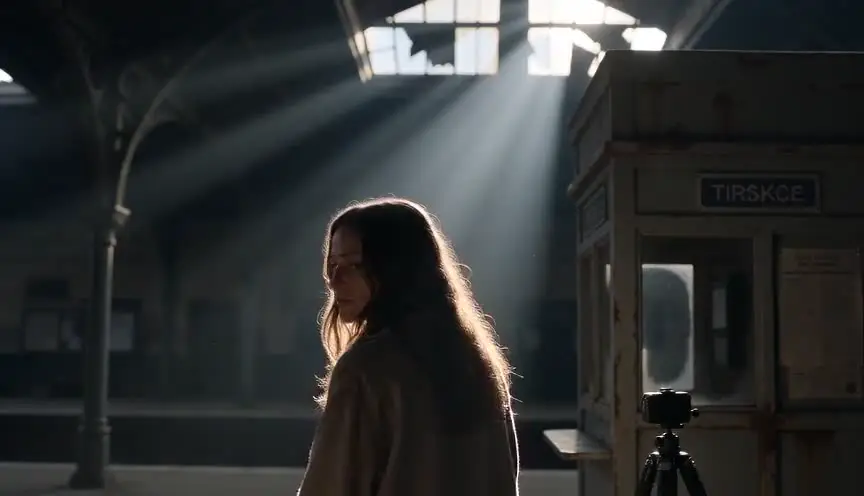
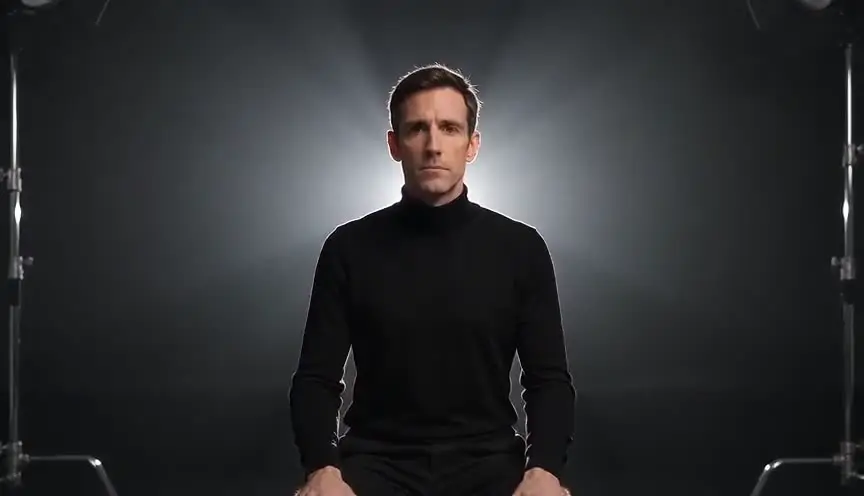
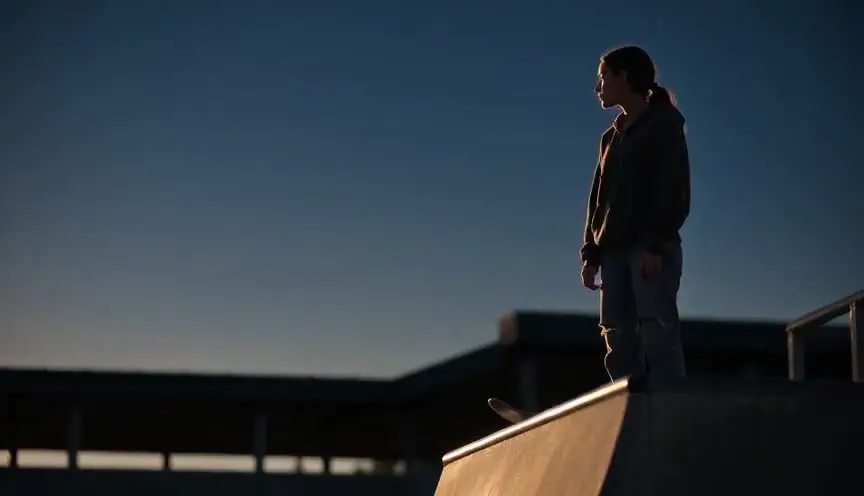
Fill is the emotional dial of lighting. With plenty of it, shadows turn pale and the face is fully readable: warmth, innocence, comedy, safety. With little or none, the shadow side falls away: menace, doubt, grief, danger. Most films move that dial as the story darkens or heals. It serves tenderness when a character is cared for, and tension when help is taken away. A scene earns a deliberate fill choice when the audience's trust in a character should change, or when a face must feel either sheltered or exposed. The fill often matters most by its absence.
The shot list line
- Size
- Medium close-up
- Angle
- Eye level
- Movement
- Static
- Lens
- 50mm
- Duration
- 4 to 8 s
Place the fill near the camera on the side opposite the key, soft and diffused, and set its level by the key-to-fill ratio the scene calls for.
Screenplay
On the page
A screenwriter never writes "fill light". What you can write is the quality of the space: a room washed with morning light off white walls, or a single lamp in a dark room where half a face disappears. The first implies generous fill, the second almost none. That gives the cinematographer the contrast without specifying equipment. The ratio, the bounce card or the fixture belong in the shot list and the lighting plan, decided with the director.
INT. MATERNITY WARD, HOSPITAL IN QUEZON CITY - DAWN
White walls, white sheets. Pale light bounces everywhere, no shadow anywhere.
MARICEL DELA CRUZ (30s) holds her newborn against her chest, eyes half closed.
Her husband, JOEL (30s), still in his security guard uniform, sits on the edge of the bed and does not dare to touch them.
MARICEL
You can breathe, you know.
Storyboard
In the storyboard
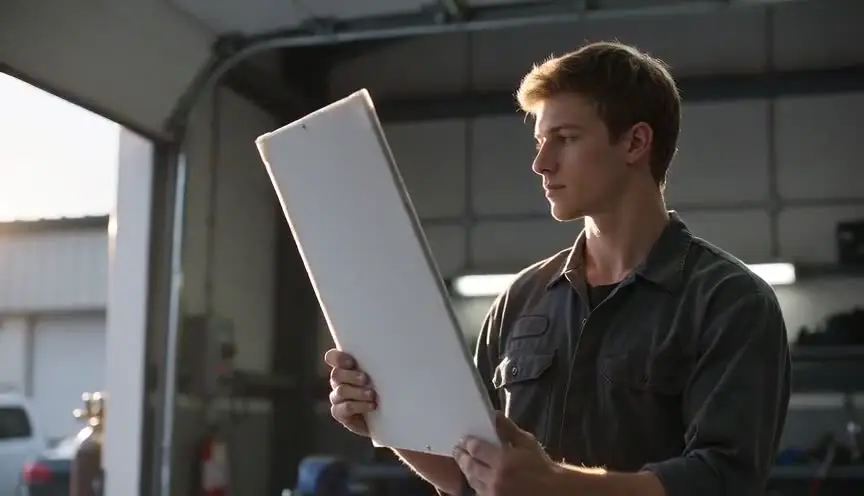
Draw the face with a lit side and a shadow side, then show how light the shadow is: a pale gray for heavy fill, a dark mass for little fill. Add an overhead diagram with the key on one side, the fill or bounce card on the other near the camera. Write the ratio under the panel, for example 2:1 for gentle or 8:1 for dark. Note whether the fill comes from a lamp, a reflector or a white wall in the room.
Pairs well with

Generous fill is the base of high-key lighting. Pairing them gives a bright, open scene where nothing is hidden, useful before a story takes the light away.
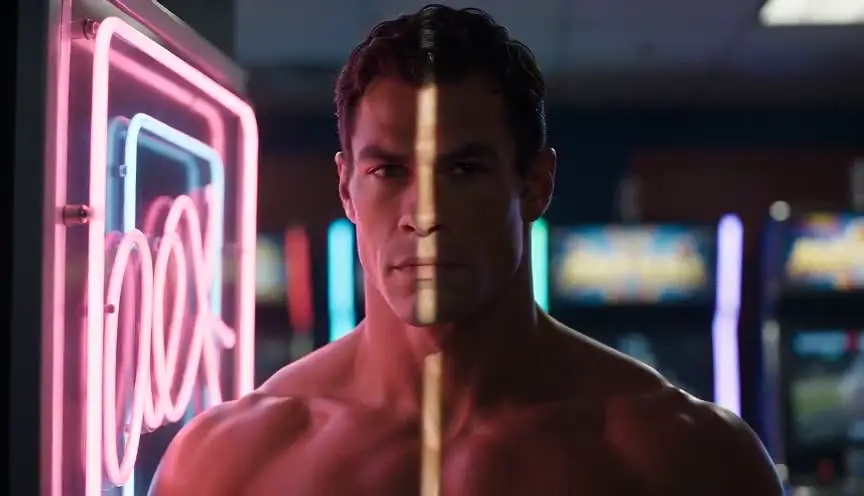
Cut the fill entirely in a later scene, and the same face falls into split lighting. The loss of fill shows the character's world closing in without a word.
Reference
Watch it in
The Godfather (1972)
Gordon Willis used almost no fill indoors, letting Brando's eyes vanish under a hard top key, a look built on what he withholds.
Singin' in the Rain (1952)
MGM's glamour style floods faces with fill, keeping them bright and low in contrast in the open high-key look of the studio years.
ScreenWeaver
Set it up in ScreenWeaver
Describe how bright or dark the room feels in your action lines, and ScreenWeaver breaks the scene down into shots automatically. Open each shot, set the framing to a medium close-up, the angle to eye level, the movement to static and a duration of four to eight seconds. Note the key-to-fill ratio on the shot so the contrast stays consistent through the scene. The character and the location carry from shot to shot, and the AI previsualization lets you compare moods.
Start writing for freeThe prompt behind this clip
This is the exact prompt that rendered the clip at the top of the page. Keep the description of the camera and the light, change the subject and the place.
Fill light demonstration on a Parisian rooftop at dusk. A woman in her fifties stands facing the warm orange sunset, which acts as the key light and rakes across the right side of her face, carving a hard shadow on the left. A large white bounce reflector, held just out of frame on her left, gently lifts that shadow side so both cheeks stay visible with detail, the fill softer and lower than the key. Camera is locked off, medium close-up, 50mm lens. Over four seconds the reflector angle tilts slightly closer, visibly softening the shadow density on her face while the warm key light and Paris rooftops behind her stay constant. No text.
Common mistakes
- 01
Fill with its own shadows
A hard fill creates a second set of shadows on the face and a double nose shadow. Keep the fill soft and large, or bounce it off a card.
- 02
Too much fill for the mood
A tense scene lit with heavy fill looks like a sitcom. Match the ratio to the emotion, and reduce fill as the scene darkens.
- 03
Fill that shows in the eyes
A fill placed high or off-axis can add a second catchlight in the eyes. Keep it low and close to the camera, or flag it off the eyes.