Butterfly lightingThe face as an icon
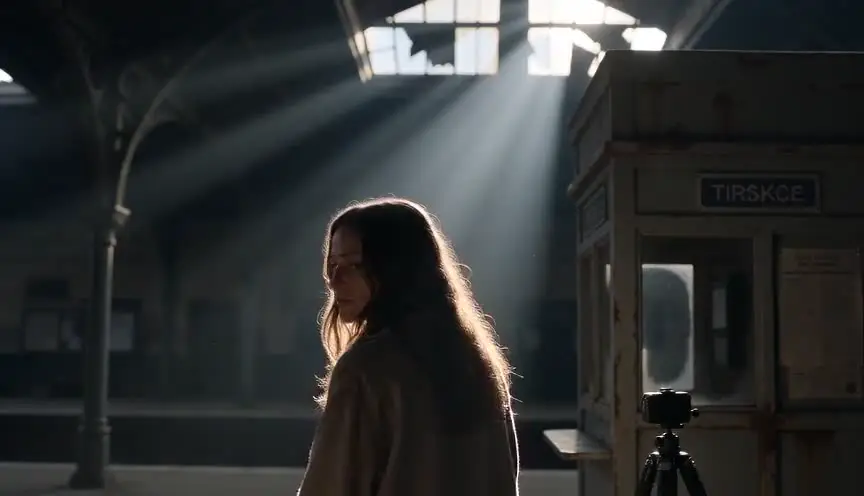
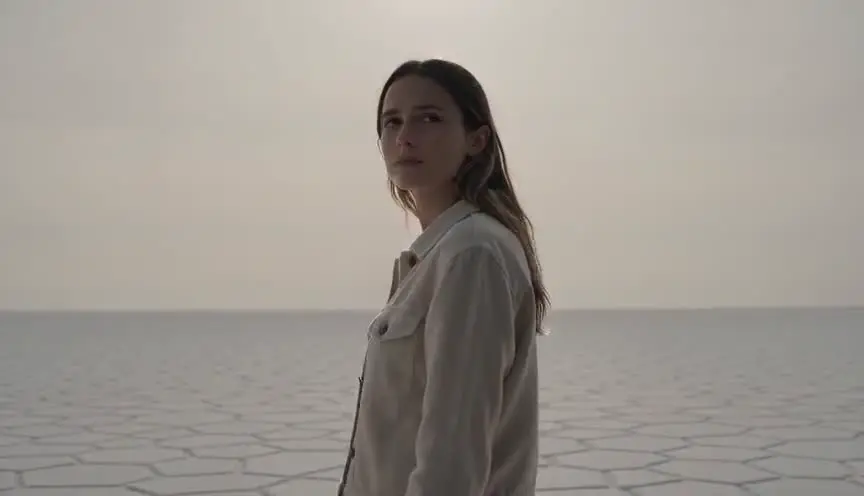
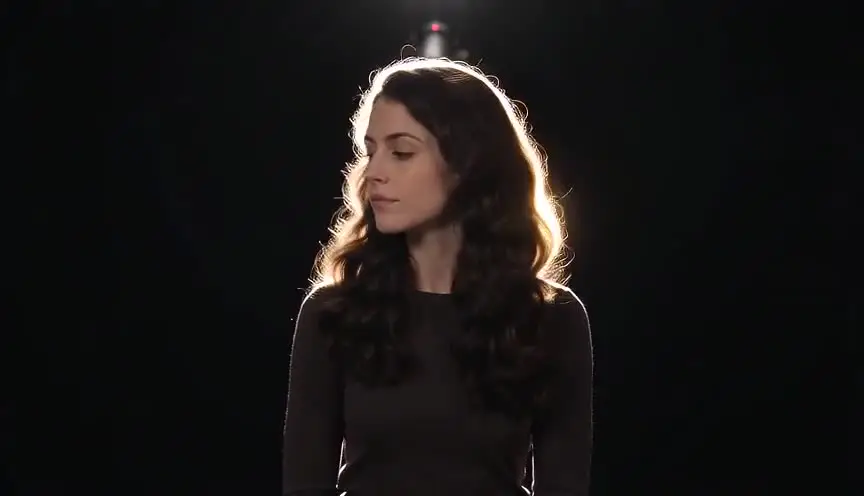
Butterfly lighting puts the key high and directly in front of the face, so a small, symmetrical shadow falls under the nose like a butterfly. Cheekbones lift, skin smooths out, and the audience sees the character the way a poster would show them.
Also calledParamount lightingGlamour lighting
Lighting
Why it works on screen
It is the light of stardom and of self-presentation. Use it when a character is performing, admired, or trying hard to look perfect: a singer before the curtain, a news anchor on air, a politician at a podium, a bride, a con artist on a first date. It flatters, but it also flattens, turning a person into an image. That makes it useful for irony. A scene earns it when the story cares about how a character is seen, and when you may later break the glamour with a harder, lower or side light that shows the person under the pose.
The shot list line
- Size
- Close-up
- Angle
- Eye level, face frontal
- Movement
- Static
- Lens
- 85mm or 100mm
- Duration
- 4 to 6 s
Key centered above the lens and angled down until the nose shadow sits halfway to the lip; add a reflector below the frame to soften the chin.
Screenplay
On the page
Keep the name of the pattern off the page. A writer can suggest the idea through the situation: a makeup mirror ringed with bulbs, a photo shoot, a camera light on a news set, a face tilted up to a chandelier. If the glamour is the point, show someone adjusting to their best angle. The exact position of the key, the reflector underneath and the height of the light go in the shot list, where the cinematographer can tune them to the actor.
INT. TELEVISION STUDIO - SEOUL - NIGHT
Thirty seconds to air. A soft light hangs high above the anchor desk, straight in front of it.
HAN SEO-YEON (50s), the evening anchor for twenty years, lifts her chin a fraction into it.
The makeup artist steps back. On the monitor, Seo-yeon looks thirty-five.
A young producer, MIN-JAE (20s), holds up the new script. It has her name on the first line.
SEO-YEON
I know. Let me read it looking beautiful.
Storyboard
In the storyboard
Draw the face straight on and add a small symmetrical shadow under the nose, plus light shading under the cheekbones and chin. Mark the key with a lamp symbol directly above the frame center and a short arrow pointing down. Sketch a reflector below the frame line. Note "butterfly, key above camera" and the reflector color. If the glamour will break later in the scene, add the next panel with the harsher light for comparison.
Pairs well with

Butterfly lighting is built for faces that face the lens. A frontal close-up gives the pattern room to shape the cheekbones and lets the audience study the character's public face.
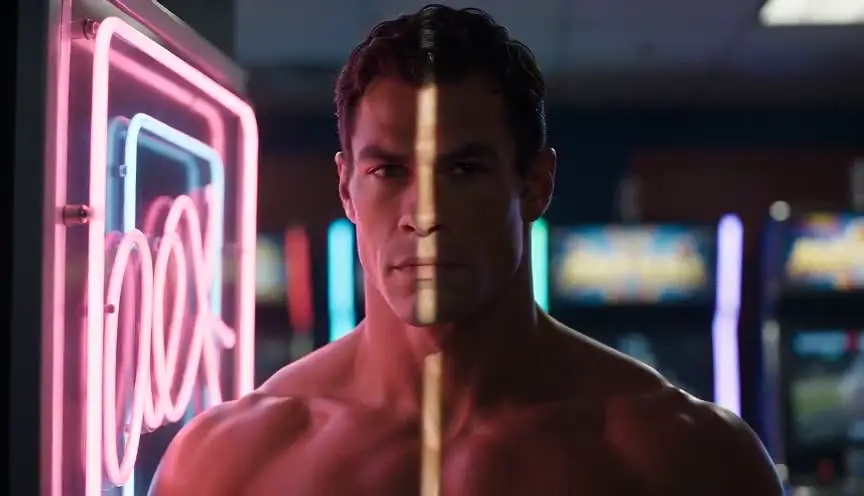
Cut from butterfly to split lighting when the mask slips. Going from symmetry to half a face in shadow shows the private person behind the performance.
Reference
Watch it in
Shanghai Express (1932)
Lee Garmes lit Marlene Dietrich from high in front, a flattering setup the industry later nicknamed after the studio's glamour look.
Morocco (1930)
Josef von Sternberg frames Dietrich under a centered high key that sharpens her cheekbones into an ideal, almost sculpted symmetry.
ScreenWeaver
Set it up in ScreenWeaver
Write the moment when the character presents themselves, and ScreenWeaver breaks the scene down into shots automatically. Open the close-up, set a frontal framing at eye level, keep the movement static, and give it a duration long enough to admire the face. Add a butterfly lighting note on the shot. The character carries from shot to shot, so you can contrast the glamour close-up with a harsher angle later, and the AI previsualization helps you judge both before the shoot.
Start writing for freeThe prompt behind this clip
This is the exact prompt that rendered the clip at the top of the page. Keep the description of the camera and the light, change the subject and the place.
Butterfly lighting on a woman in her forties standing between rows of autumn vines heavy with golden leaves. Camera is static, locked on a close-up at eye level with a soft 85mm lens look. A single warm key light sits high and directly in front of her face, almost above the camera, casting a small symmetrical butterfly-shaped shadow straight down under her nose, with a soft fill lifting the shadows under her eyes. Background vineyard rows are softly out of focus in warm amber tones, her expression calm and still through the shot. No text.
Common mistakes
- 01
Key too high
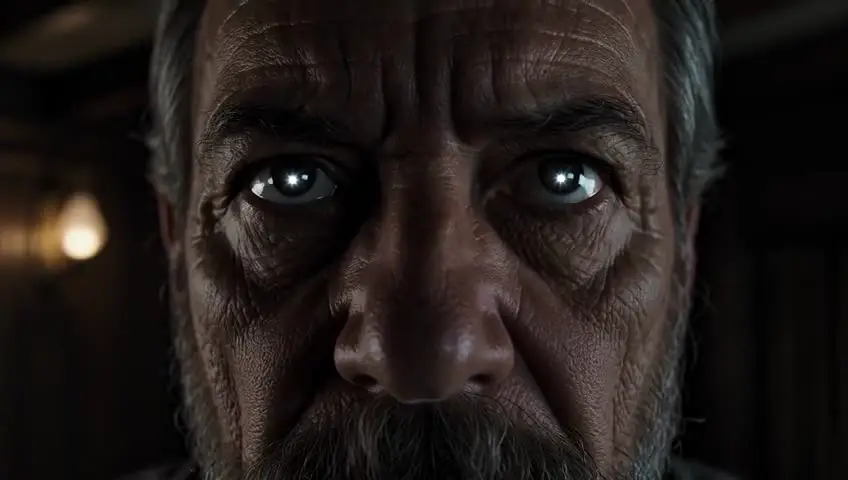
When the light climbs too far, the eyes sink into dark sockets and the glamour turns ghoulish. Lower the key until catch lights return in both eyes.
- 02
Wrong face for it
Butterfly lighting favors defined cheekbones. On a very round or very long face it can flatten or stretch the features. Test it on the actor before building the scene around it.
- 03
Head turns away
The pattern only works frontally. If the actor turns to three-quarter, the shadow slides sideways and loses symmetry. Block the key lines toward the camera or move the light with them.