Tech noirNoir dread in a world of machines
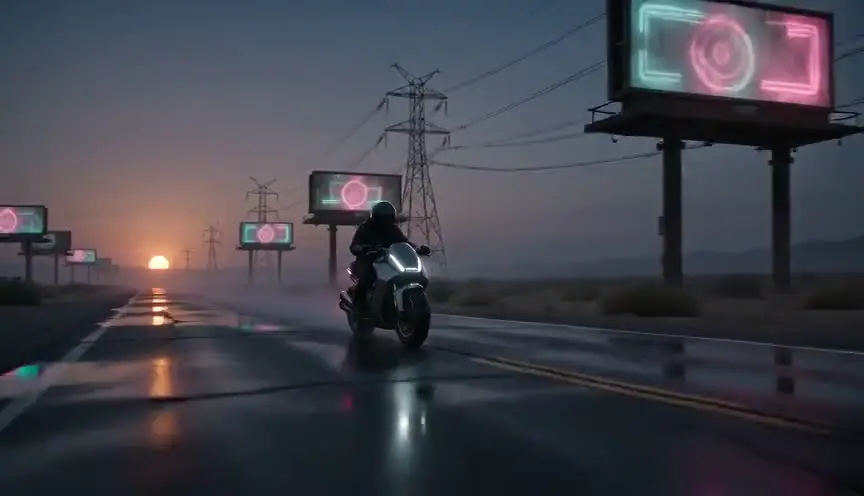
Tech noir blends the shadows and fatalism of film noir with technology: screens, machines, neon and cold artificial light. The audience feels that the danger now comes from the systems people built.
Also calledTechno-noirCyber noir
Genre looks
Why it works on screen
Tech noir keeps noir's trapped protagonist and dark city, but the threat is technological: a machine hunter, a surveillance network, a corporation, a program that learns. It serves paranoia, alienation, pursuit and the fear of losing control of our own inventions. A story earns this style when the characters are small against systems they do not understand, when the night is full of screens that watch back. It fits thrillers, science fiction and crime alike. The look lets the audience feel both the seduction of technology, its glow and speed, and its coldness.
The shot list line
- Size
- Medium shot with screens or machines in the frame
- Angle
- Eye level or slightly low, with machines looming
- Movement
- Slow dolly or static
- Lens
- 35mm to 50mm
- Duration
- 4 to 8 s
Light mainly from screens, status LEDs and cold practicals, add haze for depth, and keep hard shadows around the characters.
Screenplay
On the page
Write the technology as part of the world and the threat: the glow of monitors, a camera turning, a machine that keeps working when people stop. Name real light sources, such as screens, signs, emergency lamps. Leave the color temperature, the gels and the haze to the director and the shot list. A reader should feel the coldness through images, not through lighting vocabulary.
INT. DATA CENTER, SERVER HALL C - FRANKFURT - NIGHT
Rows of racks, blue status lights blinking in patterns no one reads.
GRETA OYELARAN (40s, night security, thermos in hand) walks the aisle.
Her tablet chimes. A door two halls away has opened. Nobody badged in.
She looks up. Every camera dome in the hall is turned toward her.
GRETA
(into radio)
Marco? Are you playing with the cameras?
Storyboard
In the storyboard
Draw the space with strong geometric lines: racks, corridors, grids of screens. Mark the light sources with small rectangles labeled "screen" or "LED", and shade the rest dark. Use cold color notes (blue, cyan) with a warm accent if needed, such as a red alarm light. Add arrows for slow camera moves. Note haze and reflections under the panel, and mark any machine point of view with an eye icon.
Pairs well with
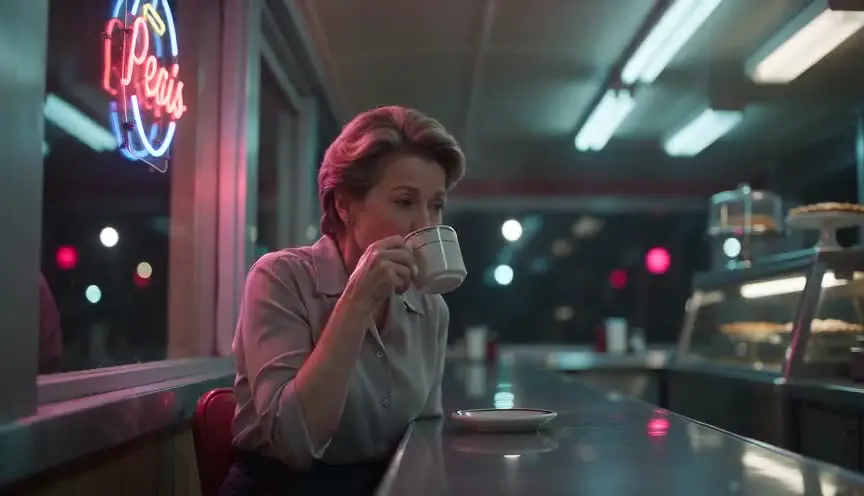
Neon and screens are the light sources of tech noir. Establish them in the wide shot so the cold glow feels like part of the world rather than a stylistic filter.

A shot from a machine's point of view, a camera, a drone, a scanner, shows the audience how the system sees the character, which deepens the paranoia.
Reference
Watch it in
The Terminator (1984)
The nightclub scene, bathed in cold blue and red neon with hard shadows, gave the style its name and still serves as its reference point.
Blade Runner (1982)
Striped blind shadows, smoke and rain mix with monitors and neon signs to build the visual language that defines the genre.
ScreenWeaver
Set it up in ScreenWeaver
Write the technology and its light in your action lines, and ScreenWeaver breaks the scene down into shots automatically. Open each shot and set the framing with screens or machines visible, an eye-level or low angle, a slow dolly or static movement and the duration. Add machine point of view shots where the system watches. Characters, locations and references carry from shot to shot, and the AI previsualization lets you test the cold mood before you plan the lighting.
Start writing for freeThe prompt behind this clip
This is the exact prompt that rendered the clip at the top of the page. Keep the description of the camera and the light, change the subject and the place.
Tech noir: a static locked-off shot inside a 1970s New York diner at night, shot on a 35mm lens with deep low-key lighting. A weary woman in a trench coat sits at the counter, her face split by hard blue neon light bleeding through venetian blinds from a sign outside, while warm amber tungsten light glows on the back booths. A small CRT television behind the counter flickers static, its cold light pulsing across chrome fixtures. Cigarette smoke drifts through the light shafts. The camera holds perfectly still for the full four seconds, only the neon flicker and smoke move, contrast between the cool and warm light staying constant. Fine film grain throughout. No text.
Common mistakes
- 01
Screens with nothing to say
Monitors everywhere without purpose become set dressing. Make the technology part of the story: it watches, blocks, lies or hunts.
- 02
Too clean a future
Tech noir is grimy, not glossy. Add wear, smoke, rain and flicker so the machines feel like a threat rather than an advertisement.
- 03
Losing the noir
Without shadows, fate and a trapped protagonist, you get a tech thriller. Keep the moral darkness and the sense of a closing trap.