CyberpunkHigh tech, low life, endless neon
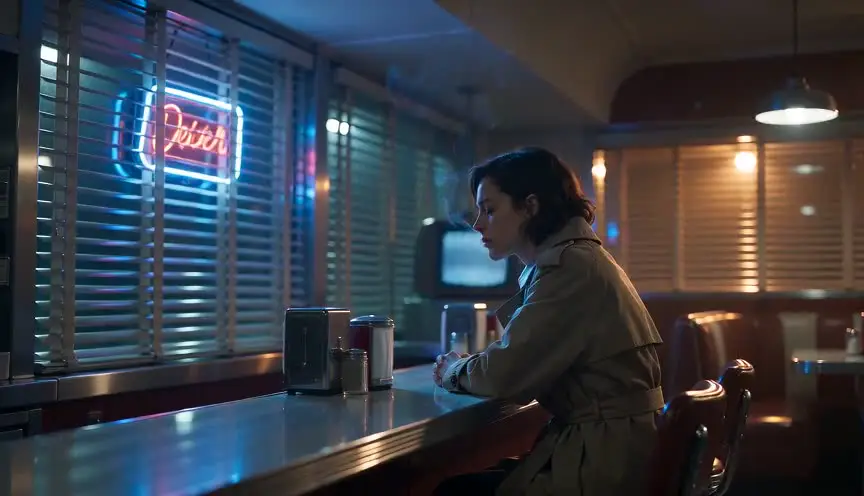
Cyberpunk shows a future of advanced technology and broken societies: megacities soaked in rain and neon, giant advertisements, crowded streets and bodies modified by machines. The audience feels the gap between dazzling technology and people struggling to survive underneath it.
Also calledCyberpunk aestheticNeo-Tokyo lookHigh tech low life
Genre looks
Why it works on screen
Cyberpunk stories follow outsiders, hackers, mercenaries, street doctors, runaways, who live in the cracks of a world run by corporations. The look serves alienation, rebellion, identity and the question of what is still human. It works when the setting itself is oppressive and seductive at once: the neon promises everything, the streets deliver nothing. A story earns this style when its conflict is about power and bodies, who owns them, who controls them. The density of the image, layers of signs, wires, steam and crowds, tells the audience that nobody here has room to breathe.
The shot list line
- Size
- Wide shots of dense cityscapes, close shots of hands and interfaces
- Angle
- Low angles on towering signs, high angles over crowded streets
- Movement
- Slow crane or drone reveals, tracking through crowds
- Lens
- Wide for scale, anamorphic for flares and bokeh
- Duration
- 4 to 10 s
Build layers of practical light (neon, LED, screens), add rain and haze, and keep the frame dense in foreground and background.
Screenplay
On the page
World-building belongs on the page, but in small, sharp details rather than long descriptions. A vending machine selling organ insurance, a billboard that knows a character's name, rain that tastes of metal. Pick one or two details per scene that carry theme. Do not write lighting colors or lens choices. The neon palette, the scale and the density are designed by the director and the production designer, then noted in the shot list.
EXT. NIGHT MARKET, KOTA TUA - JAKARTA - 2061 - NIGHT
Rain drums on plastic awnings. Holographic ads flicker above the stalls in six languages.
IBU SARI WIRANATA (60s, street surgeon, magnifying goggles) solders a prosthetic finger onto a boy's hand under a hanging LED tube.
The boy, DIMAS (12), watches a drone circle above the crowd.
IBU SARI
Stop looking at it. It counts the ones who look.
Storyboard
In the storyboard
Draw dense frames: signs in every direction, cables, awnings, steam and crowds. Label the colors of the main sources (magenta sign, cyan screen, orange lamp) and shade everything else dark. Add rain as diagonal lines. Mark the camera move with a long arrow for crane or drone reveals. Use a small inset panel for close details, hands, implants, interfaces. Note foreground elements that should partly block the view.
Pairs well with
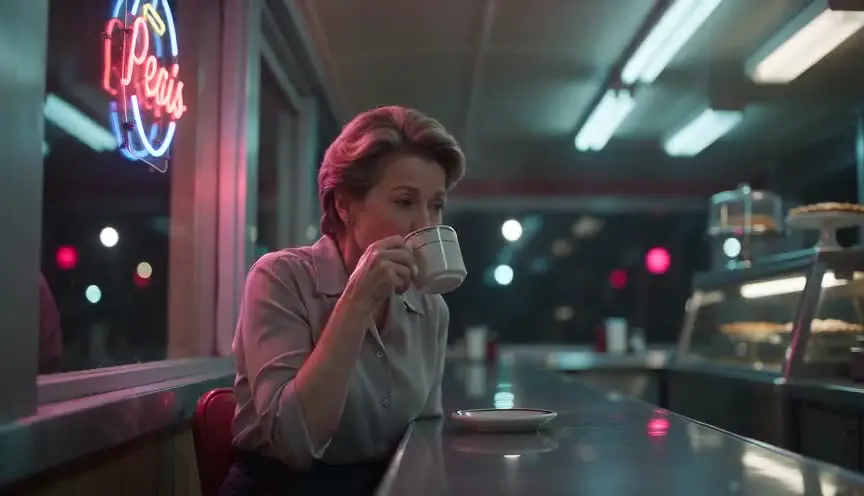
Neon is the palette of cyberpunk. It lights faces and streets in saturated colors while leaving shadows deep, and it signals both desire and decay.
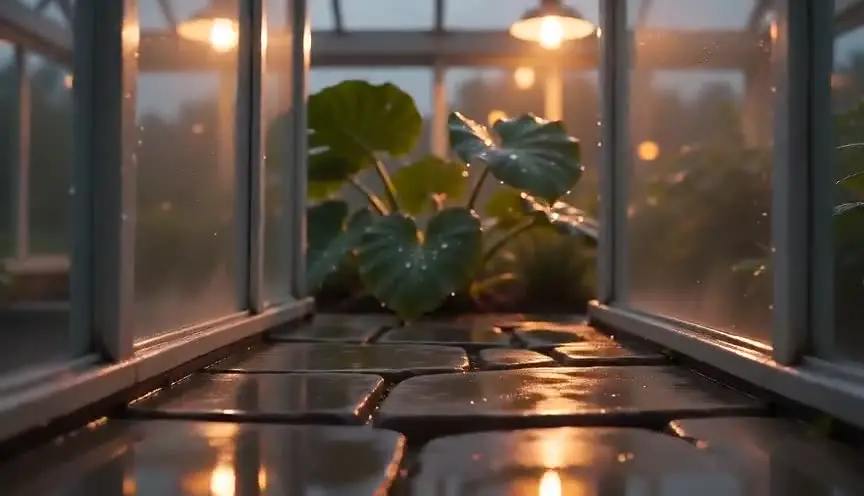
Wet streets double every neon sign in reflections, so the city glows from above and below. The combination creates the classic dense, rain-soaked night.
Reference
Watch it in
Blade Runner (1982)
It set the genre's look with rainy streets, towering screen advertisements and neon mirrored on every wet surface.
Blade Runner 2049 (2017)
The palette pushes into hard magenta and orange against cold interiors, pairing enormous scale with cities in near-total decay.
Akira (1988)
The style carried into animation: neon streets of Neo-Tokyo and biker gangs slicing through smoke and light.
ScreenWeaver
Set it up in ScreenWeaver
Write your world through sharp details in the action lines, and ScreenWeaver breaks the scene down into shots automatically. Open each shot and set wide or close framings, low or high angles, crane or tracking movements and durations. Add notes on palette, rain and density. Characters, locations and references carry from shot to shot, which keeps implants, costumes and streets consistent, and the AI previsualization lets you test the scale of your city before designing it.
Start writing for freeThe prompt behind this clip
This is the exact prompt that rendered the clip at the top of the page. Keep the description of the camera and the light, change the subject and the place.
Cyberpunk atmosphere on a desert highway at dusk: a lone rider on a matte-black electric motorcycle speeds along a cracked two-lane road as towering roadside billboards flicker with pink and cyan holographic glow, reflecting off the bike's chrome fairing and the storm-wet asphalt. The camera holds a low, wide tracking shot from a chase vehicle, moving parallel to the rider at a steady pace, framing a dull orange sun behind distant transmission towers strung with tangled cable. Thin haze drifts across the road, catching shafts of magenta light against the darkening sky. No text.
Common mistakes
- 01
Neon without story
Pink and cyan lights are not enough. Cyberpunk is about power and inequality. Every visual detail should hint at who controls the world and who pays for it.
- 02
Clean, empty streets
The genre is crowded and worn. Empty, polished sets feel like a showroom. Fill frames with people, trash, signs and weather.
- 03
Copying the classics
Many projects recreate the same rainy street. Ground your city in a real culture and geography, so the future feels specific and fresh.