Object POV shotThe story seen by a thing
An object POV shot shows the scene from the position of an object, as if it could see: a mailbox, a fridge, a phone, a bullet in flight. The audience gets a playful or unsettling viewpoint that no person in the story could have.
Also calledObject's-eye viewInanimate POVThing-cam
Camera angles
Why it works on screen
Giving an object a point of view changes who is watching. From inside a fridge, a hungry teenager becomes a looming face. From a ball rolling down a lane, speed becomes a sensation. From a bullet, a whole economy of violence becomes one trajectory. The shot serves comedy, surprise, menace, and a sense that things quietly witness our lives. It also carries ideas, following an object as it passes from hand to hand. A scene earns it when the object matters to the story, or when an ordinary moment needs to feel strange, funny or fated.
The shot list line
- Size
- Close-up to medium shot, framed by the object
- Angle
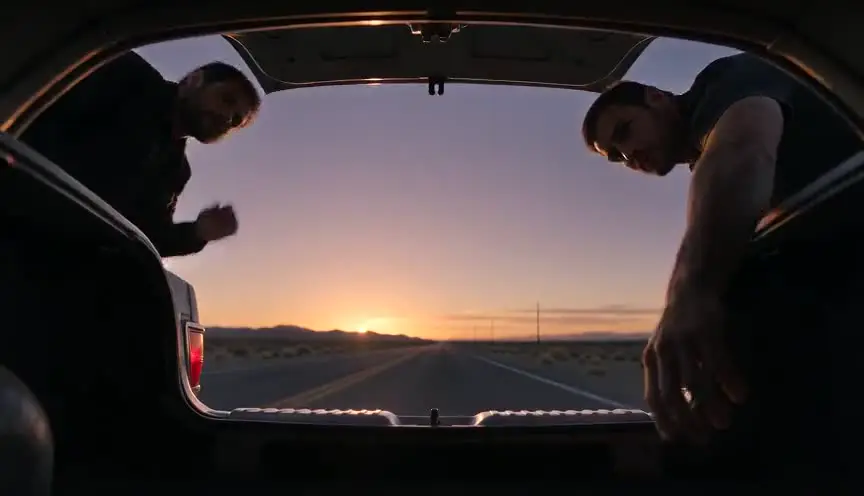
- From the object's position, often low or enclosed
- Movement
- Static, or moving with the object
- Lens
- 14mm to 24mm, sometimes a probe lens
- Duration
- 2 to 6 s
Place the lens exactly where the object sits or travels, and frame through its opening or surface so the audience recognizes the viewpoint at once.
Screenplay
On the page
An object POV is a real storytelling choice, so a writer can put it on the page, sparingly. Use a shot line such as "FROM INSIDE THE MAILBOX" or "THE BALL'S POV" and describe what is seen, then return with BACK TO SCENE. Once per script is often enough. If the whole film follows an object, set the rule in the first pages. The rig, the lens and how the camera travels with the object belong in the shot list.
EXT. ROW HOUSE, REYKJAVIK - EARLY MORNING
Snow on the steps. A red front door with a brass mail slot.
FROM INSIDE THE MAIL SLOT
The flap lifts. A slice of gray sky, a knitted mitten, then half of a face: SIGGI (15), breath fogging.
He pushes an envelope halfway through. Stops. Pulls it back out.
The flap drops. Darkness.
BACK TO SCENE
Siggi sits down on the snowy step, the envelope on his knees.
Storyboard
In the storyboard
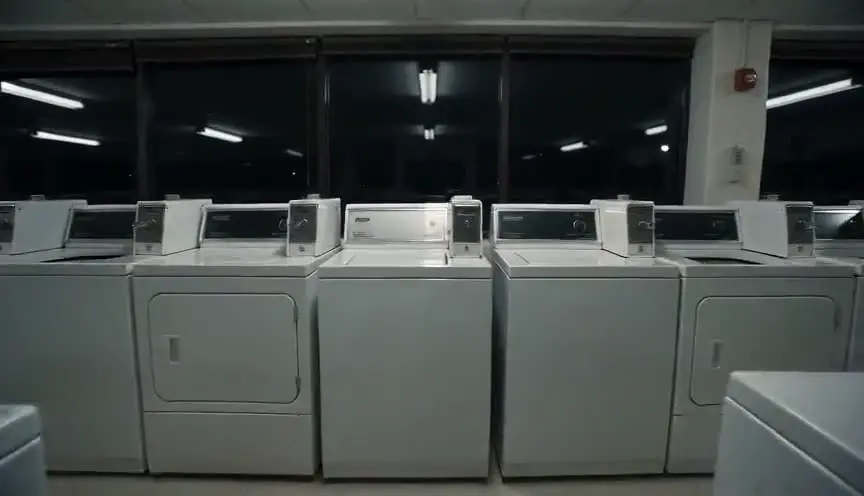
Draw the frame through the object: the rectangle of a mail slot, the round door of a washing machine, the glass of a fridge shelf. Put the character's face or hands in the opening, often large and close. Add a label naming the object whose view it is, and a small sketch of the object with the camera inside. If the object moves, draw its path with an arrow and note the speed and the rig.
Pairs well with
Show the object in an insert first, so the audience knows what it is and where it sits. When the next shot looks out from it, the viewpoint is clear and the surprise lands.

After the object's view, cut to the character from outside. Their face confirms what we just saw from the object's position and brings us back into the human scene.
Reference
Watch it in
The Evil Dead (1981)
Low, fast tracking shots race through the woods as an invisible force, a landmark case of a camera seeing through something not human.
Lord of War (2005)
The opening rides with a single cartridge from the factory line to shipping to firing, showing the arms trade from the round's own moving view.
The Big Lebowski (1998)
In a dreamy bowling fantasy, the camera rushes down the lane with the ball, so we share its path to the pins.
ScreenWeaver
Set it up in ScreenWeaver
Write the object's view as a short shot line in your screenplay, and ScreenWeaver breaks the scene down into shots automatically. Open that shot, set the framing through the object's opening, choose the angle from the object's position, keep the movement static or moving with the object, and give it two to six seconds. Add the object as a reference so it keeps its look across shots. Use the AI previsualization to check that the viewpoint reads instantly.
Start writing for freeThe prompt behind this clip
This is the exact prompt that rendered the clip at the top of the page. Keep the description of the camera and the light, change the subject and the place.
Object POV shot: the camera becomes the point of view of a small brass tea glass sliding fast across the zellige tile floor of a Moroccan riad courtyard. The lens sits centimeters above the ground, tilted slightly upward, capturing the blur of colorful tiles rushing past, then framing horseshoe arches, a tiled fountain and an orange tree as the glass spins and slows near a low wooden table. Warm midday sunlight flares across the frame. The motion stays continuous, low and unsteady, matching the glass's tumble, with no cuts. No text.
Common mistakes
- 01
Unclear viewpoint
If the audience cannot tell whose view this is, the shot just looks odd. Frame through a recognizable shape, or show the object right before.
- 02
Too many objects
Giving several objects a point of view in one film dilutes the idea. Choose the one object that matters to the story.
- 03
Wrong lens for the space
Inside a small object, a normal lens only sees a slice. Use a wide or a probe lens so the opening and the face both fit.