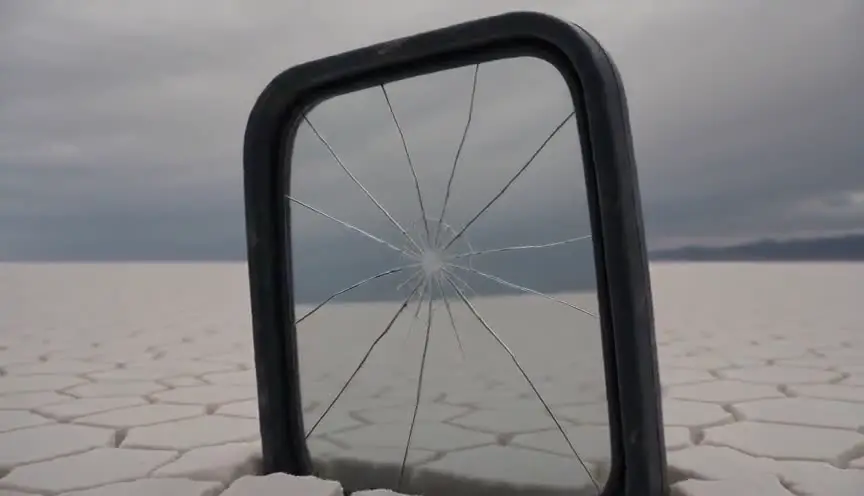
Pass-through shotCrossing the barrier between spaces
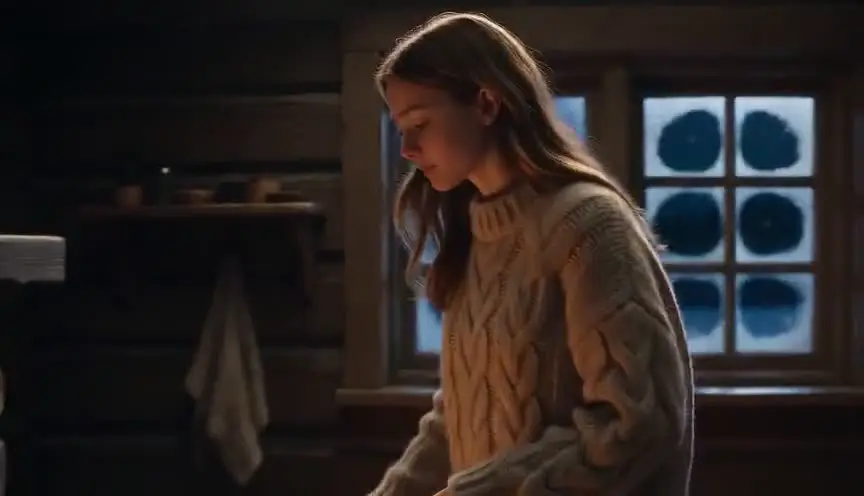
A pass-through shot carries the camera through an opening or behind an obstacle, a window, a grille, a wall, a body, and out into another space. The audience feels drawn across a threshold, and a cut can hide in the moment the frame goes dark.
Also calledThrough shotOcclusion transitionObstruction wipeReveal-through shot
Camera movement
Why it works on screen
It serves connection and intrusion. The camera leaves a street and enters a kitchen through its window, crosses from one room to the next through a hole in the wall, or slips between two people into a private conversation. It says these two spaces belong to one story. It serves curiosity, voyeurism, fate and continuity, and it can compress time when a cut is concealed in the darkness of the obstacle. A scene earns it when the barrier means something: public and private, outside and inside, a world the character cannot enter but the audience can.
The shot list line
- Size
- Wide shot ending in a medium shot
- Angle
- Slightly high, descending to eye level
- Movement
- Push forward through the window frame into the room
- Lens
- 18mm to 24mm
- Duration
- 8 to 12 s
Plan where the frame goes black or blurred as it crosses the obstacle, and shoot the inside half on a matching path so the editor can join the two.
Screenplay
On the page
A spec script should not describe the camera passing through anything. Write the two spaces one after the other, and make the barrier visible in the action: the lit window, the thin wall, the crowd in between. If the scenes are continuous, a new heading with CONTINUOUS signals the link. The director and the editor decide whether the transition is a real move, a hidden cut or a digital join, and the shot list documents the plan.
EXT. SHUBRA STREET - CAIRO - NIGHT
Laundry lines cross between balconies. Shirts and bedsheets sway above the traffic.
One kitchen window on the third floor glows yellow, the glass fogged with steam.
INT. HODA'S KITCHEN - CONTINUOUS
HODA MANSOUR (55) stirs a pot of molokhia, phone wedged against her shoulder.
HODA
If he is not here by eight, he eats it cold.
Storyboard
In the storyboard
Draw three panels: the exterior with the opening centered, the obstacle filling the frame at the crossing point, and the interior once the camera is through. Add a straight arrow through all three to show one continuous path. Mark the panel where a hidden cut can happen with a small scissor symbol. Note the speed, the lens and the duration of each segment, plus any rig change at the join.
Pairs well with
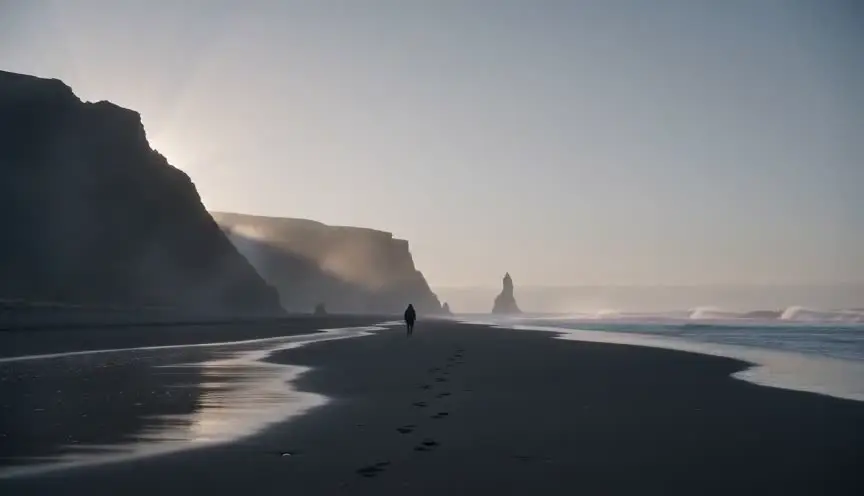
A still establishing view of the building before the move shows the outside world as a whole. The pass-through then selects one window among many and carries the audience into that private life.
The dark or blurred instant at the barrier is where an invisible cut hides. Planning both together lets two separate setups, or two different days, read as one unbroken move.
Reference
Watch it in
1917 (2019)
The film's apparently continuous take keeps pushing through trench walls, doorways and smoke, using each obstruction to conceal an edit or a leap in time.
Birdman (2014)
Weaving through backstage corridors and crowds, the camera slips behind walls and people at exact points where footage from different days is joined.
ScreenWeaver
Set it up in ScreenWeaver
Write the outside and the inside as two headings, with the barrier described in the action, and ScreenWeaver breaks the scenes down into shots automatically. Open the last exterior shot and the first interior shot, set a matching push-forward movement on both, adjust the framing from wide to medium, and give each a duration. The location and the characters carry from shot to shot. Play the pair in the AI previsualization to judge where the join should hide.
Start writing for freeThe prompt behind this clip
This is the exact prompt that rendered the clip at the top of the page. Keep the description of the camera and the light, change the subject and the place.
Pass-through shot: the camera moves forward at a steady walking pace through a crowded night market alley in Taipei, passing directly through a hanging curtain of red paper lanterns and steam rising from a food stall that fully fills and blocks the lens for a half second, then the view opens onto a vendor grilling skewers under neon signs, the camera continuing forward without a cut, handheld but stabilized, 35mm lens, warm tungsten light, background crowd walking naturally. No text.
Common mistakes
- 01
Mismatched speed at the join
If the camera slows down on one side of the obstacle and races on the other, the hidden cut becomes obvious. Keep speed, height and direction identical across the crossing.
- 02
A barrier with no meaning
Passing through a wall only to show off turns the camera into the main character. Choose barriers that separate worlds the story wants to connect.
- 03
Forgetting the interior light
Moving from night exterior to lit interior can blow out the image. Plan exposure changes on both sides so the eye adjusts naturally as the frame crosses.