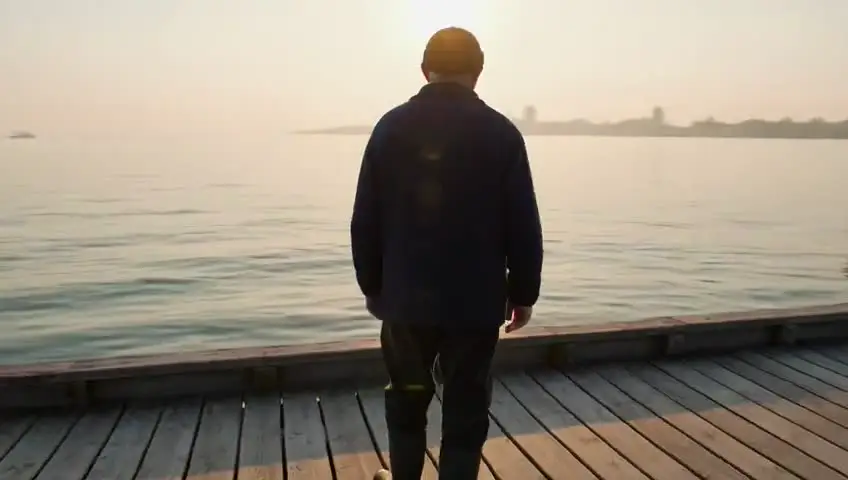
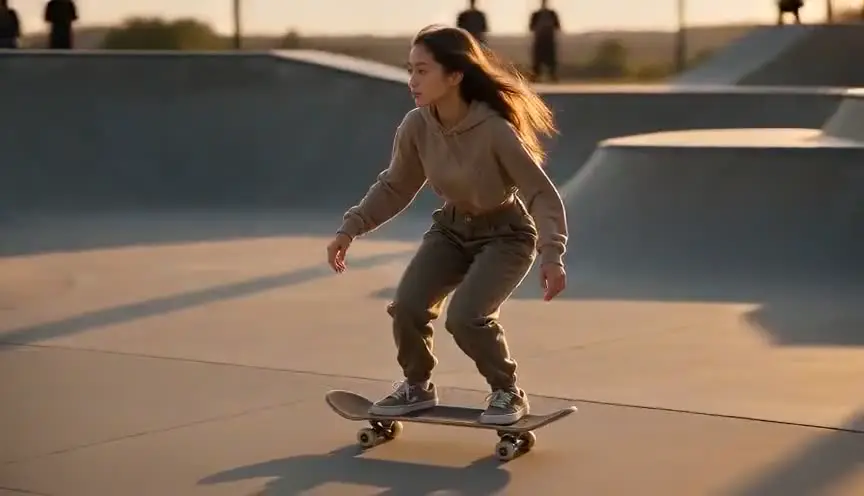
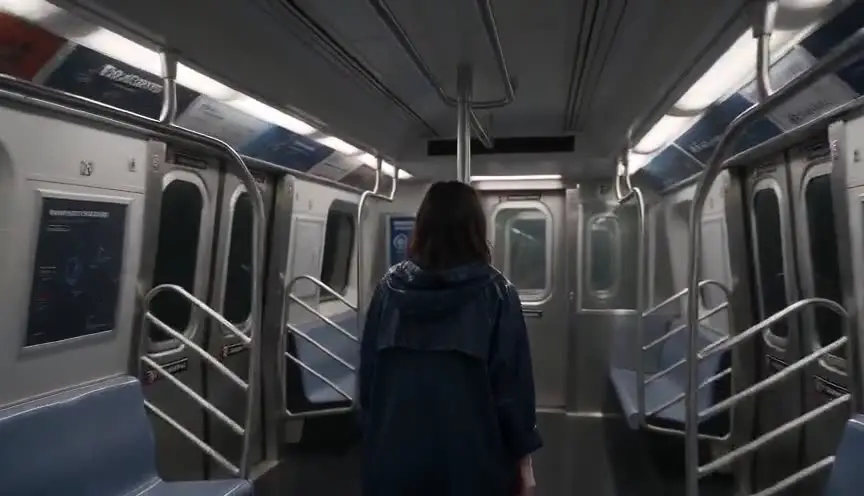
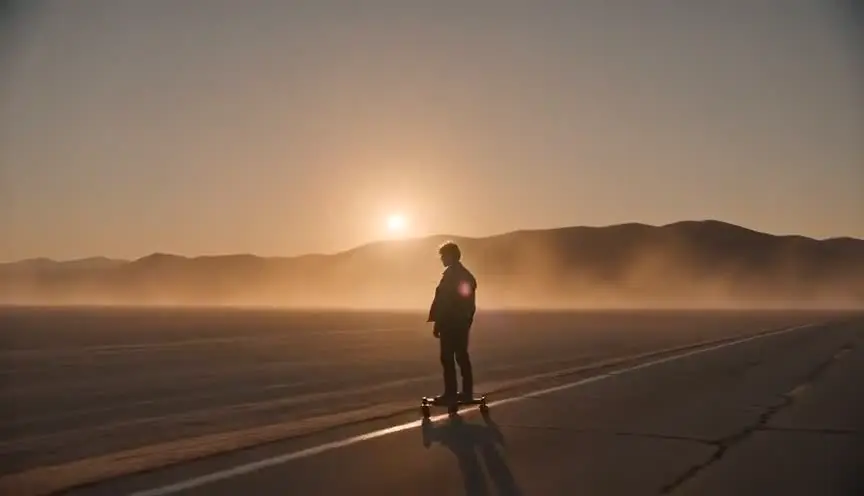
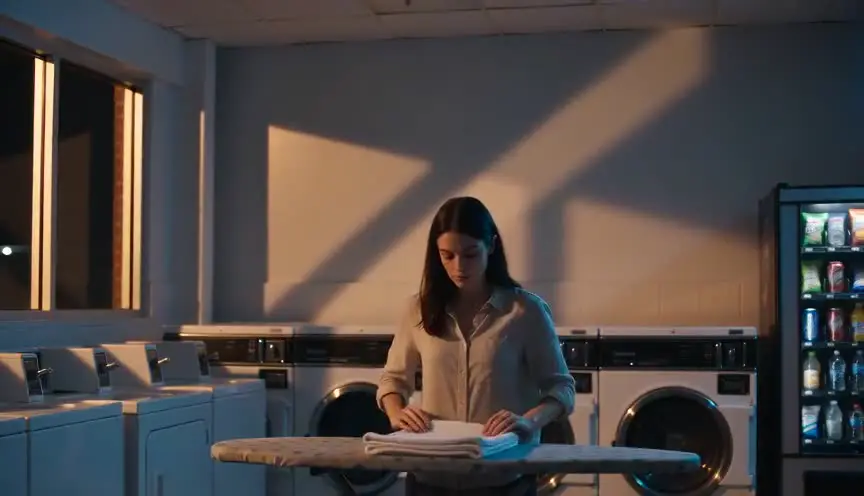
Arc shotCircling part way to add depth
An arc shot moves the camera along a curved path around a subject, a quarter or half circle, while keeping it in frame. The audience sees the person against a sliding background and feels the space wrap around them.
Also calledArcing shotCurved tracking shot
Camera movement
Why it works on screen
The arc is a heightened but flexible move. Around a couple, it makes a kiss or a confession feel like the world has tilted around them. Around a group, it turns a gathering into a team, each face taking its turn in the light. Around a lone character, it can express confusion or a decision taking shape. It serves romance, group reveals, heroic moments and slow realizations. A scene earns it when the relationship between the subject and their surroundings is changing, and the audience should feel that shift physically, not just read it on a face.
The shot list line
- Size
- Medium shot or two-shot
- Angle
- Eye level, or slightly low for a group reveal
- Movement
- Arc left or right, 90 to 180 degrees
- Lens
- 24mm to 40mm
- Duration
- 5 to 10 s
Keep the radius constant with a curved track or a marked floor path, and let focus stay on the subject as the background slides.
Screenplay
On the page
Spec scripts should not ask the camera to circle. If the scene contains a gathering, a reunion or an embrace, the director will consider an arc on their own. You can help by writing the characters in a close group or a still embrace, and letting the surroundings move or fade. Keep camera language for the shot list, where you note the arc's angle in degrees, the direction and the radius.
EXT. ROOFTOP PARKING GARAGE, BRAAMFONTEIN, JOHANNESBURG - NIGHT
Three old friends lean on the hood of a dented minibus taxi.
THANDO (30s, security guard's uniform), LERATO (30s, nail technician, bag of chips) and SIPHO (30s, suit from a funeral).
Below them, the city lights. Above them, a helicopter circling.
Sipho unrolls a blueprint on the hood.
SIPHO
One vault. One night. Nobody gets hurt.
Lerato eats a chip, very slowly.
Storyboard
In the storyboard
Draw a top-down diagram with the subject in the center and a curved arrow along part of a circle, labeled ARC and the number of degrees. Add a start panel and an end panel showing how the background has changed behind the subject. Note the direction, the radius, the duration and which face or element should be in the clearest position at the end.
Pairs well with
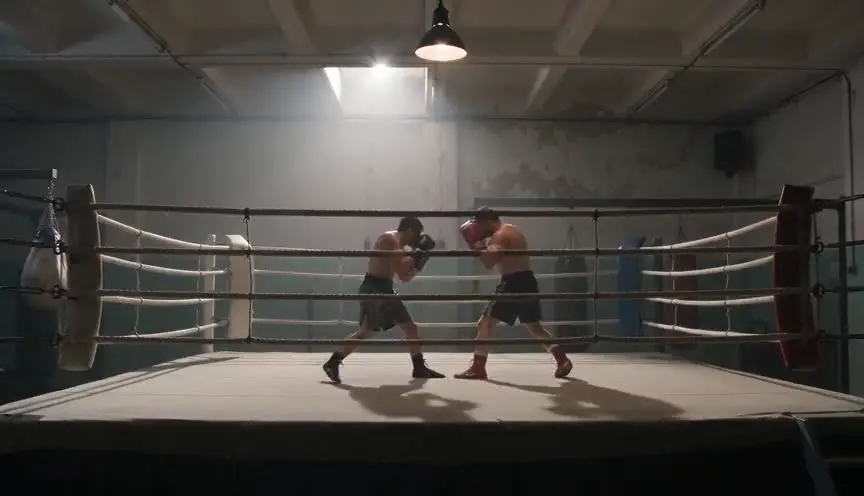
A wide shot before the arc sets the location. When the camera begins to curve around the characters, the audience already knows the space and can feel it turning around them.

End the arc and cut to a close-up of one face. The circling movement gathers the group or the couple, then the close-up picks out whose reaction matters most.
Reference
Watch it in
Vertigo (1958)
As Scottie kisses Judy in the hotel room, the camera circles them and the room itself seems to change, pulling memory into the present.
The Matrix (1999)
On the rooftop, the viewpoint curves around Neo bending back from bullets, making an impossible move readable and unforgettable.
The Avengers (2012)
In the New York battle, the camera sweeps around the heroes standing back to back, presenting the team as one figure for the first time.
ScreenWeaver
Set it up in ScreenWeaver
Write the gathering or the embrace in your screenplay, and ScreenWeaver breaks the scene down into shots automatically. Open the shot, set the framing to medium or two-shot, set the angle, choose an arc as the movement and give it a duration of five to ten seconds. Characters and the location carry from shot to shot, so faces and the background stay consistent as the camera curves. Check the arc in the AI previsualization.
Start writing for freeThe prompt behind this clip
This is the exact prompt that rendered the clip at the top of the page. Keep the description of the camera and the light, change the subject and the place.
Arc shot: the camera moves in a smooth 120-degree curved path around a seated woman in her forties reading at a mahogany desk in a Victorian library, pivoting so she stays centered in frame while tall bookshelves and a rolling ladder swing past in the background at different speeds, revealing the far side of the room. Warm lamp light, dust in the air, camera at eye level on a curved dolly track, steady unbroken motion, no cuts. No text.
Common mistakes
- 01
A changing radius
If the camera drifts closer or farther during the curve, the subject changes size and the move looks unsteady. Use a curved track or a floor mark for the operator.
- 02
Hiding the key face
As the camera curves, one character may end with their back to us. Plan the blocking so the person the scene needs is in view at the end of the arc.
- 03
Arcing without motivation
An arc on an ordinary exchange feels like a music video. Save it for a union, a reveal or a turning point.