Chroma Awards Season 2 · Guide

How to win the Chroma Awards.Six divisions. Season 2 opens mid-October.

Season 2 launches in mid-October 2026. Here is how Season 1 was judged and paid, what the six divisions ask for, and a plan to be ready on day one. Then build the film in ScreenWeaver: screenplay, storyboard, and footage with Seedance.
  • Launch mid-October 2026
  • Five equal criteria in Season 1
  • Sponsor awards explained
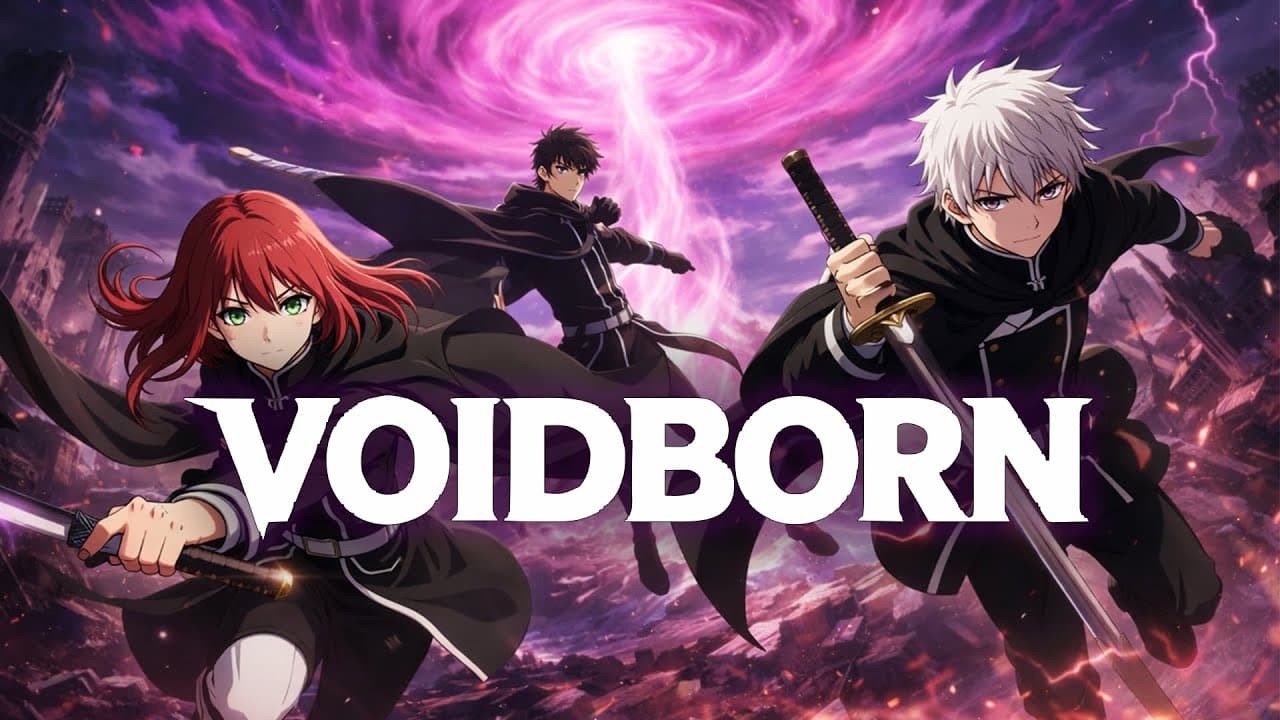
Voidborn · Episode 0

Independent guide. ScreenWeaver does not organise the Chroma Awards and is not affiliated with Chroma Awards or ElevenLabs. Rules read on 1 October 2026. Official page

Available today in ScreenWeaver: free screenwriting, and a storyboard generated from your screenplay with Storyboard Beta, $9.99 a month.

Rolling out: video generation of each shot, powered by Seedance, with the Filmmaker plan.

The rules on one card

What is announced, and what Season 1 asked.

The Chroma Awards, formerly Project Odyssey, is an online competition incubated by ElevenLabs and backed by Google, CapCut, Dreamina, Freepik, fal, Kling, Luma, Adobe and Hailuo, among others. No Season 2 rules were online on 1 October 2026, so this card separates what is announced from what Season 1 required.
Edition
Season 2, after Project Odyssey
Launch
Mid-October 2026
Deadline
Not announced yet
Divisions
Film, Advertising, Music Video, Song, Game, Behind-The-Scenes
Prizes
Season 2 not announced. Season 1: $191,500 in cash
Season 1 delivery
A public link on YouTube, Vimeo, TikTok, Instagram or Reddit
Season 1 language
English voice or English subtitles
Season 1 AI rule
At least one AI tool, used meaningfully and openly

Sources: the Season 2 page on chromaawards.com and the Season 1 rules on Devpost, read on 1 October 2026. Anything marked Season 1 can change: read the Season 2 rules the day they appear.

Key dates

One date announced, the rest to come.

The launch is the only Season 2 date on the official page. Season 1 gives you the shape of a season.
  1. Mid-Oct 2026

    Season 2 launches

    The official page announces the launch and links a sign-up form. No rules, deadline or prize table were online on 1 October.

  2. At launch

    Rules and deadline

    These are the pages to read the day they appear. Until then, Season 1 is your best guide.

  3. 31 Aug to 18 Nov 2025

    Season 1 submissions

    About eleven weeks to submit. A useful length to plan around if Season 2 repeats it.

  4. 23 Dec 2025

    Season 1 winners announced

    Judging ran from 1 to 18 December, over more than 6,500 submissions.

How films are scored

Five criteria, equal weight.

Season 1 scored finalists on five criteria that each counted one fifth of the grade. Sound and music weighed as much as story. Season 2 has not published its grid: assume the same until told otherwise.
  • Thematic adherence

    20%

    Rule compliance, fit with the category, clarity of the story. Pick the category before the idea and make the film obviously belong to it. A sci-fi film entered as a comedy loses points here, however good it is.

  • Narrative design

    20%

    Emotional impact, world-building and depth of character. For a short: one character who wants something, one rule of the world, one change. The world can be vast. The question must be small.

  • Creativity and originality

    20%

    New ideas, a look of its own and a meaningful use of AI. Season 1 asked for AI used in a significant way. Show what the tool made possible that a camera could not.

  • Production value

    20%

    Technical quality, editing, visual effects. Stable faces, clean hands, matching light from shot to shot. Every judge notices a continuity break.

  • Music and sound design

    20%

    Mood, dialogue timing and how sound sits in the picture. A fifth of the grade that most AI films neglect. Write the sound into the screenplay and place every line on the cut.

Season 1 judged in three stages: a pass or fail check, the Top 25 of each category, then the final scoring. The first stage is where non-compliant films disappear.

Who decides

Panels by category, not one jury.

Season 1 gave each film category its own panel, drawn from studios, platforms and AI creators. The official page lists dozens of judges for Season 2, and the list can change. Here is how it worked last time.
  • Category panels

    Animation and Anime had Hiroaki Inoue (AiHUB), Charlie Fink, Henry Daubrez (Google Labs) and Eugene Chung. Documentary, Horror, Micro-Drama and the others each had four judges of their own. Your film is watched by people who see that genre every day.

  • The screening stages

    Before any panel, a pass or fail check removes films that break the rules. Then the Top 25 of each category go to scoring. With more than 6,500 submissions in Season 1, the first image and the title card carry weight. Open on your best frame.

  • The sponsors' awards

    On top of category prizes, Season 1 had sponsor awards in Title, Gold and Silver tiers, plus a community award by WayToAGI. They required a Tool Tag: you declare the tool when you enter.

The six divisions

Pick one division, then one category.

The official page lists six divisions. Season 1 split Film into 13 categories, from Animation and Anime to Micro-Dramas and Behind-The-Scenes. Under each division, the angle we would take with ScreenWeaver.
  • 01

    Film

    The largest division. In Season 1: Animation and Anime, Action and Adventure, Comedy, Drama and Romance, Sci-Fi and Fantasy, Horror and Thriller, Trailers, Micro-Dramas, Short Form and more.

    Choose the category where your look is obvious in the first shot. A film that fits one category cleanly beats one that straddles three, because thematic adherence is a fifth of the grade.

  • 02

    Advertising

    Brand films and commercials, split into categories by industry.

    A commercial is a thirty second screenplay. Storyboard it frame by frame, and make the product look identical in every shot: a changing logo is the first thing a judge sees.

  • 03

    Music Video

    Clips judged by genre. Season 1 had Pop, Hip-Hop, Rock and Country, Electronic, Comedy and Parody, and Experimental.

    Plan one shot per musical phrase before generating anything. Music and sound is a fifth of the grade, and here it is the whole subject.

  • 04

    Song

    A division on the Season 2 page, by genre. It had no equivalent in the Season 1 rules we read.

    ScreenWeaver is built for the picture, not the music. You can still make a visual story around a song and enter it as a Music Video. Read the Song rules before you choose.

  • 05

    Game

    Playable projects, judged by type. Season 1 asked for a web link that plays without a download.

    Not a ScreenWeaver job. A trailer made here can sit on your game page, but it will not be judged as a game.

  • 06

    Behind-The-Scenes

    How the work was made: process, tools, choices.

    In ScreenWeaver each shot stays linked to its scene, its storyboard frame and its prompt, so a making-of is already half written. Season 1 allowed several unique entries per person: check whether Season 2 does.

Season 1 in numbers

What the first Chroma season teaches.

Season 1 ran in autumn 2025 under the Chroma Awards name. It drew more than 6,500 submissions from over 5,500 participants, paid out $191,500 in cash and named more than 300 winners and finalists, all listed at watch.chromaawards.com.

  1. 01

    About one entry in twenty was named a winner or finalist. More than 300 names on a list of over 6,500 submissions. Finishing a film and complying with the rules is half the job.

  2. 02

    The biggest cheques were sponsor awards. First place in a film category paid $2,000. First place in a Title Sponsor award paid $6,000, and in a Gold one $3,000. The sponsor list is part of the strategy.

  3. 03

    Voidborn took two placements. Made by the ScreenWeaver team, it won 1st Place Silver and 2nd Place Dreamina at the Mondial Chroma Awards. Both are sponsor names: look at what each sponsor's tool does best before you pick a category.

  4. 04

    Five equal criteria put sound on the podium. Music and sound design counted as much as production value. A film with a plain soundtrack gives up a fifth of the grade before anyone judges the picture.

  5. 05

    The scope grew for Season 2. Season 1 had three divisions on Devpost: Film, Music Video and Games. The Season 2 page lists six. Copy the lessons, not the old category list.

From script to screen

Voidborn: one scene, six shots.

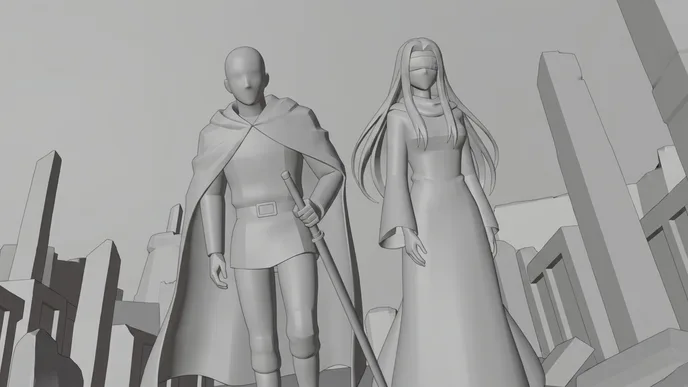
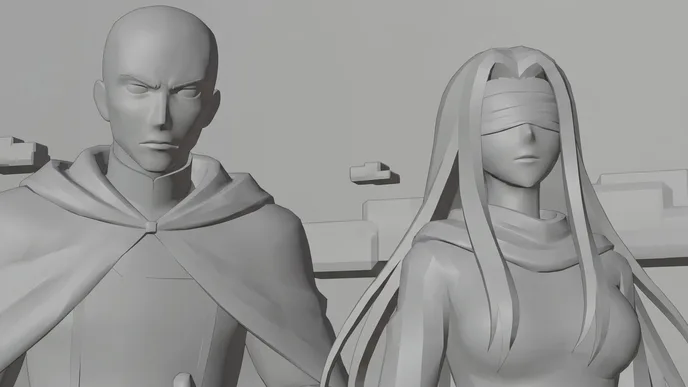
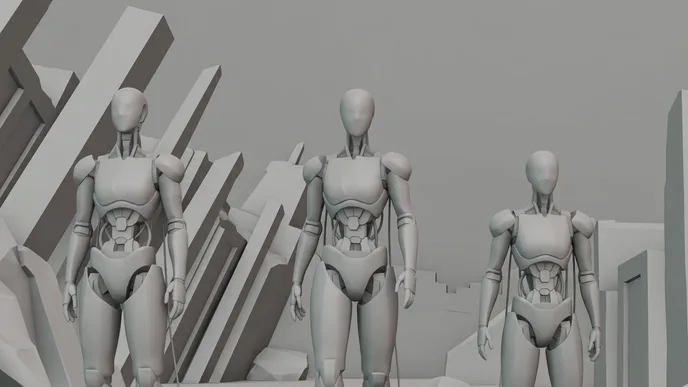
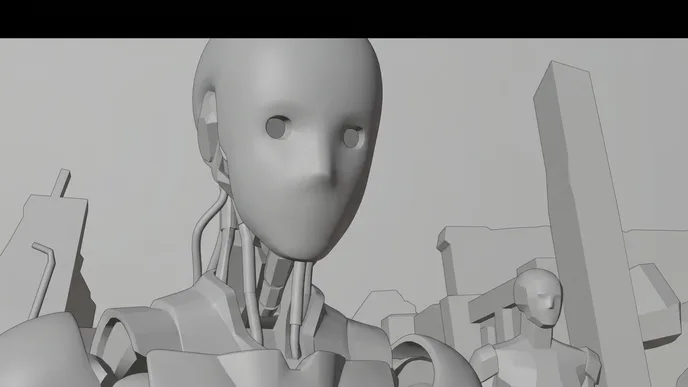
The opening of Voidborn, episode 0, an anime short made by the ScreenWeaver team. The screenplay page is the English-subtitled version, the language rule Season 1 set, then each shot as a storyboard frame and as the final image.

Logline. Every seven years, the Rift opens and swallows the world’s dreams. A swordsman sworn to a blind seer escorts her through its levels, toward a promise they made to a girl left behind.

Screenplay · episode 0 · English subtitles

EXT. RUINS OF THE FIRST LEVEL - NIGHT

Broken towers under a violet sky. SIM, a swordsman in a black cloak, walks beside LADY MARIA, blindfolded, all in white.

SIM

Tell me, Maria... do you think Leia believes we are still alive?

MARIA

We made a promise... the two of us.

A line of white automatons rises from the ruins.

AUTOMATON

The Rift will wait for no one.

SIM

What are machines doing at this level?

One automaton steps forward. Its face is blank.

AUTOMATON

We must return to the surface.

Its eyes ignite red.

SIM

I am Sim, guardian of Lady Maria... and I will proceed with your execution.

Steel meets steel. Lightning runs down the blade.

CUT TO:

  1. A swordsman in a black cloak and a blindfolded woman in white walk through ruins at night
    Storyboard frame of the wide shot, in grey
    01

    Wide · the pair

    Wide shot, a bald swordsman in a black cloak and a blindfolded red-haired woman in white walk through night ruins

  2. Medium two-shot of a bald swordsman and a blindfolded red-haired woman
    Storyboard frame of the two-shot, in grey
    02

    Two-shot · the promise

    Medium two-shot, the swordsman and the blindfolded seer side by side, violet night sky, broken towers

  3. Three white humanoid automatons stand in night ruins
    Storyboard frame of the automatons shot, in grey
    03

    Wide · the machines

    Wide low angle, three white humanoid automatons standing in the ruins, cold blue moonlight

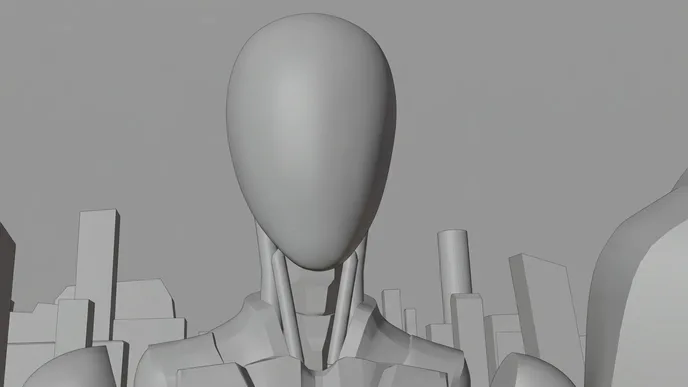
  4. Close-up of a white automaton with a smooth blank face
    Storyboard frame of the blank face close-up, in grey
    04

    Close-up · the blank face

    Close-up on an automaton's smooth faceless head, black eye slots, cables at the neck, ruins behind

  5. A white automaton's eyes glow red
    Storyboard frame of the red eyes close-up, in grey
    05

    Close-up · the red eyes

    Same framing, the automaton's eyes ignite red, the swordsman's shoulder out of focus in the foreground

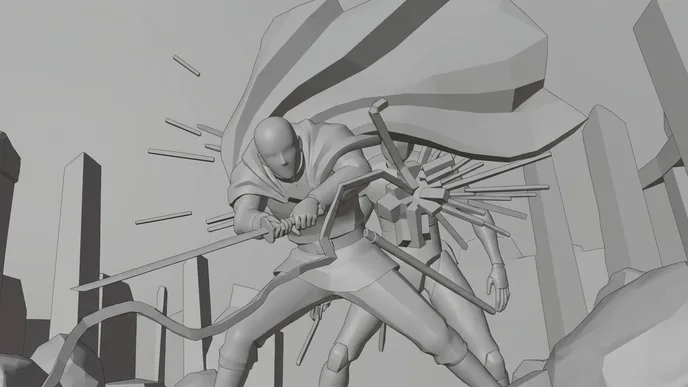
  6. A swordsman strikes with a katana wreathed in lightning and sparks
    Storyboard frame of the clash shot, in grey
    06

    Action · the clash

    Dynamic low angle, the swordsman strikes with his katana, lightning running along the blade, sparks, cape flying

Voidborn, episode 0, 13 minutes, by the ScreenWeaver team. It won 1st Place Silver and 2nd Place Dreamina at the Mondial Chroma Awards, and is an award winner at the Seoul International AI Film Festival. The scene shows what the grid rewards: a category you recognise in one shot (Animation and Anime, Action), one world, and lines placed on the cut by design. The player starts on this scene.

The script

A 4 minute film in five movements.

The Season 1 rules we read set no length, and Season 2 may. Four minutes is a safe target: about 4 screenplay pages and 50 to 70 shots of 3 to 5 seconds. If Season 2 sets a range, keep the shape and rescale it.
  1. 0:00 to 0:20

    The hook

    The category is obvious in the first shot: a sword, a ship, a joke. Judges watch hundreds of films.

  2. 0:20 to 0:50

    The world and the rule

    One rule of this world, shown rather than explained. Who we follow and what they cannot afford to lose.

  3. 0:50 to 2:40

    The escalation

    Each beat raises the cost. Put a sound cue on every turn.

  4. 2:40 to 3:30

    The choice

    The decision the film is about, with its own music and no dialogue over the key image.

  5. 3:30 to 4:00

    The echo

    Close on a frame that rhymes with the opening. Then credits listing the AI tools you used.

Season 1 required English voice or English subtitles. Burn the subtitles into the master so the film is judged the same on YouTube, Vimeo and TikTok.

Before and after the launch

From now to the submit button.

The rules land in mid-October and the deadline is unknown. Spend the first weeks on everything that does not depend on the rules: story, references, storyboard. Season 1 left about eleven weeks.
  1. 01

    Now to launch

    Pick a division and a category

    Read the six divisions and the Season 1 categories. Write five loglines for the category you can win. Keep the one you can say in a single breath.

  2. 02

    Launch week

    Read the Season 2 rules

    Check the deadline, the length, the language rule, the creation date, the sponsor list and which tools need a tag. Redo your calendar from the real dates.

  3. 03

    Weeks 1 and 2

    A screenplay with the sound written in

    Write it in the free Screenwriter plan, in industry format. Add music and sound cues as action lines, since sound is a fifth of the grade.

  4. 04

    Weeks 3 and 4

    References and storyboard

    One approved reference per character and per set, then the storyboard generated from the screenplay. Fix the look here, not in the footage.

  5. 05

    Weeks 5 to 8

    Generate the footage

    Scene by scene from the storyboard and the references. Keep prompts and versions: they feed your tool declaration and a possible Behind-The-Scenes entry.

  6. 06

    The last two weeks

    Edit, mix, subtitle, publish

    Cut, mix, burn in English subtitles, clear the music, publish a public link and submit before the deadline, not on it.

Traps to avoid

Eight ways to lose before the panel.

They come from the Season 1 rules. Season 2 may differ, but assume the same until the new text says otherwise.
  • Waiting for the rules to start

    Season 1 left about eleven weeks. A film rushed after launch loses to one built before it. Story and storyboard do not depend on the rules, so do them now.

  • No English voice or subtitles

    Season 1 asked for one or the other, for judging. A film in another language needs English subtitles. A film with no dialogue was also accepted.

  • A link the judges cannot open

    Season 1 accepted public links on YouTube, Vimeo, Reddit, TikTok, YouTube Shorts and Instagram, and refused Google Drive. Test your link in a private window.

  • Music you do not own

    Music had to be original, licensed, used with permission or AI-generated. A track from a playlist is a rule break, not a style choice.

  • Deepfakes and borrowed faces

    No deepfakes, no unauthorised likeness, no third-party IP. Invent your characters and keep them out of famous franchises.

  • AI as decoration

    Season 1 asked for AI used in a significant way and declared openly. A film with one AI shot misses the point. Say honestly which tool made what.

  • Ignoring the Tool Tag

    Sponsor awards required a Tool Tag. If one sponsor prize is your target, check which tool they tag before you generate, not after.

  • An old film

    Season 1 accepted work created after 1 February 2025. Expect a creation-date rule in Season 2 and keep the dates of your project files.

Why ScreenWeaver

Chroma lets you pick the tools. The film must still hold together.

The Chroma sponsors include Dreamina, Kling and Luma, and the rules we read impose no single tool. What ScreenWeaver adds is the film itself, in one place: screenplay, storyboard and footage in one connected project.
  • Built on Seedance 2.0 and 2.5

    Our footage pipelines are built on Seedance. Declare ScreenWeaver and the Seedance version as you would any other tool, and check which sponsor tags apply to your entry.

  • A look that holds from shot to shot

    Characters, locations and references carry across the whole project. That serves production value and originality at the same time.

  • Sound planned from the page

    The screenplay carries your sound cues and the storyboard frames are linked to scenes and beats. Music and sound design is a fifth of the grade, so plan it before you generate.

  • Write before the rules land

    Screenwriting is free, with no time limit. Add the storyboard with Storyboard Beta at $9.99 a month. Video generation for each shot is rolling out with the Filmmaker plan.

Real productions

International festival-recognized films have been written and produced with ScreenWeaver.

ScreenWeaver is already being used as a creative workspace for real AI film productions, from cinematic shorts to animated series pilots selected, nominated, and awarded by international festivals.

  • Video thumbnail for VOIDBORN

    VOIDBORN

    AI animated / cinematic short

    Festival recognition

    • 1st Place Silver

      Mondial Chroma Awards

    • 2nd Place Dreamina

      Mondial Chroma Awards

    • Award Winner

      Seoul International AI Film Festival

  • Video thumbnail for Les Fils du Vinnana

    Les Fils du Vinnana

    AI short film

    Festival recognition

    • Honorable Mention

      Top Quark Film Festival

    • People's Choice Nominee

      Illuminate Oneness of Humanity

    • Nominee

      ALTFF Supershort

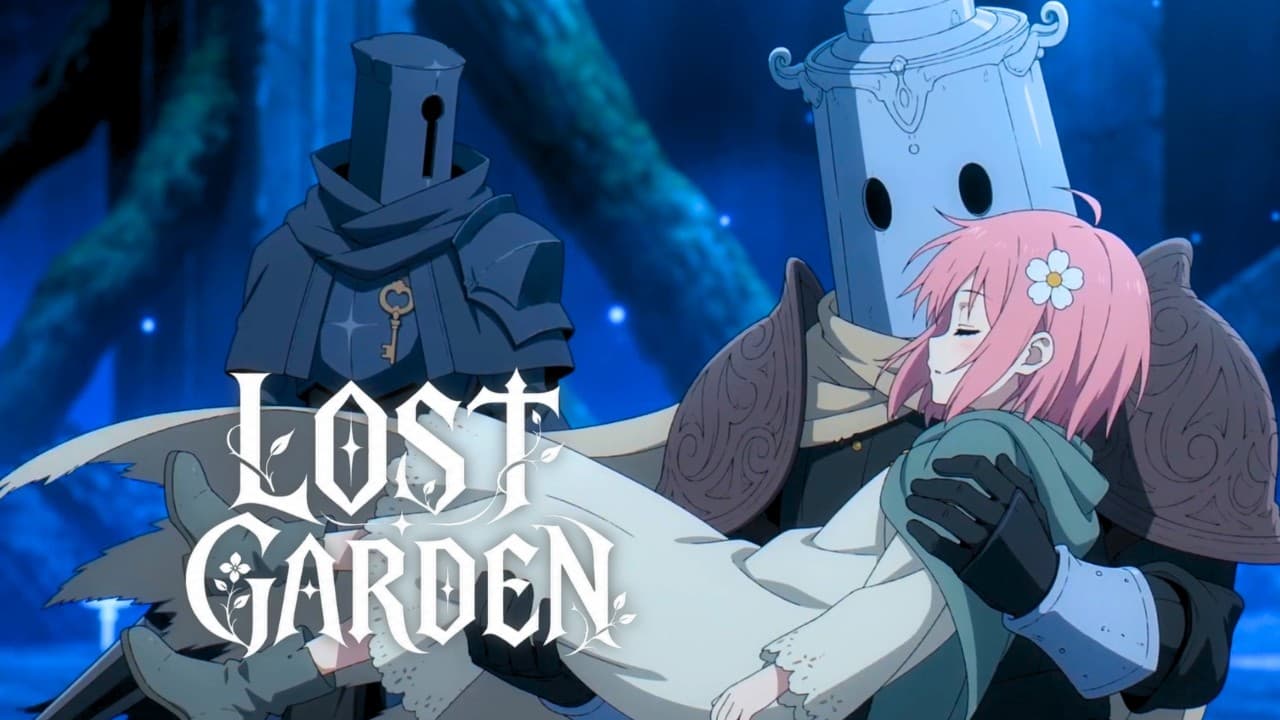
  • Video thumbnail for Lost Garden

    Lost Garden

    AI animated series pilot

    Festival recognition

    • Finalist

      AI London Festival

The pipeline

Write. Board. Produce.

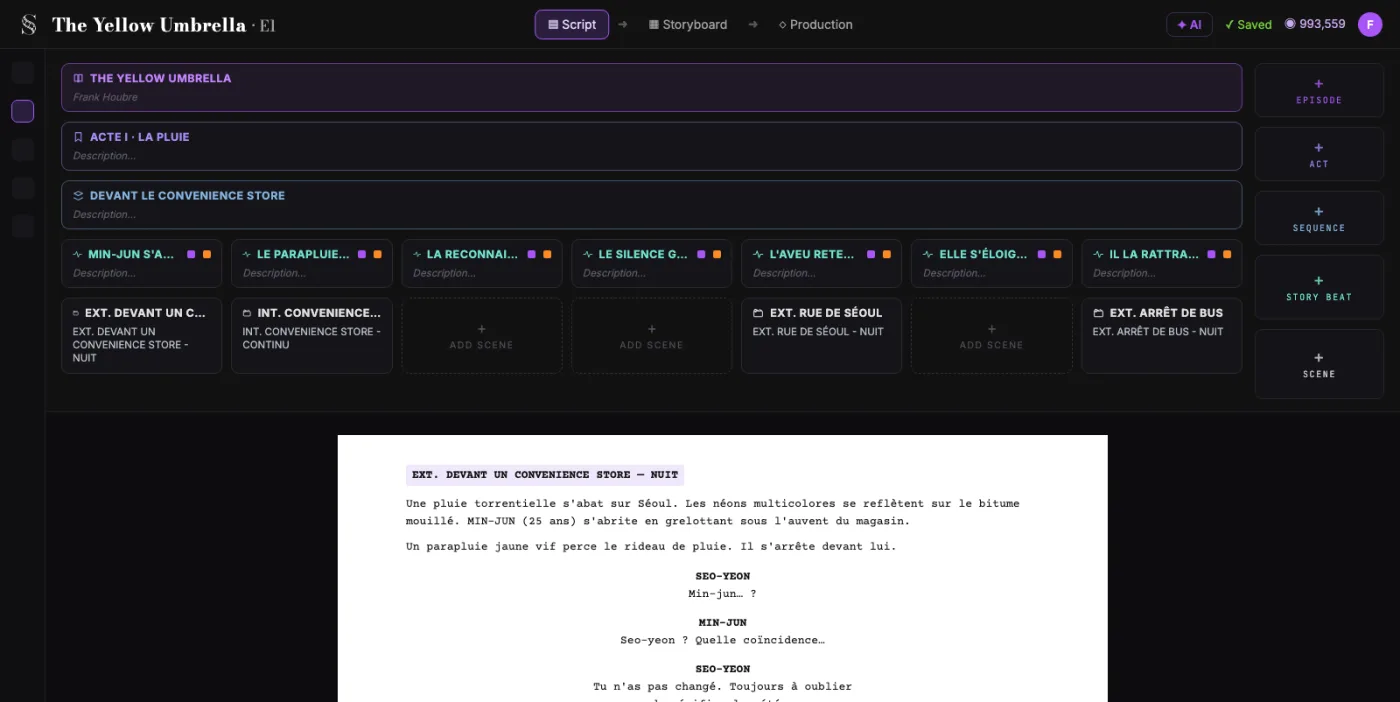
  1. ScreenWeaver screenplay editor: acts, sequences and beats above the formatted script of The Yellow Umbrella

    01The screenplay, enriched

    An industry-standard screenplay editor, and more: a visual outline and beat editor, your writing inspirations (notes, photos, audio) kept next to the page, and an AI researcher to support your writing, not replace it.

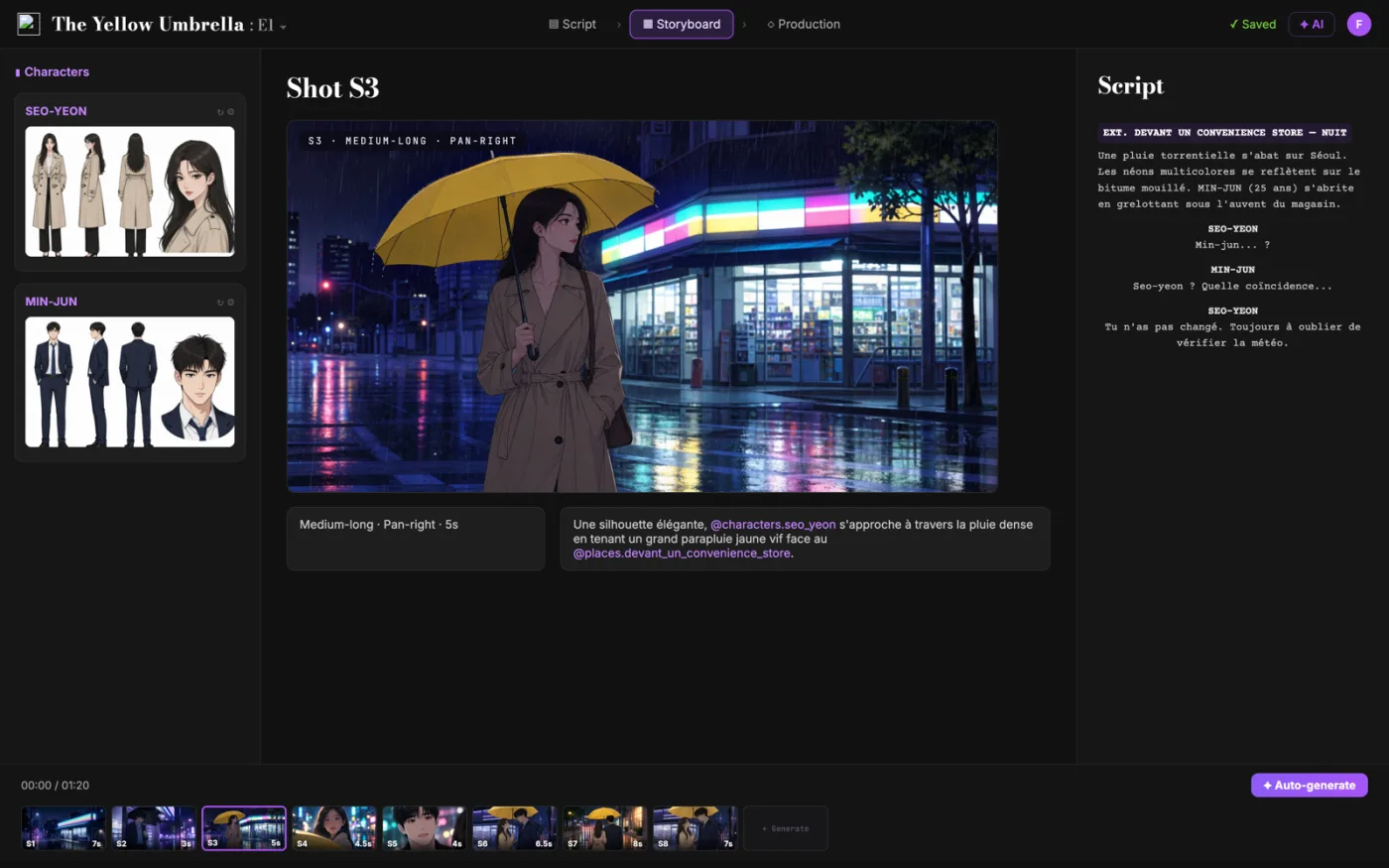
  2. ScreenWeaver storyboard: shot S3 of The Yellow Umbrella with characters, shot settings and the script beside it

    02The storyboard, made easy

    Shot breakdown generated from your screenplay, manual control over every shot (frame, angle, movement, duration), and generative AI previsualization in one click.

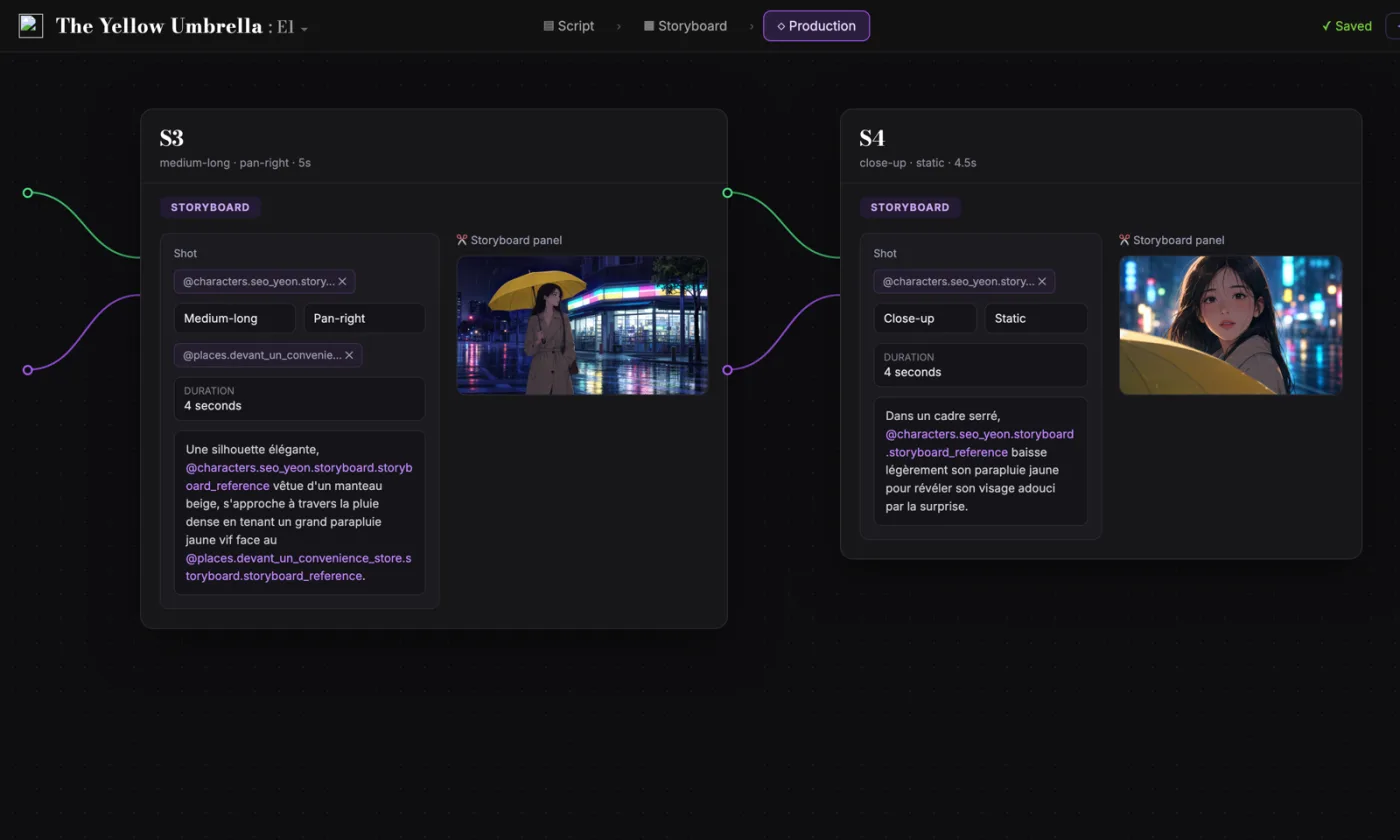
  3. ScreenWeaver production canvas: shots S3 and S4 as connected nodes carrying their storyboard panels and prompts

    03AI production, with finesse

    Footage generation pipelines connected to your screenplay and storyboard. Optimized out of the box, fully editable workflow.

FAQ

The Chroma Awards, your questions

How do you win the Chroma Awards?
Season 1 finalists were scored on five equal criteria: thematic adherence, narrative design, creativity and originality, production value, and music and sound design. Season 2 has not published its grid. Pick the category your film fits cleanly, tell one simple story, and treat sound as a fifth of the score.
When does Chroma Awards Season 2 start?
The official page says Season 2 launches in mid-October 2026. No deadline, prize table or rules were published on 1 October 2026. Check chromaawards.com the day it opens.
Is the Chroma Awards the same as Project Odyssey?
The Chroma Awards is the new name of the competition that ran as Project Odyssey. It is incubated by ElevenLabs, and its sponsors include Google, CapCut, Dreamina, Kling and Luma.
What are the prizes?
Season 2 prizes are not announced. Season 1 paid $191,500 in cash: $2,000, $1,000 and $500 for the top three of a film category, and $500 to $6,000 for sponsor awards. The official page says more than $300,000 in cash and $2 million in trials and credits have been given across the seasons.
Do I have to use a specific AI tool?
Season 1 imposed none: it asked for at least one AI tool, used meaningfully and openly. Sponsor awards were different, since they required a Tool Tag. ScreenWeaver's footage pipelines run on Seedance 2.0 and 2.5, which you declare like any other tool.
Can I enter more than one film?
In Season 1, yes: each entrant could send several unique submissions. Check the Season 2 rules for any limit.
Does the film have to be in English?
In Season 1 it had to be voiced or subtitled in English. Foreign-language films were fine with English subtitles, and a film with no dialogue was also accepted.
Who keeps the rights?
In Season 1, yes. Creators kept ownership and gave the organisers a broad non-exclusive licence to show and promote the work, without payment. Read the Season 2 terms before you submit.

Season 2 is close. Start with the page.

Write the screenplay for free today. Storyboard it, then film it with Seedance.