AKOOL AI Film Challenge · Guide

How to win the AKOOL AI Film Challenge.$50,000 grand prize. Deadline 20 December.

Open since 15 September 2026, the challenge closes on 20 December 2026. Three categories, a grid where story counts for 30 %, and one rule: AKOOL must be meaningfully used. Here is the grid, the traps, and a plan to make the film in ScreenWeaver with AKOOL in the workflow.
  • Deadline 20 December 2026
  • Story is 30 % of the score
  • Other tools allowed
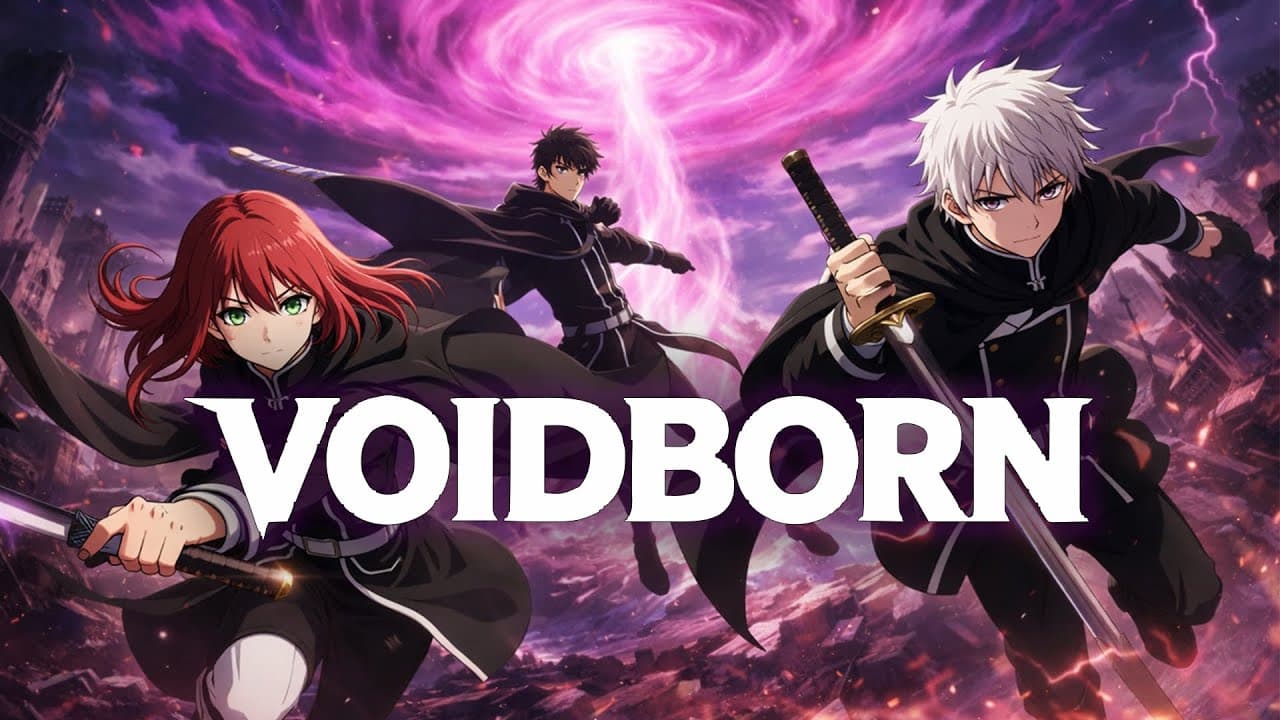
Voidborn · Episode 0

Independent guide by the ScreenWeaver team. ScreenWeaver does not organise the AKOOL AI Film Challenge and is not affiliated with AKOOL. Rules read on 28 October 2026. Official page

Available today in ScreenWeaver: free screenwriting, and a storyboard generated from your screenplay with the Auteur plan, $39.99 a month.

Also available now: video generation of each shot, powered by Seedance, on the same Auteur plan, with 6,000 credits a month.

The rules on one card

What the challenge asks.

The AKOOL AI Film Challenge is run by AKOOL, an AI video platform. It is open to creators in three categories, and all qualifying entries compete for the overall awards.
Organiser
AKOOL
Submissions
15 September to 20 December 2026
Winners
Announced on 15 January 2027
Categories
Coming Never (trailer), AI Short Film, Impossible
Prizes
$50,000, $25,000, $15,000, and ten $2,500 finalist awards
Tool rule
AKOOL must be meaningfully used. Other tools may be part of the workflow
Entry
Public post tagging @AKOOL, then the application form
Fee
No purchase necessary

Source: akool.com/aifilmchallenge, read on 28 October 2026. The page advertises “$500,000 in Creator Rewards”: the ranked prizes add up to $115,000, the rest is a $100 bonus per qualified entry, for qualifying Premium AKOOL accounts and within program limits. The full eligibility rules are in the Official Rules linked from the page.

Key dates

Seven weeks left.

From the end of October you have about seven weeks, with the December holidays at the end. Treat 15 December as your real deadline.
  1. 15 Sep 2026

    The challenge opens

    Entries are accepted from this date in all three categories.

  2. 20 Dec 2026

    Submissions close

    The film must be posted publicly and the application form sent by this date.

  3. 15 Jan 2027

    Winners announced

    The grand prize, second and third places, and the ten finalist awards.

How films are scored

Five criteria, story first.

AKOOL publishes a weighted grid. Story weighs twice as much as the use of AKOOL: the tool matters, but a film without a story cannot win.
  • Story

    30%

    A character, a want, a turn, an ending. Even a 60 second trailer tells a story: the premise must be clear by the third shot.

  • Originality

    20%

    An idea the judges have not seen this week. Avoid the trailer clichés: a voice saying “in a world”, a slow push on a city at night.

  • Creative execution

    20%

    Direction, editing, sound, consistency of faces and places. The craft that makes the idea credible.

  • Use of AKOOL

    15%

    You explain how you used AKOOL in the application. Make it visible in the film, on shots that matter, not on a decorative insert.

  • “I’d Watch That” factor

    15%

    Would someone click play on the full film? End on a question the viewer wants answered.

Use of AKOOL is 15 %. It cannot be skipped: entries must meaningfully use AKOOL to qualify at all. But the other 85 % is filmmaking.

Who decides

Six creators judge.

The page lists six judges, all AI creators with public accounts: MLuth (@brain.glitch_ml), Junghoon Kim (@2219a), Iman (@imvn.noir), Seikh (@emperorai.official), Pawfect (@pawfect.ai) and Hakam (@advkiki).
  • Judges who scroll for a living

    They watch AI films on social feeds every day. The first two seconds decide whether they keep watching. Open on your strongest image.

  • Look at their work

    Spend an evening on the six accounts. You will see what they make and like. Do not copy their style: notice what they have already seen too often.

The three categories

Pick the category that fits your idea.

Each category asks for something different. Under each, the angle we would take with ScreenWeaver.
  • 01

    Coming Never

    An original trailer of 30 to 90 seconds for an imaginary movie. The only category with a set length.

    A trailer is a screenplay you never shoot in full. Write the three-act outline of the film, then storyboard only the moments a trailer would show.

  • 02

    AI Short Film

    An original, complete story told with AI tools, in any genre, style or language. No length is set on the page.

    Complete means a beginning, a middle and an end. Three to five minutes is enough: about 50 shots, which you can keep consistent from a single storyboard.

  • 03

    Impossible

    Work that pushes AI filmmaking and could not have been made before AI.

    Impossible is a premise, not an effect. Pick one idea a camera cannot film, then build a simple story around it so the judges remember more than the trick.

From script to screen

Voidborn: one scene, six shots.

A scene from Voidborn, episode 0, an anime short made by the ScreenWeaver team: the ruins of the first level, about seven minutes in. Cut to 60 seconds, a scene like this is the spine of a Coming Never trailer.

Logline. Every seven years, the Rift opens and swallows the world’s dreams. A swordsman sworn to a blind seer escorts her through its levels, toward a promise they made to a girl left behind.

Screenplay · episode 0 · English subtitles

EXT. RUINS OF THE FIRST LEVEL - NIGHT

Broken towers under a violet sky. SIM, a swordsman in a black cloak, walks beside LADY MARIA, blindfolded, all in white.

SIM

Tell me, Maria... do you think Leia believes we are still alive?

MARIA

We made a promise... the two of us.

A line of white automatons rises from the ruins.

AUTOMATON

The Rift will wait for no one.

SIM

What are machines doing at this level?

One automaton steps forward. Its face is blank.

AUTOMATON

We must return to the surface.

Its eyes ignite red.

SIM

I am Sim, guardian of Lady Maria... and I will proceed with your execution.

Steel meets steel. Lightning runs down the blade.

CUT TO:

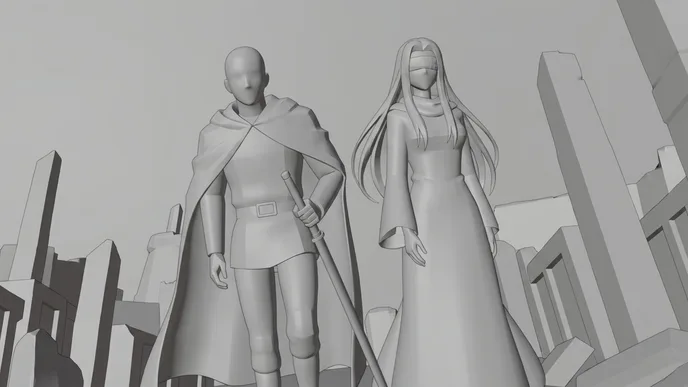
  1. A swordsman in a black cloak and a blindfolded woman in white walk through ruins at night
    Storyboard frame of the wide shot, in grey
    01

    Wide · the pair

    Wide shot, a bald swordsman in a black cloak and a blindfolded red-haired woman in white walk through night ruins

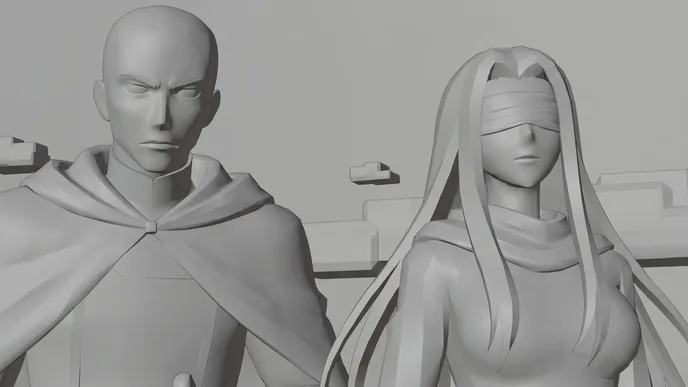
  2. Medium two-shot of a bald swordsman and a blindfolded red-haired woman
    Storyboard frame of the two-shot, in grey
    02

    Two-shot · the promise

    Medium two-shot, the swordsman and the blindfolded seer side by side, violet night sky, broken towers

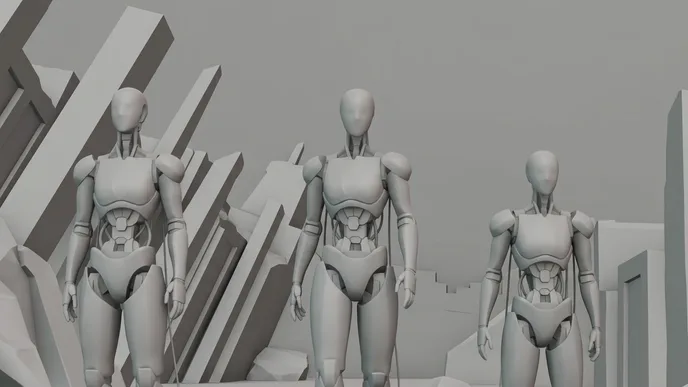
  3. Three white humanoid automatons stand in night ruins
    Storyboard frame of the automatons shot, in grey
    03

    Wide · the machines

    Wide low angle, three white humanoid automatons standing in the ruins, cold blue moonlight

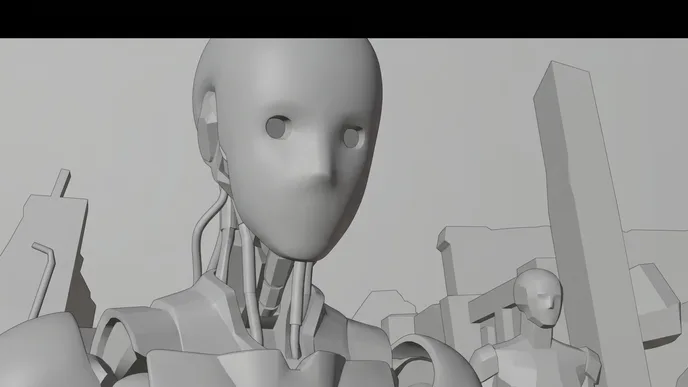
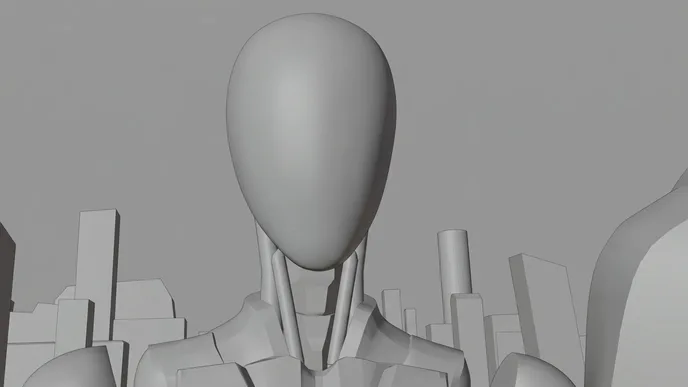
  4. Close-up of a white automaton with a smooth blank face
    Storyboard frame of the blank face close-up, in grey
    04

    Close-up · the blank face

    Close-up on an automaton's smooth faceless head, black eye slots, cables at the neck, ruins behind

  5. A white automaton's eyes glow red
    Storyboard frame of the red eyes close-up, in grey
    05

    Close-up · the red eyes

    Same framing, the automaton's eyes ignite red, the swordsman's shoulder out of focus in the foreground

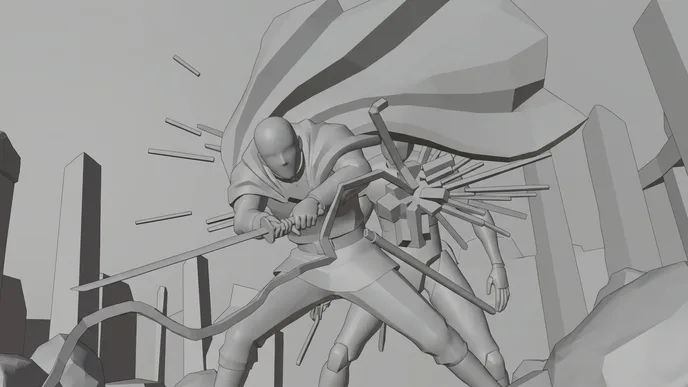
  6. A swordsman strikes with a katana wreathed in lightning and sparks
    Storyboard frame of the clash shot, in grey
    06

    Action · the clash

    Dynamic low angle, the swordsman strikes with his katana, lightning running along the blade, sparks, cape flying

Voidborn, episode 0, 13 minutes, by the ScreenWeaver team. It won 1st Place Silver and 2nd Place Dreamina at the Mondial Chroma Awards, and is an award winner at the Seoul International AI Film Festival. The scene shows what the AKOOL grid rewards: a story readable in three shots, the same swordsman from frame to frame, and an image that makes you want the rest. The player starts on this scene.

The script

A 90 second Coming Never trailer in five movements.

Ninety seconds is the top of the Coming Never range. About 25 to 30 shots of 2 to 4 seconds, cut on music.
  1. 0:00 to 0:10

    The world

    One image that sets the genre and the place. No title yet.

  2. 0:10 to 0:30

    The hero and the want

    Who the film follows and what they want, in one line of dialogue or one gesture.

  3. 0:30 to 1:00

    The trouble

    The obstacle arrives and the cutting speeds up. Three escalating shots.

  4. 1:00 to 1:20

    The silence

    The music drops. One line that makes us want the film.

  5. 1:20 to 1:30

    The title

    Title card, a last surprising shot, then a release date for a film that will never come.

For AI Short Film and Impossible no length is set. Keep it under five minutes: social feeds and busy judges reward films that end before they are asked to.

Plan to the deadline

Seven weeks to 20 December.

From the end of October. Put AKOOL into the plan from week one, so its use is meaningful, not added at the end.
  1. 01

    Week 1

    Category and logline

    Pick the category, write five loglines, keep one. Decide which shots AKOOL will make and why.

  2. 02

    Week 2

    The screenplay

    Write it in the free Screenwriter plan, in industry format. A trailer still gets a one-page outline of the whole imaginary film.

  3. 03

    Week 3

    References and storyboard

    One reference per character and per place, then the storyboard generated from the screenplay. Mark the AKOOL shots on the board.

  4. 04

    Weeks 4 and 5

    Generate the footage

    AKOOL shots in AKOOL, the rest with Seedance in ScreenWeaver or other tools. Keep notes of what each tool made: you will need them for the form.

  5. 05

    Week 6

    Edit and sound

    Cut on the music, mix, add subtitles if there is dialogue. Watch it once on a phone.

  6. 06

    Week 7, before 20 December

    Post and apply

    Publish publicly, tag @AKOOL with #AKOOLClash, #AKOOLFilmChallenge, #AIVideo and #AIFilm, then send the application form explaining how you used AKOOL.

Traps to avoid

Six ways to lose before judging.

They come from the official page. Read the Official Rules for the rest.
  • AKOOL as an afterthought

    AKOOL must be meaningfully used in the final creation. One AKOOL insert in a film made elsewhere risks failing the rule and scoring low on the 15 %.

  • Forgetting the application form

    A public post is not an entry. You also submit the form and explain how you used AKOOL.

  • Missing tags and hashtags

    The post must tag @AKOOL and use #AKOOLClash, #AKOOLFilmChallenge, #AIVideo and #AIFilm. Check them before you publish.

  • A trailer longer than 90 seconds

    Coming Never is 30 to 90 seconds. A two-minute trailer belongs in another category, or nowhere.

  • An incomplete short

    AI Short Film asks for a complete story. A mood piece without an ending fits Impossible better, if it shows something new.

  • Counting on the $100 bonus

    The Creator Bonus is for qualifying Premium AKOOL accounts, within program limits, and paid creators are not eligible. Plan your budget without it.

Why ScreenWeaver

AKOOL is required. The film is up to you.

The rules allow other tools in the workflow as long as AKOOL is meaningfully used. ScreenWeaver covers everything around it: screenplay, storyboard and footage in one connected project.
  • Story is 30 % of the grade

    Write it properly, for free, in industry format. Screenwriting has no time limit and no credit cost.

  • A storyboard that plans the AKOOL shots

    Generated from the screenplay, shot by shot. You decide where AKOOL serves the story before you open it.

  • Footage with Seedance

    Generate the other shots with Seedance in the same project, with characters and places that stay consistent. Declare it honestly in the form.

  • One price

    Storyboard and video generation for each shot come with the Auteur plan at $39.99 a month.

Real productions

International festival-recognized films have been written and produced with ScreenWeaver.

ScreenWeaver is already being used as a creative workspace for real AI film productions, from animated shorts to short films nominated and awarded by international festivals.

  • Video thumbnail for VOIDBORN

    VOIDBORN

    AI animated / cinematic short

    Festival recognition

    • 1st Place Silver

      Mondial Chroma Awards

    • 2nd Place Dreamina

      Mondial Chroma Awards

    • Award Winner

      Seoul International AI Film Festival

  • Video thumbnail for Les Fils du Vinnana

    Les Fils du Vinnana

    AI short film

    Festival recognition

    • Honorable Mention

      Top Quark Film Festival

    • People's Choice Nominee

      Illuminate Oneness of Humanity

    • Nominee

      ALTFF Supershort

The pipeline

Write. Board. Produce.

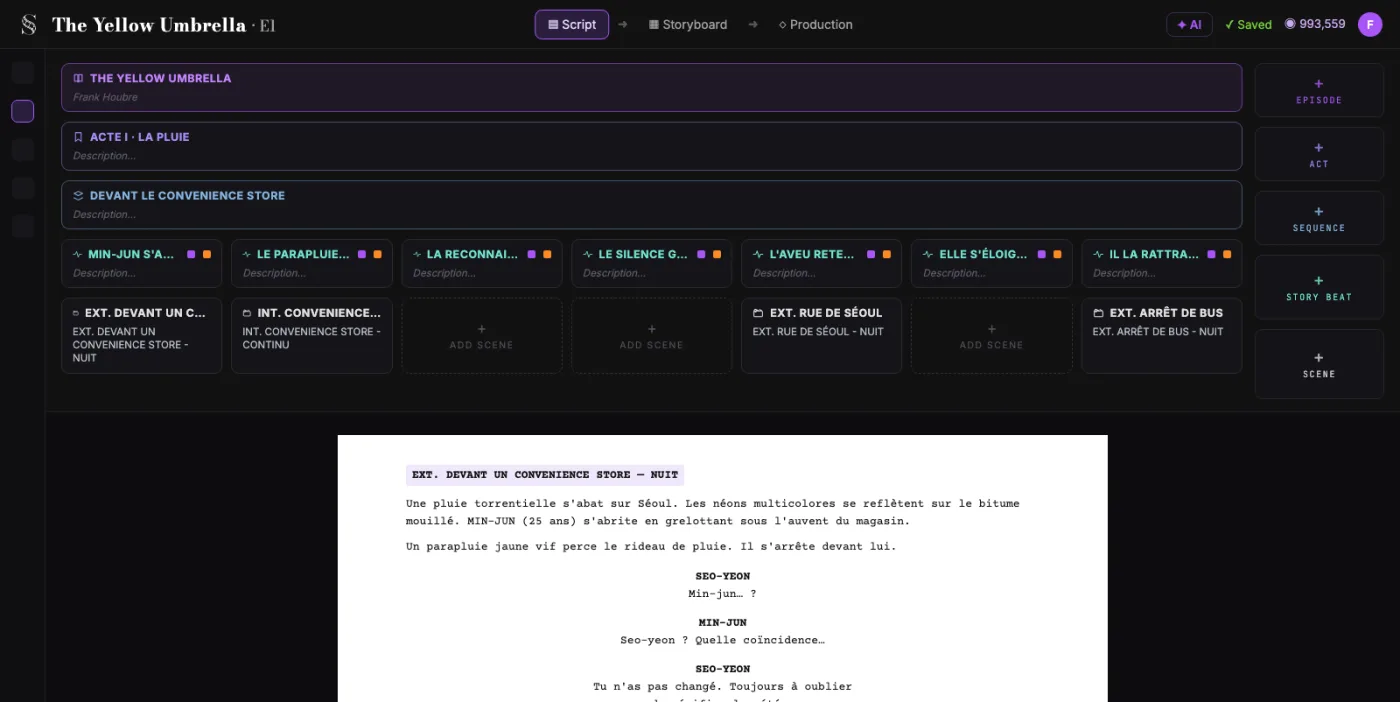
  1. ScreenWeaver screenplay editor: acts, sequences and beats above the formatted script of The Yellow Umbrella

    01The screenplay, enriched

    An industry-standard screenplay editor, and more: a visual outline and beat editor, your writing inspirations (notes, photos, audio) kept next to the page, and an AI researcher to support your writing, not replace it.

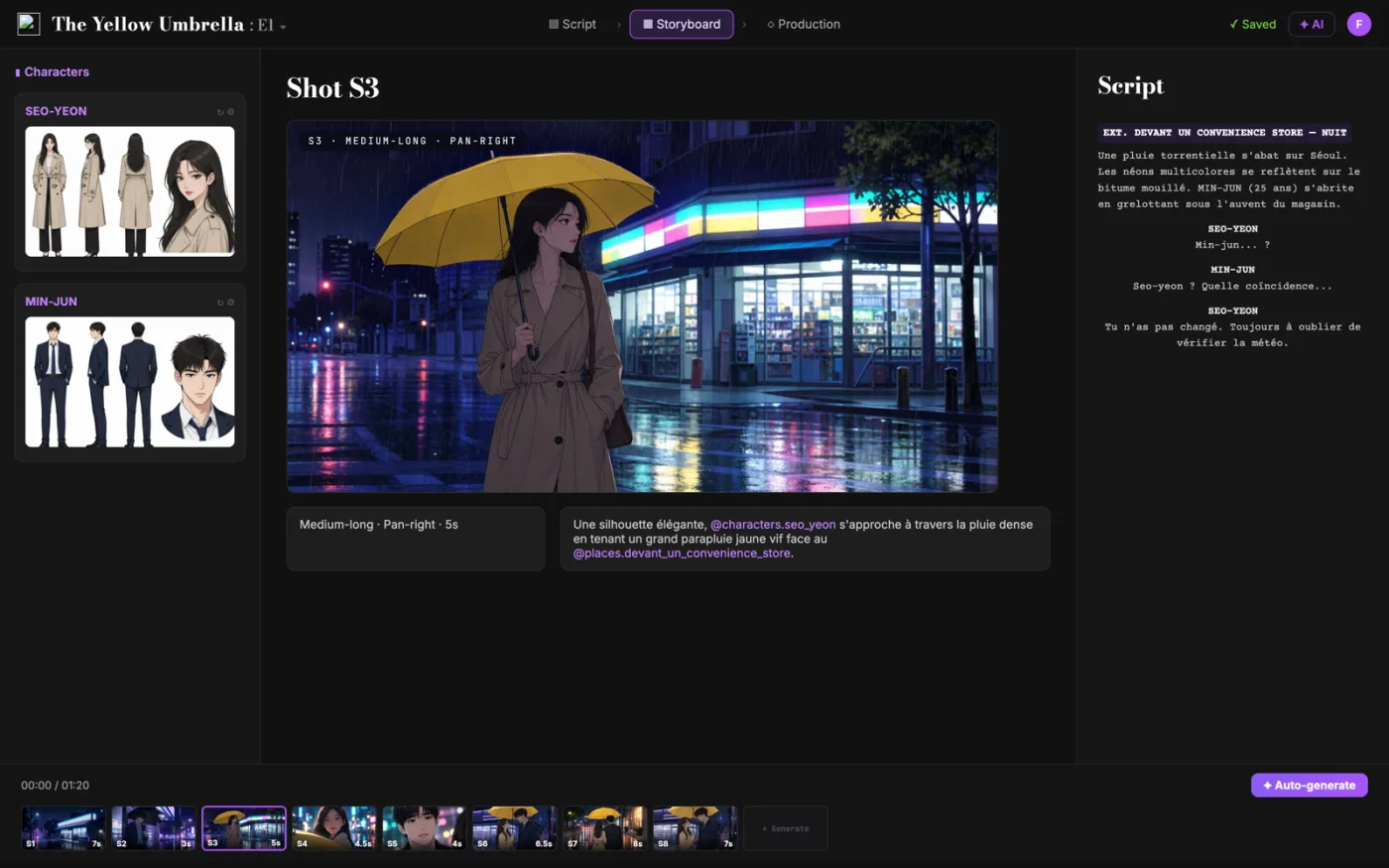
  2. ScreenWeaver storyboard: shot S3 of The Yellow Umbrella with characters, shot settings and the script beside it

    02The storyboard, made easy

    Shot breakdown generated from your screenplay, manual control over every shot (frame, angle, movement, duration), and generative AI previsualization in one click.

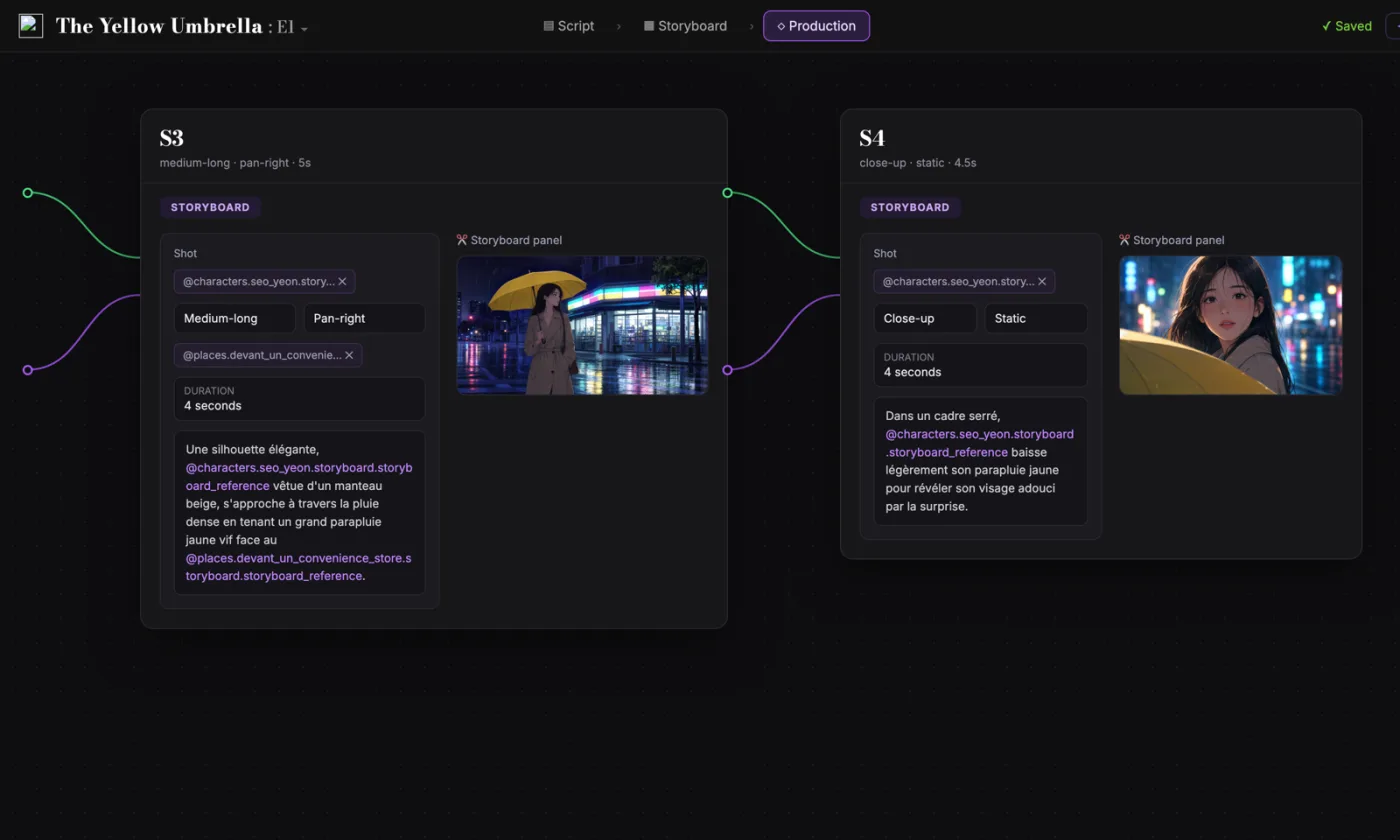
  3. ScreenWeaver production canvas: shots S3 and S4 as connected nodes carrying their storyboard panels and prompts

    03AI production, with finesse

    Footage generation pipelines connected to your screenplay and storyboard. Optimized out of the box, fully editable workflow.

FAQ

The AKOOL AI Film Challenge, your questions

How do you win the AKOOL AI Film Challenge?
Lead with story, which is 30 % of the score, then originality and execution at 20 % each. Use AKOOL on shots that matter (15 %), and end on an image that makes people want more (the “I’d Watch That” factor, 15 %).
What is the deadline?
Submissions close on 20 December 2026. Winners are announced on 15 January 2027.
What are the prizes?
$50,000 for the grand prize, $25,000 for second place, $15,000 for third and ten finalist awards of $2,500. A $100 Creator Bonus per qualified entry goes to qualifying Premium AKOOL accounts, within program limits.
Do I have to use AKOOL?
Yes. AKOOL must be meaningfully used in the final creation, and you explain how in the application. Other creative tools may be part of the workflow.
Can I use ScreenWeaver and Seedance?
Yes, as part of the workflow, since other tools are allowed. Write and storyboard in ScreenWeaver, generate some shots with Seedance, and make sure AKOOL plays a real part in the final film.
How long should the film be?
Coming Never trailers run 30 to 90 seconds. No length is set on the page for AI Short Film or Impossible: check the Official Rules.
Is it free to enter?
The page says no purchase is necessary. You need to post the film publicly and fill in the application form.

Seven weeks to 20 December. Start with the page.

Write the screenplay for free today, storyboard it, then make the film with AKOOL in the workflow.