Gossip Goblin x Showrunner · Guide

How to win the Gossip Goblin x Showrunner competition.$20,000, one chair, and a tool you cannot swap.

Make a 2 to 20 minute film in the Ripper Doc's clinic before 15 December 2026, inside Showrunner Studio and nowhere else. Here is the brief, the five prizes, what the organiser leaves unsaid, and how to prepare the screenplay and storyboard in ScreenWeaver before you open Showrunner.
  • Deadline 15 December 2026
  • Showrunner Studio only
  • $20,000 in five prizes
Voidborn · Episode 0

Independent guide. ScreenWeaver does not organise this competition and is not affiliated with Showrunner, Fable or Gossip Goblin. Rules read on 1 October 2026. Official competition page

Available today in ScreenWeaver: free screenwriting, and a storyboard generated from your screenplay with Storyboard Beta, $9.99 a month.

Rolling out: video generation of each shot, powered by Seedance, with the Filmmaker plan. It will not count here, because this contest requires footage made in Showrunner Studio.

The rules on one card

What the competition asks for.

The organiser is Showrunner, a platform for serialized AI storytelling, and the world is Gossip Goblin's. The page is short: five rules, five prizes, and a brief that fits in one paragraph.
Prize pool
$20,000 across five prizes
Best Film
$15,000
Deadline
15 December 2026
Running time
2 to 20 minutes, any genre
Tool
Made in Showrunner Studio
Brief
Hidden Desires: the story starts in the Ripper Doc's chair
On screen
The official competition watermark
Social posts
None until you have submitted

Source: the competition page on showrunnerstudio.com and the platform's Terms of Service of 31 May 2026, read on 1 October 2026. The page gives no entry fee, eligibility rule, jury, judging grid, announcement date or contest-specific ownership terms.

Key dates

Seventy-five days, one date.

The page publishes a single date. Count back from it, and <b>submit a day early</b>, since no hour or time zone is given.
  1. Open now

    The brief is live

    No opening date is published. You start from the Ripper Doc start page on showrunnerstudio.com, after signing in to the platform.

  2. 15 Dec 2026

    Submissions close

    The organiser states the day and nothing more. Treat the end of 14 December as your deadline.

  3. Not published

    Winners

    No announcement date, voting window or ceremony is given on the page. Follow the Showrunner community for news after you submit.

How films are judged

Five prizes and no published grid.

The organiser lists no criteria and no jury. The prize names are the only guide, so treat each one as a question your film has to answer.
  • Best Film, $15,000

    The whole piece. With no grid, assume story, tone and fit with the Gossip Goblin world count together. A film that closes its loop inside the chair's story is the safest reading of the brief.

  • People's Choice, $2,000

    The name points to a public vote, but the page gives no mechanism. Since nothing may be posted before you submit, plan the audience moment for after 15 December and check the rules for the vote.

  • Best Screenplay, $1,000

    The only prize that rewards the writing itself. It is the one where work done outside the tool shows most: structure, a distinct client, lines that sound like a person.

  • Best Visuals, $1,000

    Because every frame comes from Showrunner, visuals here mean composition, lighting choices and consistency inside its look. Plan shots the tool can hold, not shots you wish it could.

  • Best Performance, $1,000

    Showrunner lets you choose how a character looks, sounds and acts. A performance prize rewards voice, timing and restraint: give the client a few lines that carry a lot.

The page does not say whether one film can win several prizes. Do not assume it can. Aim the film at one prize first, then see what else it earns.

The brief

Hidden Desires, in three parts.

The organiser frames one film as three questions: what the client wanted, what they got and what they became. Under each, the angle we would take, inside the one rule of the world: the story starts in the chair.
  • 01

    What they wanted

    A desire kept hidden for years, buried so deep the client almost forgot it.

    Choose a want you can picture in one image, not a feeling. A smell, a room, a voice gives the Ripper Doc something to install and the camera something to show.

  • 02

    What they got

    The procedure: a biomechanic who installs experiences directly into the mind, no questions asked.

    The session is the film, so stay close to the chair. Let the experience bleed into the clinic instead of cutting away to a second world you cannot afford.

  • 03

    What they became

    The cost of getting what you hid.

    End on a changed face, not an explanation. One quiet shot of the client leaving says more than a closing speech.

From script to screen

Voidborn: a dark world in six shots.

The Ripper Doc world is a back-alley, biomechanical science fiction. This is a scene from Voidborn, episode 0, an anime pilot made by the ScreenWeaver team with Seedance, not in Showrunner. It shows the preparation: the screenplay page as it is spoken, then each shot as a storyboard frame and as the final image.

Logline. Every seven years, the Rift opens and swallows the world’s dreams. A swordsman sworn to a blind seer escorts her through its levels, toward a promise they made to a girl left behind.

Screenplay · episode 0 · English subtitles

EXT. RUINS OF THE FIRST LEVEL - NIGHT

Broken towers under a violet sky. SIM, a swordsman in a black cloak, walks beside LADY MARIA, blindfolded, all in white.

SIM

Tell me, Maria... do you think Leia believes we are still alive?

MARIA

We made a promise... the two of us.

A line of white automatons rises from the ruins.

AUTOMATON

The Rift will wait for no one.

SIM

What are machines doing at this level?

One automaton steps forward. Its face is blank.

AUTOMATON

We must return to the surface.

Its eyes ignite red.

SIM

I am Sim, guardian of Lady Maria... and I will proceed with your execution.

Steel meets steel. Lightning runs down the blade.

CUT TO:

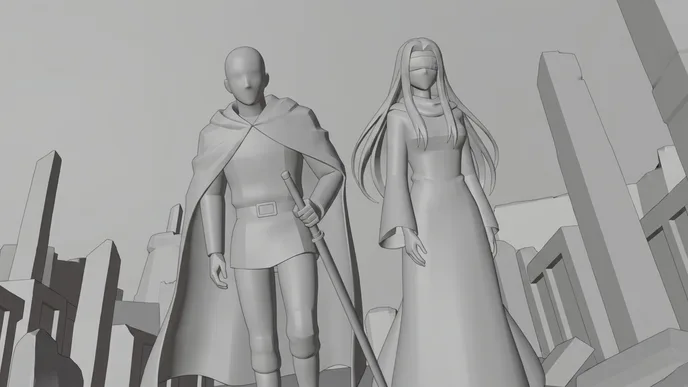
  1. A swordsman in a black cloak and a blindfolded woman in white walk through ruins at night
    Storyboard frame of the wide shot, in grey
    01

    Wide · the pair

    Wide shot, a bald swordsman in a black cloak and a blindfolded red-haired woman in white walk through night ruins

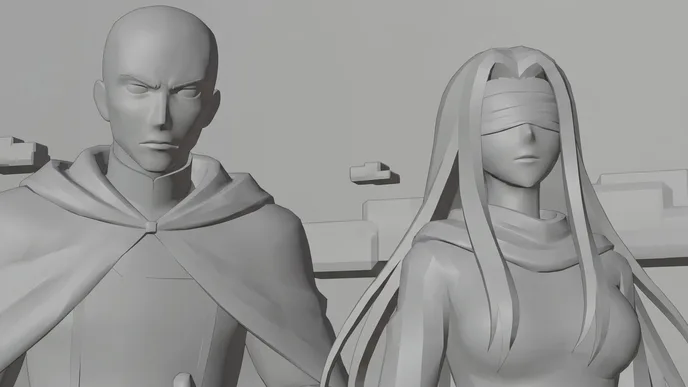
  2. Medium two-shot of a bald swordsman and a blindfolded red-haired woman
    Storyboard frame of the two-shot, in grey
    02

    Two-shot · the promise

    Medium two-shot, the swordsman and the blindfolded seer side by side, violet night sky, broken towers

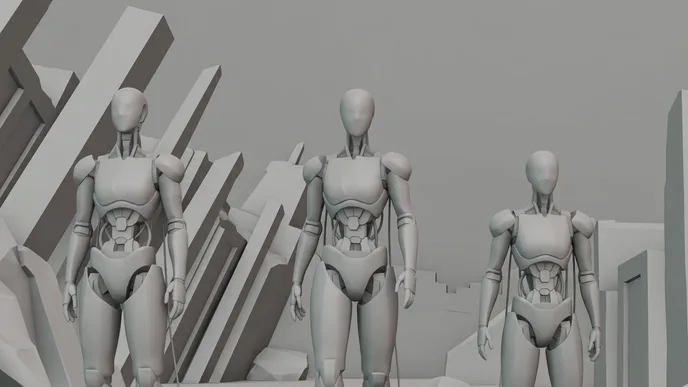
  3. Three white humanoid automatons stand in night ruins
    Storyboard frame of the automatons shot, in grey
    03

    Wide · the machines

    Wide low angle, three white humanoid automatons standing in the ruins, cold blue moonlight

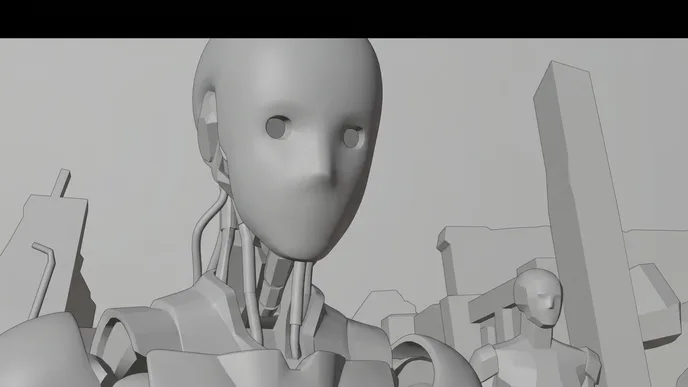
  4. Close-up of a white automaton with a smooth blank face
    Storyboard frame of the blank face close-up, in grey
    04

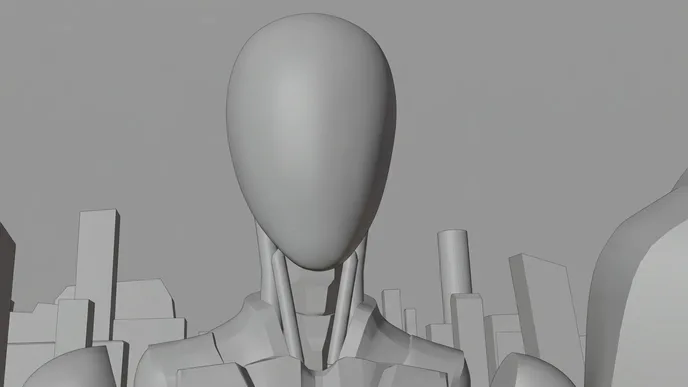
    Close-up · the blank face

    Close-up on an automaton's smooth faceless head, black eye slots, cables at the neck, ruins behind

  5. A white automaton's eyes glow red
    Storyboard frame of the red eyes close-up, in grey
    05

    Close-up · the red eyes

    Same framing, the automaton's eyes ignite red, the swordsman's shoulder out of focus in the foreground

  6. A swordsman strikes with a katana wreathed in lightning and sparks
    Storyboard frame of the clash shot, in grey
    06

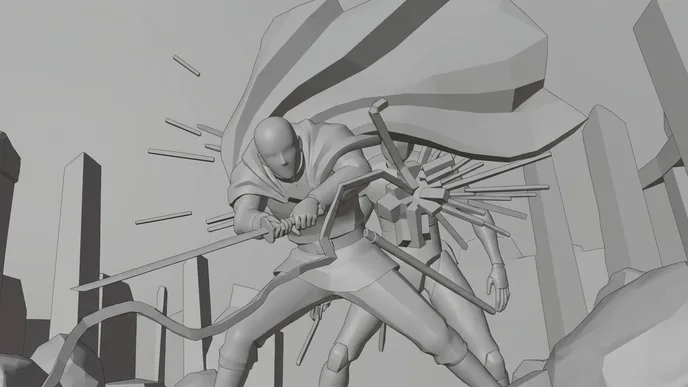
    Action · the clash

    Dynamic low angle, the swordsman strikes with his katana, lightning running along the blade, sparks, cape flying

Voidborn, episode 0 runs 13 minutes, inside the 2 to 20 minute window of this competition. It cannot be entered, since it was not made in Showrunner Studio. It shows the shape of a film that was storyboarded before it was generated: two characters, one night location, machines that speak in short lines. It won 1st Place Silver at the Mondial Chroma Awards. The player starts at this scene.

The script

A 7 minute film that starts in a chair.

The window is 2 to 20 minutes. A 7 minute film is enough to land three questions, and short enough to build scene by scene in one tool. That is about 7 screenplay pages and 70 to 90 shots.
  1. 0:00 to 1:00

    The chair

    The client sits down and the session begins. The brief fixes this opening.

  2. 1:00 to 3:00

    The want, named

    The Doc asks, the client answers, and we learn what was buried.

  3. 3:00 to 5:30

    The experience

    The installed memory plays. This is where the film earns its Visuals vote.

  4. 5:30 to 7:00

    The after

    The client stands. What they became is shown in one gesture.

Showrunner is built for continuity across scenes and episodes, so write recurring places and faces on purpose: the clinic, the chair, the Doc, the client.

Countdown

From a test scene to the submit button.

Seventy-five days from 1 October. The imposed tool shapes the plan: learn what Showrunner does well first, then write for it.
  1. 01

    By 8 October

    Make a throwaway scene in Showrunner

    Open the Ripper Doc start page and build 20 seconds. See how it handles faces, voices and camera moves, and what it costs you in time. This decides what you can write.

  2. 02

    By 22 October

    Logline, then screenplay

    Write ten loglines, pick one, then seven pages. Write it free in ScreenWeaver in industry format. It doubles as your entry for Best Screenplay.

  3. 03

    By 5 November

    Storyboard in ScreenWeaver

    Generate the shot breakdown and the storyboard from the screenplay. Cut every shot Showrunner cannot hold before you spend time building it.

  4. 04

    By 30 November

    Build it in Showrunner Studio

    Scene by scene, from your storyboard. Keep the competition watermark on every cut, and do not post drafts.

  5. 05

    By 10 December

    Assemble and check the rules

    Run time between 2 and 20 minutes, watermark visible, no outside footage. Watch it once on a phone and once on a large screen.

  6. 06

    By 14 December

    Submit, then post

    Submit one day early. Only then post to social media, and put the competition watermark on everything you post.

Disqualification traps

Six ways to lose before anyone watches.

The rules are short, so each one carries weight. Read them again the week you submit.
  • Footage made elsewhere

    The rule says films must be created in Showrunner Studio. Seedance, Kling or any other generator is outside it. Footage made in ScreenWeaver is out of the running.

  • No official watermark

    Every film must carry the Gossip Goblin competition watermark. Do not crop, blur or cover it in your edit.

  • Posting too early

    The page says not to post to social media until you have submitted. That includes teasers and test clips. Anything you post later must carry the watermark too.

  • The wrong length

    The range is 2 to 20 minutes. A 90 second teaser and a 25 minute cut are both outside it.

  • A story that starts elsewhere

    The one rule of the world is that the story starts in the chair. A cold open on a street chase, with the chair arriving in minute three, risks reading as ignoring the brief.

  • Skipping the platform terms

    Showrunner's Terms of 31 May 2026 grant the platform a perpetual licence to your content, make public content remixable, and require a paid subscription from companies with over $250,000 in revenue. Read them before you build.

Why ScreenWeaver

The tool is imposed. The preparation is not.

This contest locks the footage to Showrunner Studio. ScreenWeaver does not change that. It covers what happens before and around the build: screenplay, storyboard and plan.
  • A screenplay that can win its own prize

    Best Screenplay is judged on the writing. Draft it in a proper screenplay editor, then take it into the tool. The screenplay stays yours.

  • A storyboard that saves attempts

    Every shot is tied to its scene and its beat before you generate anything. You arrive in Showrunner knowing which frames you need.

  • A film beyond the contest

    Seedance 2.0 and 2.5 power ScreenWeaver's footage pipelines. After the deadline, the same screenplay and storyboard can become a film made outside Showrunner.

  • Free to begin

    The Screenwriter plan costs $0 and never expires, which covers the Best Screenplay work. Storyboard Beta, at $9.99 a month, adds the storyboard. Video generation arrives with the Filmmaker plan, which is rolling out.

Real productions

International festival-recognized films have been written and produced with ScreenWeaver.

ScreenWeaver is already being used as a creative workspace for real AI film productions, from cinematic shorts to animated series pilots selected, nominated, and awarded by international festivals.

  • Video thumbnail for VOIDBORN

    VOIDBORN

    AI animated / cinematic short

    Festival recognition

    • 1st Place Silver

      Mondial Chroma Awards

    • 2nd Place Dreamina

      Mondial Chroma Awards

    • Award Winner

      Seoul International AI Film Festival

  • Video thumbnail for Les Fils du Vinnana

    Les Fils du Vinnana

    AI short film

    Festival recognition

    • Honorable Mention

      Top Quark Film Festival

    • People's Choice Nominee

      Illuminate Oneness of Humanity

    • Nominee

      ALTFF Supershort

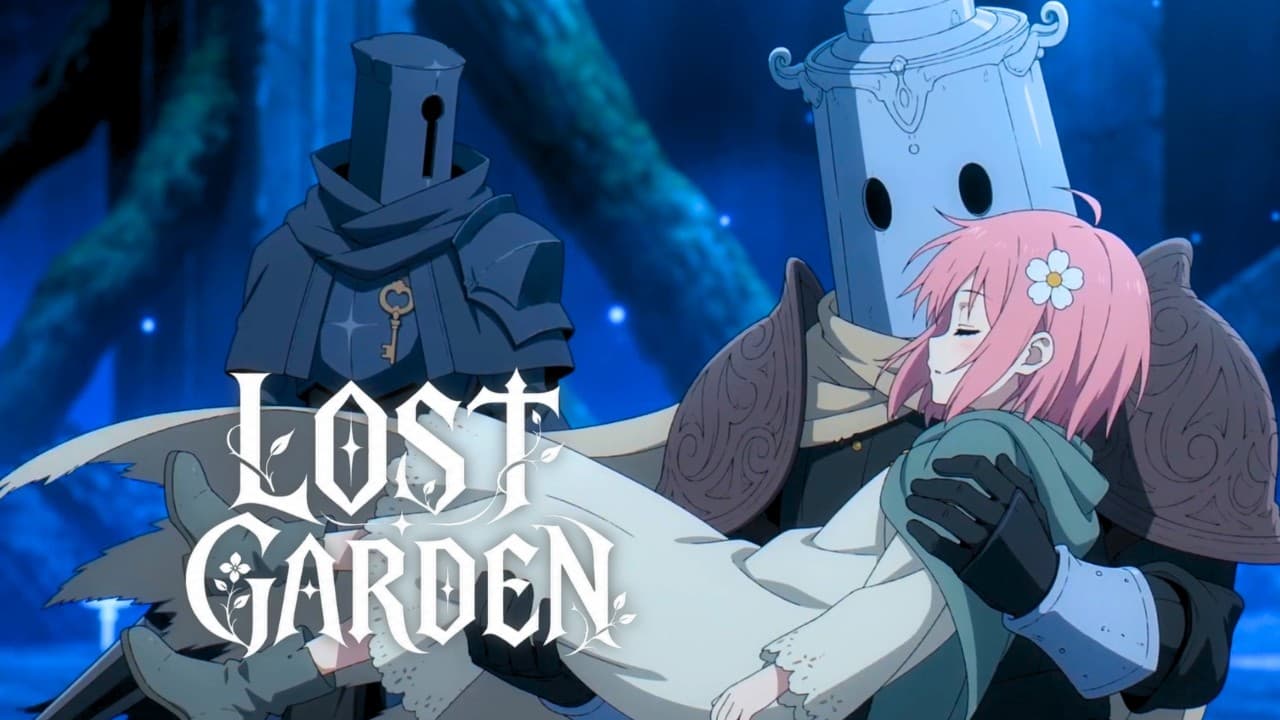
  • Video thumbnail for Lost Garden

    Lost Garden

    AI animated series pilot

    Festival recognition

    • Finalist

      AI London Festival

The pipeline

Write. Board. Produce.

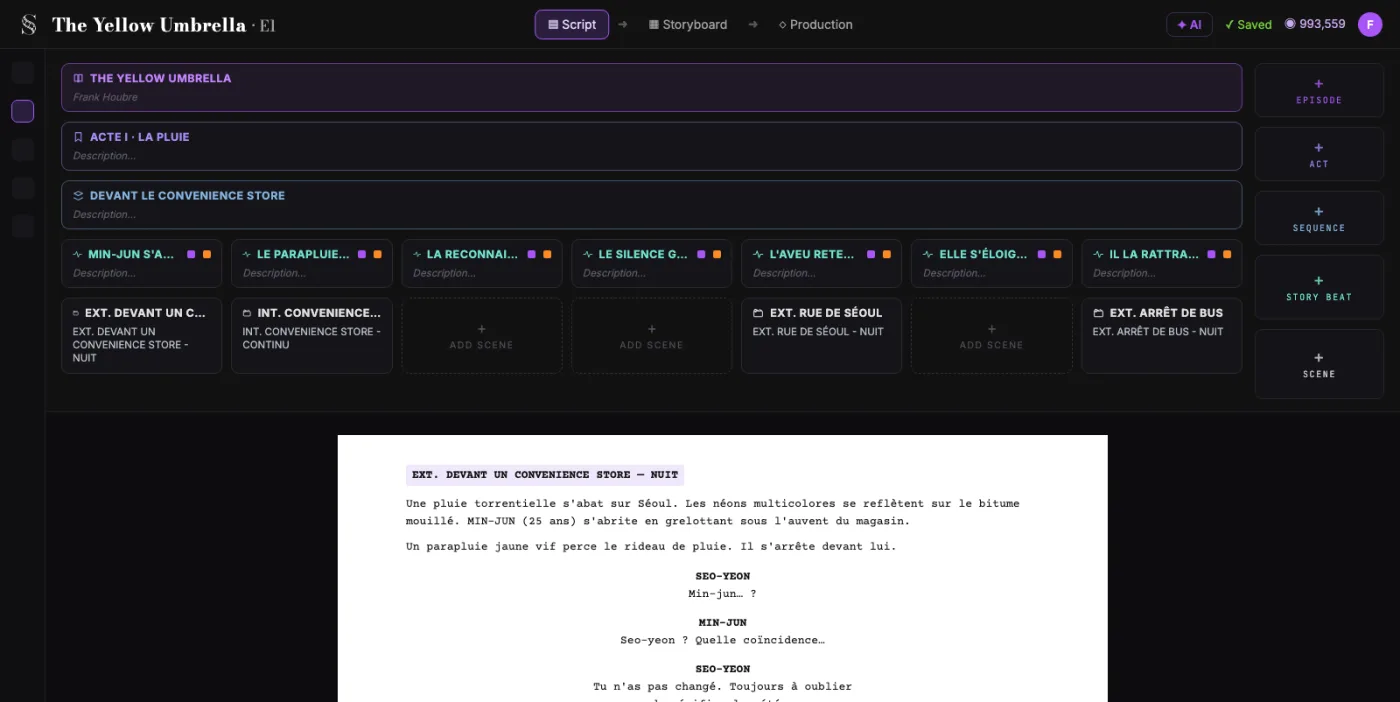
  1. ScreenWeaver screenplay editor: acts, sequences and beats above the formatted script of The Yellow Umbrella

    01The screenplay, enriched

    An industry-standard screenplay editor, and more: a visual outline and beat editor, your writing inspirations (notes, photos, audio) kept next to the page, and an AI researcher to support your writing, not replace it.

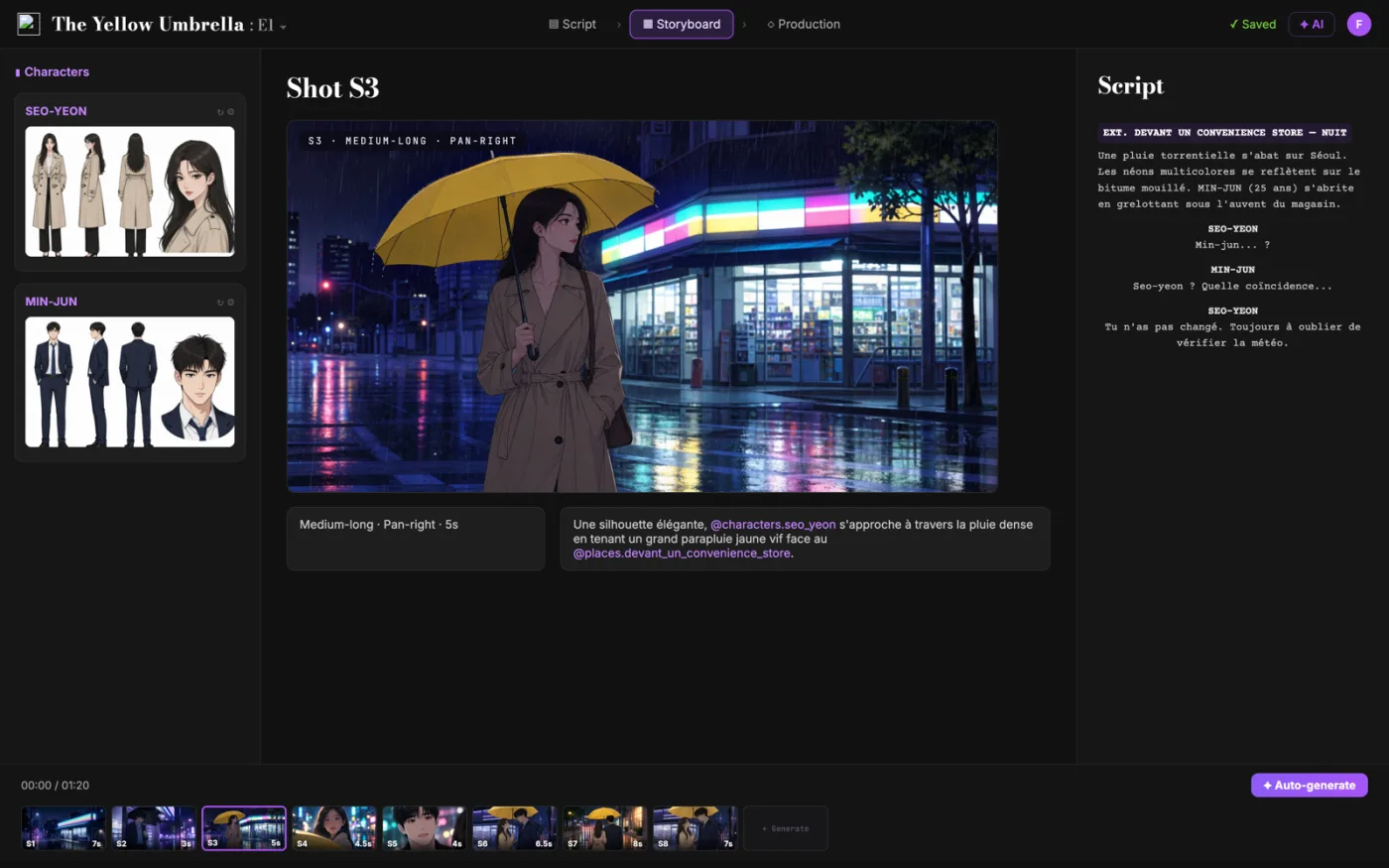
  2. ScreenWeaver storyboard: shot S3 of The Yellow Umbrella with characters, shot settings and the script beside it

    02The storyboard, made easy

    Shot breakdown generated from your screenplay, manual control over every shot (frame, angle, movement, duration), and generative AI previsualization in one click.

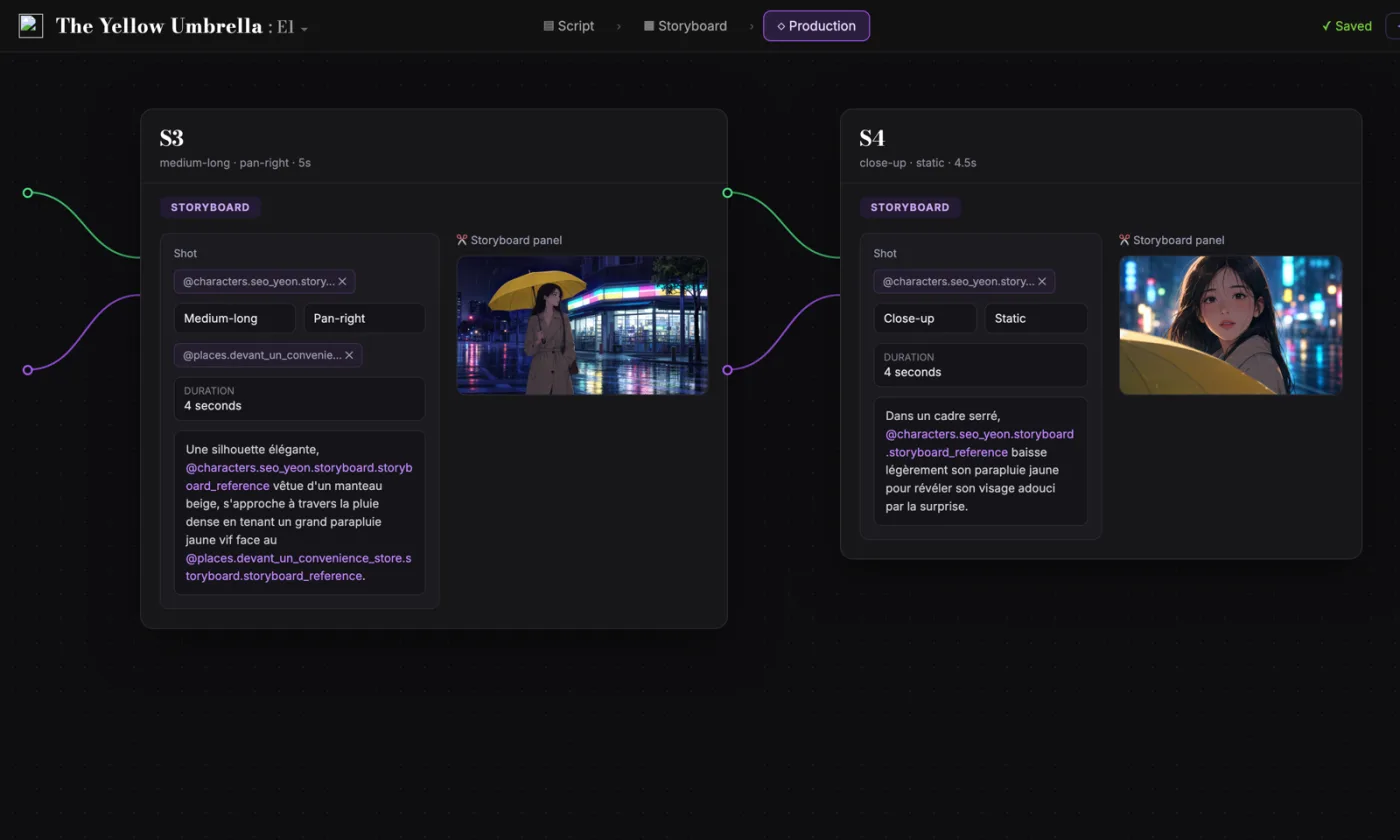
  3. ScreenWeaver production canvas: shots S3 and S4 as connected nodes carrying their storyboard panels and prompts

    03AI production, with finesse

    Footage generation pipelines connected to your screenplay and storyboard. Optimized out of the box, fully editable workflow.

FAQ

The Gossip Goblin x Showrunner competition, your questions

How do you win the Gossip Goblin x Showrunner competition?
There are five prizes and no published judging grid. Best Film pays $15,000. Make a film of 2 to 20 minutes that starts in the Ripper Doc's chair, follow what the client wanted, got and became, and keep the official watermark. Then aim at one prize.
Can I make my entry with ScreenWeaver?
Not the footage. The rules require films created in Showrunner Studio. ScreenWeaver covers the screenplay, the storyboard and the plan, which you then build in Showrunner. Never submit footage made in another tool.
When do entries close?
Submissions close on 15 December 2026. The page gives no hour or time zone, so submit by 14 December.
Who is Gossip Goblin?
Gossip Goblin is the universe the contest is set in. Showrunner's own homepage credits the Ripper Doc to the Gossip Goblin feature film Gods Don't Give Gifts. For the world's rules, read the competition page.
Does Showrunner charge to enter?
The page states no entry fee. Showrunner's Terms of 31 May 2026 say the service is currently free, may carry its own watermark, and may be charged for later. Companies above $250,000 in annual revenue must be paid subscribers.
When can I post my film online?
Only after you submit. The page asks you not to post before then, and anything you post must show the competition watermark.
Is there a jury, and what are the criteria?
The page names neither. Do not invent a grid: use the five prize names as your guide, and re-read the page before you submit in case it is updated.
What does the contest do with my film?
The contest page says nothing on rights. The platform's Terms give Showrunner a perpetual, non-exclusive licence to content made on it, and public content can be remixed. Ask the organiser about contest rights before you submit.

Seventy-five days. Start with the page.

Draft the screenplay free today, storyboard it, then build the film in Showrunner Studio.