
A student film looks good on no money when the script is written around what you can already get: the locations, people and gear your school and friends give you for free. Spend the little cash you have on food, sound and the paperwork that lets the film leave the classroom. Camera and lenses come last.
This guide sits in our film pre-production section, and the festival rules near the end are worth reading before you write a page. If you're working solo outside a school, the independent filmmaker workflow is the better starting point.
Write the script around what you already have
When a student film looks cheap, the script usually asked for things the budget couldn't buy. A car chase, a crowded restaurant, a night exterior in the rain: each one is a line in the script and a week of problems on set.
So start with an inventory, before the first draft. Walk around and list:
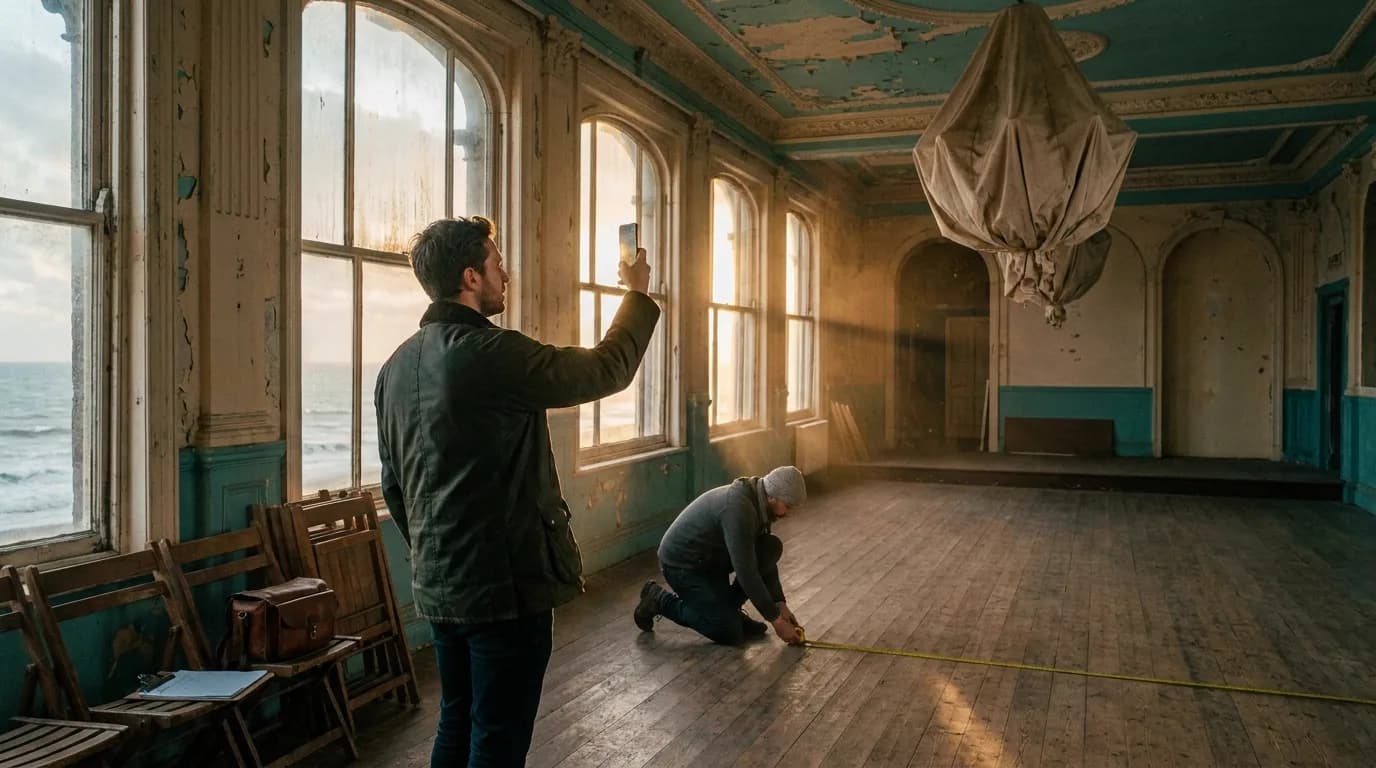
- Places you can use for free, and for long enough: your parents' kitchen, a friend's shop after closing, the campus building you have a key card for. Write down the hours you'd actually get.
- People who will show up twice, as opposed to people who said "sure, maybe": the theatre department, a roommate who acted in high school, a relative with an interesting face.
- Things with character: an old car that runs, a dog that sits still, a costume someone already owns.
Then write the story inside that box. Two characters, one or two locations, a problem that can play out in a single afternoon. That's the right size for a first film you have to finish by the end of term.
Keep it short. A ten-page script with three locations is a weekend. A twenty-page script with eight locations is a month and a lot of favours. Our guide to short film script length breaks down what 5, 10 and 15 pages mean on set, and the free script time calculator tells you how long your draft will run before you shoot anything.
Where student film money goes, and the free swap for each line
Even a "no budget" film costs something. The question is which lines you can swap for free and which ones you can't.
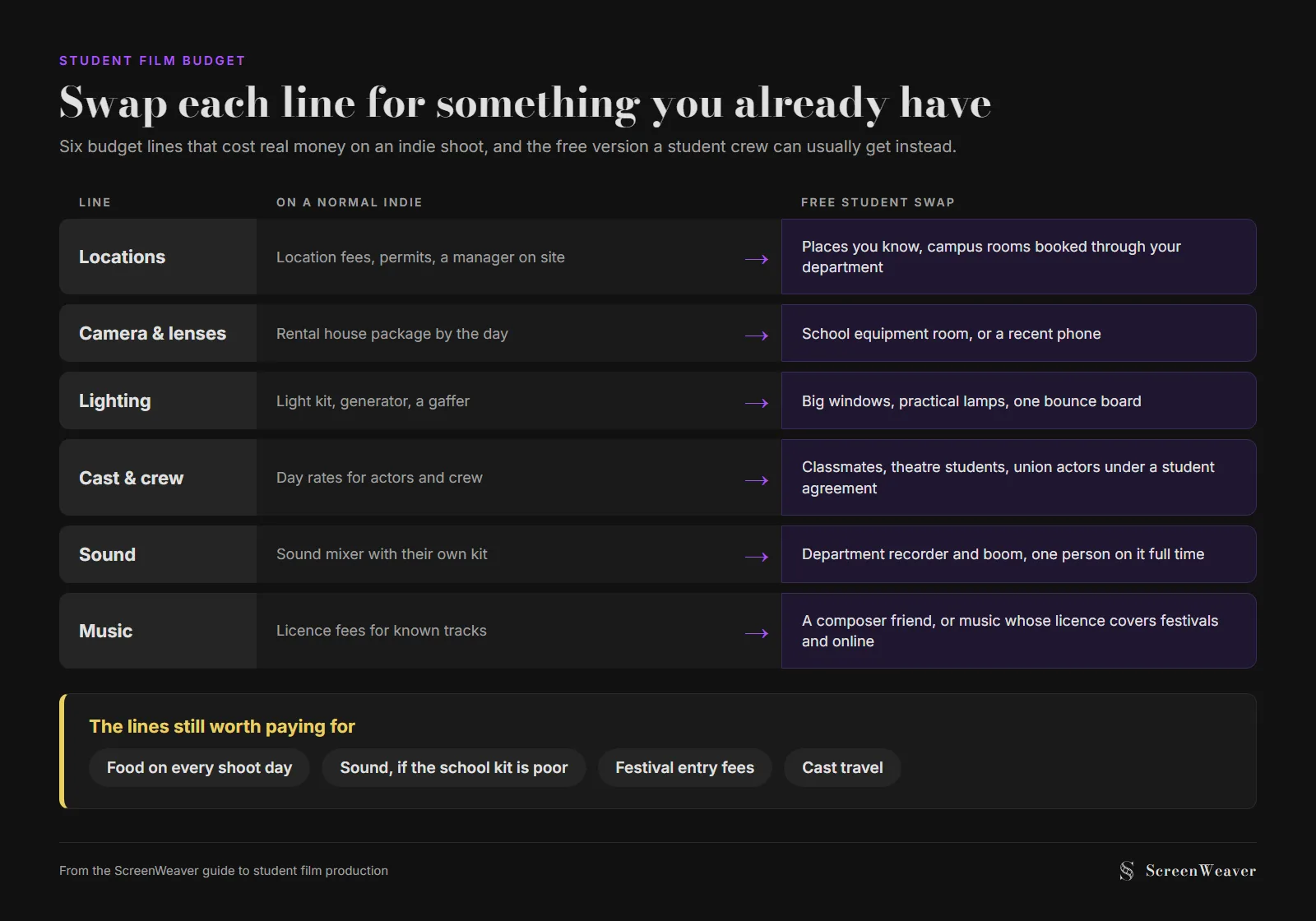
| Budget line | Free swap for students | Worth paying for? |
|---|---|---|
| Locations | Places you know, campus rooms booked through your department | Only a small thank-you gift |
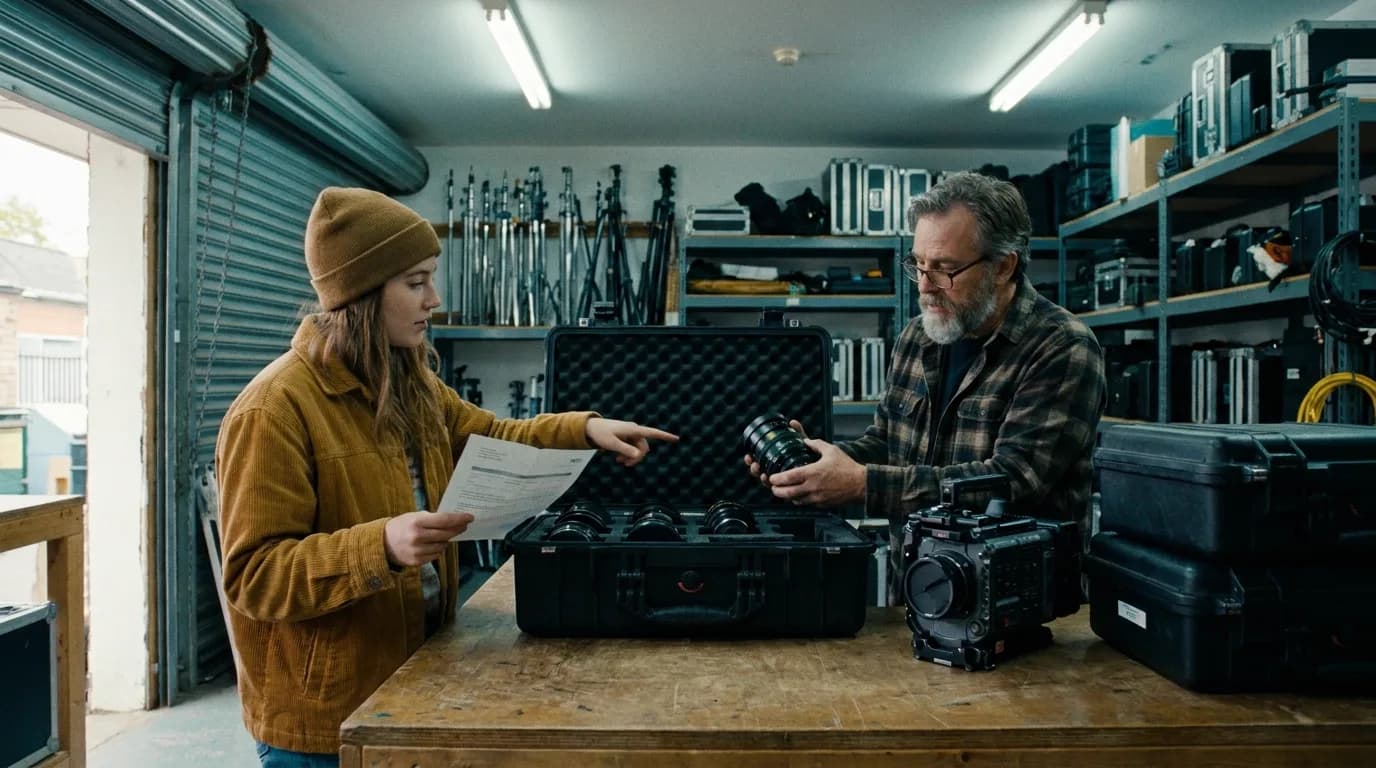
| Camera and lenses | School equipment room, a recent phone | Rarely |
| Lighting | Windows, practical lamps, one bounce board | A cheap LED panel at most |
| Cast | Theatre students, friends, union actors under a student agreement | Travel and food, always |
| Sound | Department recorder and boom | Yes, if the school has nothing decent |
| Food | Nobody brings it for you | Yes, every shoot day |
| Music | Composer friends, music you have a licence for | Licence fees if you use a known track |
| Festivals | A few free or student-rate festivals | Entry fees for the ones that fit |
Food matters more than people expect. Unpaid cast and crew are giving you their weekend. Feeding them properly is the minimum, and it's what makes them come back for the reshoot.
For the full spreadsheet version, our micro-budget film budget template has every line with a top sheet. On a student film you'll leave most of it at zero, and that's fine. Filling it in still shows you where the hidden costs are.
Cast and crew without paying anyone
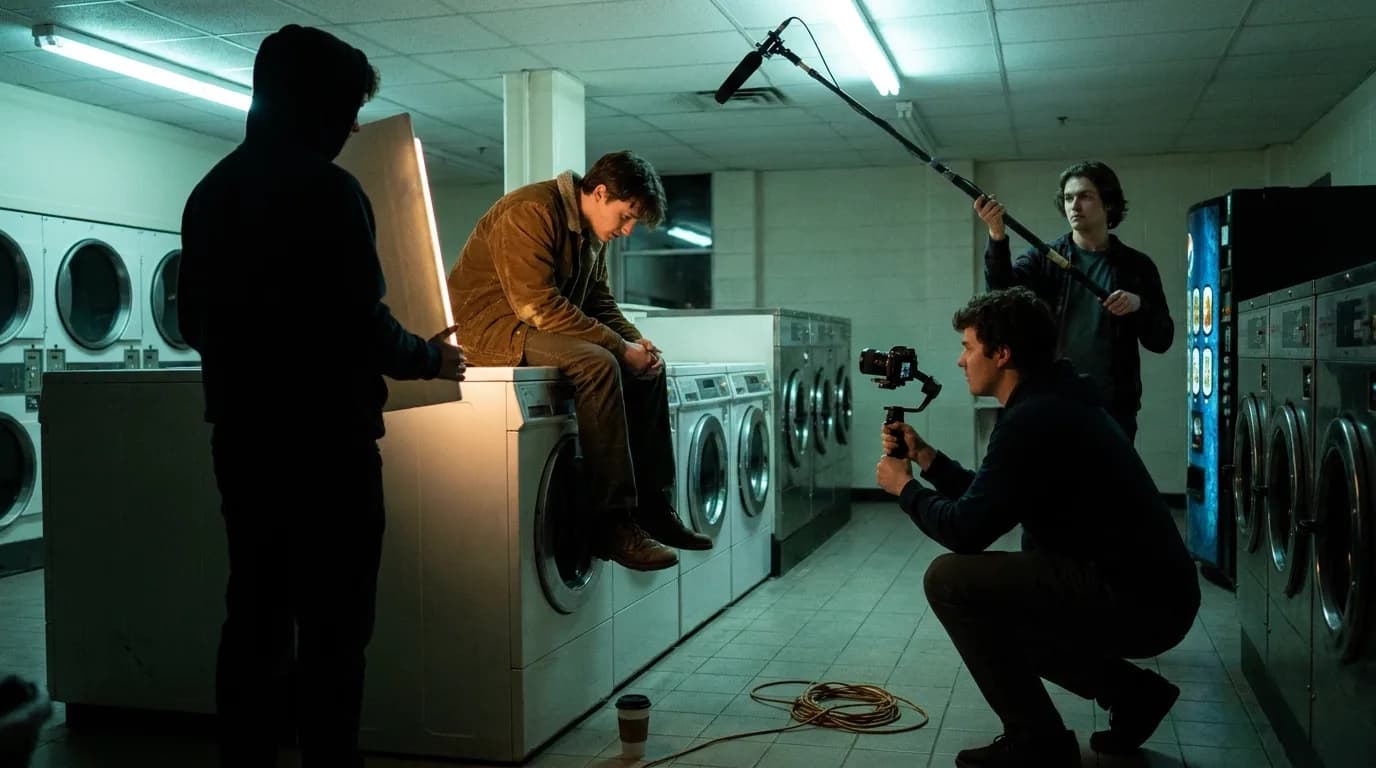
Your crew is your class, plus anyone who wants a credit and a reel. Give each person one clear job. A student film crew where four people "help with everything" ends up with nobody watching the sound levels.
The roles you can't leave empty, even on a three-person shoot:
- Someone behind the camera who isn't the director, if you can manage it.
- Someone whose only job is sound.
- Someone who keeps the shot list and knows what's left to shoot today.
Casting is where we'd spend any spare week. Friends who can't act will flatten a good script faster than a bad camera. Ask the theatre department first, post in local acting groups, and hold real auditions even if they're on a video call.
If you want professional actors, SAG-AFTRA has a Student Film Agreement. Its table on the SAGindie site lists a maximum budget of $35,000, a running time of 35 minutes or less, and actor salaries that are deferred. The producer has to be enrolled at an accredited college or university.
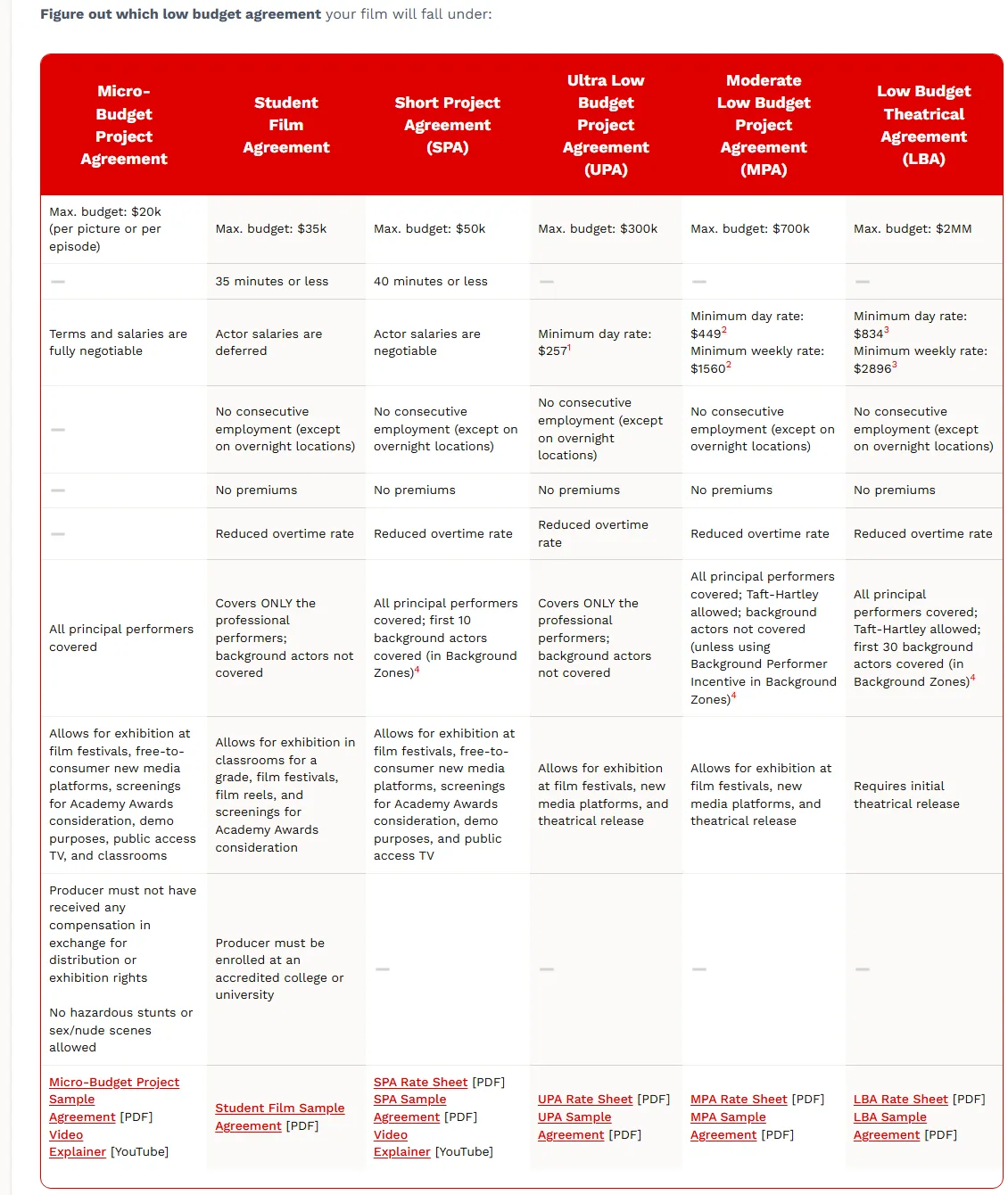
Two details on that page change how you plan. The agreement covers the professional performers only, so background extras aren't covered. And the exhibition line lists classrooms for a grade, film festivals, film reels and screenings for Academy Awards consideration, so check it before you plan a wider release. The same page tells producers to start the signatory process 4 to 6 weeks before the cast starts traveling, rehearsing or filming.
The paperwork that lets the film leave the classroom
A film you only show in class can get away with a lot. Once you send it to festivals or put it online, every face, location and song on screen needs a signature behind it, and those signatures are cheap before the shoot and expensive after.
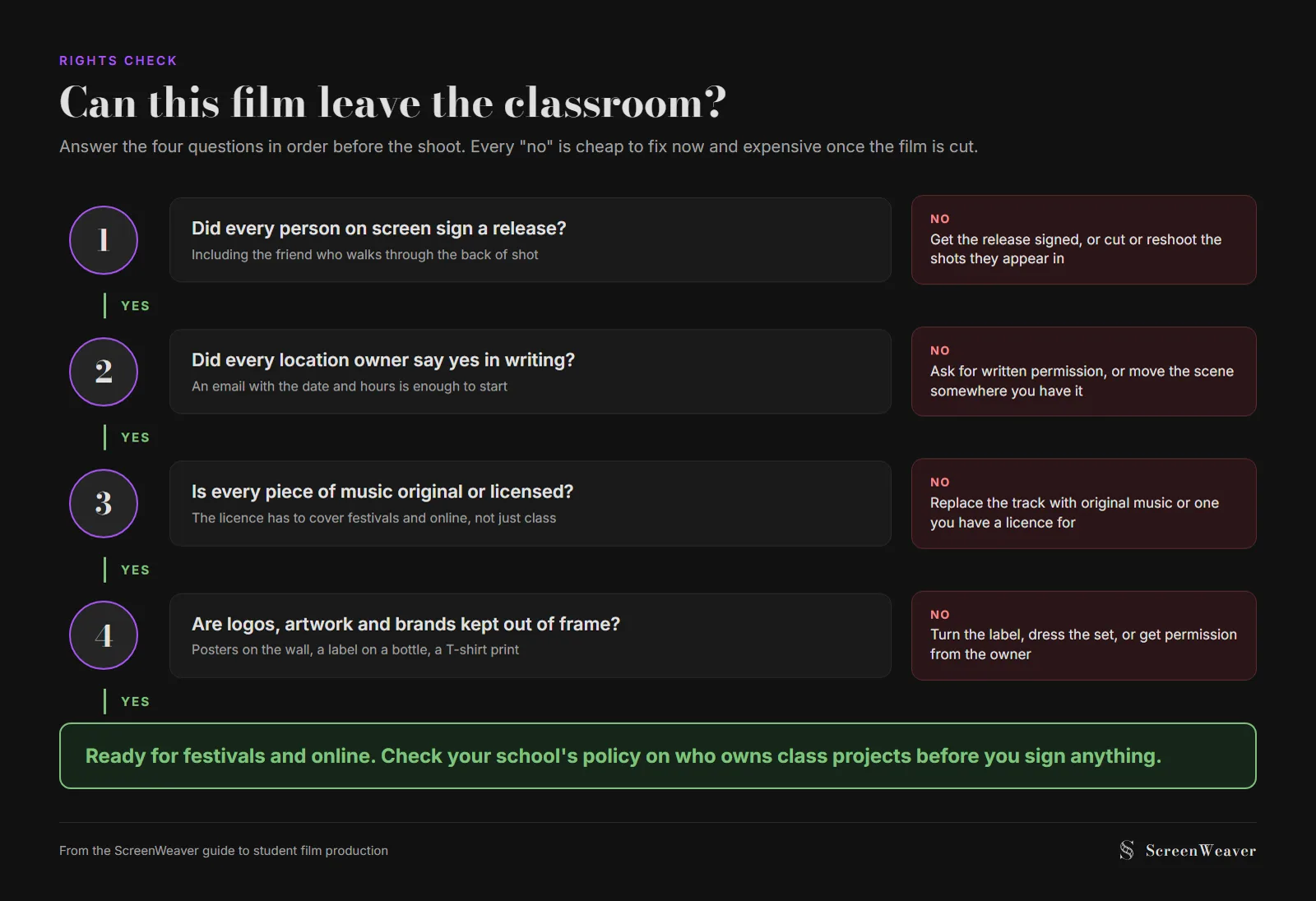
Get these signed before the camera rolls:
- A release from every person who appears on screen, including the friend who walks through the back of shot.
- Written permission for every location, even a public-facing one. An email from the owner saying "yes, Saturday 9 to 5" is better than nothing.
- Music rights. A popular song in the background of a party scene means you need permission. Use original music from a composer friend or a track whose licence covers festival and online use.
- Your school's own rules. Ask your department whether it has a policy on who owns class projects, and read it before you promise rights to anyone.
All of it is free. Budget an afternoon and a printer.
Try it free
Try ScreenWeaver for free on your script
It is free. Import your existing project, get a clearer view of your outline, and regain control of your story structure in minutes.
Start FreeA semester plan that leaves room for post
The crunch on a student film tends to arrive in week 13: the edit isn't finished, the sound is a mess and the deadline is Friday.
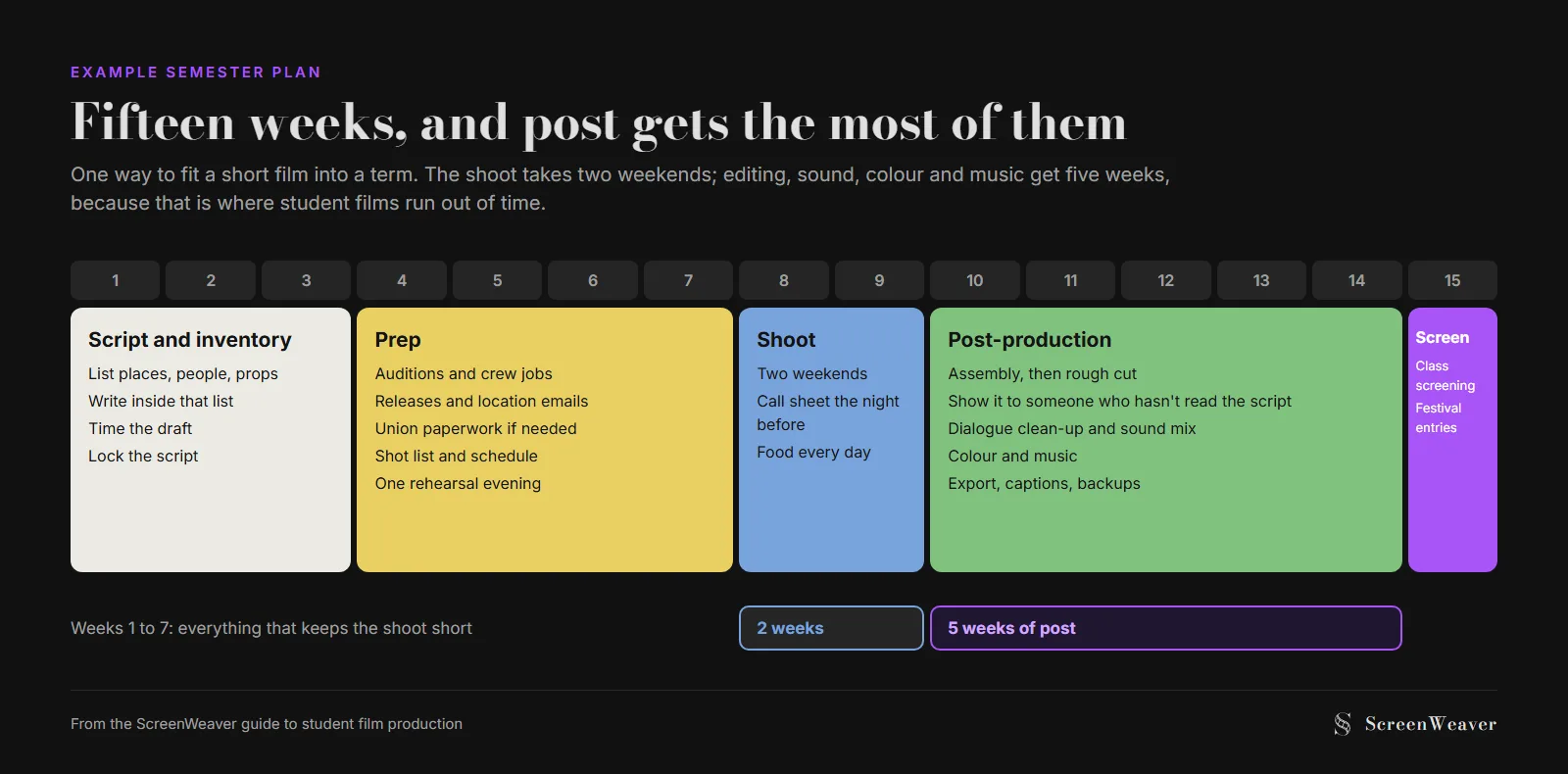
The shape that works: script in the first three weeks, prep for four, shoot over two weekends, then give post-production the rest. Our eight-week pre-production timeline is the long version of the prep block. On a semester you'll compress it, but keep the same order: lock the script, then cast and scout, then schedule.
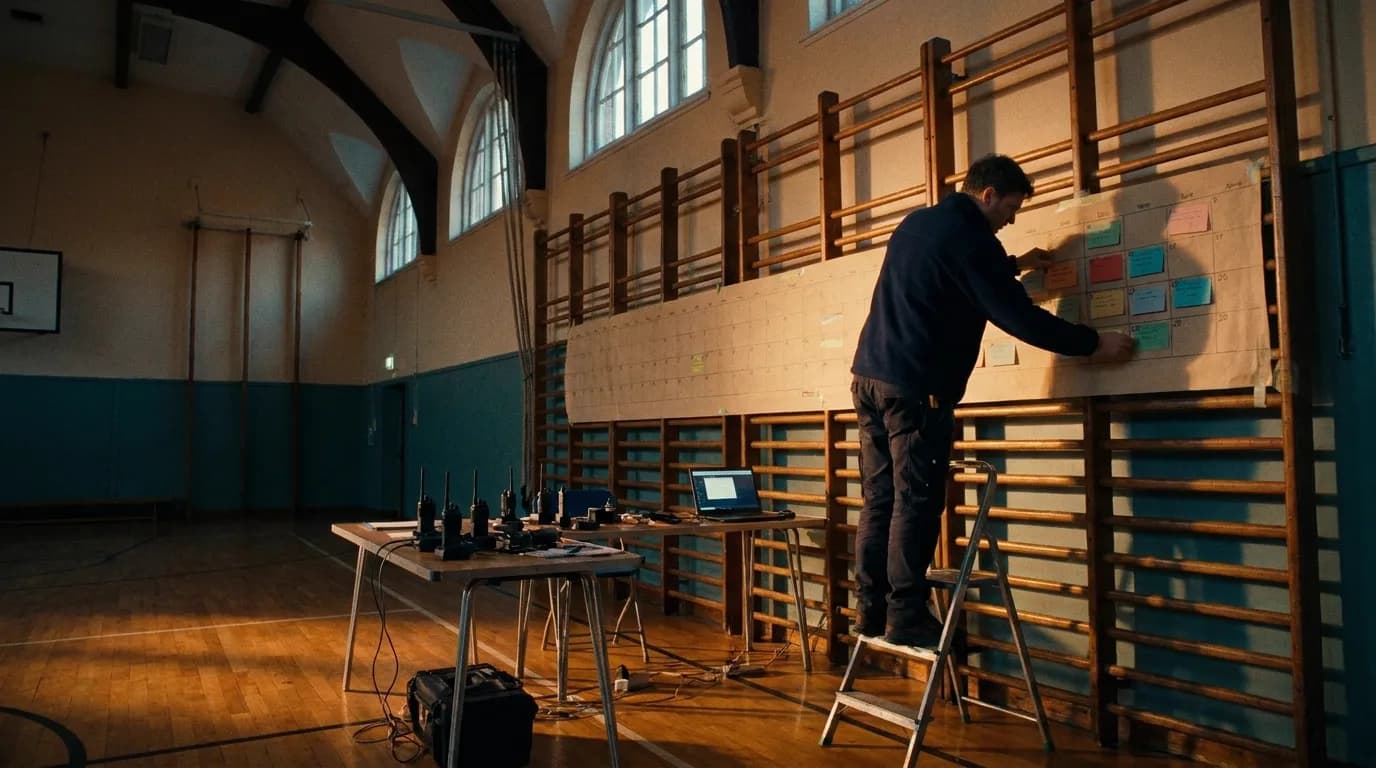
Plan the shoot on paper. A shot list built from your script tells you how many setups each scene needs, and the stripboard basics show how to group scenes by location so you only move once. Send a call sheet the night before every shoot day, even if your crew is four friends. It's the difference between a 9 a.m. start and a 10:30 one.
Where to spend effort so it looks expensive
Audiences put up with a soft image far longer than with muddy dialogue. If you can only get one thing right, make it dialogue that's clean, recorded close, with no fridge humming underneath.
After sound, the cheapest upgrades are:
- Light from where light already is. Shoot interiors next to a big window and turn the overheads off. One bounce board does more than three cheap lamps.
- Fewer, better setups. Six well-framed shots of a scene beat fifteen rushed ones. Lock the camera off when you're not sure.
- Production design in the frame only. Clear the clutter you can see, add two objects that say something about the character, and ignore the rest of the room.
- Rehearsal. One evening of blocking in a living room saves an hour of confusion on set.
For editing and colour, DaVinci Resolve has a free version. If your school has an editing suite, book it for weeks 10 to 14 now, before everyone else does.
Festivals: the rules that decide whether you can enter
Plan the festival route before the shoot, because some rules depend on how the film was made. The Student Academy Awards are the clearest example.
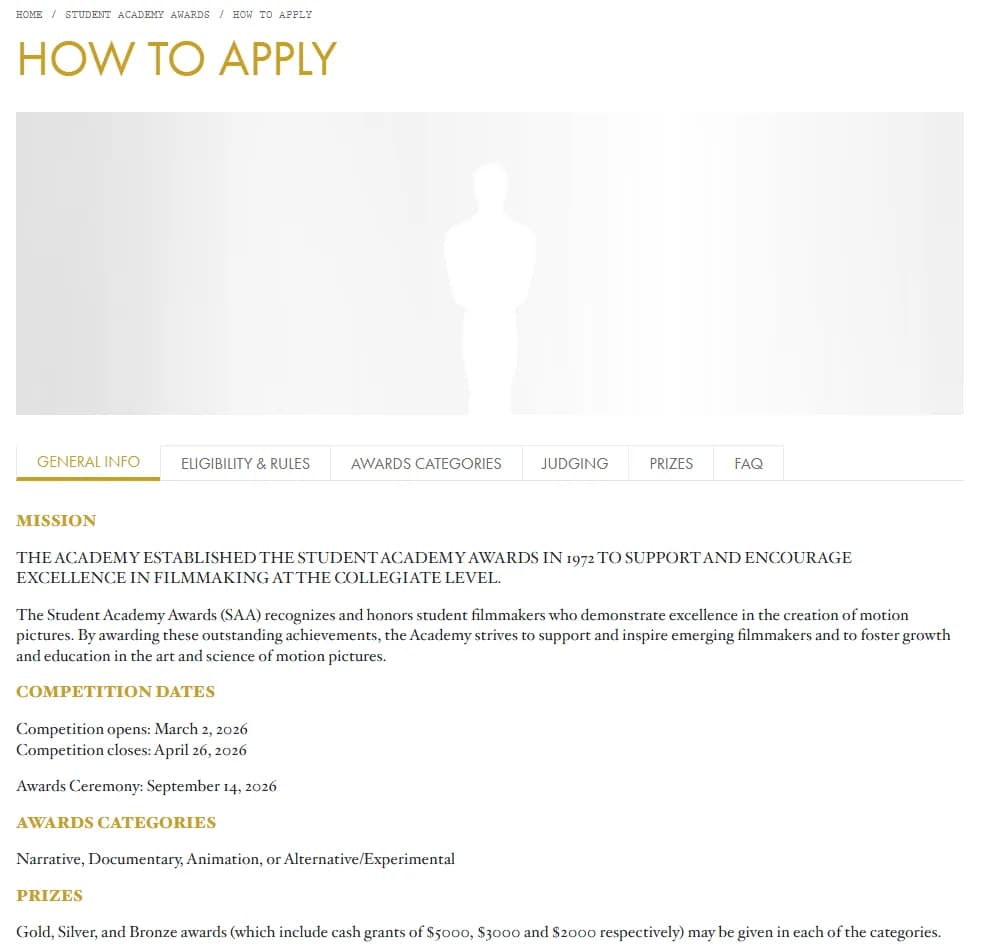
According to the Academy's rules for the 2026 competition, a film had to be made as part of a student's coursework or graduation requirement, run no longer than 40 minutes including credits, and be finished and submitted for final credit inside the eligibility window. Each director can submit one film per competition year, entries go through FilmFreeway, and films can't display festival laurels. Dates for the next round weren't posted when we checked, so look at the official page before you plan around them.
The same rules address AI directly: there's currently no rule against it, but if you use AI, the Academy says "it should be to enhance the project and not to replace any human creativity."
For the wider route, our guide to short film festivals for new writers covers where a first short has a realistic chance, and the list of AI film festivals in 2026 helps if your film uses generated shots.
If part of your film is AI-generated
Some student projects now mix live action with generated shots, or are fully generated. The money problem changes shape. You don't pay for locations or catering, but you do pay for generation, and the work moves to keeping a character's face and a place's look the same from shot to shot.
The free part of the job stays free. ScreenWeaver's Screenwriter plan costs $0 and includes the script editor, the outline builder, moodboards and import and export to .fdx and PDF. Generating storyboard images and video needs the paid Auteur plan, at $39.99 a month with 6,000 credits on the pricing page we checked today. Students already using Celtx can compare in our look at Celtx for students in 2026.
Lost Garden, the anime series made in ScreenWeaver by one person, is an example of that shape: script, storyboard and production in the same project before anything is generated. Whatever the tool, the student rule from the top of this guide still applies. Write for what you can actually make.
FAQ
How much does a student film cost?
It can cost close to nothing if you use school gear, free locations and unpaid friends. The costs that stay are food for every shoot day, travel for cast, any music licence and festival entry fees. Write the script around what you already have and those are usually the only lines left.
Can student films use SAG-AFTRA actors?
Yes, through the Student Film Agreement. The SAGindie comparison table lists a $35,000 maximum budget, 35 minutes or less, deferred actor salaries, and a producer enrolled at an accredited college or university. Start the process 4 to 6 weeks before your cast starts rehearsing or filming.
What should a student film be about?
Something you can shoot well with what you have. Two characters, one or two locations and a problem that plays out in a short stretch of time is a strong shape for a first film. Start from your inventory of places and people, then find the story inside it.
How long should a student film be?
For a first film, under ten minutes is easier to finish and easier to program at festivals. Check the rules of the festivals you're aiming for: the Student Academy Awards, for example, accept films up to 40 minutes including credits.
Can I enter a student film with AI shots in the Student Academy Awards?
The 2026 rules say there's currently no rule against using AI, but it should enhance the project and not replace human creativity. The film still has to meet every other rule, including being made as part of your coursework.
What's the most important thing to get right on a student film?
Sound. Viewers will accept a soft or grainy image, but muddy dialogue makes a film feel amateur straight away. Give one person the job of recording sound and nothing else.
Writing is free
Write your next script with ScreenWeaver
Write for free, export to PDF and Final Draft, and turn your scenes into a storyboard when you are ready.
Start writing free