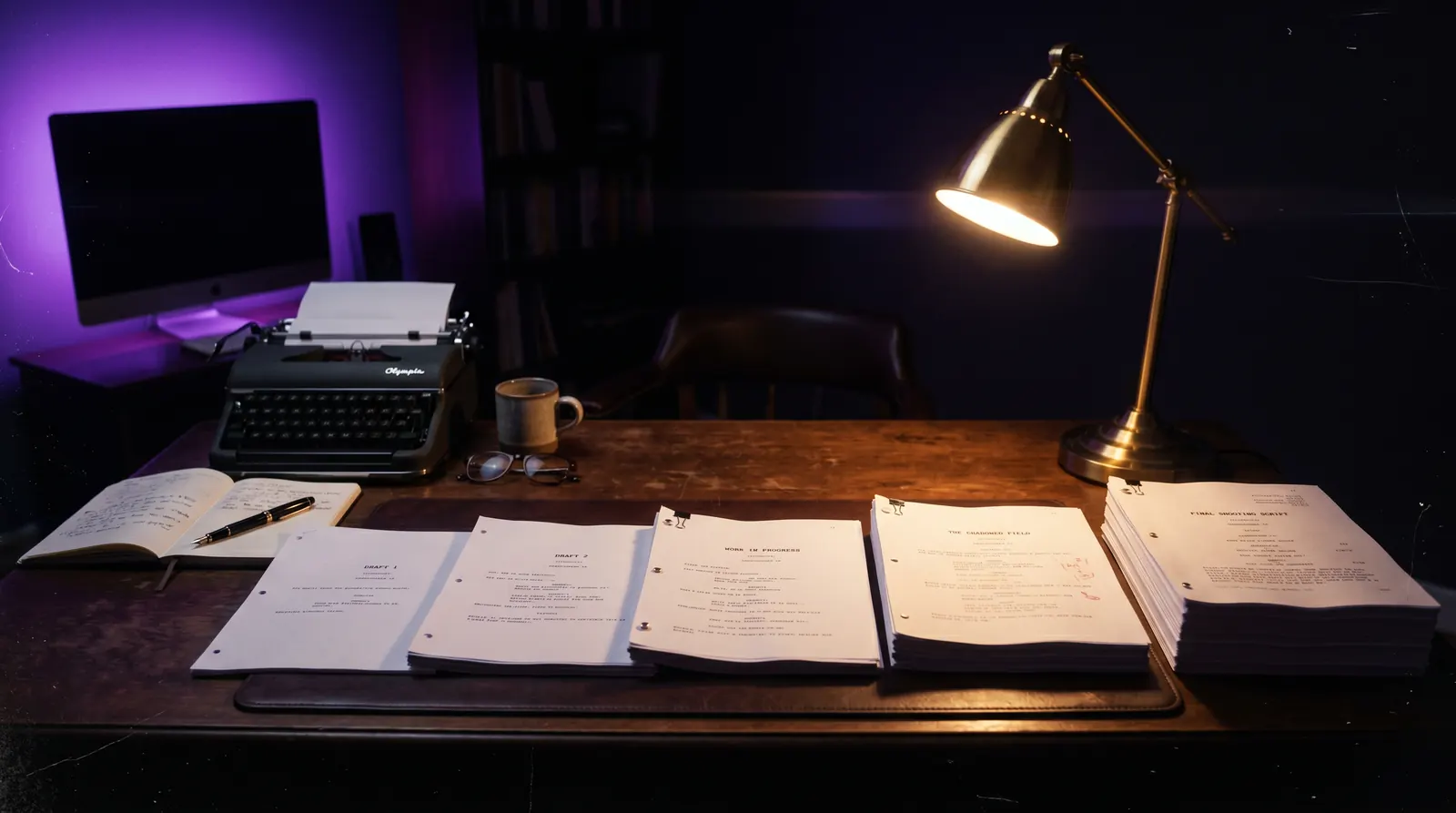

Short answer: a 5-minute short runs about 5 pages, a 10-minute short runs 9 to 11 pages, and a 15-minute short runs 14 to 16 pages, following the one-page-per-minute rule almost exactly. Short film is where that rule has the least slack of any format: a feature can drift 10 pages from its target without anyone blinking, but a short that runs 3 pages long is a short that runs noticeably over its stated length.
The precise answer, by length
Short film page counts track runtime more tightly than any other format, since programmers and labs schedule by the minute, not by the page.
| Intended runtime | Page count | Slack tolerance | Why it matters |
|---|---|---|---|
| 5 minutes | 4.5-5.5 pages | Under half a page | Common festival and challenge submission length |
| 10 minutes | 9-11 pages | About 1 page | The most common short film length submitted |
| 15 minutes | 14-16 pages | 1-2 pages | Upper edge before readers expect a "mid-length" |
| 20+ minutes | 18-22 pages | 2 pages | Some labs cap eligibility at 20 minutes exactly |
For how these numbers compare to feature and TV page counts, see How Long Should a Script Be?. For how short runtime affects which festivals and labs will even consider your film, how short film length affects festival routes covers the submission side in depth.
The nuance that changes the answer
Shorts have less slack than features for two concrete reasons, not just tradition.
There is no fat to trim at this length. A 110-page feature has room for a slow scene here and a quick cut there, and the total runtime absorbs it. A 10-page short has almost no scenes to spare, so a single overwritten page reads as a proportionally large overrun, the same page added to a feature would barely register.
Programmers time submissions with a stopwatch, not an estimate. Festival blocks are built to the minute so a full slate of shorts fits a single screening session. A film that runs 12 minutes when the entry form says 10 can bump another film out of the block, which is why programmers and lab readers check runtime far more literally for shorts than a feature reader checking page count against genre norms.
How to check yours in seconds
Do not assume your short hits its target length because the page count looks close, and do not trust a page count from a word processor: the rule only holds in standard screenplay format, which a free screenwriting app applies as you type. Paste your script or type its word count into the free Script Time Calculator and set the pace to get a runtime estimate that accounts for the balance of dialogue and action, the thing that matters most at short-film scale.
If the length is right but the middle sags, the problem is structural rather than a page count issue, and a beat sheet built for a short film shows how to compress feature structure into 10 pages without losing the turns that keep a short watchable.
If you are making the short yourself, 10 pages is also a manageable size to board and generate: create the storyboard from your script scene by scene, then make the AI short film from the screenplay with the panels as the reference for every clip.
Free tool: the Script Time Calculator estimates runtime from pasted script text or a word count in seconds, no signup.
Try it free
Try Screenweaver for free on your script
It is free. Import your existing project, get a clearer view of your outline, and regain control of your story structure in minutes.
Start FreeFAQ
How many pages is a 10-minute short film script?
About 9 to 11 pages, following the one-page-per-minute rule with very little slack. Most produced 10-minute shorts land within a page of that range on either side.
Can a 15-minute short run to 20 pages?
Not comfortably. Twenty pages reads closer to 18-20 minutes once produced, which pushes the film out of most "under 15" or "under 20" festival categories. Trim toward 14-16 pages if 15 minutes is the actual target.
Is there any room for slack in short film page count?
Very little, compared to features. A feature can run 10 pages over its genre's typical range without alarming a reader; a short running even 2-3 pages over its stated length changes which festival categories and screening blocks it qualifies for.
How do festivals measure short film length exactly?
Almost always by the actual runtime of the finished film, not the script's page count, since page count is only an estimate until the film is cut. Page count matters at the writing and budgeting stage precisely because it is the only runtime signal available before production.
Final Step
Build your next script with Screenweaver
Move from ideas to production-ready pages faster with timeline-native writing and AI-assisted story flow.
Try Screenweaver