
Short answer: in screenwriting, a script cover page and a title page are the same thing: one plain page with the title, "Written by," your name, and contact details. The confusion comes from other industries, where a cover page means a designed page with artwork, and a screenplay never gets that treatment.
That is the whole answer for ninety percent of the people typing "script cover page" into a search bar. The remaining ten percent are dealing with a real, physical distinction left over from the paper era, plus a few edge cases where the two words genuinely point at different objects. Knowing which group you fall into matters, because sending the wrong kind of page is one of the fastest ways to look like you have never read a professional script.
The precise answer, term by term
The word "cover" gets used four different ways around scripts. Only one of them describes something you need to design, and it is not the one most writers think.
| Term as used | What it actually refers to | What a reader expects to see |
|---|---|---|
| Title page | The first page of the script PDF: title, "Written by," writer name, contact or agency info | This is the standard. Every submitted script has one |
| Cover page (screenplay sense) | The exact same page, under an older name from the printed-script era | Identical to a title page in every way |
| Cover (physical sense) | The blank card stock front and back protecting a printed, bradded script | Nothing printed on it at all, or the production's plain cover |
| Cover page (other industries) | A designed page with images, logos, taglines, or branding | Never on a spec screenplay. This is for reports, books, and pitch decks |
When a contest, a manager, or a producer's submission form asks for a "cover page," they mean the title page. When a fellowship's rules say "no identifying information on the cover page," they mean strip your name and contact details from the title page, which is its own minefield covered in Anonymous Title Pages for Contests: Nicholl, Austin, PAGE Rules. Nobody in film is asking you for graphic design.
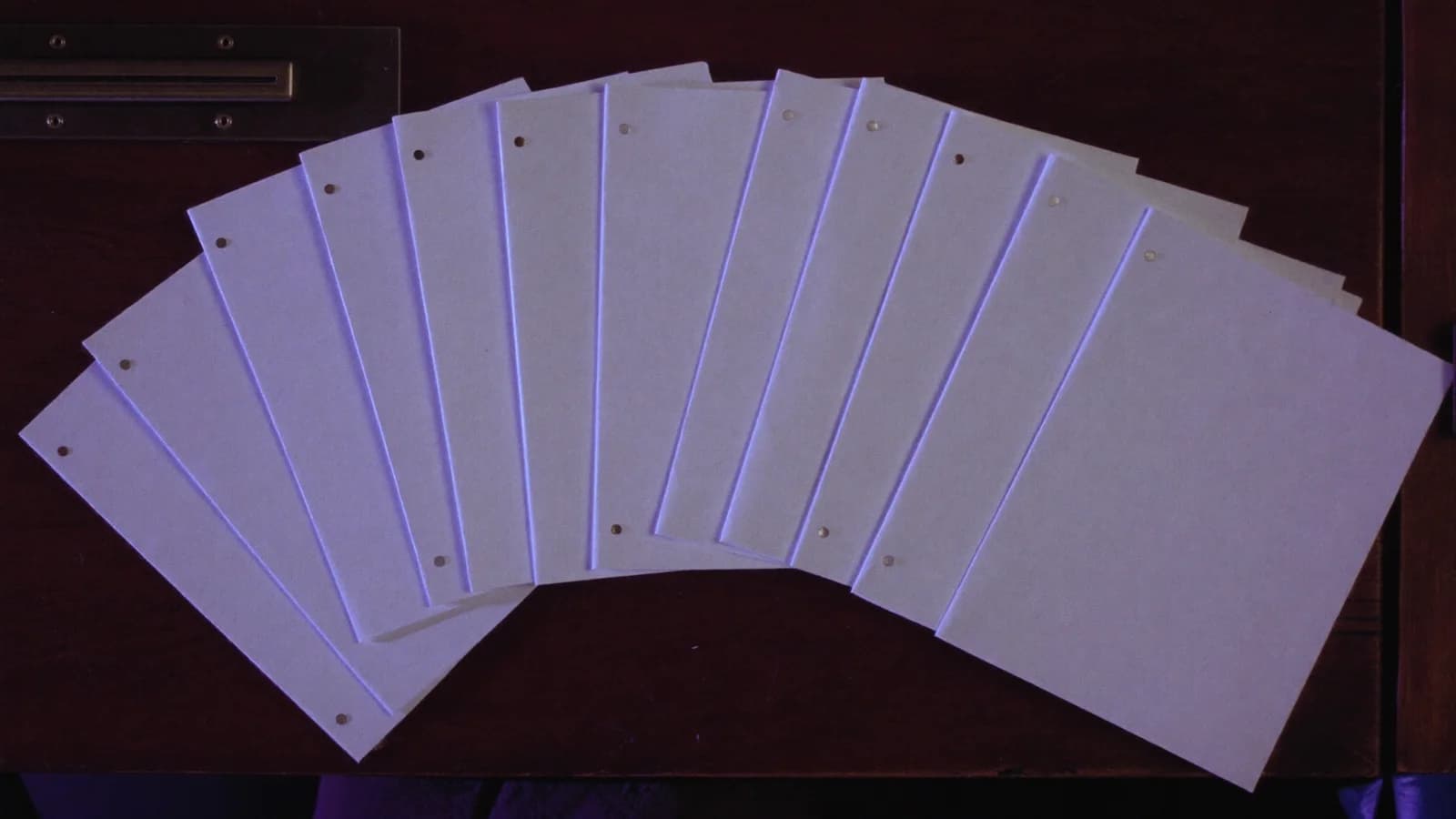
The older term survives for a simple mechanical reason. For most of the industry's history, scripts moved as paper: three-hole punched, held by two brass brads, with a sheet of card stock on the front and back. The card stock was the cover. The first typed page inside it was the title page. Writers who came up in that system used "cover page" and "title page" interchangeably because in a stack of paper the title page was the first page you saw once you flipped the cover. The vocabulary stuck around long after the brads did.
Today, with nearly all submissions as PDFs, the physical cover is gone and the two terms have collapsed into one page. Google Search Console data shows people still search "cover page" separately from "title page" in meaningful numbers, which tells you the old vocabulary is alive even though the object it described mostly is not.
What that one page contains
Since both terms point at the same page, the contents are the same list either way:
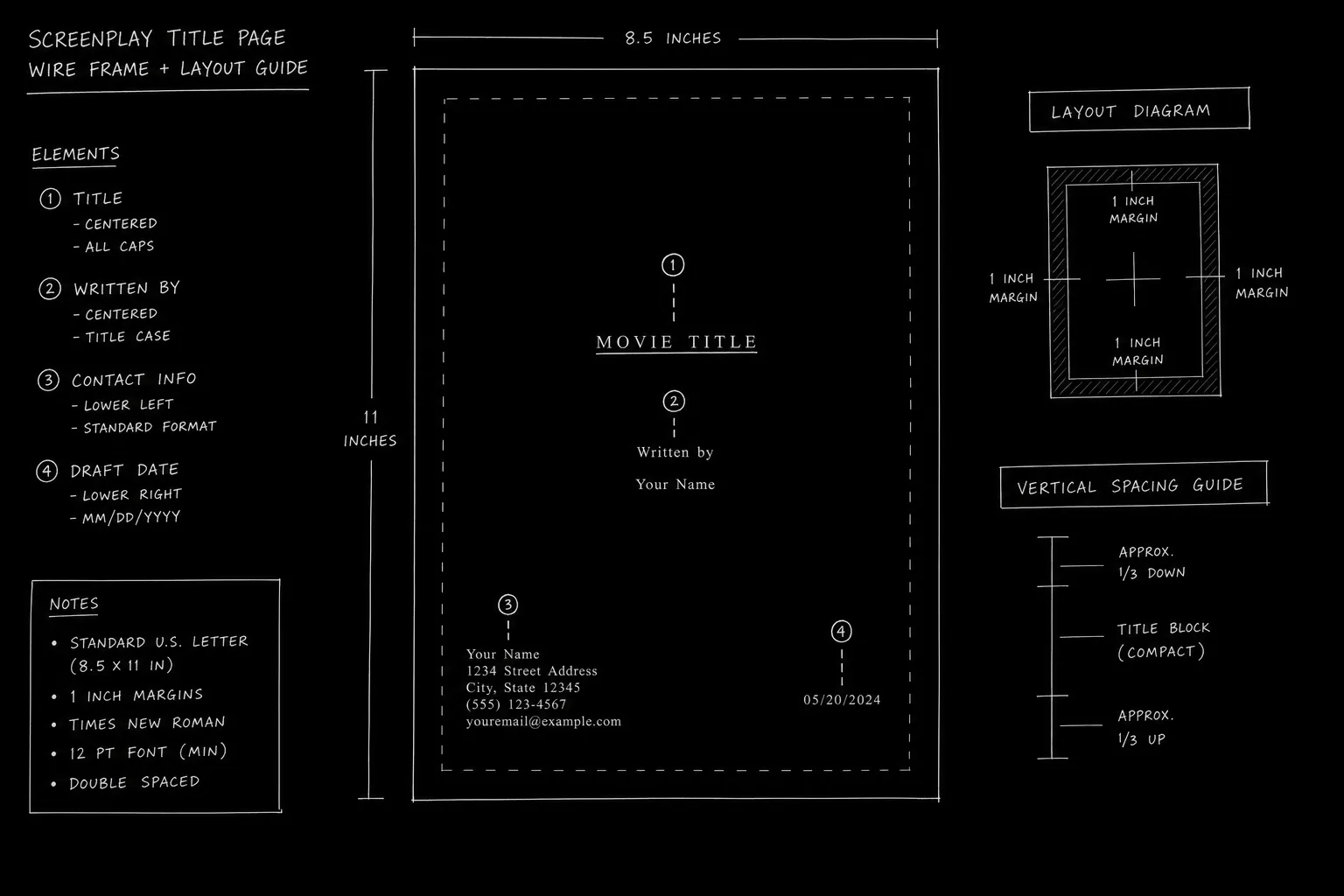
- The title, centered, roughly a third of the way down the page
- "Written by" (or "Screenplay by") centered below it
- Your name centered below that
- Contact information, usually bottom-left: your email and phone, or your rep's details if you have representation
- Optionally, a source line such as "Based on the novel by" for adaptations
That is it. No date on a spec, no draft number, no copyright notice, no WGA number unless a specific submission asks for it. The exact spacing, margins, and capitalization rules live on our dedicated formatting reference, Script Title Page Format: Rules, Examples and Free Template, and I would rather send you there than half-repeat it here. For a visual tour of how the page changes across nine real submission contexts, from represented specs to staffing samples, see Screenplay Title Page Examples: 9 Real Layouts Annotated.
The nuance that changes the answer
There are three situations where "cover page" and "title page" stop being synonyms, and each one changes what you should actually produce.
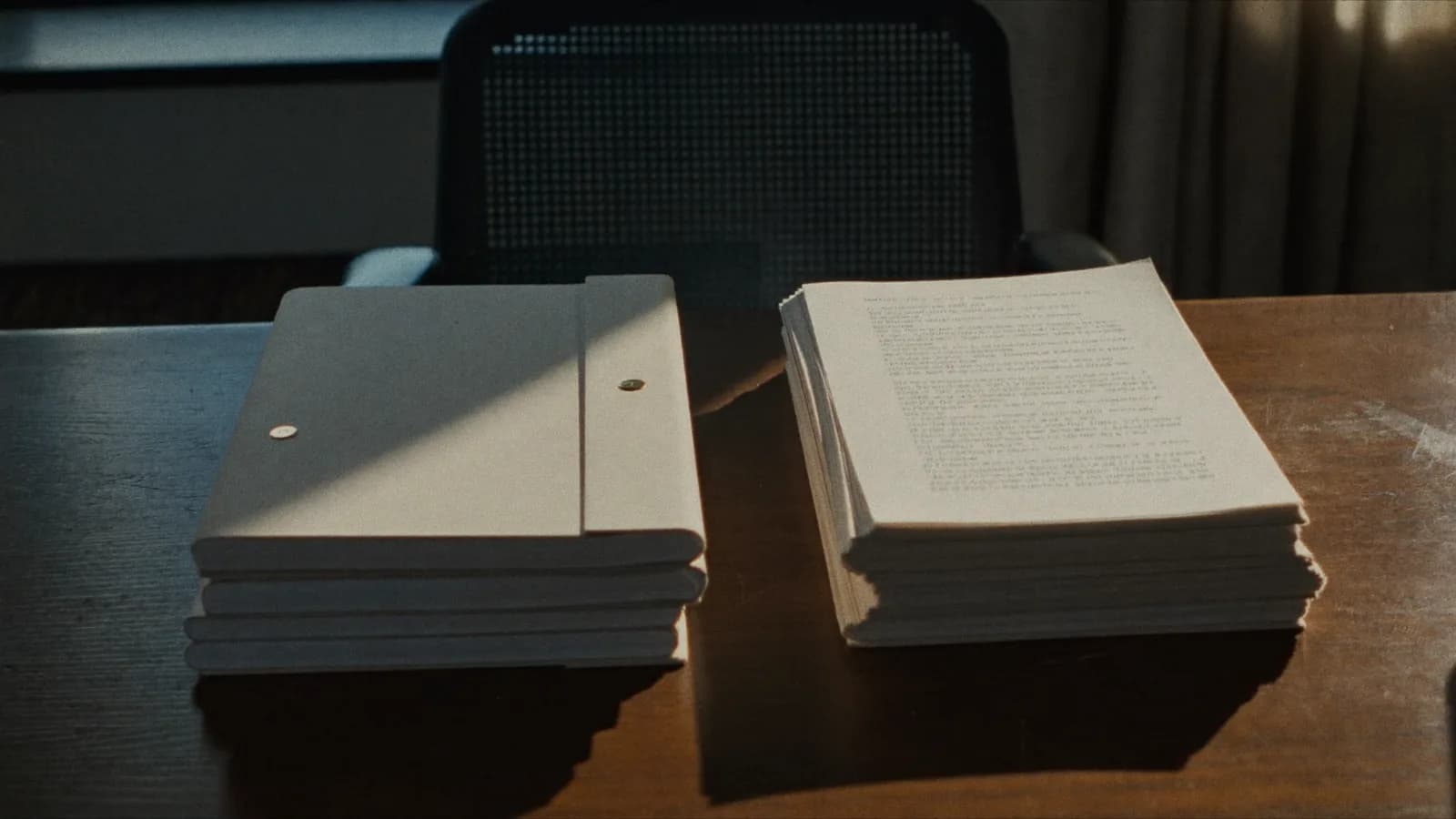
1. You are printing and binding a physical script. Here the old distinction is literal again. The cover is blank card stock, front and back, and the title page is the first paper page behind it. Do not print your title page onto the card stock, and do not design a cover. A plain white or light-colored card cover with nothing on it is the professional standard for a spec. Some writers use a colored card to make their script easy to spot on a desk, which is fine. Artwork, a printed title, or anything else designed onto the cover itself is not. On active productions the situation shifts slightly, since shooting scripts carry draft labels and revision colors that identify the document at a glance, and that whole system is explained in Shooting Script Title Page: Colors, Drafts and Revisions.
2. Someone hands you a template with artwork on it. Search for "cover page" and most template sites will show you designed pages with photos, texture backgrounds, and tagline placement, because those templates are built for book manuscripts, business reports, and school papers. A screenplay with a graphic cover page reads instantly as an amateur submission. This is not a stylistic opinion readers disagree about. Script readers process dozens of scripts a week, they know exactly what page one is supposed to look like, and a movie-poster mockup in front of the script signals that the writer's reference point is template websites rather than actual screenplays. Your writing never gets a neutral read after that first impression.
3. You are writing something that is not a spec screenplay. Commercial scripts in AV format, corporate video scripts, and some branded content do circulate with agency logos and client branding on a cover page, because those documents live inside a client-services workflow rather than a literary submission process. TV also has its own conventions: a pilot's title page carries the series title above the episode title, and staffing samples sometimes follow a specific show's internal template. If that is your situation, the layout rules are in TV Pilot Title Page: Format and Series Name Placement. The plain-page rule is a spec screenplay rule. It just happens that if you are searching this question, a spec screenplay is almost certainly what you are writing.
One more distinction worth naming because writers conflate it constantly: a cover page is not a coverage page. Script coverage is the reader's report written about your script after they read it. You never submit coverage with a script, and asking a producer whether your "coverage page" is formatted correctly will earn you a confused pause.
Try it free
Try Screenweaver for free on your script
It is free. Import your existing project, get a clearer view of your outline, and regain control of your story structure in minutes.
Start FreeHow to check yours
Run your current first page against this list. It takes under a minute.
- Is it one page, black text on white, in 12-point Courier? Anything decorative fails.
- Does it contain only the title, the byline, your name, and contact details, plus a source line if it is an adaptation? Anything extra (date, draft number, "Registered WGA," a tagline, a quote) comes off a spec.
- Is the contact block current? An old email on an otherwise perfect page is a silent submission killer.
- If a specific contest or fellowship asked for a "cover page" with special rules, did you read their rules rather than assuming? Anonymity requirements vary by program and year.
- If you are printing, is the physical cover blank card stock with the title page as the first sheet inside?
If any of those checks feel fiddly to fix in a word processor, skip the fight with centering and margins entirely. The free screenplay title page maker builds a correctly formatted page from a handful of fields and exports a clean PDF you can drop in front of any script.
Free tool: the screenplay title page maker builds a standard, contest-safe title page in seconds, no signup.
FAQ
Is a script cover page the same as a title page?
For a screenplay, yes. Both terms describe the single plain page carrying the title, "Written by," the writer's name, and contact information. "Cover page" is the older term from the printed-script era, when card stock covers physically wrapped the script and the title page sat directly behind them.
Should a screenplay cover page have artwork or images?
No. Artwork, photos, taglines, and decorative fonts belong to book manuscripts and pitch decks, not screenplays. A spec script's first page is plain typed text, and readers treat anything more designed than that as a sign the writer does not know professional conventions.
What goes on the cover of a printed, bradded script?
Nothing. The traditional physical cover is blank card stock, front and back, with the typed title page as the first sheet of paper inside. A plain colored card is acceptable; a printed or designed cover is not, unless a production's own protocol says otherwise.
When a contest asks for a "cover page," what do they mean?
They mean the title page, and often a restricted version of it. Blind-read contests and fellowships typically require the title only, with no name or contact information anywhere. Always check the specific program's current rules, because anonymity requirements differ between contests and can change year to year.
Is a cover page the same as a coverage page?
No. Coverage is the evaluation report a script reader writes about your screenplay: logline, synopsis, comments, and a verdict. It is produced by the reader, not the writer, and never submitted with a script. The cover page, meaning the title page, is part of your script document itself.
Does a shooting script use a cover page differently than a spec?
Yes, in one respect: a shooting script's title page carries production information a spec must never have, including a draft label, the current revision color, the date, and often a production company credit. The page itself is still plain typed text, not a designed cover.
Final Step
Build your next script with Screenweaver
Move from ideas to production-ready pages faster with timeline-native writing and AI-assisted story flow.
Try Screenweaver