Readers see your title page before they see a single scene. In contests, agencies, and coverage rooms, that page signals whether you understand professional presentation. Screenplay title page format is not creative writing. It is protocol. Get it wrong and some readers will assume the script inside is careless too, fair or not.
In 2026, most specs travel as PDF. That makes alignment, spacing, and metadata hygiene more visible than ever. The title page is your handshake.
Want it right without fighting margins in Word? Use the free screenplay title page maker to fill in a form and export an industry-standard script cover page as a clean PDF.
The title page is the quietest scene in your script. It should contain only what the industry expects, nothing that argues for attention.
How It Works: What a Spec Title Page Does
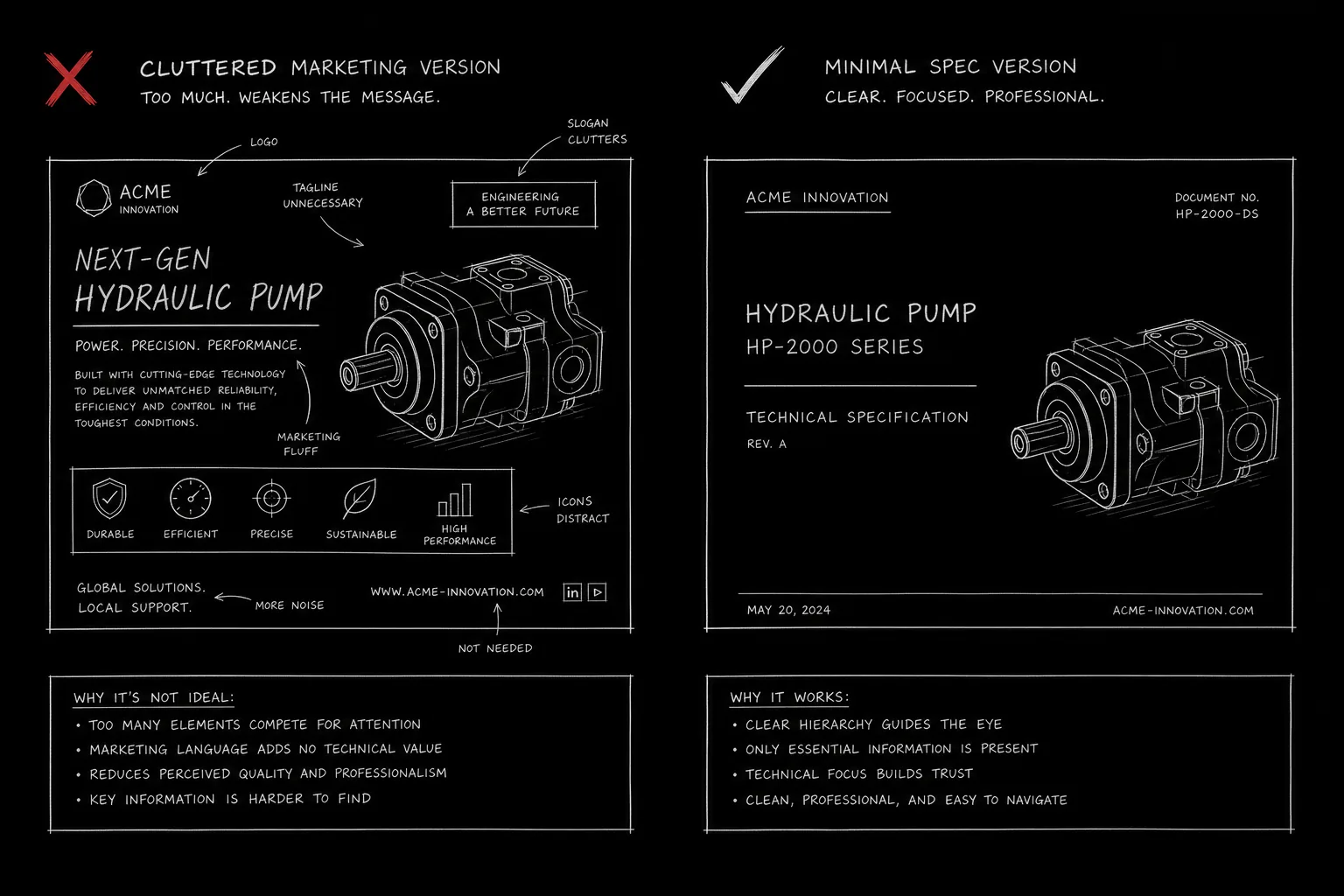
A spec title page identifies the work and the writer. It does not sell the movie with loglines, poster art, or character grids. Production drafts add different metadata. Specs stay minimal.
Core functions:
- Title the reader can quote accurately
- Writer credit with correct legal or professional name
- Contact path if the script is unsolicited or may circulate
- Optional draft context when useful (date, draft number)
Everything else is conditional: based on, adaptation credit, WGA registration number in private submissions, representation line.
Platform and Use-Case Sections
Contest and Fellowship Submissions
Many competitions require anonymized title pages: title only, no contact info. Read each fellowship or lab rules every year. Nicholl, Austin, PAGE, and studio programs differ. A beautiful noncompliant page is a silent disqualification.
If anonymity is required, create a separate export. Do not maintain one PDF that forgets to strip contact data.
Representation and Producer Inboxes
When you send through an agent or manager, the title page may include representation contact instead of yours. Ask your rep. Keep formatting clean. No marketing copy.
Pair title page discipline with broader spec vs shooting script habits so interior pages match the professionalism of the cover.
Writing Samples and Staffing Packets
TV writing samples sometimes include episode title and series name on the title page per studio template. Features use feature conventions. If you are submitting a pilot, confirm whether the program wants series title on top and episode title below.
Step-by-Step: Building a Correct Spec Title Page
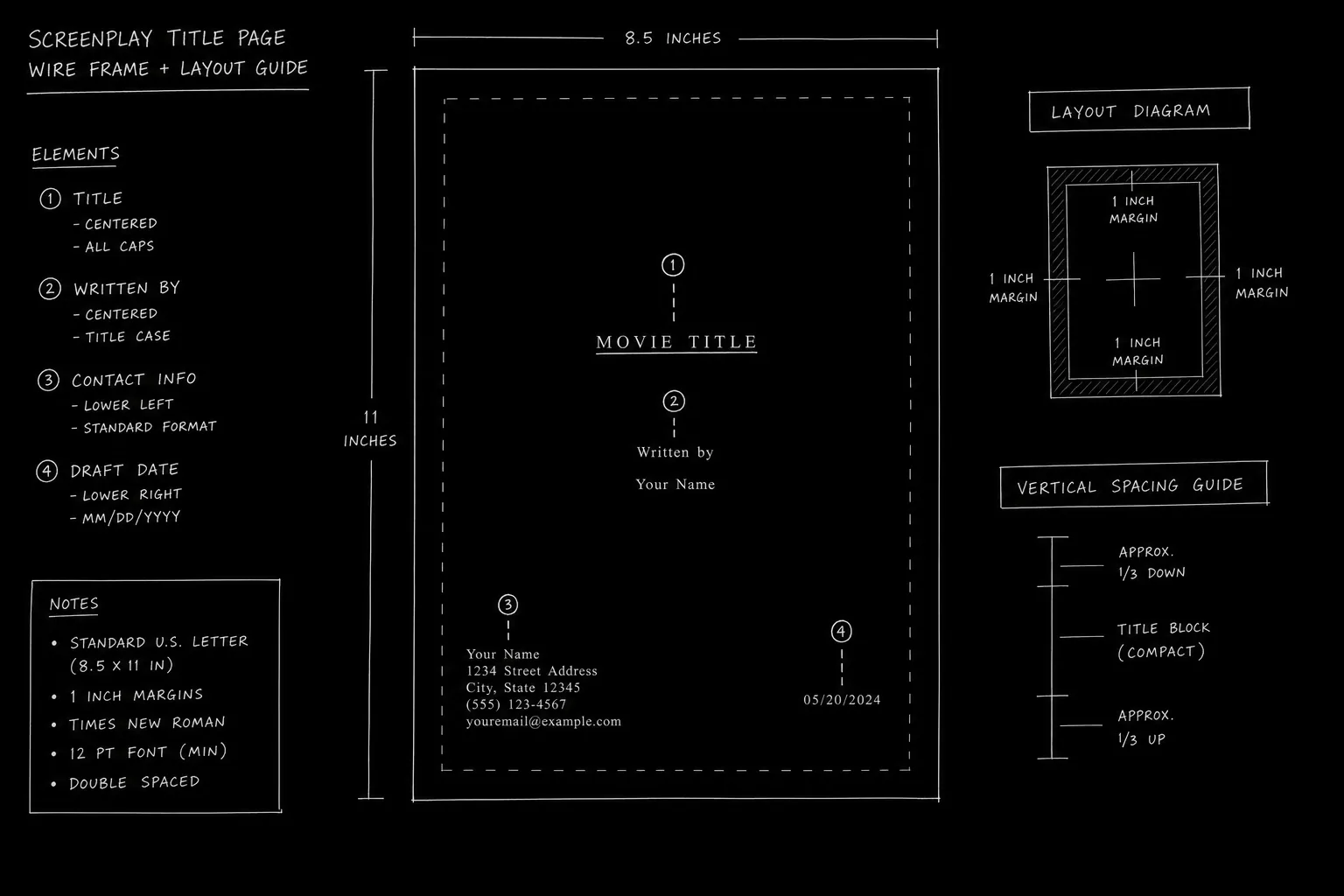
Step 1: Center the title in uppercase. Roughly one-third down the page is traditional in many templates. Use the exact title you want spoken in meetings, including articles unless you have a stylistic reason.
Step 2: Add "Written by" or "Story by / Screenplay by" as credits require. Center beneath title. Multiple writers use an ampersand (&) for a writing team and "and" for writers who worked separately, per WGA conventions when applicable.
Step 3: Place contact block bottom left or bottom right. Name, email, phone or rep line, optional WGA if requested. No street address required in modern practice unless you choose.
Step 4: Optional draft date bottom opposite contact. "Draft 3.2 - June 2026" is enough. Avoid emotional notes ("Final Final FOR REAL").
Step 5: Verify PDF export. Check font embedding, title not clipped, no software watermarks from free trial tools.
Step 6: Run a compliance pass. Contest anonymized version, rep version, general version. Three exports if needed.
Operational Section: Requirements, Metadata, and Common Variations
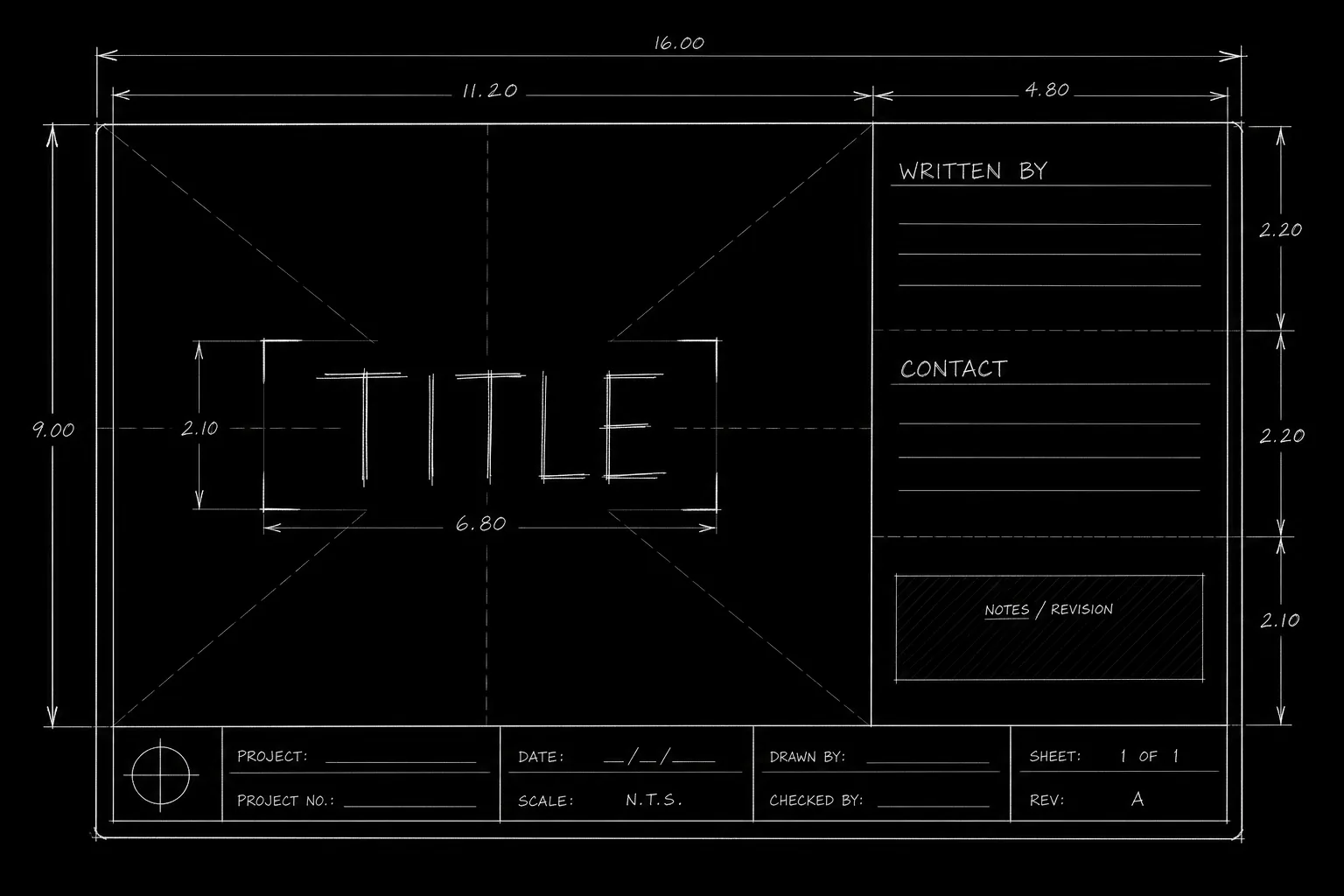
Title formatting. All caps for title is standard in many US feature specs. Mixed case appears in some indie templates. Pick one industry-standard template and mirror it on interior slug lines and margins.
Based on / inspired by. If adaptation, credit chain belongs on title page, not buried in email body.
Copyright notice. Optional line like Copyright (c) 2026 Author Name appears on some title pages. Not required for copyright protection. Registration is a separate legal step. For registration context, see our guide on WGA script registration vs copyright.
Registration numbers. Some writers add WGA registration on private sends. Do not put registration numbers on anonymous contest pages if rules forbid identifying marks beyond title.
Quotes and epigraphs. Generally avoid on spec title pages. Readers want the script, not a mood board.
Attachments and cover letters. Cover letter is separate file or email body. Do not turn the title page into a pitch deck.
| Submission type | Title | Contact | Draft date |
|---|---|---|---|
| Open contest anonymized | Yes | No | Optional |
| Rep send | Yes | Rep or writer | Optional |
| Direct producer | Yes | Writer or rep | Optional |
| Adaptation sample | Yes + credit chain | Yes | Optional |
Try it free
Try Screenweaver for free on your script
It is free. Import your existing project, get a clearer view of your outline, and regain control of your story structure in minutes.
Start FreeOutcome and Results: What a Clean Title Page Achieves
Proper title page format produces practical outcomes:
- Frictionless logging. Assistants file your PDF correctly the first time.
- Accurate coverage. Title spelling matches industry databases and search.
- Trust transfer. Reader enters page one assuming craft competence.
- Version control clarity. Draft labels reduce "which script is this?" emails.
After formatting, open the script on a phone PDF viewer. If title or contact info requires pinch-zoom, fix margins. Readers review on phones more than you think.
Relatable Scenario: Same Script, Two Sends
You finish a thriller called NIGHT SIGNAL. You submit to a fellowship that requires anonymity and to a manager who needs your email. The old way exports one PDF with your phone number on the cover and hopes nobody notices. The fellowship desk rejects or strips it manually. The manager forwards a version missing draft context.
The new way maintains two exports from one master: NIGHT_SIGNAL_fellowship_anon.pdf and NIGHT_SIGNAL_rep_June2026.pdf. Same title capitalization, same interior margins, different cover metadata. Ten extra minutes saves a season of confusion.
Software and Export Checklist (2026)
- Confirm title page is page 1, not a cover sheet with logline
- Embed fonts or export to PDF standard readers accept
- Remove tracked-change markup and comment bubbles
- Filename includes title and draft, not "script_final_REAL.pdf"
- Interior page numbers start after title page per your template
- Hyperlinks, if any, work and are intentional
Readers notice export hygiene as much as field placement.
International Writers Sending to US Readers
If you are outside the US, still use the title page format US readers expect unless a specific program requests otherwise. Put country code in phone numbers. Keep email professional. Do not add visa status, photos, or lengthy bio paragraphs. The script is the audition.
When in doubt, compare your page to a produced spec sample from a reputable template and match spacing exactly. Consistency signals you belong in the room before dialogue proves it.
Why It Matters: Old Way vs New Way
The old way: Writers treated the title page as branding: loglines, headshots, mood quotes, "based on a true story" when the story was barely true. Readers felt pitched before they read art.
The new way: Writers treat the title page as metadata and move story work inside the script. Presentation is invisible when correct, memorable only when wrong.
Interior craft still wins, but how to run a table read does not matter if the PDF never gets opened because the cover looked amateur. Title page format is the lowest-cost professionalism upgrade.
Final CTA and Conclusion
Open your current spec PDF. Hide page one from anyone who knows the project. Ask: could an assistant file this without asking questions? If not, fix the title page tonight.
Strip marketing. Align fields. Export three versions if your submission paths differ. Then let the first scene do the selling you were tempted to put on the cover.
A correct title page takes ten minutes. It buys you a reader who starts page one neutral instead of skeptical.
Final Step
Build your next script with Screenweaver
Move from ideas to production-ready pages faster with timeline-native writing and AI-assisted story flow.
Try Screenweaver