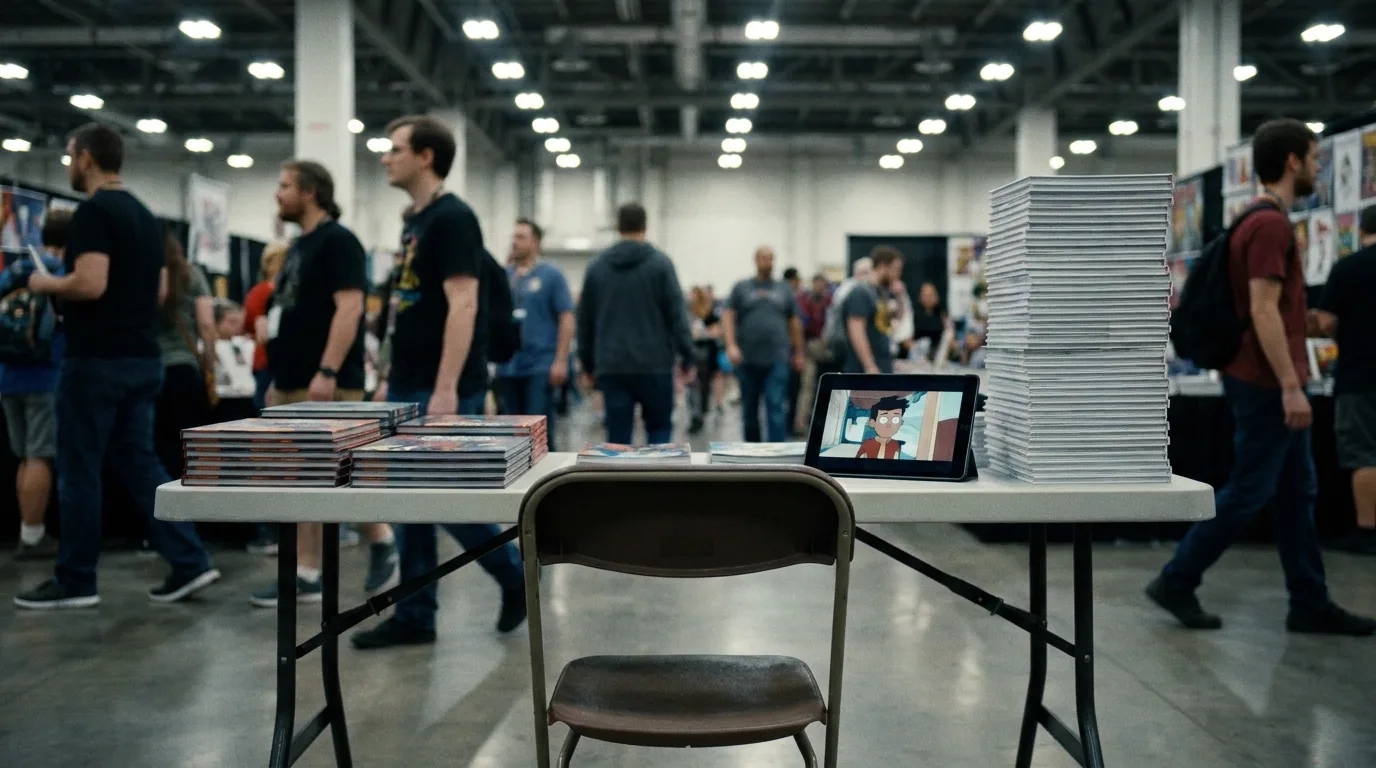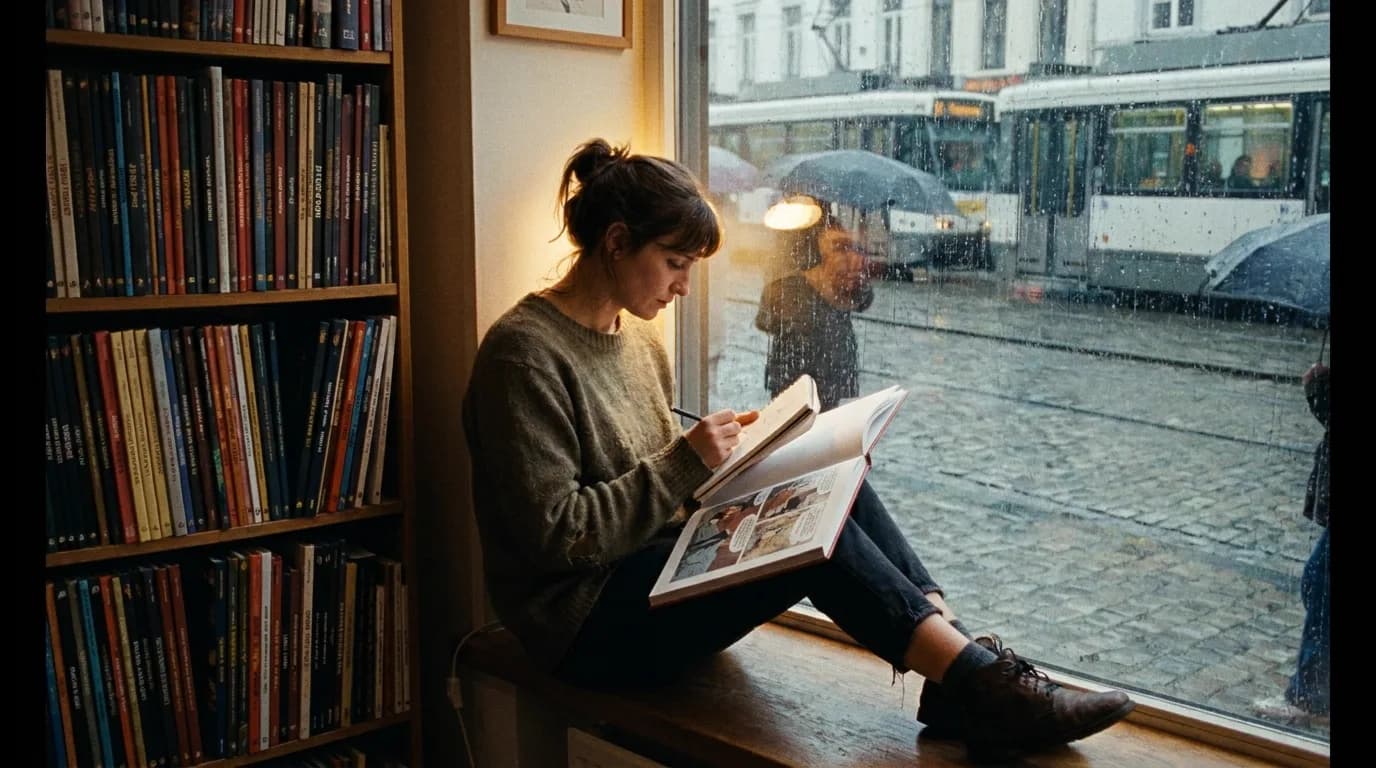

A graphic novel becomes an animated film by deciding first whether it is a film at all. A 48-page Franco-Belgian album is a 22-minute episode; a 150-page graphic novel is a 65-minute feature or a three-part series; a 300-page book is a feature only if a third of it goes. The book's length, its panel density and its structure decide the delivery format, and that decision comes before a single panel is boarded.
This article sits under how to turn a comic into an animated series and is about long-form, page-based books: albums, graphic novels and collected volumes. Manga's specific problems are in manga to anime.
The length problem
| Book | Pages | Panels per page | Runtime at the calculator's defaults | The honest delivery |
|---|---|---|---|---|
| Franco-Belgian album | 46 to 62 | 8 to 10 | 22 to 30 min | One episode, or a 25-minute special |
| Two-album story | 92 to 124 | 8 to 10 | 45 to 60 min | A one-hour special, or three episodes |
| Graphic novel | 120 to 180 | 5 to 7 | 55 to 85 min | A feature |
| Long graphic novel | 200 to 300 | 5 to 7 | 90 to 140 min | A feature with cuts, or a limited series |
| Collected volume, 4 to 6 issues | 88 to 132 | 5 to 6 | 40 to 60 min | A special, or a 4-episode season |
The comic to animation calculator gives the exact numbers for your page count and panel density. Two things move them: the share of action, which splits panels into several shots, and the share of dialogue in the same framing, which merges them. Dense Franco-Belgian pages skew toward the second; a Tintin page has nine to twelve panels and most of them are conversation, which is why an album that looks like a feature on the shelf is an episode on screen.
Film, special or series
A feature and a series ask different things of the same book.
| Feature | Limited series | |
|---|---|---|
| Structure the book needs | One spine, one climax, subplots that can be cut | Chapter hooks, a cliffhanger every 20 to 25 minutes |
| What gets cut | Subplots, side characters, the middle | Almost nothing; the middle becomes episodes |
| Runtime target | 75 to 100 minutes | 4 to 8 episodes of 11 or 22 minutes |
| Production shape for AI | One long board, one cast, many locations | Same board, delivered in chunks, with the cast locked across all of them |
| What readers expect | The story, faster | The book, all of it |
Books built in chapters (most graphic novels, every collected volume, any album series) are series. Books built as one continuous movement, like a single-sitting graphic novel with no chapter breaks, are features. The chapter breaks are the tell.
Persepolis became a feature by compressing two volumes into 95 minutes and keeping the author's drawing hand, which is the graphic novel adaptation that most adapters point at. Tintin became a series of 22-minute episodes because the albums were already episodes. Neither decision was about budget; both were about the shape of the source.
Compression: what leaves the book
For a feature from a 200-page book, roughly a third of the pages do not survive, and the choice of which third is the adaptation.
- Subplots that do not touch the climax. If a thread can be removed without changing the last twenty pages, it goes first.
- Repeated beats. Graphic novels, especially serialized ones, restate motivation every chapter for readers who put the book down. A film needs it once.
- Travel and transitions. A page of someone crossing a city is one establishing shot.
- Interior monologue in captions. Either it becomes a performance on a face, or it becomes voiceover, and voiceover past a few lines is the sign of a scene that should have been rewritten.
- The characters who exist to deliver one fact. Give the fact to someone who is already in the room.
What never leaves: the images readers remember. Make a list of the ten panels people post from the book before cutting anything, and build the board around getting to each of them.
The board for a long book
Everything in comic panels to storyboard applies; the long form adds scale.
A 150-page graphic novel is around 1,100 shots. Nobody boards that in one pass. Break the book into sequences of six to twelve pages, each with its own establishing shot and its own ending beat, and board one sequence at a time. In ScreenWeaver the sequences are outline nodes under the episode (or the film), the scenes sit under them, and the shot list for each is a script pane away from its storyboard. Set the aspect ratio once; 16:9 for a feature, and the short drama pipeline if a vertical serialized release is where the audience is.
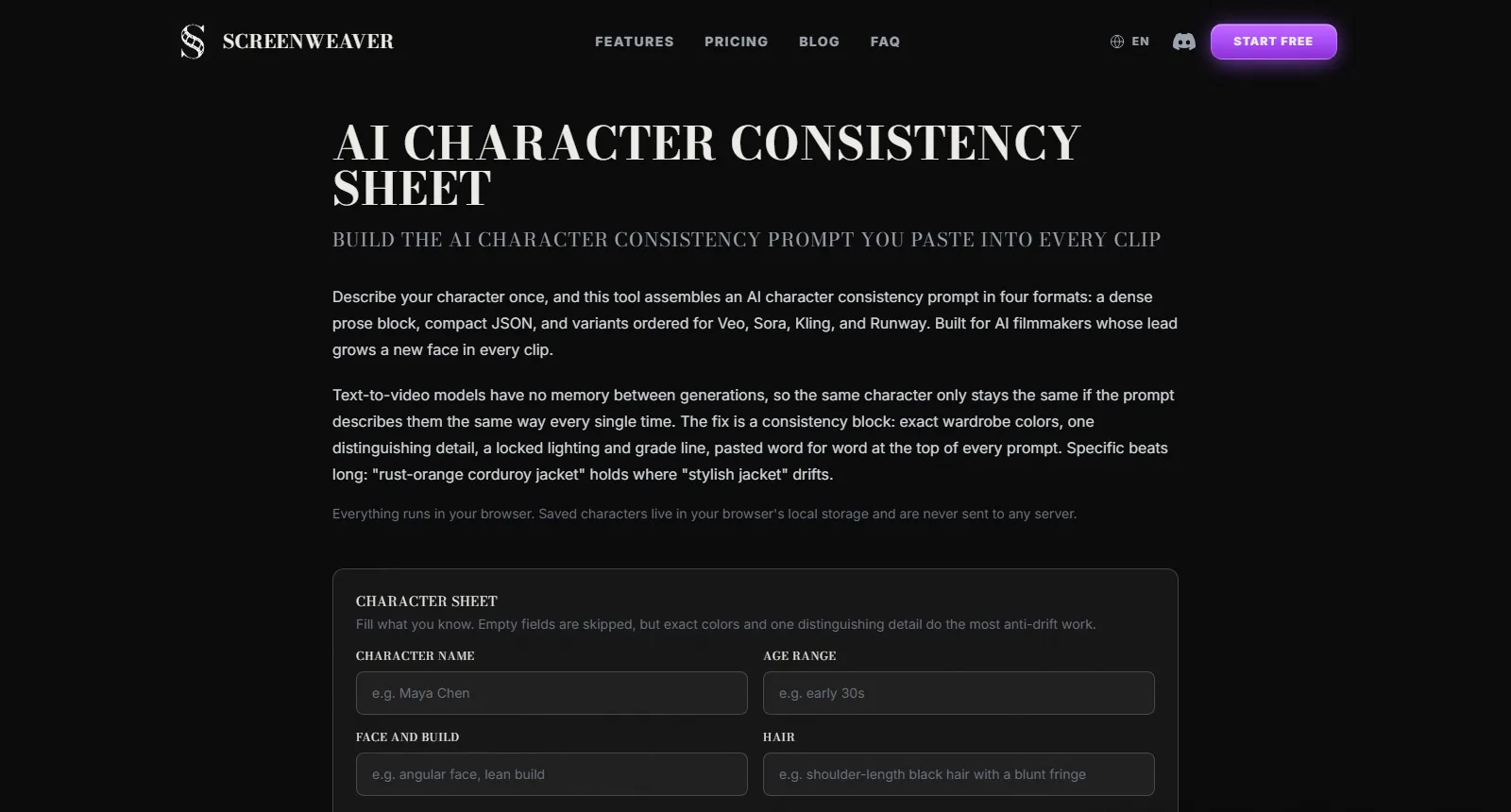
The AI character consistency sheet on screenweaver.ai, captured 3 September 2026. For a long book the cast sheet is the single most reused document: every character's front, three-quarter and profile, each costume, and the expressions the artist went big on, all cut from the pages.
Try it free
Try Screenweaver for free on your script
It is free. Import your existing project, get a clearer view of your outline, and regain control of your story structure in minutes.
Start FreeStyle: ligne claire, painted, or the author's hand
Long-form comics carry stronger authorial styles than periodicals, and the style is often the reason the book is loved. Three common cases:
| Style | The problem in motion | What works |
|---|---|---|
| Ligne claire (clear line, flat colour, no hatching) | Very little, which is why it animated well for decades | Flat colour references, a consistent line weight, and a rule against painterly lighting in the prompts |
| Painted or watercolour | Texture crawls in generation; edges are soft, so faces drift | Build references from the cleanest faces; describe the texture in the style reference, not in every prompt; expect more retries |
| Ink-heavy, expressive, sketchy | The hand is the style, and generation smooths it | Keep monochrome or two-tone, use the roughest clean panels as style references, and accept that the motion will be in the style, not by the hand |
Decide the style on one reference page before boarding, and test it with ten shots from the hardest sequence in the book. If the look does not hold across ten, it will not hold across a thousand.
Voice and the author
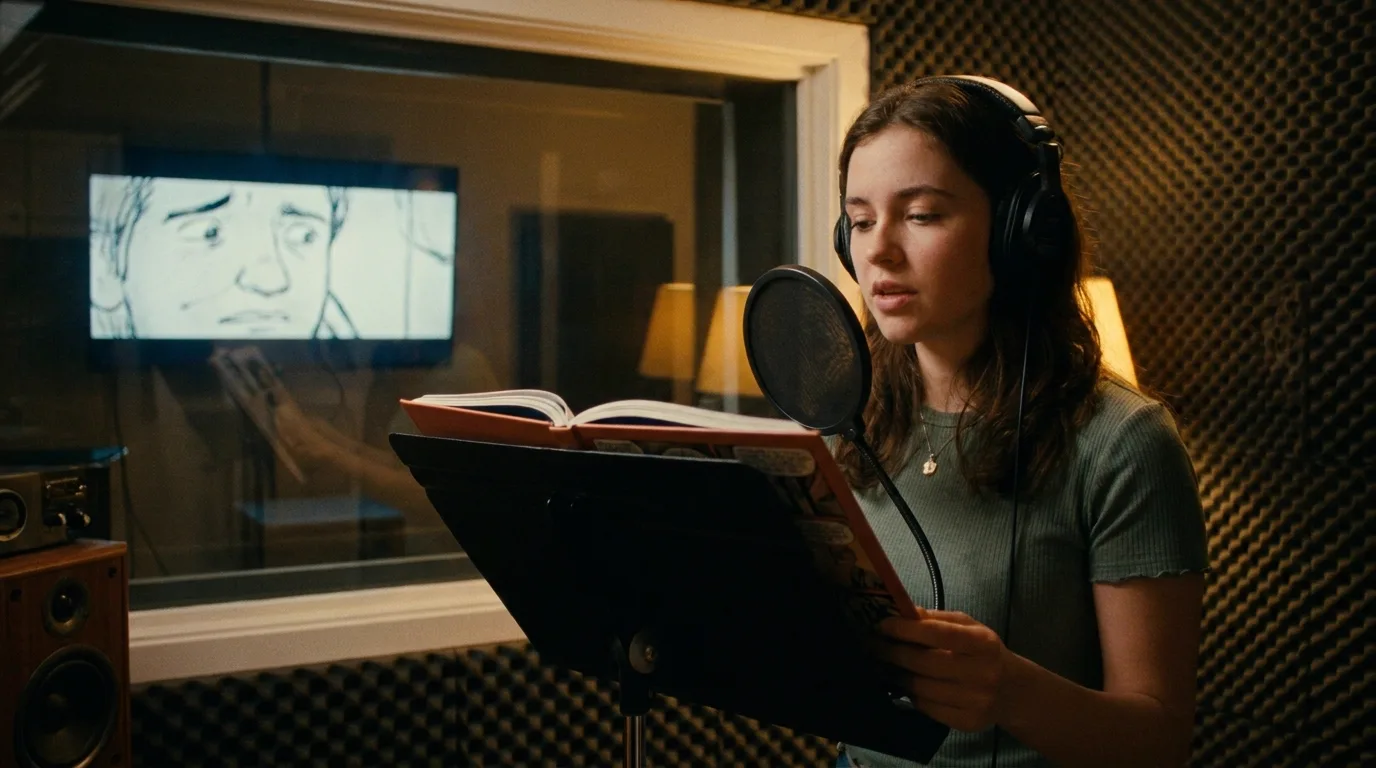
A graphic novel adaptation lives or dies on voice casting more than a comic does, because the reader has spent hours with these characters and has heard them. Record before generating so the durations are known, and if the author is alive and willing, have them read the captions. Persepolis kept Satrapi's hand in the drawings; a voice is the closest an animated adaptation gets to keeping the author's hand in the sound.
Rights, briefly
An album or graphic novel usually has a publisher with adaptation rights in the contract, and in the Franco-Belgian market those rights are often held or brokered by the publisher rather than the author. If it is your own book, check your publishing contract before producing anything longer than a teaser. If it is someone else's, the teaser is the pitch and the rights conversation comes before the board. What that teaser has to contain, and why it is aimed at a producer rather than a broadcaster, is in the comic adaptation teaser. The industry and rights guides on this blog cover the mechanics.
A first project
Not the book. One sequence of eight to twelve pages, the one readers remember, boarded fully, with the style decided and tested on it. Two to three minutes of animation, 40 to 60 shots, 150 generations, two weeks. It tells you whether the style holds, whether the voices are right, and whether the book is a film or a series, before you commit to 1,100 shots.
FAQ
How long is a graphic novel as an animated film?
A 150-page graphic novel at five to seven panels a page runs 55 to 85 minutes at the calculator's defaults, which is a feature. A 48-page album is 22 to 30 minutes, an episode. Past 200 pages a feature needs cuts, or the book becomes a limited series.
Should a graphic novel be a film or a series?
Books built in chapters, with a hook every 20 to 30 pages, are series. Books written as one continuous movement are features. The chapter breaks are the tell, and the feature will lose about a third of a long book to compression.
Can a Franco-Belgian album be turned into animation with AI?
Yes, and ligne claire styles animate well because flat colour and a consistent line survive generation. The density of the pages (nine to twelve panels, mostly dialogue) means an album is a 22 to 30 minute episode, not a film, and the merge share in the calculator should be high.
What gets cut when adapting a graphic novel?
Subplots that do not touch the climax, repeated motivation beats, travel pages, caption monologue, and characters who exist to deliver one fact. The ten panels readers post from the book never get cut; the board is built to reach them.
How do you keep a painted or watercolour style in AI animation?
Build references from the cleanest faces, describe the texture once in a style reference rather than in every prompt, and expect a higher retry rate because soft edges drift. Test ten shots from the hardest sequence before boarding the book.
Do I need the rights to animate a graphic novel?
For your own book, check the adaptation clause in your publishing contract. For anyone else's, the teaser is the pitch and the rights conversation precedes the board. Publishers often hold or broker animation rights, especially in the Franco-Belgian market.
Final Step
Build your next script with Screenweaver
Move from ideas to production-ready pages faster with timeline-native writing and AI-assisted story flow.
Try Screenweaver