
The Western screenwriter hands over a script. Dialogue, action lines, scene headings. The document is self-contained. Anyone who reads it understands how the film plays.
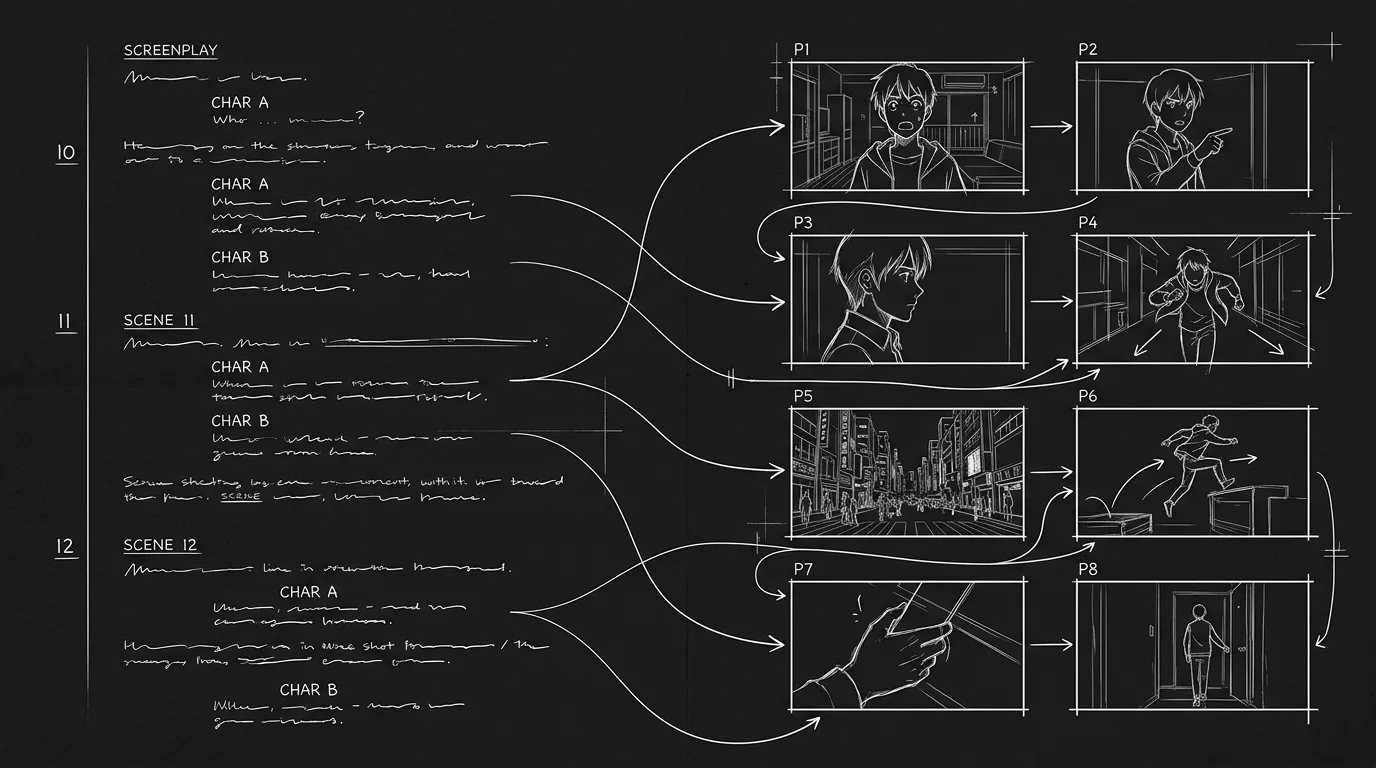
The anime screenwriter hands over a script that's one piece of a larger system. The dialogue exists, but so do timing charts, character expression guides, key animation notes, and storyboard references. The script alone doesn't tell you how the episode plays, it tells you what the characters say and, sometimes, what they do. The visual language lives in other documents, created by other people, following conventions the Western writer has never encountered.
This is the fundamental difference. Anime and manga scripting operates within a production system that divides labor differently than Western film and television. Understanding these divisions, and the codes that govern them, is essential if you want to write for the medium rather than awkwardly translate Western habits into a context that doesn't want them.
This guide isn't about how to "write anime." There's no single style. Cowboy Bebop reads differently than Naruto, which reads differently than Your Name. But there are formatting conventions, production expectations, and storytelling codes that apply broadly. Knowing them won't make you Hayao Miyazaki, but it will keep you from making mistakes that mark you as an outsider.
Free tool: use the Slugline Formatter to clean up and standardize your scene headings.
Cinematic workflow frames
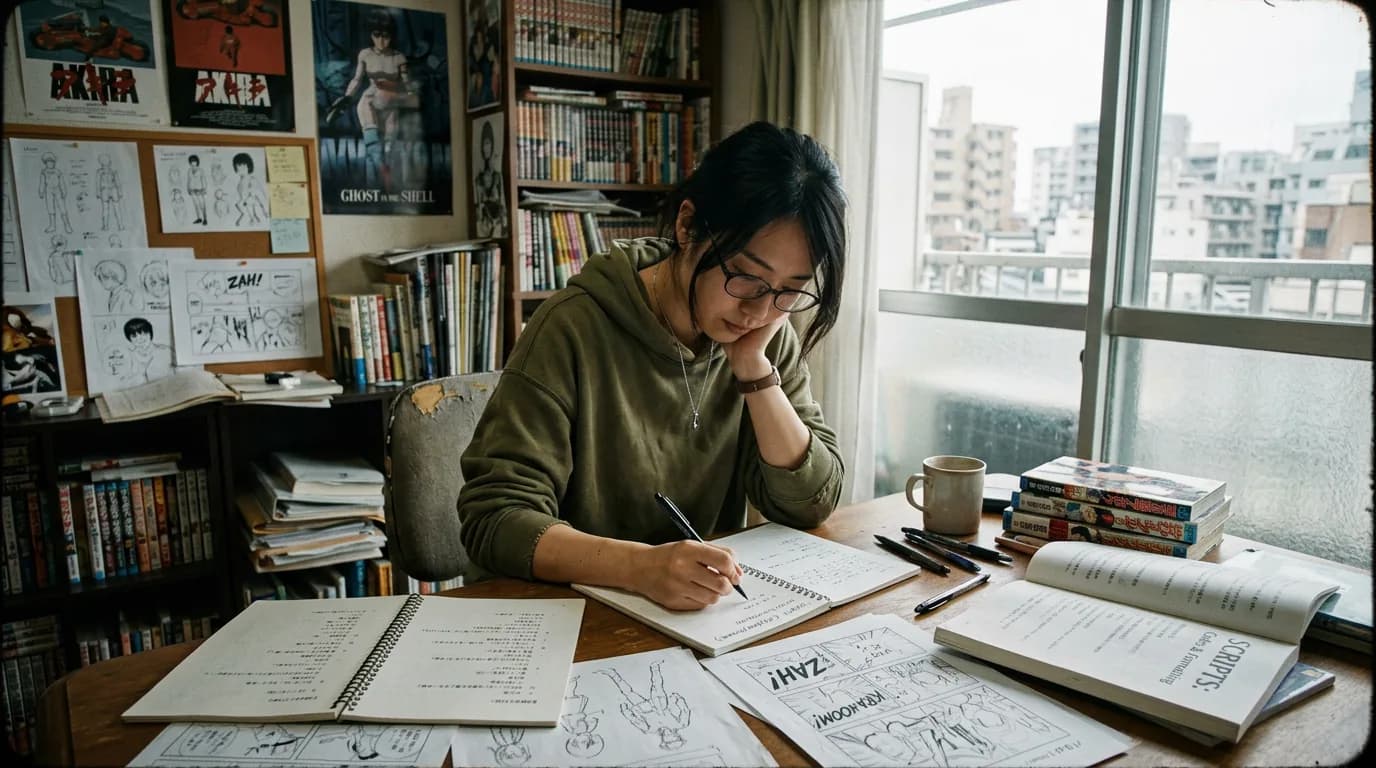
These two visuals work as a pair: the first shows Cinematic workflow still, first angle, 35mm film grain, and the second shifts to Cinematic workflow still, second angle, 35mm film grain - compare them briefly, then move on.
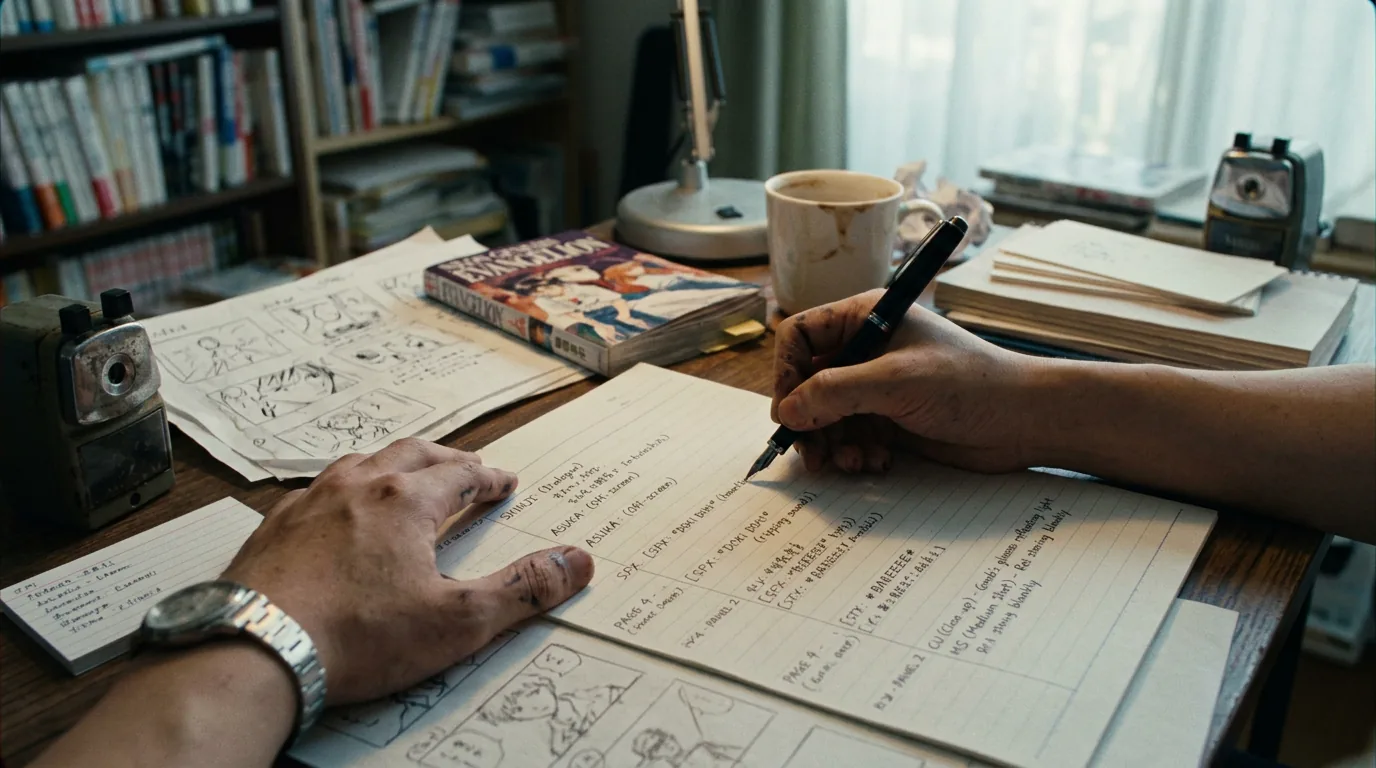
The Production Context: Why Anime Scripts Look Different
Western screenwriting assumes a single author (or team) produces a master document, the screenplay, from which all departments work. The script is the blueprint.
Anime production doesn't work this way. The anime script (called a "kyakuhon" or "shinario") is one input among many. It coexists with:
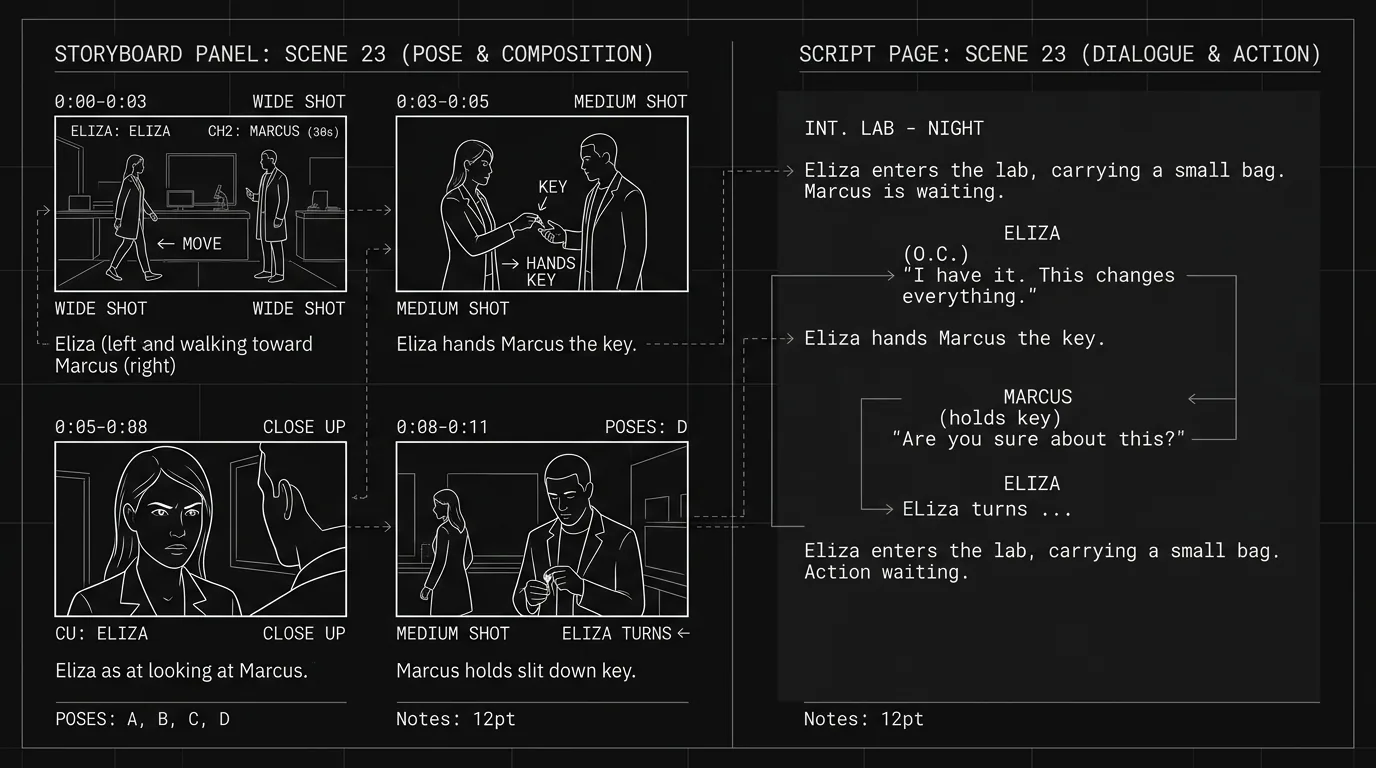
The storyboard (ekonte). A visual document that looks like a comic strip, created by the episode director or a storyboard artist. Its fields and its seconds-plus-frames timing notation are broken down in how e-konte works. The storyboard dictates camera angles, shot composition, movement, and timing. It often contains dialogue, but not always, and it may revise or contradict the script.
The key animation (genga). The primary drawings that define character poses and movements. Key animators interpret the storyboard, not the script.
The timing sheet (time sheet). A frame-by-frame breakdown of action, lip sync, and camera movements. Created by the episode director and animation director.
The script's role is to provide dialogue, scene descriptions, and narrative structure. But once the storyboard exists, the storyboard often supersedes the script for visual decisions. This means the anime scriptwriter has less control over visual execution than a Western screenwriter expects.
In anime, the script is a starting point. The storyboard is the blueprint.
This isn't a flaw, it's a different production philosophy. It allows for visual directors with strong stylistic vision to shape the medium's look, which is one reason anime has such distinctive visual languages.
The Anime Script Format: Basic Structure
Anime scripts vary by studio, but a common format includes:
Scene heading. Similar to Western scripts: location, time of day. Often simpler: "School classroom - day." Japanese scripts may use kanji for location names.
Action/description. What happens in the scene. Generally sparer than Western scripts, because detailed visual direction goes in the storyboard. Descriptions focus on emotional beats and narrative action, not camera angles.
Dialogue. Character name, followed by dialogue. Parentheticals may indicate emotional state or delivery ("angry," "whispering"). Dialogue in anime scripts is often written to match lip-sync requirements, a consideration for dubbing and animation timing.
Sound effects and music cues. Often indicated in the script with abbreviations: SE (sound effect), BGM (background music). These are placeholders; the sound team elaborates.
Timing notes. Some scripts include rough timing: "This scene: approximately 2 minutes." This helps production planning.
A sample page might look like:
SCENE 12: School rooftop - sunset
Akira stands at the railing, looking out. The wind catches her hair. Behind her, the door opens.
KENJI enters, hesitant.
KENJI (quietly) I didn't think you'd be here.
AKIRA (without turning) Where else would I go?
Kenji approaches. Stands beside her. Neither speaks.
SE: Distant train whistle.
Akira finally looks at him. Her eyes are wet.
AKIRA You knew, didn't you? The whole time.
Notice what's missing: camera directions, specific shot compositions, animation notes. Those go in the storyboard. The script provides dialogue and emotional skeleton.
Key Codes: Conventions Western Writers Miss
Code #1: Internal Monologue Is Standard
Anime uses internal monologue constantly. Characters think in voiceover, narrate their feelings, explain their strategies. This is not considered poor craft, it's part of the medium's DNA, inherited from manga.
In Western screenwriting, extensive internal monologue is often a crutch. In anime, it's a tool. Use it to reveal information the character can't say aloud, to deepen emotional stakes, to build suspense.
Format: Internal monologue is typically marked with an indicator, "M" for monologue or "(internal)" after the character name.
AKIRA (M) He's lying. I can see it in his eyes. But why?
Code #2: Emotional Reaction Beats
Anime scripts often indicate beats for silent emotional reaction. A character processes shocking news. A character realizes the truth. These moments, often held for several seconds in animation, are part of the rhythm.
Mark these clearly: "Beat. Akira's expression shifts, realization dawning." The storyboard artist will interpret the visual, but you're flagging that the moment matters.
Code #3: Flashbacks Are Structural, Not Exceptional
Western scripts treat flashbacks as special, they require justification, clear visual distinction, and sparing use. Anime treats flashbacks as standard narrative vocabulary. Characters flash back constantly: to explain motivation, to contextualize current action, to provide exposition.
Indicate flashbacks clearly: "FLASHBACK - Akira, age 12, in the same rooftop location." End with "END FLASHBACK" or "BACK TO PRESENT."
Code #4: Chibi and Super-Deformed Moments
In comedy anime, characters suddenly shift to simplified, exaggerated designs, "chibi" or "super-deformed." These are scripted as emotional punctuation: embarrassment, frustration, comedic shock.
Indicate when appropriate: "Kenji goes chibi, steam rising from his ears." The storyboard and animation teams decide the exact visual, but you're signaling the tonal shift.
Code #5: Transformation and Power-Up Sequences
Action anime often includes transformation sequences, magical girl transformations, power-ups, mech combinations. These are sometimes reused footage (called "bank sequences") and sometimes unique.
If a transformation is standard (same sequence each episode), indicate briefly: "TRANSFORMATION SEQUENCE - standard bank." If unique, describe the key emotional and visual beats without over-directing: "Akira's transformation, more desperate this time, her power flickering, unstable."
Manga Scripting: A Different Format
Manga (print comics) scripting differs from anime scripting because the output is static images, not animation.
A manga script typically includes:
Page number and panel breakdown. "Page 12: 5 panels."
Panel-by-panel description. What's in each panel: characters, action, background, composition.
Dialogue and captions. What text appears in speech bubbles, thought bubbles, and caption boxes.
Sound effects (onomatopoeia). Manga heavily uses visual sound effects integrated into the art. The script indicates what sounds occur; the artist designs the typography.
Sample manga script:
PAGE 15
Panel 1 (large, top half of page): Wide shot. The rooftop at sunset. Akira stands alone at the railing. Kenji has just arrived at the door behind her.
KENJI: I didn't think you'd be here.
Panel 2 (small): Close on Akira's face in profile. She doesn't turn.
AKIRA: Where else would I go?
Panel 3 (small): Kenji's feet as he walks toward her.
SFX: step step
Panel 4 (medium): The two of them side by side at the railing. Neither looking at the other.
(no dialogue)
Panel 5 (medium): Akira turns. Her eyes are wet.
AKIRA: You knew, didn't you? The whole time.
Notice the detailed composition notes. In manga, the writer often indicates panel layout and visual emphasis, though the artist may revise. The writer and artist collaborate more closely than in anime (where storyboard artists interpret the script independently).
Try it free
Try Screenweaver for free on your script
It is free. Import your existing project, get a clearer view of your outline, and regain control of your story structure in minutes.
Start FreeA Table: Anime vs. Manga Script Differences
| Element | Anime Script | Manga Script |
|---|---|---|
| Visual direction | Minimal, goes to storyboard | Extensive, panel compositions described |
| Dialogue placement | Listed sequentially | Placed in specific panels |
| Timing | Sometimes indicated in minutes | N/A (reader controls pace) |
| Sound effects | Indicated as cues (SE:) | Integrated into panel descriptions |
| Page/panel structure | Scenes, not pages | Page and panel specific |
| Internal monologue format | (M) or (internal) | Thought bubbles indicated |
| Final visual authority | Storyboard artist / director | Manga artist |
If you're adapting between formats, manga to anime, or vice versa, understanding these differences is essential.
Three Scenarios: Different Anime Writing Contexts
Scenario A: Original Anime Series (TV)
You're writing an original series, not based on existing manga or light novel. You have creative freedom within the production system.
Script requirements: Complete dialogue, clear emotional beats, scene transitions, and timing estimates. You may collaborate with the series composition writer (series kōsei) who oversees the overall narrative arc.
Key challenge: Balancing your vision with the episode director's interpretation. Your script is a starting point; be prepared for storyboard revisions.
Scenario B: Manga Adaptation
You're adapting an existing manga into anime. The source material is beloved; fans will notice deviations.
Script requirements: Faithful adaptation of dialogue and key scenes. Decisions about what to cut (manga arcs often run longer than anime episodes can accommodate) and what to expand (adding anime-original scenes for pacing).
Key challenge: Compression. A manga chapter might take ten minutes to read but only three minutes as anime. You'll cut more than you add.
Scenario C: Light Novel Adaptation
You're adapting a light novel, prose fiction popular in Japan. Light novels are heavy on internal monologue and exposition.
Script requirements: Translating internal prose into external action and dialogue. What the protagonist thinks across three pages must become visual behavior or spoken lines.
Key challenge: "Show, don't tell" pressure. Light novels tell constantly; anime must show. Every internal passage becomes a scripting problem: How do we dramatize this?
The "Trench Warfare" Section: What Western Writers Get Wrong
Failure Mode #1: Over-Directing Visuals
The Western writer specifies camera angles, shot compositions, and editing rhythms. The Japanese production team ignores it, that's the storyboard artist's job.
How to Fix It: Focus on emotional beats, not visual execution. Write "Akira is devastated" not "Close-up on Akira's face, tears streaming, camera slowly pushing in."
Failure Mode #2: Avoiding Internal Monologue
The Western writer avoids voiceover because "it's lazy." The anime feels flat because emotional interiority is missing.
How to Fix It: Embrace internal monologue. It's a feature of the medium, not a bug. Use it to deepen character psychology.
Failure Mode #3: Underestimating Silence
Western TV scripts rarely hold silent beats, the medium is afraid of dead air. Anime holds silence constantly: a character staring, wind blowing, the weight of a moment.
How to Fix It: Script silent beats explicitly. "Beat, neither speaks. The weight of the unspoken hangs between them." The storyboard artist will interpret, but you're flagging the emotional necessity.
Failure Mode #4: Ignoring Rhythm and Pacing
Anime pacing is often slower than Western TV, scenes linger, conversations breathe, action sequences extend. A Western writer compresses everything.
How to Fix It: Study anime pacing. Watch a Ghibli film and note how long moments are held. Match that rhythm in your scripting.
Failure Mode #5: Treating Transformation Sequences as Filler
The Western writer sees reused transformation footage as lazy. The Japanese writer sees it as ritual, part of the show's identity and audience expectation.
How to Fix It: If the genre calls for transformations, write them with intention. They're not filler; they're ceremony.
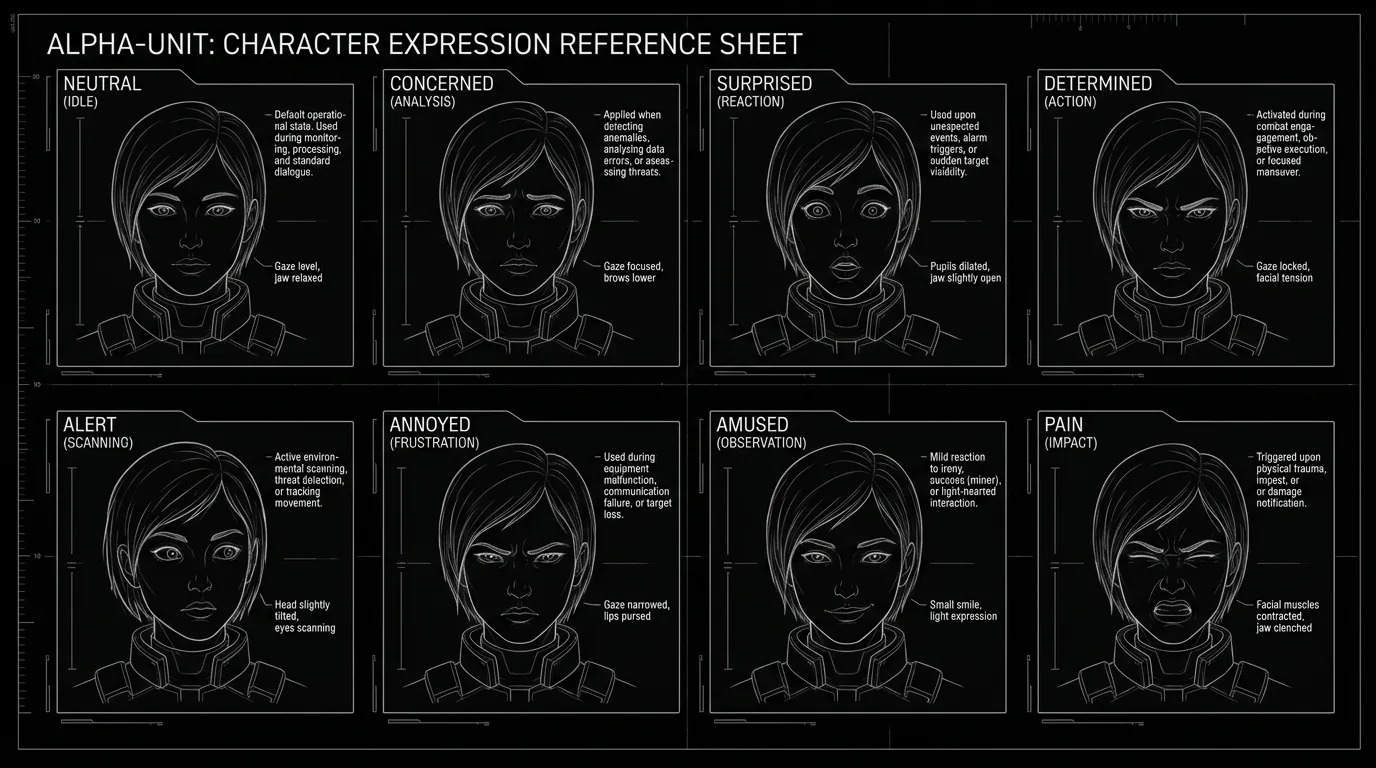
Cultural Codes: Storytelling Expectations
Beyond formatting, anime and manga carry cultural storytelling expectations that differ from Western norms.
Episodic vs. Serialized Balance. Many anime series blend episodic adventures with long-term arcs. Each episode must satisfy on its own while advancing the greater story. Western streaming tends toward pure serialization; anime often splits the difference.
Training Arcs. Shonen (young male audience) anime often includes extended training sequences. Characters practice, fail, improve. Western audiences may find these slow; Japanese audiences expect them.
Slice of Life Tolerance. Anime audiences tolerate, and enjoy, extended "slice of life" sequences: characters eating together, commuting, doing mundane activities. These build character through behavior, not plot.
Emotional Escalation. Anime often builds to emotional peaks that feel melodramatic by Western standards. Characters yell, cry, express feelings at high volume. This is convention, not excess.
Ending Ambiguity. Anime endings can be ambiguous, melancholic, or unresolved in ways that Western television often avoids. The satisfaction is emotional, not necessarily narrative.
Understanding these expectations helps you calibrate your scripts for the medium.
The Perspective: Writing for a Collaborative System
The hardest adjustment for Western writers is releasing control. In Hollywood, the script is sacred (in theory). In anime, the script is one input. The director, storyboard artist, key animator, and sound designer all shape the final product. Your words matter, but they're not the last word.
This can feel frustrating, or liberating. You don't have to solve every visual problem. You focus on character, dialogue, and emotional arc. You trust collaborators to interpret the visuals.
The best anime scripts are clear about what matters and flexible about what doesn't. They specify emotional beats with precision and leave visual execution open. They provide dialogue that sounds like each character while allowing timing adjustments for animation.
Write the skeleton. Let the storyboard add the flesh.
[YOUTUBE VIDEO: A breakdown of an anime episode showing how the original script was interpreted through storyboard and final animation, with commentary on what changed and why.]
Further reading:
- For guidance on adapting comics to screenplay (including manga), see adapting a comic book into a screenplay: managing onomatopoeias and splash pages.
- If you're writing interactive or branching narratives (common in visual novels), see our interactive fiction formatting guide.
- The Anime News Network covers industry practices at animenewsnetwork.com{:rel="nofollow"}.
If your source material is a webtoon rather than an original script, the adaptation route has its own rules. How to turn a webtoon into an anime covers the studio path and the AI path side by side.
For adapting an existing manga rather than writing for the medium, manga to anime with AI covers chapters per episode, right-to-left order and the screentone problem.
Final Step
Build your next script with Screenweaver
Move from ideas to production-ready pages faster with timeline-native writing and AI-assisted story flow.
Try Screenweaver