Jib shotAdding height and sweep on a small set
A jib shot uses a counterweighted arm to swing the camera up, down and sideways in smooth arcs, on a scale smaller than a full crane. The audience feels the camera float over a table, a counter or a crowd with a lightness a tripod cannot give.
Also calledJib arm shotMini crane shot
Camera movement
Why it works on screen
The jib gives an ordinary scene a sense of choreography. It can lift from a worker's hands to the whole workshop, sweep over a dinner table as a family argues, or descend from a balcony to a single guest. It serves openings and endings, transitions from detail to group, and moments where the space itself is a character. Because it is lighter and faster to set up than a crane, it suits small productions that still want vertical movement. A scene earns it when rising or falling through the space reveals relationships that a flat angle would hide.
The shot list line
- Size
- Close-up on hands to medium wide on the room
- Angle
- Low or eye level rising to high angle
- Movement
- Jib up and sideways in a smooth arc
- Lens
- 18mm to 35mm
- Duration
- 5 to 12 s
Balance the arm carefully and use a remote head so the operator can adjust tilt and pan while the grip swings the arm.
Screenplay
On the page
Screenwriters should not write "jib shot" or "on the jib". The choice of equipment belongs to the director and camera team. You can, however, describe a space with height: a mezzanine, a counter with hands working, a staircase, a crowd seen from a balcony. That gives the director a reason to move vertically. When you direct your own script, the shot list names the jib, the arc and the start and end frames.
INT. BOULANGERIE DU CANAL, PARIS 10E - 4 A.M.
Flour hangs in the air under a single hanging bulb.
Hands slap dough onto a marble counter: fold, turn, fold.
They belong to MARIE-CLAIRE N'DIAYE (40s, hair wrapped, earbuds in), dancing a little as she works.
Behind her, racks of baguettes rise to the ceiling. The oven door glows orange.
Her apprentice THÉO (17) sleeps upright on a sack of flour.
She flicks a pinch of flour at him without looking.
Storyboard
In the storyboard
Draw a start panel on the detail and an end panel on the wider view. Between them, sketch the jib from the side, with the pivot on its stand and a curved arrow tracing the arc of the camera, labeled JIB UP or JIB DOWN. If the arm also swings sideways, add a top view with a second curved arrow. Note the start and end heights, the duration and any pan or tilt on the head.
Pairs well with
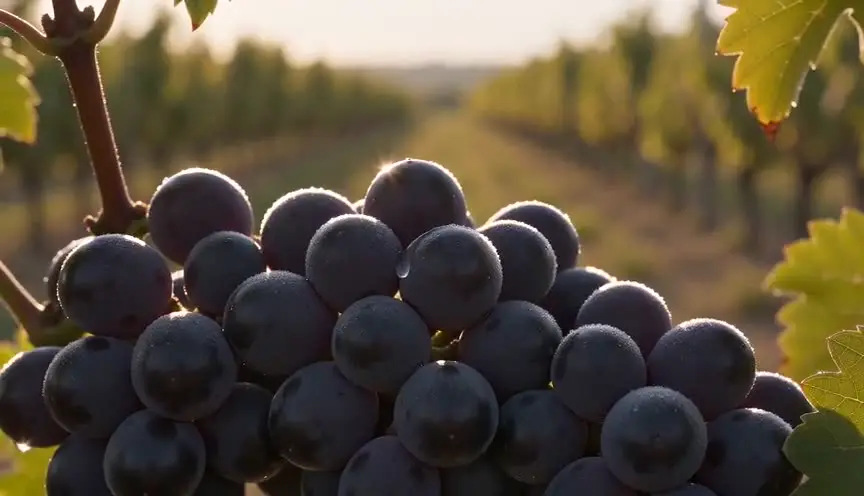
Begin with an insert of hands or an object, then let the jib rise away to reveal the room. The insert fixes the detail, and the jib places it in the life of the scene.
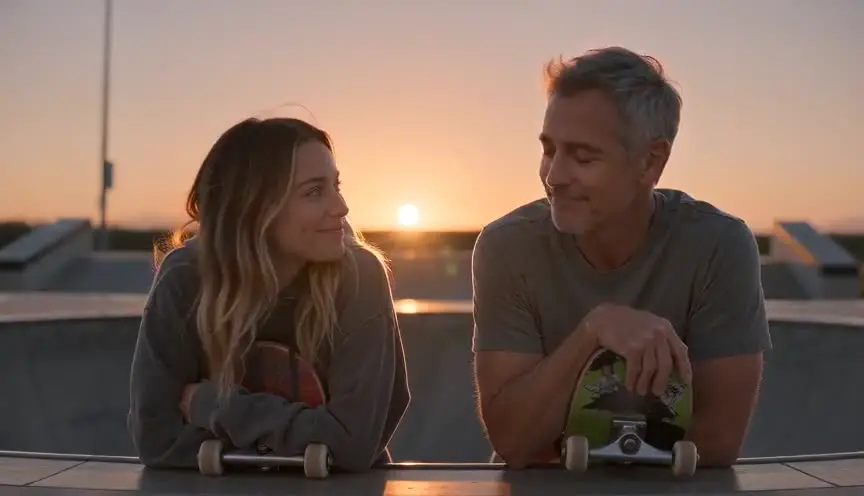
A jib that descends from a wide view into a two-shot turns a public scene into a private exchange, landing the audience right at the table with the two characters.
Reference
Watch it in
1917 (2019)
Jib and telescopic arms carry the camera over trench walls and debris so the seemingly unbroken journey can climb and drop without a visible cut.
Notorious (1946)
From the balcony, Hitchcock sweeps the camera down through a party to Alicia's hand and the key she hides, turning a crowded room into pure suspense.
Touch of Evil (1958)
The opening rises over the border town, follows the car carrying a bomb, and comes down to the street in one long, unbroken movement.
ScreenWeaver
Set it up in ScreenWeaver
Write the space with its heights and details in your screenplay, and ScreenWeaver breaks the scene down into shots automatically. Open the shot, set the framing to start close, set the angle, choose a jib up or jib down as the movement and give it a duration of five to twelve seconds. Characters and the location carry from shot to shot, so the room and props stay consistent. Test the arc in the AI previsualization before you take it to set.
Start writing for freeThe prompt behind this clip
This is the exact prompt that rendered the clip at the top of the page. Keep the description of the camera and the light, change the subject and the place.
Jib shot: the camera glides up and forward through a cylindrical space station corridor, mounted on an arm that rises smoothly from hip height to near the ceiling while sweeping laterally to the right, revealing a lone engineer floating past illuminated control panels. The move is continuous with no cuts, shot on a 35mm lens, cool white LED strip lighting along the curved walls, faint drifting dust motes, horizon level throughout, the sweep easing in and holding steady speed for the full four seconds. No text.
Common mistakes
- 01
Bounce at the end of the arc
A jib that stops abruptly wobbles, and the frame shakes. Slow the arm into its final position, and add a moment of hold before the cut.
- 02
Arm in the shot
On a wide lens, the end of the arm or its shadow can creep into frame. Check the full arc on the monitor, especially near lights.
- 03
Jib moves on every setup
Once a jib is on set, it is tempting to use it for everything. Constant floating removes weight from the moments that need it. Keep some shots still.