AI Film Festival Japan · Guide

How to win AI Film Festival Japan.Tokyo, four categories, two sponsored awards.

The 2026 entry window closed on 30 September, so this guide reads the 2026 rules, jury and special awards to get you ready for the next call. Then carry the film from screenplay to storyboard to footage in ScreenWeaver.
  • 2026 entries closed 30 Sep
  • Festival 31 Oct to 2 Nov
  • No imposed AI tool
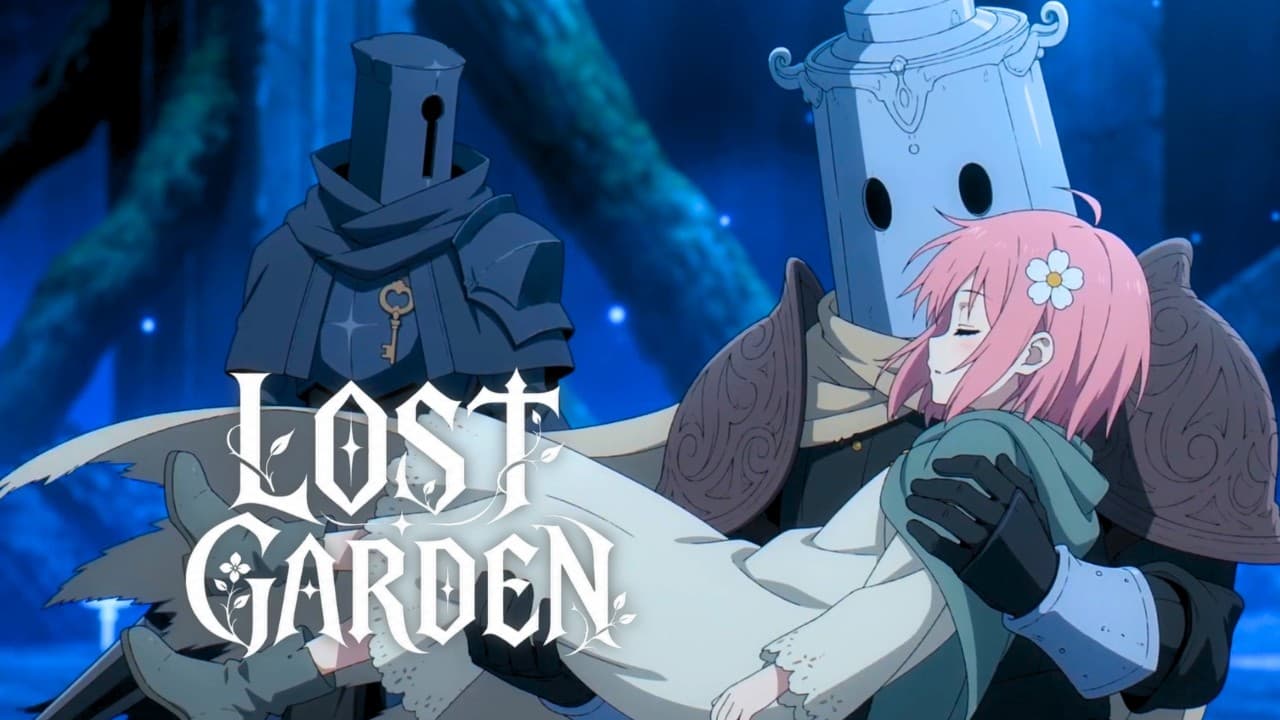
Lost Garden · Episode 2

Independent guide. ScreenWeaver does not organise AI Film Festival Japan and is not affiliated with the AI Film Festival Japan 2026 Executive Committee. Rules read on 1 October 2026. Official site

Available today in ScreenWeaver: free screenwriting, and a storyboard generated from your screenplay with Storyboard Beta, $9.99 a month.

Rolling out: video generation of each shot, powered by Seedance, with the Filmmaker plan.

The rules on one card

What the second edition asked for.

AIFJ is a Tokyo festival for films made with generative AI, run by an executive committee led by AI FILM JAPAN inc. The 2026 call is over, and no 2027 call is announced, so these terms are the best guide to what comes next.
Edition
Second, in Tokyo, 31 October to 2 November 2026
Venue
Tokyo Innovation Base, Marunouchi, still marked “to be confirmed”
Entries
Closed. Late deadline 30 September 2026, 12:00 JST, on FilmFreeway
Categories
AI Cinema Narrative, AI Creative Film and Experimental, AI Animation, and a new AI Film Music Score
Files
16:9 and 1080p recommended, 4K accepted, MP4 or MOV
Language
English subtitles are mandatory for any work not in English or Japanese
AI rule
Say which generative AI tools you used, in which processes and to what extent
Length and fee
Neither is printed on the official pages. Fees are set on FilmFreeway

Source: aifilm.jp (home page, Film Music category page, CapCut and ElevenLabs award pages), read on 1 October 2026. The dates of the entry rounds come from the Film Music page and the CapCut page. An older news item on the home page still says 3 November.

The 2026 calendar

Three months of rounds, then Tokyo.

The 2026 schedule shows how the festival paces itself. Expect something similar next time, and check the dates the day the call opens.
  1. 1 Jul to 10 Sep 2026

    Entries open

    Opening on 1 July, early bird on 31 July, regular deadline on 10 September, all on FilmFreeway.

  2. 30 Sep 2026

    Late deadline

    12:00 JST. This was also the formal deadline for the CapCut AI Creative Award.

  3. 10 Oct 2026

    Notification

    Selected filmmakers are told. The festival uses a preliminary review, then a final jury.

  4. 12 Oct 2026

    CapCut contest results

    CapCut announces its own top 20 and top 10. The AIFJ award is decided separately by the AIFJ jury.

  5. 31 Oct to 2 Nov 2026

    Festival in Tokyo

    Competition screenings, keynotes and panels, creator workshops, the award ceremony and a networking reception.

How films are judged

Four categories, four yardsticks.

AIFJ publishes no weights. It does publish what each category looks at, and the yardsticks differ, so choose the category before you cut the film.
  • AI Cinema Narrative

    Short films that put story first. The guidelines name narrative structure, character development and the visual aesthetics of AI-driven expression. Write the arc before you generate a frame.

  • AI Creative Film and Experimental

    Genre-free work about the dialogue between creativity and AI tools, hybrids included. The yardstick is originality, groundbreaking experimentation and process innovation. Show a method nobody has used.

  • AI Animation

    Animated work made by humans and AI together. Judges look at how traditional animation techniques fuse with AI, at visual completeness and at stylistic uniqueness. A house style beats a pile of effects.

  • AI Film Music Score

    New in 2026. Creators score an official video clip with AI-generated music, and are judged on cinematic synchronicity and musical completion across instrumental and vocal tracks.

No weights are published, so treat the four yardsticks as equal. Enter the category whose yardstick your film already meets, not the one with the largest prize.

The jury

Four jurors, four ways of reading a film.

The organisers name an international jury of four and say a preliminary review adapts to the number of entries. The biography of a juror tells you what they will notice.
  • Harry Hyun, MooAm

    Founder of the Korean AI production company MooAm. She produced the feature Crypto Man and won the Grand Prize at the 1st CGV AI Film Festival in 2025. Expect a producer's eye: does this film hold together, and could it reach an audience?

  • Toby Hyder, XOLink

    A creative technologist who worked on volumetric capture and virtual production, then led a human-performance capture team at Synthesia. He champions hybrid workflows. Expect attention to how a performance was built, not only how it looks.

  • Kennex Ma

    A scriptwriter turned advertising creative director, now an AI filmmaker, who calls himself a storyteller first. A clear line of story will matter more to him than a showy shot.

  • Jon Taramona Redondo, Sin Cámara

    CEO of the Spanish software company Aplimedia, who started the Camera-less AI film festival in Spain. A festival organiser's view: he programmes AI films himself, so make what is original in yours visible within the first minute.

Side doors

Three prizes beside the main categories.

Beyond the four categories, the festival opens three more doors. Each has its own rules, and none of them requires a particular tool for the film itself, except CapCut's.
  • 01

    Best Use of Voice, presented by ElevenLabs

    Chosen from the finalist pool. The criteria, in order: voice performance and direction, voice as storytelling, localisation and dubbing craft, technical execution. ElevenLabs products are not required and earn no bonus. The winner gets six months of an ElevenLabs Professional licence.

    Every human voice must be your own performance with consent, a licensed voice, or a synthetic voice tied to no real person. Imitating a real voice without consent disqualifies the film. Keep a record of where each voice came from.

  • 02

    CapCut AI Creative Award

    For works that use CapCut's AI tools in a substantial, primary role, scored on creative quality, CapCut AI integration, workflow innovation and technical execution. The prize is a one-year CapCut Pro membership and 50,000 CapCut AI credits. You must still submit to AIFJ through FilmFreeway.

    Be honest with yourself: footage made elsewhere does not qualify, and the festival can ask for generation logs. Choose this award only if CapCut is the engine of your film.

  • 03

    AI Film Music Score

    You get an official video clip of about three minutes and compose an unreleased, AI-generated track for it. Instrumental and vocal divisions exist. You send a WAV or AIFF file and a preview MP4 synced to the footage. The festival keeps the copyright to the clip.

    Treat it as a spotting session: mark where music enters, swells and leaves, tied to the cuts. Synchronicity is the first thing the category judges.

The 2025 edition

What the first list of finalists shows.

The festival's Past Winners page lists the 2025 nominations by category and marks 20 films as finalists. It does not say who took each prize, so read it as a map of what the festival selects.

  1. 01

    The categories moved. In 2025 the list had Narrative, Experimental, Animation and Documentary. The 2026 call has no documentary category and adds a music one. Read each year's categories fresh.

  2. 02

    The field is global. Nominees came from Korea, the United States, China, France, Poland, Brazil, Kuwait, Iran and Japan. Plan for subtitles and a story that works across cultures.

  3. 03

    Small premises dominate. A girl and a plush pig in Walled Dreams, a boy, a dog and a robot caregiver in Friends, a man sewing a button in Repair. One image, one feeling.

  4. 04

    AI is also a subject. ZERO follows a novelist shaken when an AI author wins a prize, and AIVY° is about an idol group made by AI. The festival welcomes films that look at the technology they use.

A scene, taken apart

Lost Garden: the cavern, in six shots.

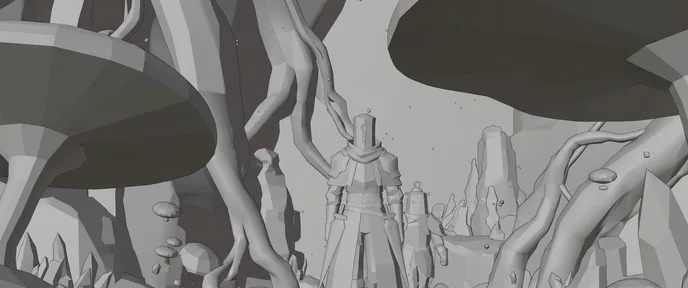
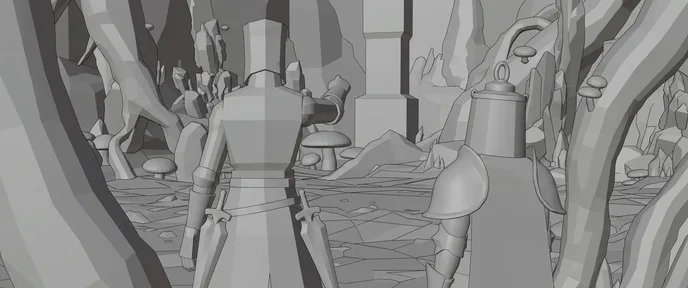
From Lost Garden, episode 2, an animated series made by the ScreenWeaver team with Seedance: two armoured knights beside a wound in an armour plate. Read the screenplay page, then compare each storyboard frame with the final image. Voice, character and a worked-out look are what the AIFJ categories ask for.

Logline. A newborn knight whose inner light is leaking away crosses a world that has stopped hoping, to find the one blacksmith who can seal his armor.

Screenplay · episode 2 · page 1

INT. UNDERGROUND CAVERN - LOWER PATH - CONTINUOUS

Blue mushrooms the size of houses. LANTERN, a small knight with a lantern for a helm, walks alone.

He presses a hand to his chest. Sparks of light slip between his fingers.

SERRURE

Hold on. You're losing something.

Serrure lifts the edge of the cloak. A gash in the armor. Blue light leaks out like smoke.

SERRURE

That's your energy. What keeps you standing.

He grips Lantern's shoulder. Two knights alone among the crystals.

SERRURE

A suit that leaks goes out. Eventually.

Under the giant mushrooms, the road climbs into the dark.

SERRURE

So. We follow the road.

Serrure points the way. Lantern follows.

CUT TO:

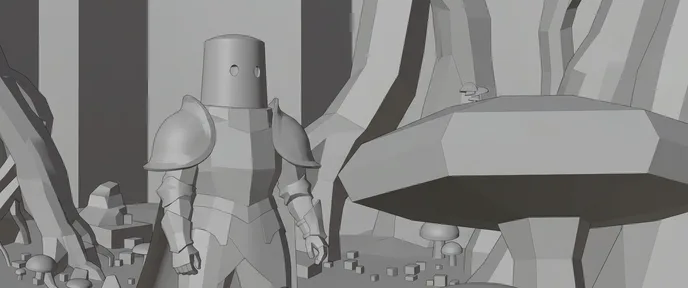
  1. A small knight with a lantern helm stands by a giant glowing blue mushroom in a crystal cavern
    Storyboard frame of the same wide shot, in grey
    01

    Wide · the world

    Wide shot, Lantern alone by a giant glowing blue mushroom, crystal cavern, roots, drifting spores, cold blue light

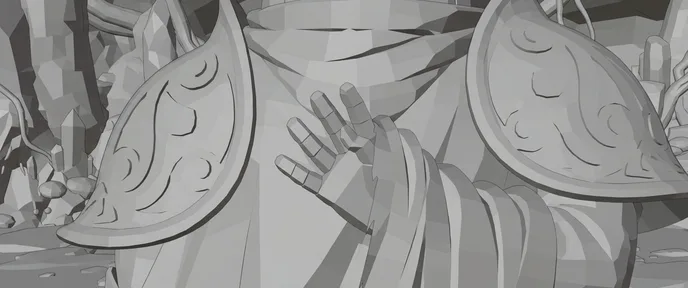
  2. Close-up of an armored chest under a cream cloak, a gloved hand, a spark of light
    Storyboard frame of the chest close-up, in grey
    02

    Close-up · the chest

    Close-up on Lantern's chest, his gloved hand pressed to the cloak, a spark of light escaping between the fingers

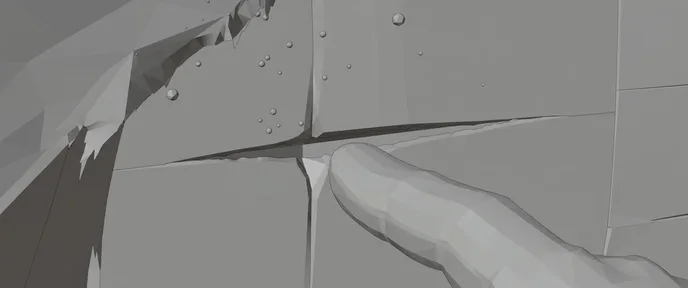
  3. A torn gash in an armor plate leaking bright blue light, a finger pointing at it
    Storyboard frame of the wound insert, in grey
    03

    Insert · the wound

    Extreme close-up, Serrure's finger near a torn gash in the back plate, blue light leaking out like luminous smoke

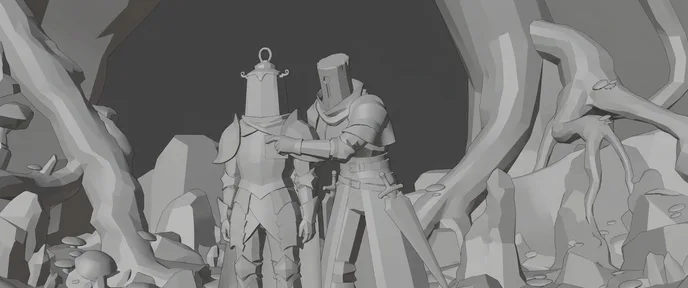
  4. Two armored knights side by side, one with a hand on the other's shoulder, in a crystal cavern
    Storyboard frame of the two-shot, in grey
    04

    Two-shot · the bond

    Medium two-shot among crystals and roots, Serrure's hand on Lantern's shoulder, faceless armors, emotion through posture only

  5. Two small knights walk beneath two giant glowing blue mushrooms
    Storyboard frame of the wide shot, in grey
    05

    Wide · the scale

    Wide low angle, the two knights tiny beneath two giant glowing mushrooms, blue crystals in the foreground, mist

  6. Seen from behind, a tall dark knight points ahead while the small lantern knight looks on
    Storyboard frame of the over-the-shoulder shot, in grey
    06

    Over the shoulder · the road

    Over-the-shoulder from behind, Serrure points ahead into the cavern, Lantern beside him, roots framing the path

Lost Garden, episode 2 lasts 21 minutes. The ScreenWeaver team made this animated series with Seedance, and episode 1 reached the finals at the AI London Festival. For AIFJ you would cut one sequence like this for the Animation or Narrative category. The player begins on this scene.

The script

Five minutes, five movements.

AIFJ prints no length limit, so choose the length your story needs. We use five minutes: short enough to keep a character the same, long enough for an arc. That is about five pages and 60 to 80 shots.
  1. 0:00 to 0:35

    The image

    A face, a place, a sound. Establish the look of the film at once.

  2. 0:35 to 1:30

    The want

    What the character needs, shown rather than said.

  3. 1:30 to 3:30

    The pressure

    Complications that cost something. If voices carry the film, this is where they work hardest.

  4. 3:30 to 4:25

    The turn

    A choice that changes the character.

  5. 4:25 to 5:00

    The echo

    A final image or line that answers the first one.

If you aim at the voice award, write the screenplay so that voice carries meaning, not only information. Judges rank performance and direction highest.

Be ready

Six steps before the next call opens.

The 2026 window ran three months. No 2027 call is announced, but a film finished early gives you every option. Work backwards from a finished master, not from a date.
  1. 01

    Step 1

    Choose a category and a side door

    Narrative, Experimental, Animation or Music Score. Then decide if the voice award or the CapCut award is realistic for this film. Most films should skip the CapCut award.

  2. 02

    Step 2

    Write the screenplay

    Five pages, free in ScreenWeaver. If voice is your angle, write dialogue that an actor could perform, then read it aloud.

  3. 03

    Step 3

    Document your voices and your tools

    Start the disclosure file now: every tool, every process, and for each voice its source and consent. The festival can ask for prompt histories.

  4. 04

    Step 4

    Storyboard every shot

    Generate the shot breakdown and storyboard from the screenplay, then tune framing, angle, movement and duration shot by shot.

  5. 05

    Step 5

    Generate, edit and mix

    Footage scene by scene from your storyboard and references. Edit, then mix the sound as carefully as the picture.

  6. 06

    Step 6

    Master and subtitle

    Export 16:9 at 1080p in MP4 or MOV. Add English subtitles if the film is not in English or Japanese. The festival says official screenings generally carry dual subtitles, so keep a clean, separate subtitle file.

Disqualification traps

Six ways to be removed.

The festival's terms are firm, and breaking them can mean a permanent ban from all future AIFJ events.
  • Third-party material

    Works must be entirely original and may not use copyrighted material or trademarks without permission. You alone clear music, footage and portrait rights.

  • Unauthorised deepfakes

    Training on real individuals without permission is prohibited, and the voice award adds a separate ban on imitating a real voice without consent.

  • A vague disclosure

    You must say which generative AI tools were used, in which processes and to what extent. Refusing to explain without a valid reason leads to disqualification or loss of an award.

  • Prohibited content

    Discrimination, hate speech, pornography and excessive violence are not allowed. A violent action scene needs care here.

  • No English subtitles

    A film that is not in English or Japanese must carry English subtitles. Without them, it does not meet the technical rules.

  • A recycled score

    In the Film Music category, tracks must be newly composed and unreleased, made for the festival's own clip. Reusing a published track fails the rule.

Why ScreenWeaver

An open field, and a pipeline that documents itself.

AIFJ names no required model for its main categories, so what you need is a film that is consistent, documented and written to be performed. That is a production pipeline, not a single tool.
  • A disclosure file built as you go

    Each shot connects to its scene, storyboard frame and prompt, so the answer to “which tools, which processes” is in the project file, not in your memory.

  • Faces and sets that stay put

    Characters, locations and references stay attached from shot to shot. In Animation the yardstick is visual completeness and a style of your own, and that begins with consistency.

  • Built on Seedance

    ScreenWeaver generates footage with Seedance 2.0 and 2.5. For the CapCut award, remember that CapCut's tools must play the primary role.

  • Free to start

    You can write for free, with no expiry. The storyboard step is $9.99 a month in beta, and video generation for each shot comes with the Filmmaker plan, now rolling out.

Real productions

International festival-recognized films have been written and produced with ScreenWeaver.

ScreenWeaver is already being used as a creative workspace for real AI film productions, from cinematic shorts to animated series pilots selected, nominated, and awarded by international festivals.

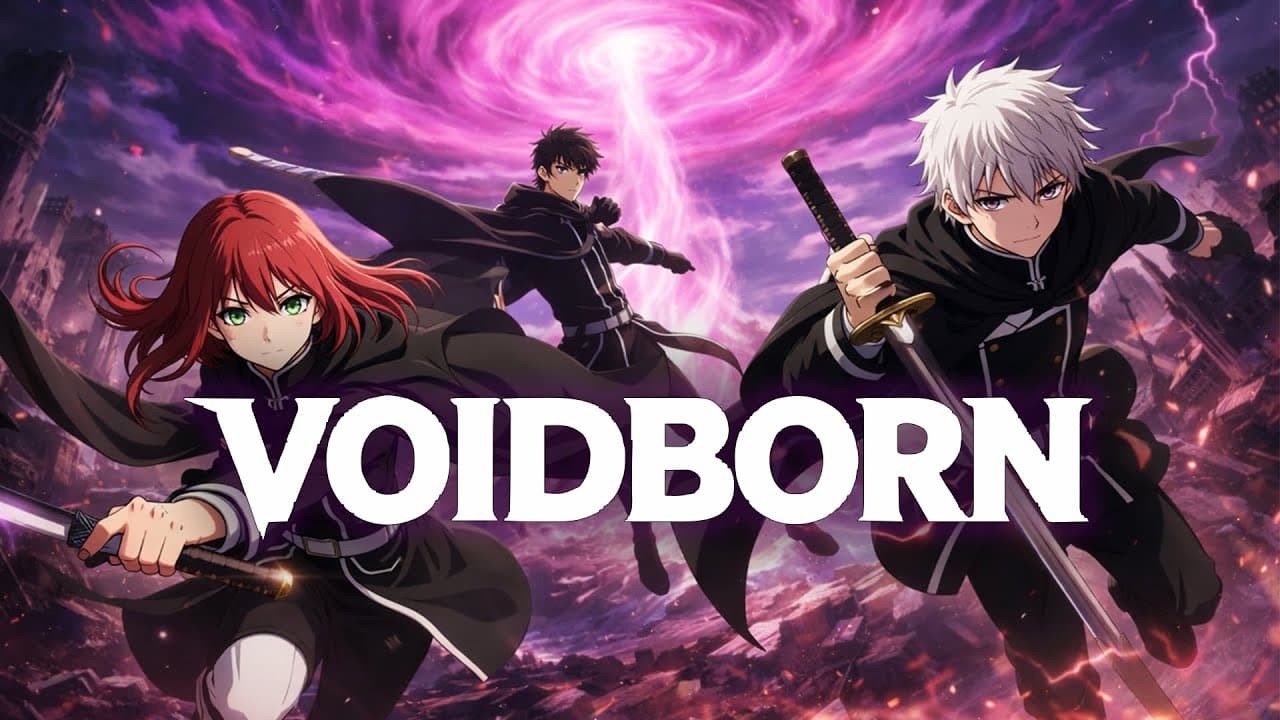
  • Video thumbnail for VOIDBORN

    VOIDBORN

    AI animated / cinematic short

    Festival recognition

    • 1st Place Silver

      Mondial Chroma Awards

    • 2nd Place Dreamina

      Mondial Chroma Awards

    • Award Winner

      Seoul International AI Film Festival

  • Video thumbnail for Les Fils du Vinnana

    Les Fils du Vinnana

    AI short film

    Festival recognition

    • Honorable Mention

      Top Quark Film Festival

    • People's Choice Nominee

      Illuminate Oneness of Humanity

    • Nominee

      ALTFF Supershort

  • Video thumbnail for Lost Garden

    Lost Garden

    AI animated series pilot

    Festival recognition

    • Finalist

      AI London Festival

The pipeline

Write. Board. Produce.

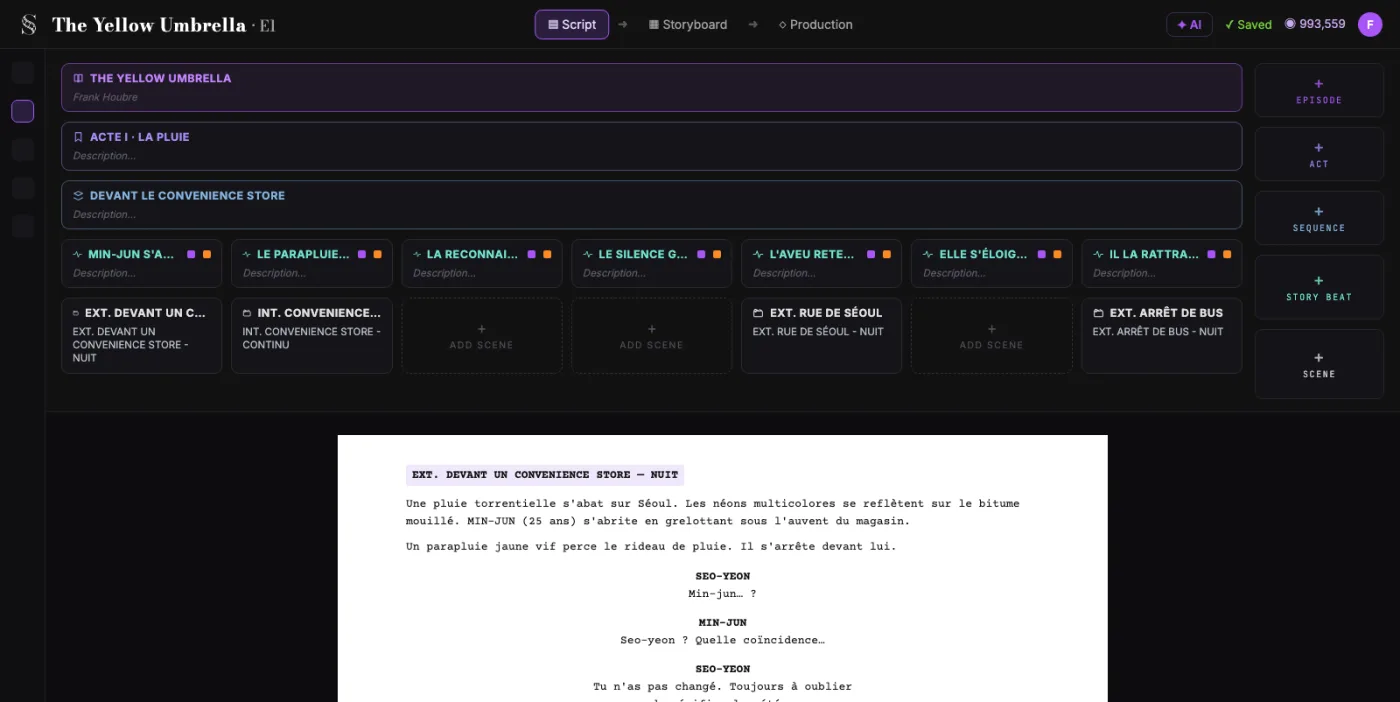
  1. ScreenWeaver screenplay editor: acts, sequences and beats above the formatted script of The Yellow Umbrella

    01The screenplay, enriched

    An industry-standard screenplay editor, and more: a visual outline and beat editor, your writing inspirations (notes, photos, audio) kept next to the page, and an AI researcher to support your writing, not replace it.

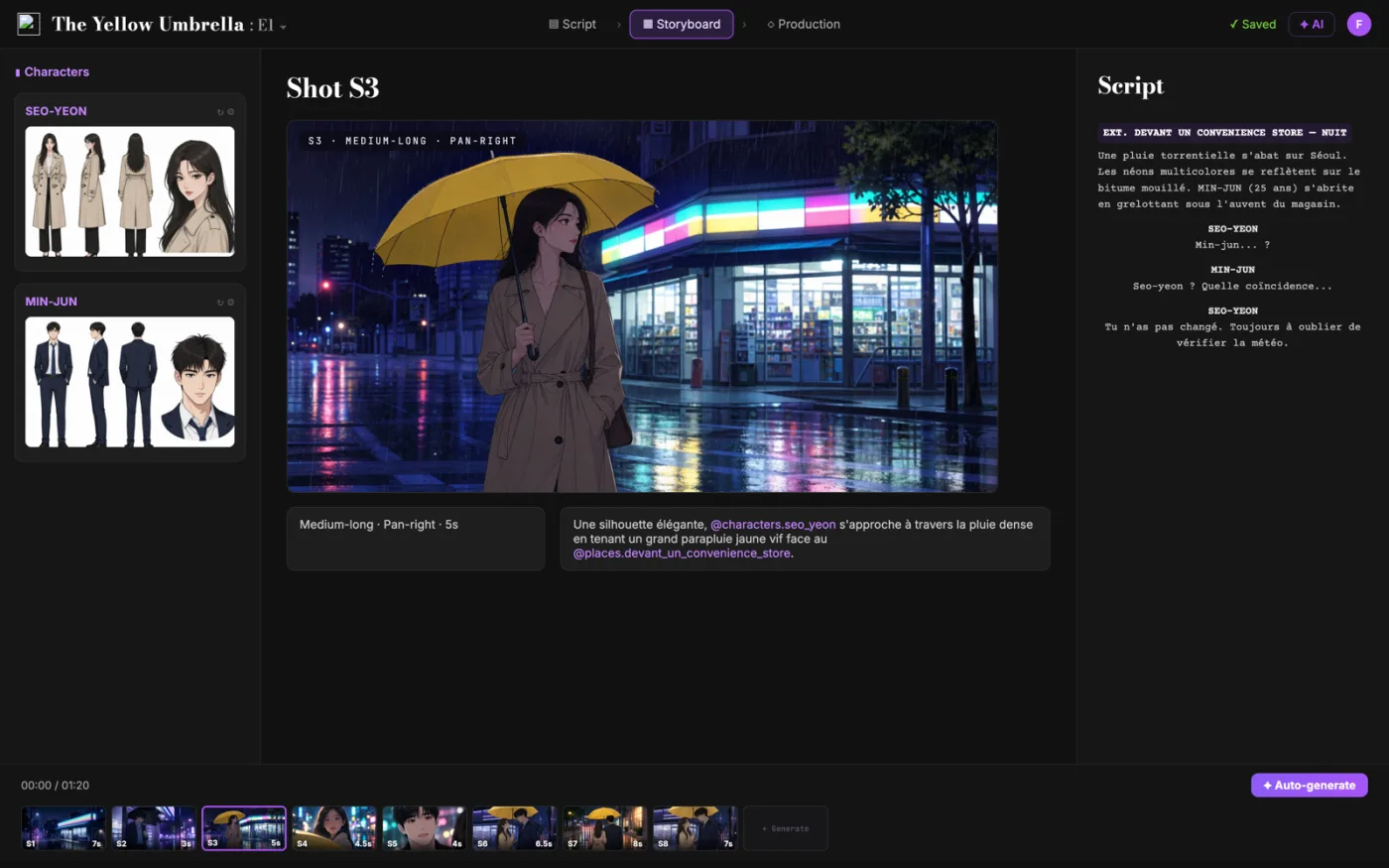
  2. ScreenWeaver storyboard: shot S3 of The Yellow Umbrella with characters, shot settings and the script beside it

    02The storyboard, made easy

    Shot breakdown generated from your screenplay, manual control over every shot (frame, angle, movement, duration), and generative AI previsualization in one click.

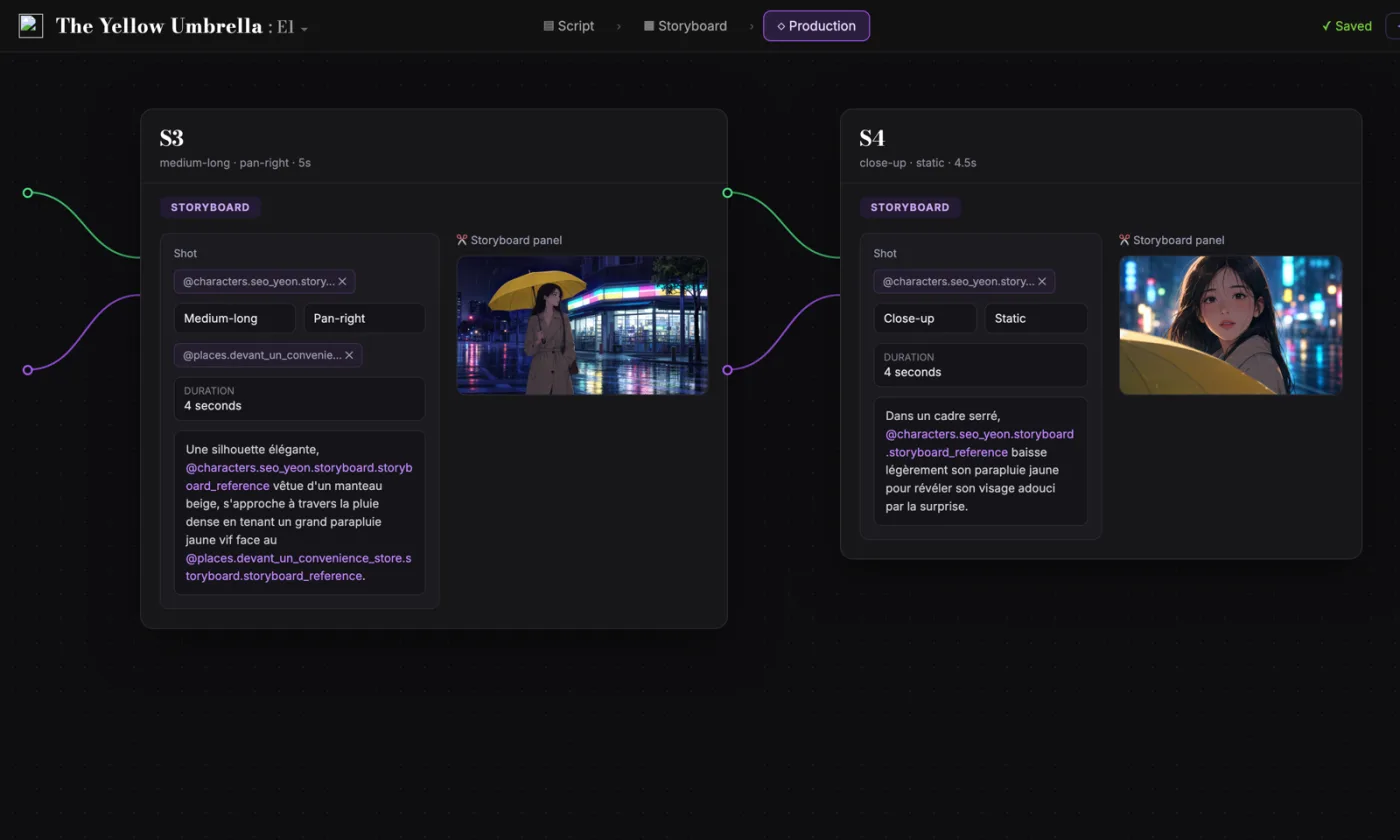
  3. ScreenWeaver production canvas: shots S3 and S4 as connected nodes carrying their storyboard panels and prompts

    03AI production, with finesse

    Footage generation pipelines connected to your screenplay and storyboard. Optimized out of the box, fully editable workflow.

FAQ

AI Film Festival Japan, your questions

How do you win AI Film Festival Japan?
Pick the category whose yardstick fits your film: structure and character for Narrative, originality and process for Experimental, a unified style for Animation, synchronicity for Music Score. Then disclose your tools honestly. No weights are published, and an international jury of four takes the final decision.
Is the 2026 deadline over?
Yes. The late deadline was 30 September 2026 at 12:00 JST on FilmFreeway, and notification follows on 10 October. No 2027 call is announced, so use this guide to be ready.
Do I have to use ElevenLabs or CapCut?
No, for the main categories and for the voice award, where ElevenLabs products are not required. Yes for the CapCut AI Creative Award, which needs CapCut's AI tools in a substantial, primary role.
How long can my film be?
The official pages print no limit. Other listings quote different ranges, so read the FilmFreeway page when the next call opens.
Can I submit a film in French, Korean or Spanish?
The rules allow it. A film that is not in English or Japanese must carry English subtitles.
Who is on the jury?
Harry Hyun of MooAm, Toby Hyder of XOLink, Kennex Ma and Jon Taramona Redondo of the Sin Cámara festival. A preliminary review may filter entries first, depending on volume.
Does ScreenWeaver work for AIFJ?
Yes for the main categories, since no AI tool is imposed. ScreenWeaver builds its footage on Seedance 2.0 and 2.5. Name ScreenWeaver and the Seedance version in your disclosure.

Finish early, enter at leisure.

Put the screenplay on the page now, for free. Storyboard and footage can follow.