Future Vision XPRIZE · Guide

How to win the Future Vision XPRIZE.Three minutes. One hopeful future. $2.6 million.

A 3 minute trailer and a 12 page treatment for an optimistic sci-fi film, made with any tool you like. The first edition closed on 15 August 2026 and put $2.5M in equity behind one film. Here is how it was judged, and how to prepare for the next call, starting with the treatment in ScreenWeaver.
  • Any tool allowed, AI included
  • First edition closed 15 Aug 2026
  • Grand prize $2.6M
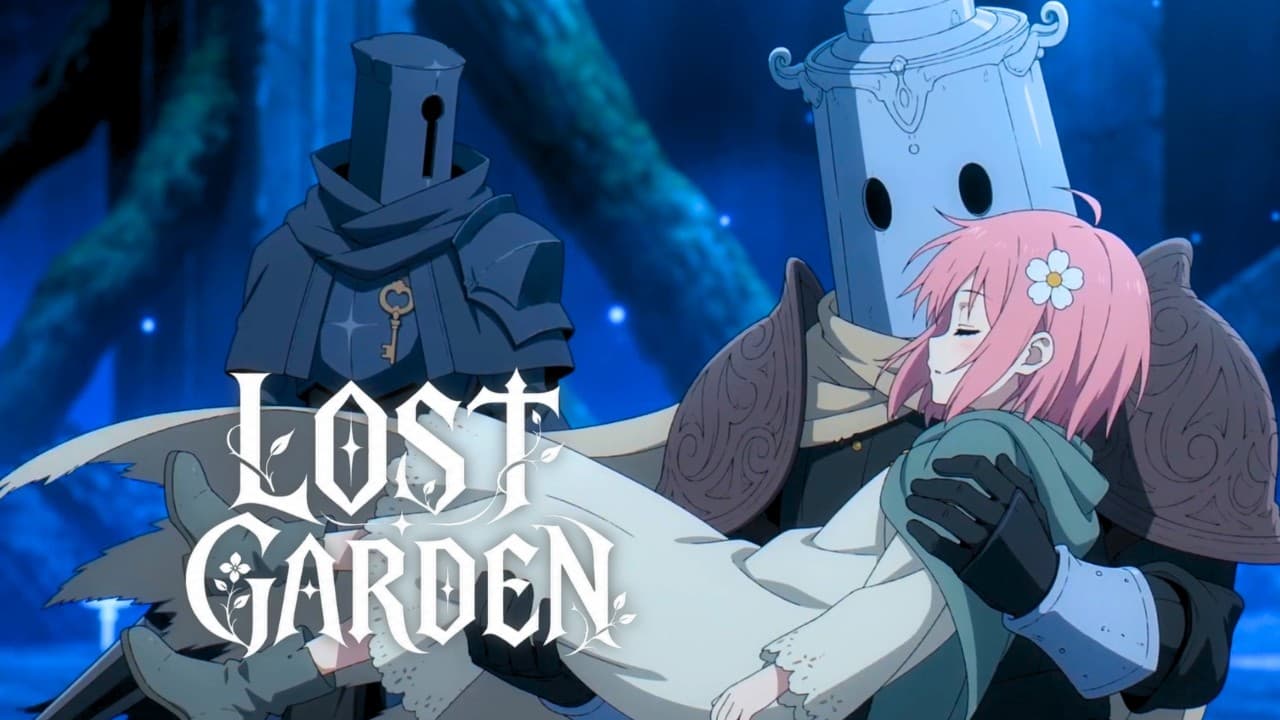
Lost Garden · Episode 1

Independent guide. ScreenWeaver does not organise the Future Vision XPRIZE and is not affiliated with the XPRIZE Foundation, Google or Range. Rules read on 1 October 2026. Official rules

Available today in ScreenWeaver: free screenwriting, and a storyboard generated from your screenplay with Storyboard Beta, $9.99 a month.

Rolling out: video generation of each shot, powered by Seedance, with the Filmmaker plan.

The rules on one card

What the first edition asked for.

The Future Vision XPRIZE is a prize for hope, not for tech demos. Google, the XPRIZE Foundation and Range presented it, and entrants could use any tool: AI, live action, animation or a mix.
Prize pool
$3.5M+ in total
Grand prize
$2.6M: $100,000 cash plus $2.5M equity
Runners-up
Four films at $100,000 each
What you submit
A 3 minute trailer and a 12 page treatment
Video format
MP4 or MOV, 1080p or more, English voice or subtitles
Tools
Any: AI, live action, animation or hybrid
First call
9 March to 15 August 2026, 11:59 pm PST
Who can enter
Worldwide, solo or in teams, no experience needed

Source: the Future Vision XPRIZE site and its Rules page, read on 1 October 2026, and the XPRIZE winner announcement of 26 September 2026. The call is closed and no second edition is announced. The Rules page quotes both $2.5M and $3.5M+ for the pool: the home page says $3.5M+.

Key dates

Six and a half months, call to stage.

The first edition ran from 9 March to 25 September 2026. It is closed, so read it as a calendar to copy.
  1. 9 Mar 2026

    Submissions open

    Entrants registered, joined the Slack workspace and received the end card every video must carry.

  2. 15 Aug 2026

    Final deadline

    11:59 pm PST. The film on an unlisted YouTube link, the treatment and the cover sheet.

  3. 10 Sep 2026

    Scripts from the Top 10

    Finalists had to write a first-draft script from their treatment.

  4. 25 Sep 2026

    Finals in Los Angeles

    Five finalist films screened at Moonshots LIVE. The Gifted took the grand prize on stage.

  5. Not announced

    Next edition

    No second call is published. Prepare as if the same shape returns: about five months to make a trailer.

How films are judged

Four questions, no published weights.

The Rules name four dimensions for the first screening and give no weights. YouTube metrics are also factored in, though the Rules say audience size should not give a big edge.
  • Concept quality and execution

    Is the story compelling and well realised within a trailer's limits? Three minutes hold one idea, one person in trouble and one image of the future. The twelve page treatment must prove the film exists beyond the trailer.

  • Scale and ambition

    Does the vision think big enough about humanity's future? Show a change of scale: a city, a planet, a century. A small human gesture inside a large setting does it best.

  • Mission alignment

    Does the film show a compelling, technology-enabled future where everyone can thrive? Hope is the test. The site allows problems, danger and villains if the message is that humanity can work it out.

  • Technology-forward storytelling

    Advanced technology has to be woven into the story, not parked in the background. Make it a character, a tool in the plot or the cause of the conflict.

The judging philosophy also asks which film is the most producible and would do the most good. Think of the trailer as the first minutes of a film with a budget of up to $15 million.

Who decides

Five judges, one question.

The site names four judges and the winner announcement names a fifth, John Zissimos of Salesforce. Together they cover astrophysics, science fiction, responsible technology and the Star Trek legacy. Under each, what the profile suggests.
  • Neil deGrasse Tyson

    The astrophysicist has argued for three decades that understanding the universe makes people more hopeful, as the site puts it. Make curiosity the engine of your future, not conquest.

  • Neal Stephenson

    The novelist who coined the word metaverse in 1992 writes about people tackling hard problems. A future built by capable people under pressure reads well to him.

  • Mira Lane

    She led ethics and society work at Microsoft and Google and is named Google's vice president of technology and society in the winner announcement. Technology stories gain from honest trade-offs, not from magic.

  • Rod Roddenberry

    He runs Roddenberry Entertainment and backs stories built on the premise that the future is worth striving for. Humanity moves forward together: a crew, a community, not a lone genius.

Four pillars

A future worth building.

The site lists four things it wants and a note on stakes. Hope is not the absence of darkness, it says: what separates the prize from standard dystopia is the presence of hope. Under each pillar, the angle we would take.
  • 01

    Technology solving problems

    Show technology addressing real challenges such as climate, health or exploration.

    Pick one problem and show its fix at human scale: one patient, one village, one ship. A trailer needs a cause before an effect.

  • 02

    Humanity thriving

    Not just surviving, but flourishing together.

    Abundance is hard to film. Show it through an ordinary scene that would be impossible today: a meal, a commute, a classroom.

  • 03

    A future worth building

    Visions that inspire people to wake up and create.

    Give the viewer a place they would want to live in. Public voters were asked which future they would rather live in, film against film.

  • 04

    Stories that inspire

    Compelling narratives that move people emotionally.

    Start with a person and a loss, then bring in the technology. The grand prize film is about a boy and his mother.

The 2026 results

What The Gifted teaches.

The grand prize went to The Gifted by Jeff Synthesized (USA): $2.5M in equity and $100,000 in cash for screenplay development. XPRIZE describes a boy who rebuilds his late mother from her texts, voice and diary, and an AI that never gives an order and only asks. More than 2,500 trailers and treatments were submitted.

  1. 01

    The future starts in one home. The winner is a boy and a lost mother, not a fleet or a city. Scale comes from the feeling, not from the set.

  2. 02

    The AI asks, it does not command. The premise turns the usual machine threat around, which is what a prize for optimism wants to see.

  3. 03

    Each runner-up kept one human idea. A chef who tastes nothing and a Martian who feels everything. A dying billionaire's black cube. A garage programmer who gives an AI memory and senses. A serial non-committer who signs up to fly Earth out of the solar system.

  4. 04

    The public vote ran head to head. Voters saw two films at a time and chose the future they preferred, across all 65 official selections. A world that reads in seconds wins comparisons.

  5. 05

    The top 10 came from five countries: the USA, the UK, France, Germany and Japan. Where you live is no handicap: the Rules open the prize worldwide, apart from a few sanctioned regions.

From page to trailer

Lost Garden: six shots of hope.

The prize asks for science fiction and Lost Garden is a fantasy, but its Source Tree scene does what the judges want from three minutes: a small figure, a vast presence and a seed of hope. It comes from Lost Garden, episode 1, an animated series by the ScreenWeaver team made with Seedance, shown as a screenplay page, then a storyboard frame and a final image for each shot.

Logline. A small knight wakes up in a dead world and learns he is the last guardian of a seed that could bring the garden back.

Screenplay · episode 1 · the Source Tree

INT. HEART OF THE ROOTS - NIGHT

Living roots coil around LANTERN and pin him down. A voice stops them.

THE SOURCE TREE

Stop. He is my guest.

A giant woman of roots and white lilies opens her arms over the cavern.

Her eyes open. Blue, and vast.

THE SOURCE TREE

Welcome to you, Lantern Knight.

She lifts him in her palm, like a lamp.

THE SOURCE TREE

Do not be afraid. I will not harm you.

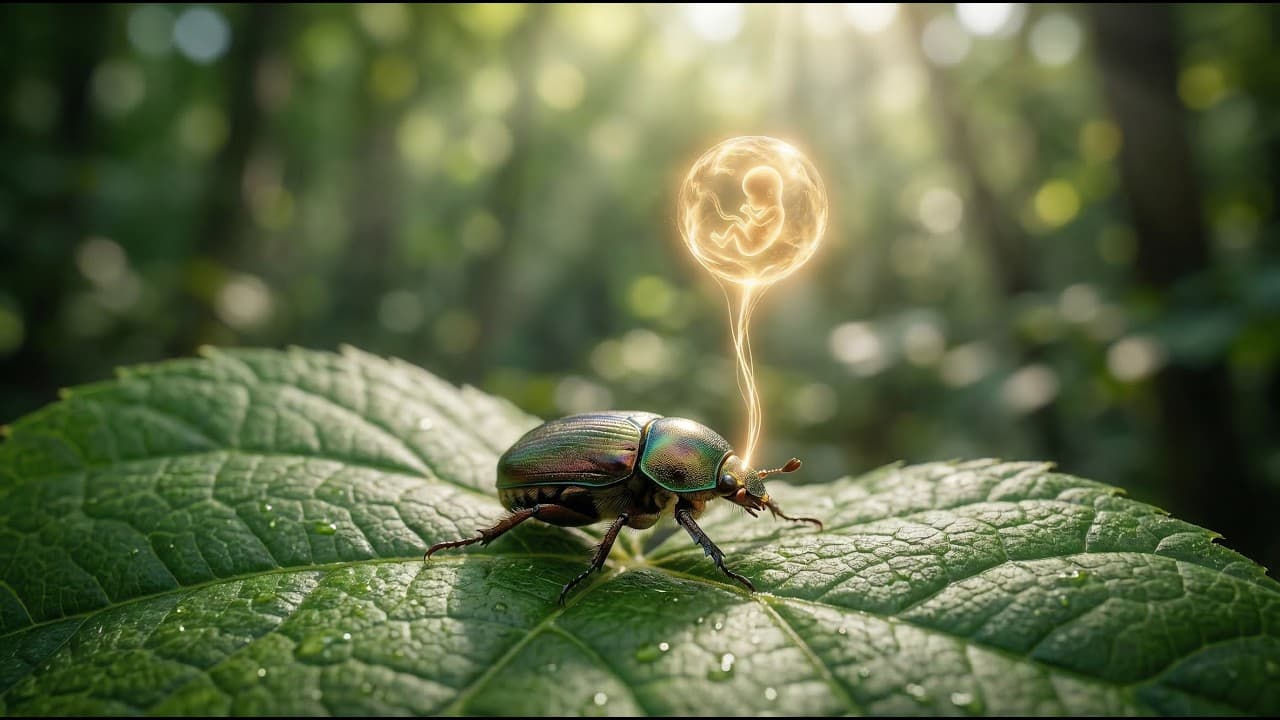
In the dark, a seed of light opens. Inside the flower, a sleeping child.

THE SOURCE TREE

You must find yours. Protect her.

CUT TO:

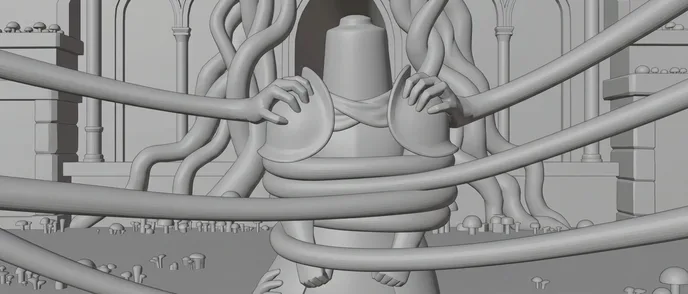
  1. A small lantern-helmed knight bound by thick roots in a ruined hall
    Storyboard frame of the trap shot, in grey
    01

    Medium · the trap

    Medium shot, Lantern bound by thick living roots in a ruined hall, glowing blue mushrooms on the floor, cold light

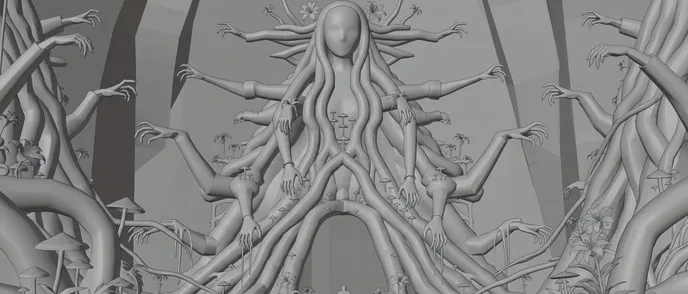
  2. A giant woman made of roots and white lilies spreads her many arms in a dark cavern
    Storyboard frame of the wide shot, in grey
    02

    Wide · the Source Tree

    Symmetrical wide shot, a giant woman made of roots, arms spread with many hands, white lilies, blue glyphs

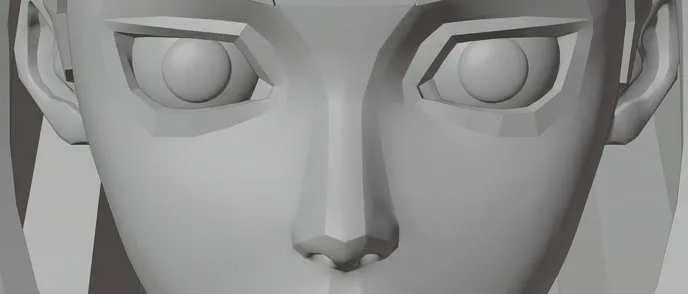
  3. Extreme close-up of a giant pale face with piercing blue eyes
    Storyboard frame of the eyes close-up, in grey
    03

    Extreme close-up · the eyes

    Extreme close-up on the giant's face, piercing blue eyes opening, pale skin, soft light from below

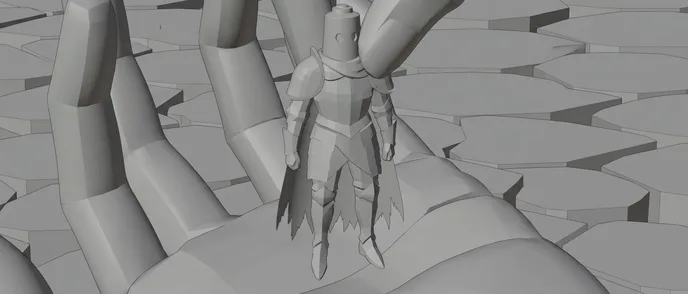
  4. A tiny armored knight stands in the middle of a giant open hand
    Storyboard frame of the palm shot, in grey
    04

    High angle · the palm

    High angle, the tiny knight standing in the center of a giant open palm, stone floor far below

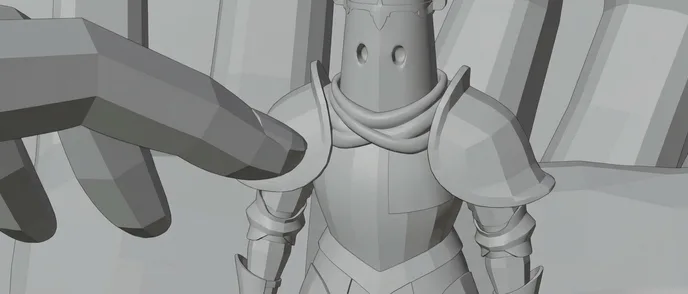
  5. A giant fingertip gently touches the chest of a small armored knight
    Storyboard frame of the touch close-up, in grey
    05

    Close-up · the touch

    Close-up, a giant fingertip gently touches the knight's armored chest, faceless helm, emotion through posture

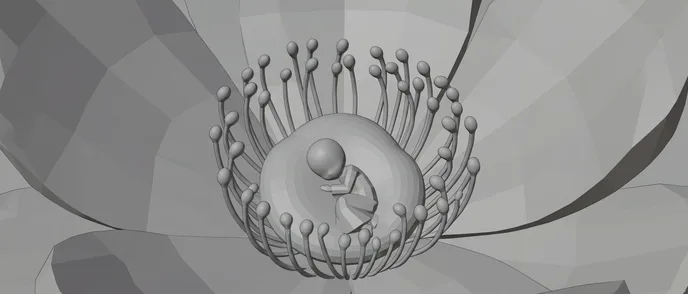
  6. A sleeping pink-haired child curled inside a glowing blue flower
    Storyboard frame of the seed insert, in grey
    06

    Insert · the seed

    Top-down insert, a glowing pale blue flower opening, a sleeping child with pink hair curled inside

Lost Garden, episode 1 runs 17 minutes. Cut to three, this scene would be the turn of a trailer, from a trapped knight to a seed of light. The episode reached the finals of the AI London Festival. The prize accepts any tool, so the craft shown here, one held look from shot to shot, carries over to a sci-fi trailer. The film opens here when you press play.

The script

A 3 minute trailer in five movements.

The Rules cap the video at 3 minutes and add a 15 second sponsor end card. A trailer sells a feeling and a film: about 3 pages of trailer script and 30 to 45 shots of 4 to 6 seconds, backed by the treatment that holds the rest.
  1. 0:00 to 0:15

    The image of the world

    One shot that shows the future at a glance. The viewer should know the place and the era without a caption.

  2. 0:15 to 0:45

    The person in trouble

    Who we follow and what stands between them and a better world.

  3. 0:45 to 1:55

    The technology at work

    Show the invention in use, and what it costs. The site wants conflict and real danger, not a brochure.

  4. 1:55 to 2:35

    The struggle

    The point where it could fail. Villains, obstacles and cost belong here.

  5. 2:35 to 3:00

    We figured it out

    End on the hopeful turn and the title, before the sponsor card.

Voice and subtitles must be in English. Add the required end card and put #FutureVisionXPRIZE in the YouTube title or description.

Week by week

From the blank page to the YouTube link.

The first edition gave entrants about five months, from 9 March to 15 August. No second call is announced, so start this plan the day a call opens, not before.
  1. 01

    Weeks 1 and 2

    The future you would live in

    Write ten one-sentence futures, each with a place and a problem. Pick the one you could explain to a child, then keep the one people ask about.

  2. 02

    Week 3

    The cover sheet

    One page: a logline, a synopsis of 300 words at most and a personal statement of 300 words at most. Write it first. It forces the story.

  3. 03

    Weeks 4 to 6

    The treatment

    Twelve pages at most for the whole film, written free in ScreenWeaver. The trailer sells it, so the treatment must hold what the trailer cannot.

  4. 04

    Week 7

    Trailer script and storyboard

    Three pages. Generate the shot breakdown and the storyboard from the screenplay, then set each shot by hand.

  5. 05

    Weeks 8 to 14

    Make the shots

    Approve characters and places once, then generate scene by scene with Seedance in ScreenWeaver, as video generation reaches your plan. Any other tool is allowed too.

  6. 06

    Weeks 15 to 18

    Cut, sound, subtitles

    Three minutes at most, English voice or subtitles, MP4 or MOV at 1080p or better. Add the sponsor end card and license every sound.

  7. 07

    Weeks 19 to 21

    Publish unlisted, then submit

    Upload to YouTube as unlisted with the hashtag in the title or description, then send it through the Slack workspace. Stay reachable: finalists had days to write a script.

Ways to lose a film

Eight ways to fall out of the contest.

Most are on the Rules page, and every video is reviewed for appropriateness before it goes public. Know the Rules before the first prompt.
  • Copyrighted worlds and brands

    All content must be 100% original: no copyrighted characters, worlds or storylines, no recognisable brand without permission. Video models add logos and look-alikes on their own, so review every shot.

  • Not for general audiences

    No explicit violence, language or sexual content. The site wants real stakes, but stakes a family could watch.

  • A dystopia with a happy last shot

    The prize asks for hope throughout. Darkness is fine. A world that gives no reason to hope until the final frame is not what it asks for.

  • A missing end card or hashtag

    Every video carries the 15 second sponsor end card and the hashtag in its title or description, with a link to the site. Sponsors can change, so be ready to swap the card.

  • Shopping the idea elsewhere

    By submitting, you give Range exclusive rights until 25 September 2026. You cannot pitch the concept to other studios in that time, and Google becomes a producing partner if a Top 10 project is adapted to a feature.

  • Written materials in the wrong shape

    The treatment runs to 12 pages and the cover sheet to one, in English. The home page speaks of a two page brief and the Rules page says one page, so follow the Rules page.

  • Unlicensed music or footage

    You warrant that you hold the rights to every piece of music, footage and creative element. Stock must be licensed.

  • A finalist who cannot travel

    To win a cash prize you must attend in person in Los Angeles on the final day, and finalists write a first-draft script within days. Plan for both.

Why ScreenWeaver

Any tool is allowed. Few plan the whole film.

The prize is tool-agnostic, so footage made with ScreenWeaver qualifies like any other. What it rewards is a film that already exists on paper: a treatment, a world and a trailer that sells it.
  • A treatment and a trailer from one project

    The treatment, the trailer script and the storyboard live together, so the trailer shows what the twelve pages promise.

  • Seedance for the footage

    Footage generation runs on Seedance 2.0 and 2.5. You may mix in any other tool the Rules allow, and keep every version in one project.

  • A world that holds for three minutes

    Approved references for characters and places follow every shot. A future that looks different in each shot reads as concept art, not as a film.

  • Free to start, before a call opens

    The treatment costs nothing on the Screenwriter plan: $0 with no end date. Storyboard Beta is $9.99 a month, and the Filmmaker plan adds Seedance video generation as it rolls out.

Real productions

International festival-recognized films have been written and produced with ScreenWeaver.

ScreenWeaver is already being used as a creative workspace for real AI film productions, from cinematic shorts to animated series pilots selected, nominated, and awarded by international festivals.

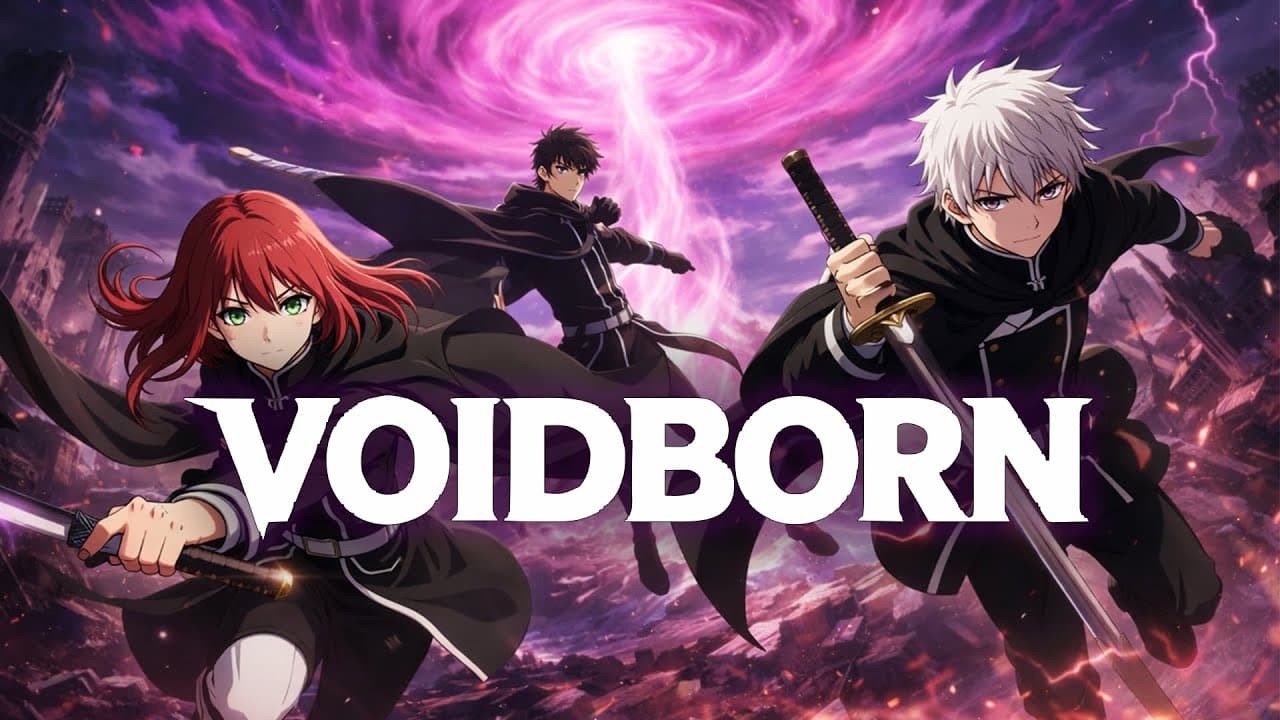
  • Video thumbnail for VOIDBORN

    VOIDBORN

    AI animated / cinematic short

    Festival recognition

    • 1st Place Silver

      Mondial Chroma Awards

    • 2nd Place Dreamina

      Mondial Chroma Awards

    • Award Winner

      Seoul International AI Film Festival

  • Video thumbnail for Les Fils du Vinnana

    Les Fils du Vinnana

    AI short film

    Festival recognition

    • Honorable Mention

      Top Quark Film Festival

    • People's Choice Nominee

      Illuminate Oneness of Humanity

    • Nominee

      ALTFF Supershort

  • Video thumbnail for Lost Garden

    Lost Garden

    AI animated series pilot

    Festival recognition

    • Finalist

      AI London Festival

The pipeline

Write. Board. Produce.

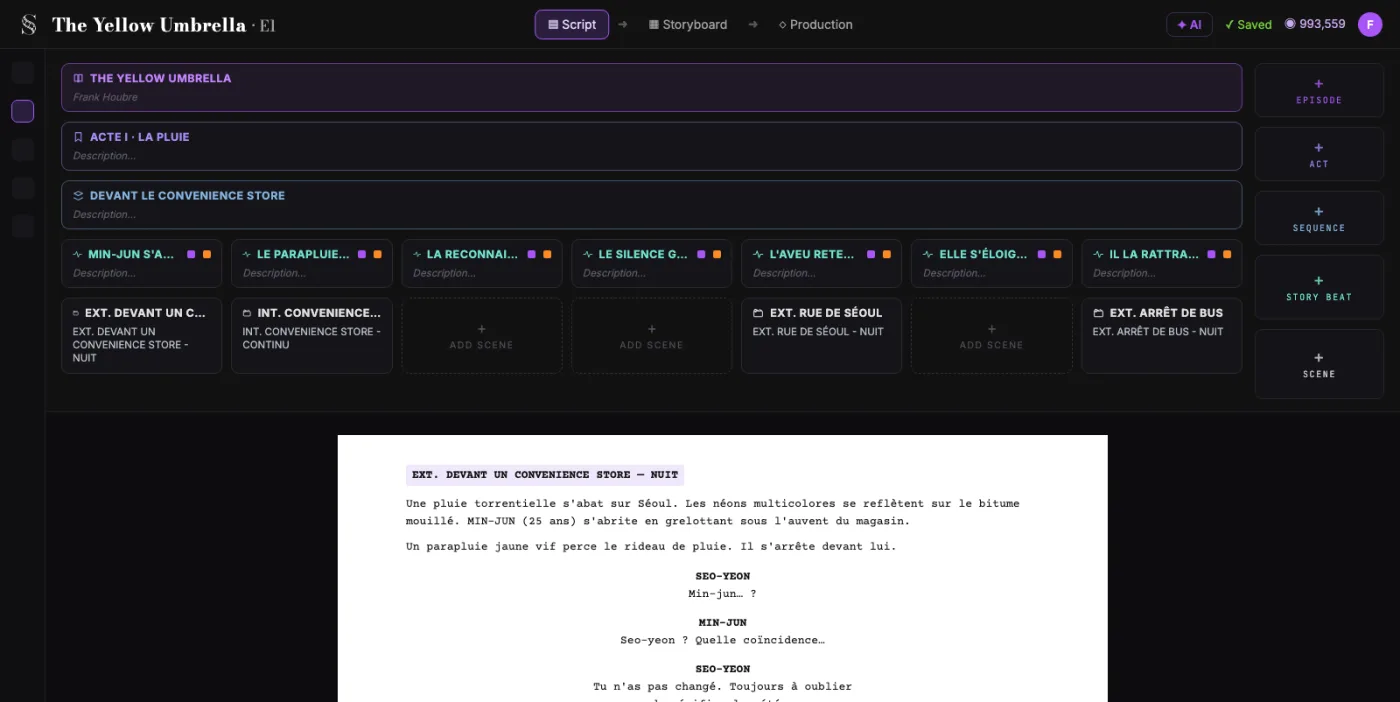
  1. ScreenWeaver screenplay editor: acts, sequences and beats above the formatted script of The Yellow Umbrella

    01The screenplay, enriched

    An industry-standard screenplay editor, and more: a visual outline and beat editor, your writing inspirations (notes, photos, audio) kept next to the page, and an AI researcher to support your writing, not replace it.

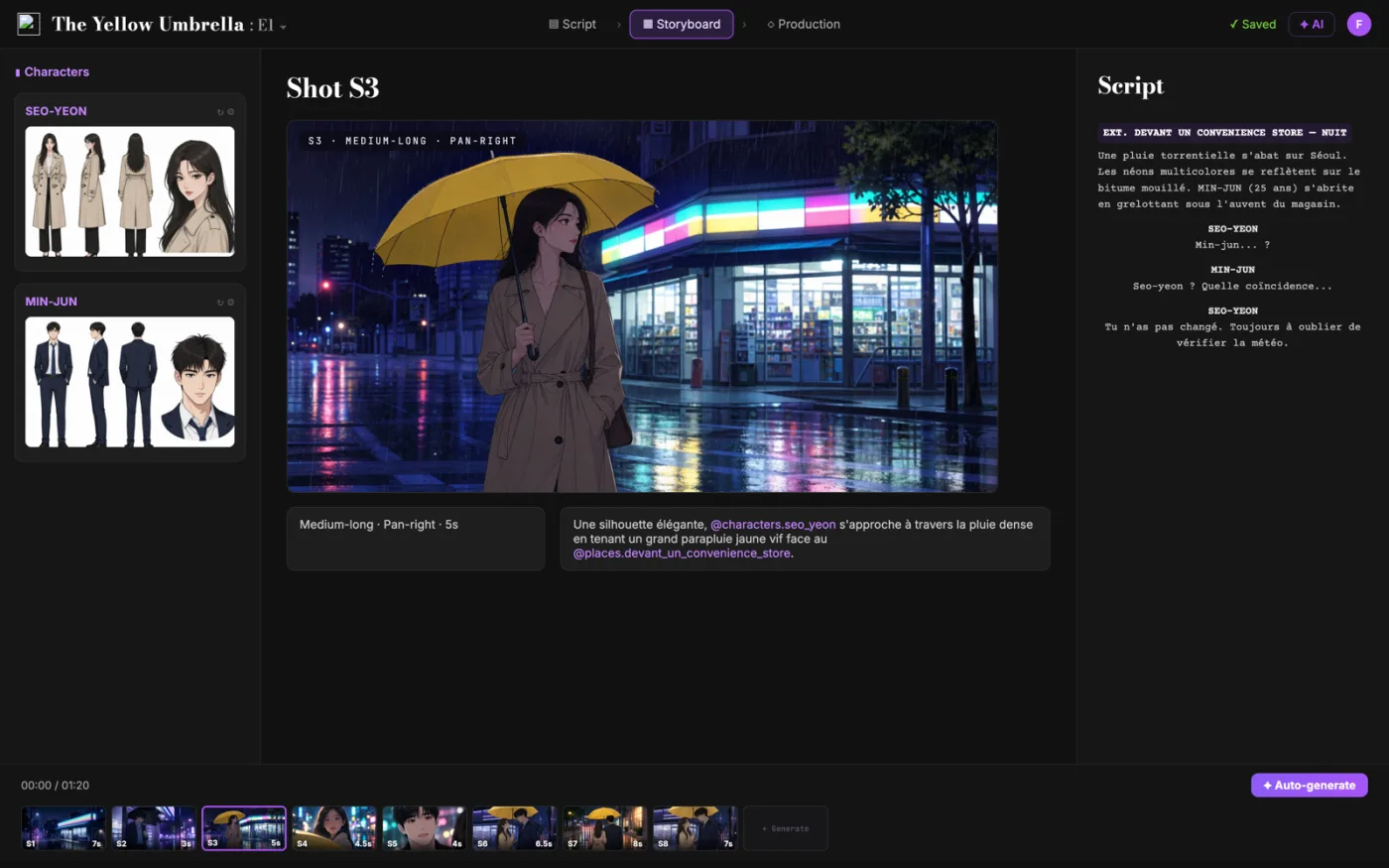
  2. ScreenWeaver storyboard: shot S3 of The Yellow Umbrella with characters, shot settings and the script beside it

    02The storyboard, made easy

    Shot breakdown generated from your screenplay, manual control over every shot (frame, angle, movement, duration), and generative AI previsualization in one click.

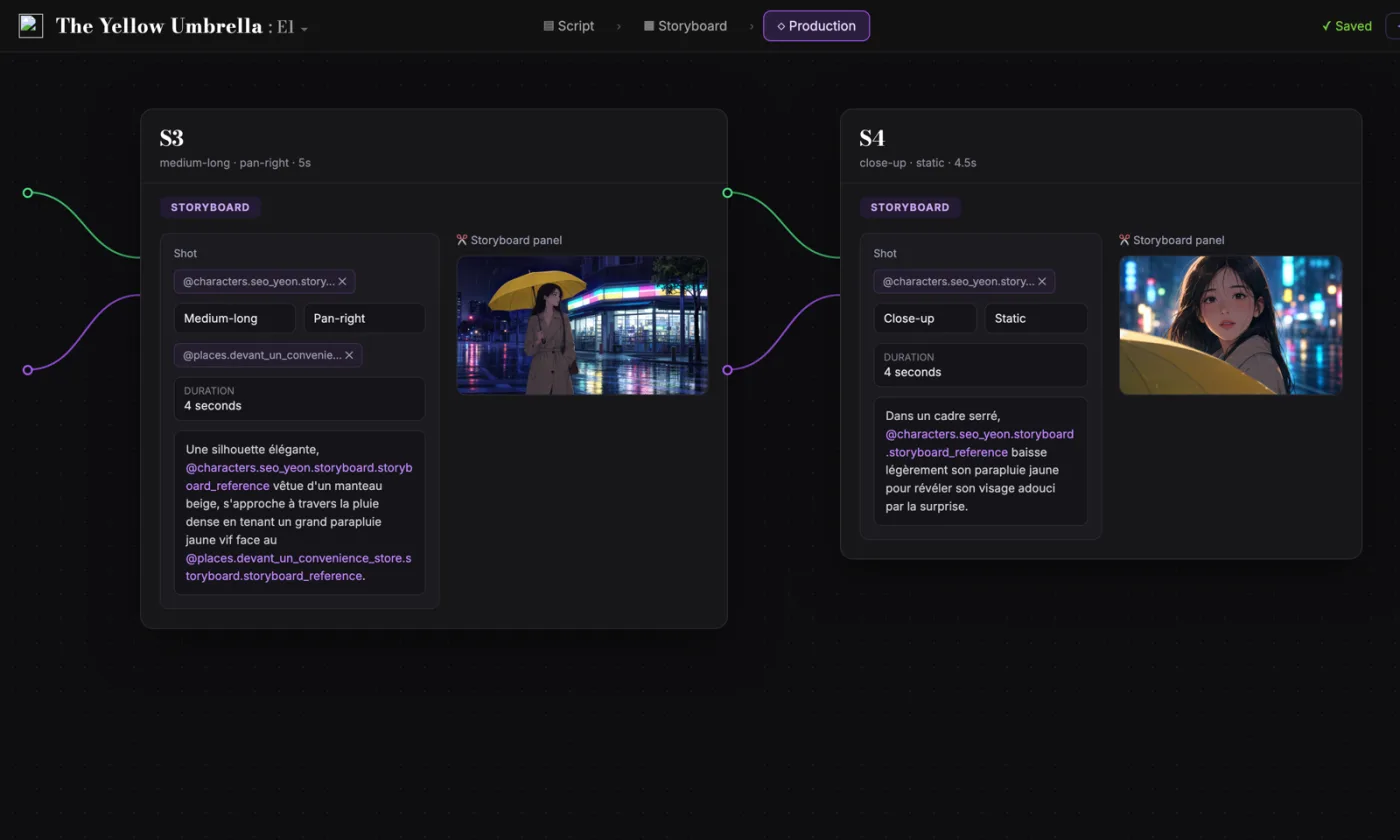
  3. ScreenWeaver production canvas: shots S3 and S4 as connected nodes carrying their storyboard panels and prompts

    03AI production, with finesse

    Footage generation pipelines connected to your screenplay and storyboard. Optimized out of the box, fully editable workflow.

FAQ

The Future Vision XPRIZE, your questions

How do you win the Future Vision XPRIZE?
The Rules name four questions: concept quality and execution, scale and ambition, mission alignment, and technology-forward storytelling, and give no weights. Make a 3 minute trailer and a 12 page treatment for a hopeful future that costs something to reach. In 2026 one film took $2.5M in equity and $100,000 in cash.
Is there a second edition?
Not announced. The first edition ran from 9 March to 15 August 2026 and ended with the finals in Los Angeles on 25 September 2026. The official site says submissions are closed.
Can I use AI, and which tools?
Yes, any tool. The Rules welcome live action, animation, AI-generated content and hybrids. If your project wins or reaches the finals, its development must later use Google tools and products where the production calls for them.
Can I make my trailer with ScreenWeaver?
The Rules allow any tool. ScreenWeaver covers the screenplay, treatment and storyboard today, and its footage pipelines run on Seedance 2.0 and 2.5, with video generation rolling out on the Filmmaker plan.
What does the grand prize include?
$2.6M in all: $100,000 in cash for screenplay development and a $2.5M equity investment toward the feature, with producers from Range and Google attached. Range commits best efforts to a budget of up to $15M or more. Four runners-up take $100,000 each.
Who were the judges?
Neil deGrasse Tyson, Neal Stephenson, Mira Lane and Rod Roddenberry are named on the site. The winner announcement also lists John Zissimos, Salesforce's chief brand and creative officer.
Who owns the film after I submit?
You keep ownership of your original work and your YouTube channel. You grant Range exclusivity until 25 September 2026, and Google a producing credit if a Top 10 project becomes a feature.
Does YouTube popularity matter?
A little. The Rules say views, likes and shares are factored in, but audience size should not give a significant advantage. You publish the film unlisted first, the competition reviews it, then asks you to make it public.

Three minutes. Start with the page.

Write the treatment free today. Storyboard the trailer, then film it with Seedance.