Match on actionCut in the middle of the move
A match on action cuts from one shot to another in the middle of a movement, so the action begins in the first shot and finishes in the second. The audience follows the motion across the cut and barely notices the edit.
Also calledAction matchMatch cut on actionCutting on actionContinuity cut
Editing and transitions
Why it works on screen
Cutting on action is the workhorse of continuity editing. It keeps energy in fights, chases, sports and dance, and it lets a simple gesture, opening a door, throwing a punch, lifting a child, move from a wide view to a close one without losing momentum. Emotionally, it keeps the audience inside the moment, so the change of angle feels like a heightened look rather than an interruption. A scene earns it whenever the action matters and the story needs both context and detail. It becomes visible, and powerful, when the second angle reveals something the first could not: fear in a face, a weapon in a hand.
The shot list line
- Size
- Wide or medium shot, then close-up on the same action
- Angle
- Two angles at least 30 degrees apart
- Movement
- Static or handheld, following the action
- Lens
- 35mm for the wide, 85mm for the close
- Duration
- 1 to 3 s each side of the cut
Have the actor repeat the full movement in both setups, with the same speed, hand and direction, so the editor can find matching frames.
Screenplay
On the page
Match on action is an editing choice, so it should not appear by name in a screenplay. Write the action clearly and in the order it happens, with verbs that give the editor natural cut points: she grabs, turns, throws. Short paragraphs for each beat suggest new angles without giving camera orders. The director plans overlap in coverage, and the shot list notes where each shot starts and ends in the movement so the editor can cut on the peak.
INT. ST. BRIGID'S BOXING GYM - WEST BELFAST - NIGHT
Rain on the windows. AOIFE CULLEN (17, taped fists) circles the heavy bag.
Her coach, DERMOT (60s, flat nose), holds it steady.
DERMOT
From the hip. Not the shoulder.
Aoife plants her back foot, twists her hips and drives a right hook.
The bag jumps on its chain. Dermot stumbles back a step, then grins.
Storyboard
In the storyboard
Draw two panels showing the same movement from two different angles. In the first, stop the figure at the start or middle of the gesture; in the second, show the gesture continuing from that point. Add a motion arrow that crosses from the first panel into the second. Write CUT ON ACTION between panels, and note which hand or foot leads, the direction of movement and the peak frame where the cut happens.
Pairs well with
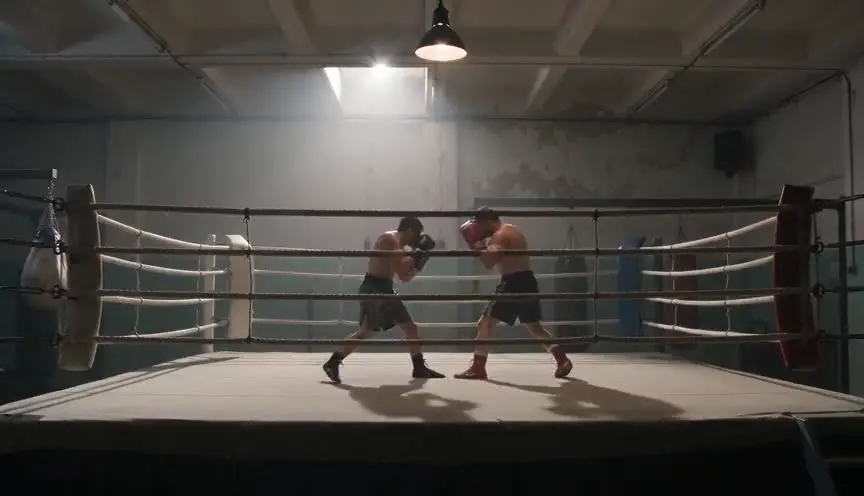
A wide shot before the match on action shows where everyone is and the scale of the movement. The cut to a closer angle then feels like a natural focus on the key gesture.
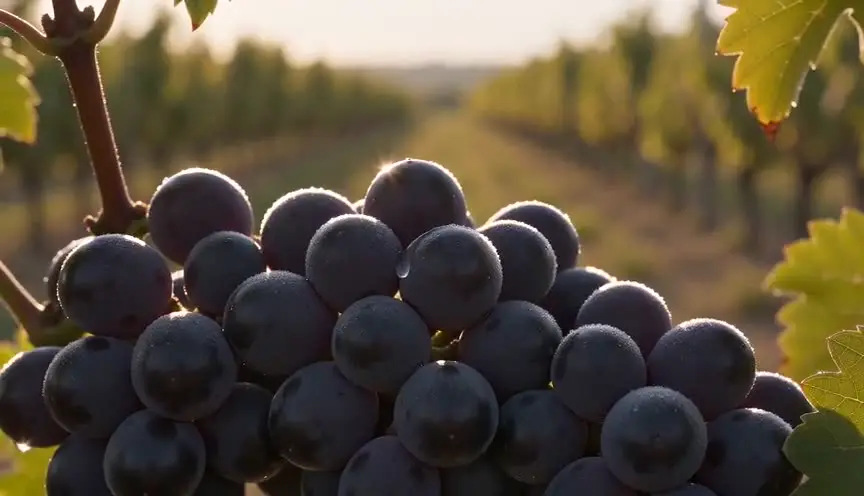
Cutting on the action into an insert, a hand on a doorknob, a foot on a pedal, lets the audience feel the detail at the exact moment it matters.
Reference
Watch it in
Mad Max: Fury Road (2015)
Car chases jump between vehicles and bodies while keeping each movement's speed and direction, so the chaos never loses its line.
The Matrix (1999)
In the lobby shootout, spins, wall runs and falls continue from one angle to the next, carrying momentum while the edits disappear.
ScreenWeaver
Set it up in ScreenWeaver
Write the action beat by beat in your screenplay, and ScreenWeaver breaks the scene into shots automatically. In the storyboard, give the first shot a wide or medium framing and the second a close framing on the same gesture, with angles far enough apart to cut. Set short durations so the movement carries. Characters and props carry from shot to shot, so hands, costumes and positions stay consistent. Check the flow of the cut in the AI previsualization.
Start writing for freeThe prompt behind this clip
This is the exact prompt that rendered the clip at the top of the page. Keep the description of the camera and the light, change the subject and the place.
Match on action: a weathered lighthouse keeper on a storm-lashed coast grips a heavy iron valve wheel, shown in a close medium shot at eye level as driving rain streaks past and the wheel turns a quarter rotation clockwise. The cut lands at the exact midpoint of that turn, jumping to a wide shot from outside the lighthouse where the same keeper's arms continue the identical wheel rotation at matching speed, waves smashing against the rocks and wind snapping his coat. Position, direction and pace of the motion stay perfectly continuous across the cut, so the gesture reads as one unbroken action. No text.
Common mistakes
- 01
Angles too close together
Cutting between two similar angles on the same action creates a jump rather than a smooth match. Change angle by at least thirty degrees or change shot size clearly.
- 02
Mismatched hands or speed
If the actor uses the right hand in one take and the left in the other, or moves faster, the cut stumbles. Supervise continuity and repeat the movement exactly.
- 03
Cutting after the action ends
A cut that comes after the movement stops loses its power. The best cut points are mid-gesture, at the peak of speed, where the eye is carried across.