Motion blurSpeed you can see
Motion blur is the streak a moving subject leaves on the image when the shutter stays open while it moves. Controlled on purpose, it tells the audience how fast things feel, and it can make a still person stand out sharply against a rushing world.
Also calledMotion smearShutter blurSlow shutter look
Time and motion
Why it works on screen
Use it when speed, chaos or isolation is the emotional point. Heavy blur makes a fight feel too fast to follow, a city feel feverish, a car chase feel dangerous. Turned the other way, a sharp, still character surrounded by smeared crowds shows loneliness, shock or calm in the middle of a storm. It serves disorientation, urgency, dream states and the feeling of being left behind. A scene earns it when the audience should feel movement rather than analyze it. When clarity matters, such as an important piece of evidence or a precise stunt, too much blur works against you.
The shot list line
- Size
- Wide shot, or medium on a still subject
- Angle
- Eye level
- Movement
- Static, so moving elements blur against a fixed frame
- Lens
- 35mm to 50mm, ND filters to allow a slow shutter
- Duration
- 4 to 8 s
Open the shutter to 270 or 360 degrees, or slower for a long exposure look, and ask the still actor to hold perfectly motionless.
Screenplay
On the page
Motion blur is a camera setting, so it does not belong in a spec script as a term. Write what the character perceives instead: the crowd becomes a smear of color, the traffic streaks past, she is the only fixed point. That gives the director and the cinematographer the feeling to aim for. Shutter angle, frame rate, whether blur is created in camera or added in post, all of that goes in the shot list and the camera notes.
EXT. SHIBUYA-STYLE CROSSING, OSAKA - NIGHT
The lights change and hundreds of people surge across at once.
In the center of it, KENJI MORIYAMA (70s, suit a size too big, a paper bag of oranges) stops walking.
The crowd pours around him in streaks of coats and umbrellas and headlights.
He does not move. He is looking at a billboard with his late wife's face on it.
A taxi horn, long and far away.
Storyboard
In the storyboard
Draw the still subject in clean, firm lines and everything moving as long horizontal smears or ghosted repeats with speed lines. Use a different shading for sharp and blurred zones, so the contrast reads at a glance. Add an arrow for the direction of the moving elements and note the shutter setting under the panel, such as 360 degree shutter or 1/4 second exposure. If the camera moves instead, draw the blur on the background and note the pan speed.
Pairs well with
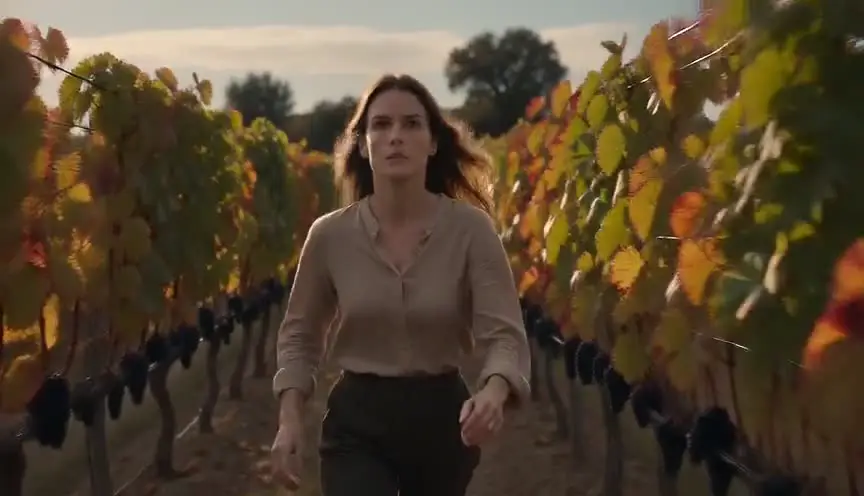
Handheld camera plus a wide shutter blurs the whole frame during fast moves, which makes a fight or a panic feel physical. The next steady moment then lands as sudden clarity.

After a wide shot full of streaking motion, a sharp close-up of the still character gives the audience a face to hold on to, and confirms why the world around them feels unreal.
Reference
Watch it in
The Bourne Supremacy (2004)
Fast handheld reframes smear fists, walls and faces during fights, so the audience feels the violence more than it can map every blow.
Chungking Express (1994)
Slow shutters and stepped frames stretch pedestrians and traffic into colored trails, giving the city a restless, overheated energy.
ScreenWeaver
Set it up in ScreenWeaver
Write the contrast between stillness and rush in your screenplay, and ScreenWeaver breaks the scene into shots automatically. Open the key shot, set a wide framing at eye level and a static movement so everything moving blurs against a fixed frame, then give it four to eight seconds. The character and the location carry from the shots around it, so the still figure stays recognizable. Use the AI previsualization to judge the composition, then note the shutter setting for the camera team.
Start writing for freeThe prompt behind this clip
This is the exact prompt that rendered the clip at the top of the page. Keep the description of the camera and the light, change the subject and the place.
Motion blur. At night, a long exposure look on a busy city crossing: cars and buses pass as smooth streaks of light and color, pedestrians become ghostly blurred trails, while one woman stands perfectly still and sharp in the middle of the crowd. Static camera, slow shutter, cinematic. No text.
Common mistakes
- 01
Blurring the wrong thing
If the character the audience needs to read is smeared, the shot loses its anchor. Decide what stays sharp and what blurs, then build the camera setting and the blocking around it.
- 02
Overexposed slow shutter
A slower shutter lets in more light. Without ND filters or a smaller aperture, the image blows out. Plan exposure along with the blur, especially in daylight.
- 03
Mixing looks by accident
Cutting between blurred and crisp shots in the same scene without a reason feels like a mistake. Keep the shutter consistent unless the change marks a shift in the story.