Group shotMany people, one unit
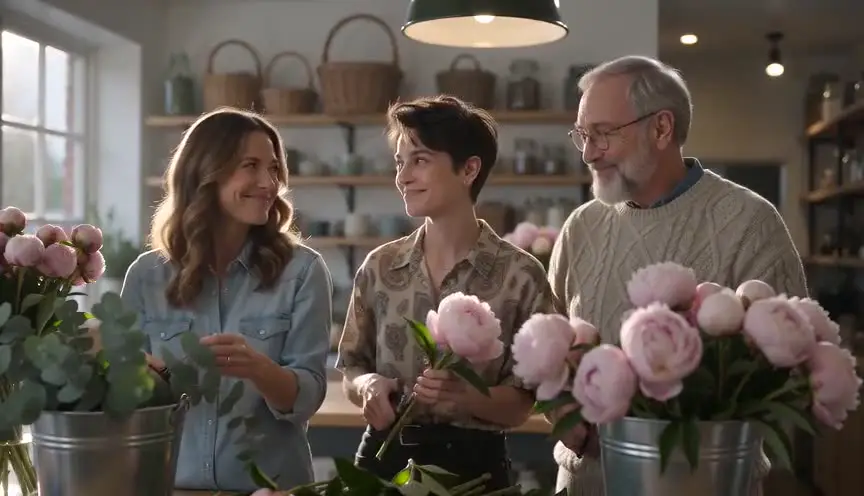
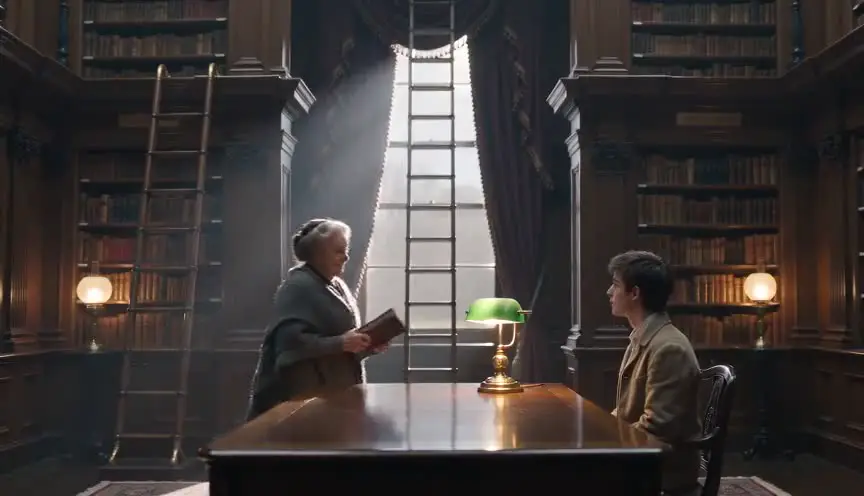
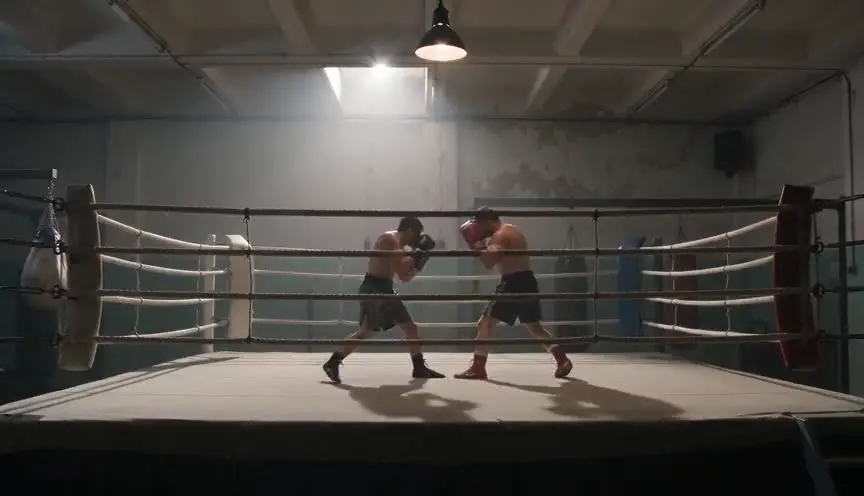
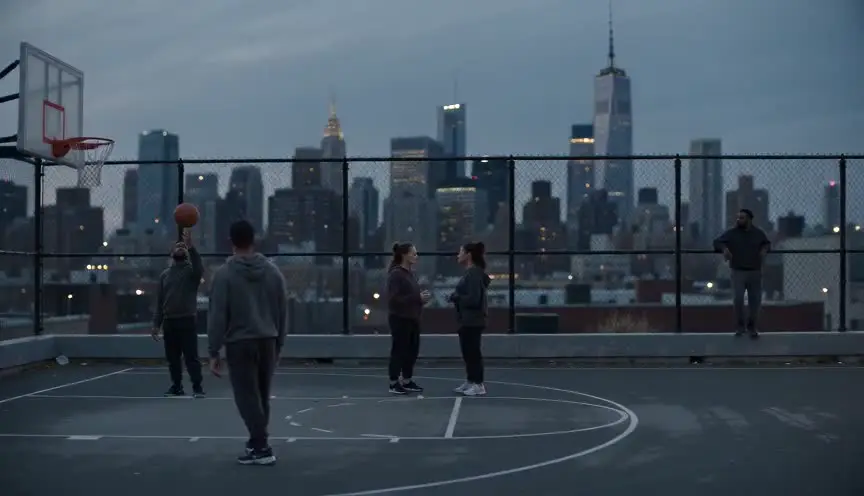
A group shot frames several characters together, usually four or more, so they read as a single unit. The audience sees a team, a family, a crew or a crowd before seeing the individuals inside it.
Also calledEnsemble shotCrowd shotTeam shot
Shot sizes
Why it works on screen
Use it when the group is the character. A team gathered before a competition, a family on a doorstep, a crew walking toward a job, protesters facing police. The group shot serves belonging, solidarity, threat and collective action. It also shows hierarchy: who stands in front, who hangs at the back, who is slightly apart. A scene earns it when the story needs to establish or celebrate the ensemble, or when a group's unity is about to be tested. Returning to the same framing later, with someone missing, can say more than any line of dialogue.
The shot list line
- Size
- Wide or medium wide group shot
- Angle
- Eye level or slightly high
- Movement
- Static, or a slow arc around the group
- Lens
- 24mm to 35mm
- Duration
- 4 to 10 s
Stage the group in depth so every key face reads, and place the character who matters most where the eye goes first.
Screenplay
On the page
Spec scripts should not call for a group shot by name. Describe the group as a unit and its arrangement: the team crowding around a laptop, a family lined up for a photo, a crew walking in step. Highlight the one who stands apart if it matters. The director will frame it. The size, the lens and whether the camera moves around the group belong in the shot list.
INT. LINCOLN HIGH SCHOOL - ROBOTICS LAB - DAYTON - NIGHT
Seven teenagers crowd around a workbench. Soldering smoke, energy drink cans, a robot the size of a dog.
PRIYA NAIR (16) holds the remote. The others lean in, shoulder to shoulder.
Only DUSTIN KOWALSKI (17) stays at the back, by the door, jacket on.
The robot lifts one arm. Stops. Lifts the other.
The room explodes. Dustin does not cheer. He slips out.
Storyboard
In the storyboard
Draw the group as a cluster, with the key characters larger or marked with initials. Show the depth by overlapping figures in front and behind. Circle the character the audience should notice first. Add arrows if the camera arcs around the group. Note the lens, the angle and the number of people in frame.
Pairs well with
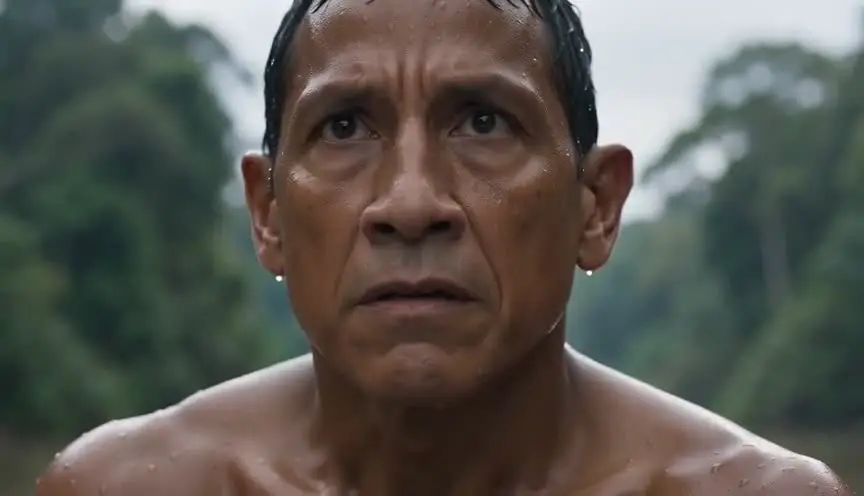
After the group shot shows the unit, a close-up on one face reveals an individual feeling that contradicts or confirms the group mood.
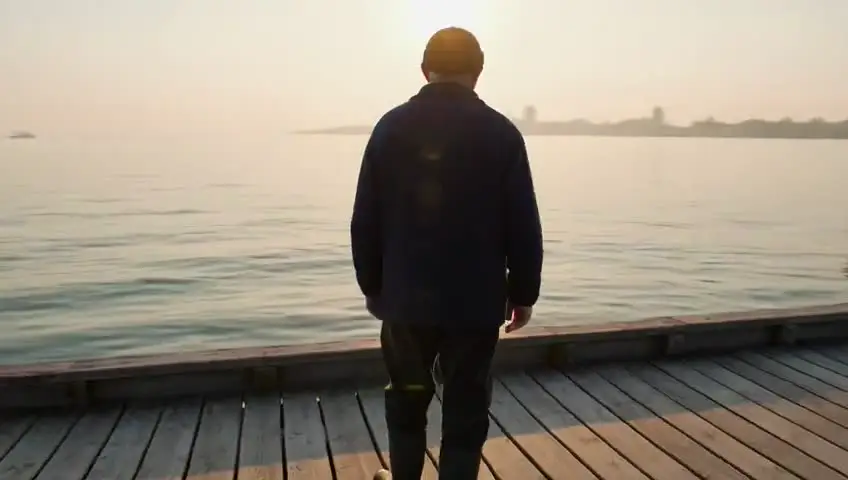
Circling the group with an orbit move shows every member and makes the ensemble feel united and heroic, especially before a big moment.
Reference
Watch it in
Reservoir Dogs (1992)
The opening walk keeps the whole gang in one frame, presenting them as a unit just before the story begins to break their trust apart.
The Avengers (2012)
In the final battle, a circular move gathers the entire team in frame at once, the payoff of a film built around assembling them.
ScreenWeaver
Set it up in ScreenWeaver
Describe the group and its arrangement in your action lines, and ScreenWeaver breaks the scene down into shots automatically. Open the shot, set a wide or medium wide framing at eye level or slightly high, choose a static or arc movement and a short duration. The characters and the location carry from shot to shot, so each member keeps their look and position when you cut closer. Use the AI previsualization to check that every key face reads.
Start writing for freeThe prompt behind this clip
This is the exact prompt that rendered the clip at the top of the page. Keep the description of the camera and the light, change the subject and the place.
Group shot inside a moving subway car at night, wide 28mm lens locked off at eye level, framing six passengers spaced along both sides of the aisle under flickering overhead light. Two stand gripping the pole, three sit on the bench seats, one leans against the door, all kept sharp and evenly lit with no single face favored. The car sways gently, dark tunnel walls streak past the windows, and the camera holds completely still for the full four seconds. No text.
Common mistakes
- 01
Faces hidden
In a big group, some faces disappear behind others. Stage in depth and at different heights so the important characters stay visible. Lift the camera slightly if needed, so the back row stays visible.
- 02
No focal point
Without a clear center of attention, the audience's eye wanders. Use position, light or movement to point to the key character. The one who matters most should be the easiest to find.
- 03
A flat line of people
Lining everyone up like a photo shoot kills the energy. Vary depth, posture and spacing to make the group feel alive. Unless the scene is literally a photograph, let people overlap and lean.