SpotlightEveryone is looking at you
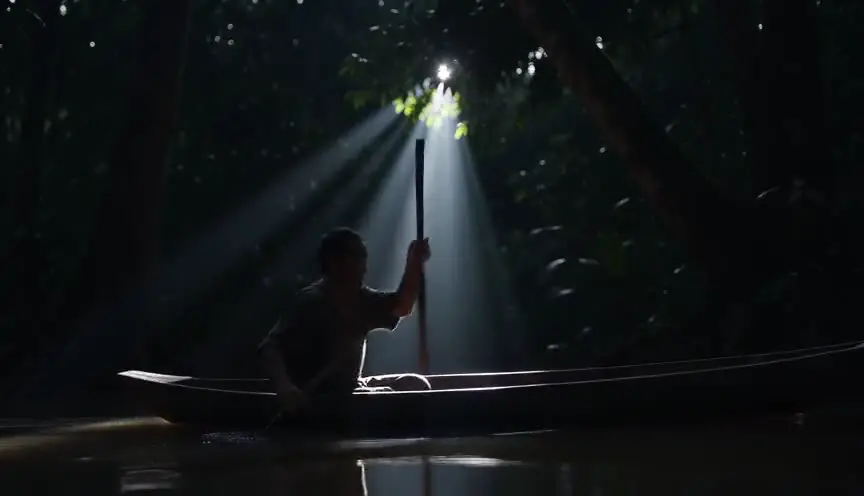
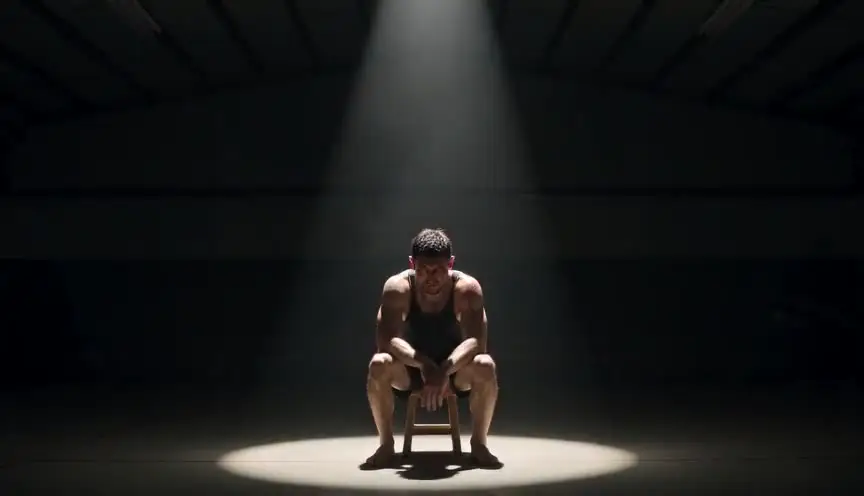
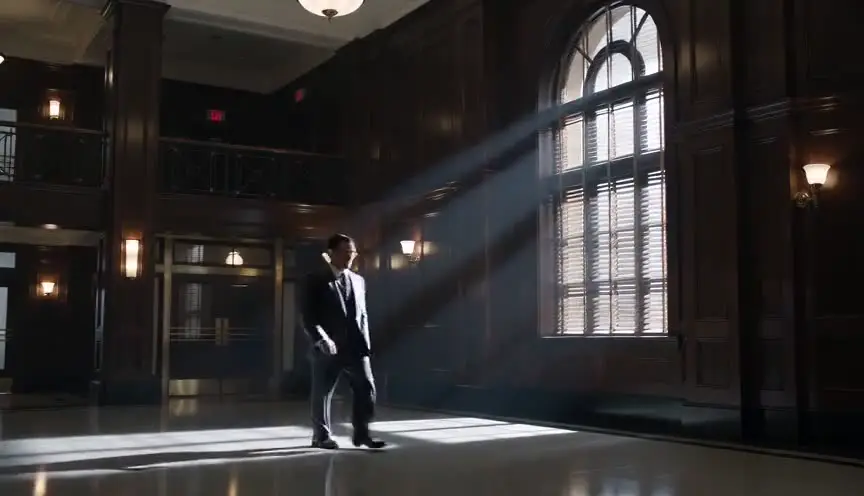
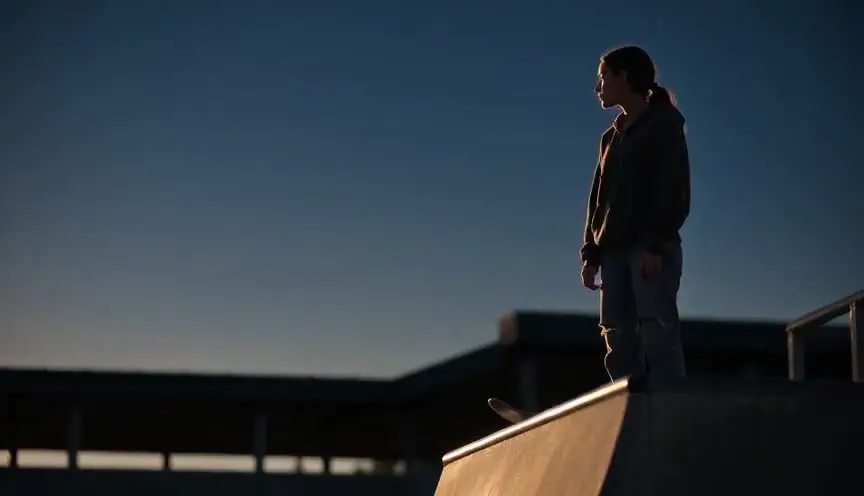
A spotlight throws a narrow, hard beam that creates a bright pool on one character or area while the surroundings stay darker. The audience knows exactly where to look, and feels what it is like to be singled out.
Also calledFollow spotHard spot lightIsolation lighting
Lighting
Why it works on screen
The spotlight is the light of attention. It singles out a performer, a suspect, a hero stepping forward or a person who suddenly has to speak. It can mean glory, exposure or danger: a singer's big moment, a prisoner under a searchlight, a stranger revealed in a doorway. Use it for performances, reveals, interrogations and any beat where the whole world turns toward one person. A scene earns it when being seen is the drama, whether the character wants it or dreads it, and when the story needs the audience to share that sudden, unavoidable focus.
The shot list line
- Size
- Full shot to medium shot
- Angle
- Eye level or slightly low
- Movement
- Static, or follow spot tracking the actor
- Lens
- 50mm to 135mm
- Duration
- 4 to 8 s
Use a focusable hard fixture with a tight beam, keep the rest of the set at least three stops under, and rehearse the follow spot operator on the actor's marks.
Screenplay
On the page
Spotlights often exist in the story world, on stages, in stadiums, as searchlights or flashlights, and a writer can name them as part of the scene. Write who is caught in the beam and how they react. If the spotlight is metaphorical, keep it out of the page and let the director choose it. Beam size, whether it follows the actor and the fixture type belong in the shot list and the lighting plan.
INT. SCHOOL HALL - SOWETO - NIGHT
The annual talent show. A packed room, parents with phones up, a follow spot rigged on the balcony.
THABO MOKOENA (13) walks on with a violin, into the circle of light. The rest of the stage is dark.
He cannot see the audience. He looks for his grandmother anyway.
From the dark, a small voice: his sister NALEDI (8).
NALEDI (O.S.)
We're here, Thabo. Just play.
Storyboard
In the storyboard
Draw a clear circle or cone of light on the floor and on the character, and shade everything outside it dark. Mark the spot's position above and behind the camera or on the balcony with a lamp symbol and a narrow cone. If the spot follows the actor, draw the path with an arrow and the positions of the pool at the start and end. Note "spot, hard edge" or "soft edge" and the beam size.
Pairs well with
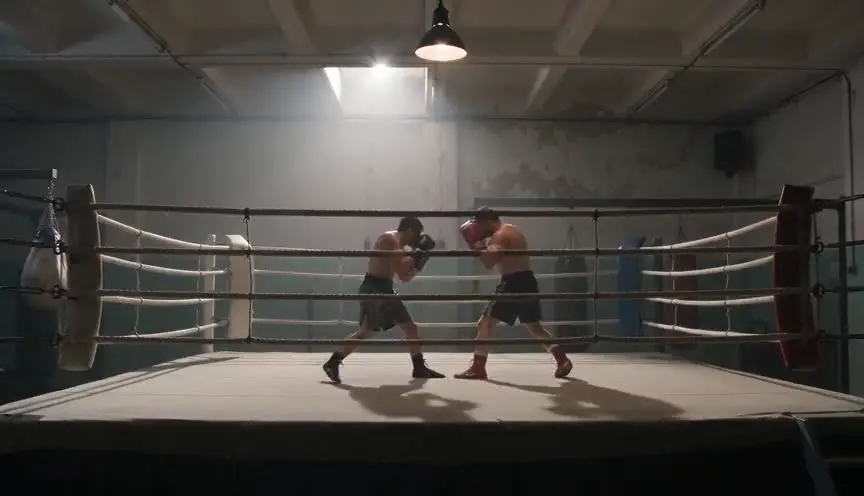
A wide shot shows the bright pool within a dark space, telling the audience how alone the character is in the light. Cut in from there to feel the pressure on the face.

After the spotlight moment, cut to the watchers in the dark. Their reactions tell us whether the character is being celebrated, judged or hunted.
Reference
Watch it in
The Third Man (1949)
A sudden beam from a window across the street reveals Harry Lime's face in a dark doorway, one of cinema's great entrances.
Chicago (2002)
The musical numbers isolate performers in hard spot pools on an empty stage, turning daydreams into pure performance.
ScreenWeaver
Set it up in ScreenWeaver
Name the spotlight and who it catches in your action lines, and ScreenWeaver breaks the scene down into shots automatically. Open each shot, set framing, angle, movement and duration, and note the spot, its size and whether it follows the character. Characters and the location carry from shot to shot, so the stage and the pool stay consistent across wides and close-ups. The AI previsualization lets you judge how much of the set can fall into darkness.
Start writing for freeThe prompt behind this clip
This is the exact prompt that rendered the clip at the top of the page. Keep the description of the camera and the light, change the subject and the place.
Spotlight: inside an abandoned train station at night, a single hard beam of light drops from a broken skylight and forms a tight, sharp-edged circle on the dusty platform floor. A middle-aged woman in a worn coat walks slowly into the beam from the surrounding darkness, her face lit while the rusted pillars, broken benches, and collapsed ceiling around her stay black and invisible. The camera stays locked on a tripod, static, while dust drifts through the beam. The edge between light and shadow stays hard and sharp throughout. No text.
Common mistakes
- 01
Actor misses the pool
A hard spot is unforgiving: one step off the mark and the face goes dark. Rehearse positions with the operator and mark the floor clearly.
- 02
Background too bright
If the rest of the set is only slightly darker, the spotlight loses its power. Bring the surroundings down several stops so the pool stands out.
- 03
Hot spot on the face
A tight hard beam can burn out foreheads and noses. Adjust the exposure for the face and soften the edge slightly for close-ups.