Bounce lightSoft light from a surface
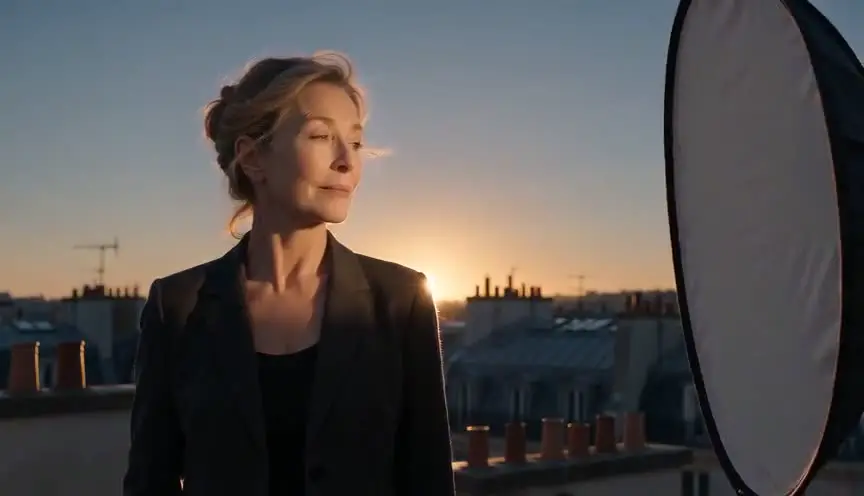
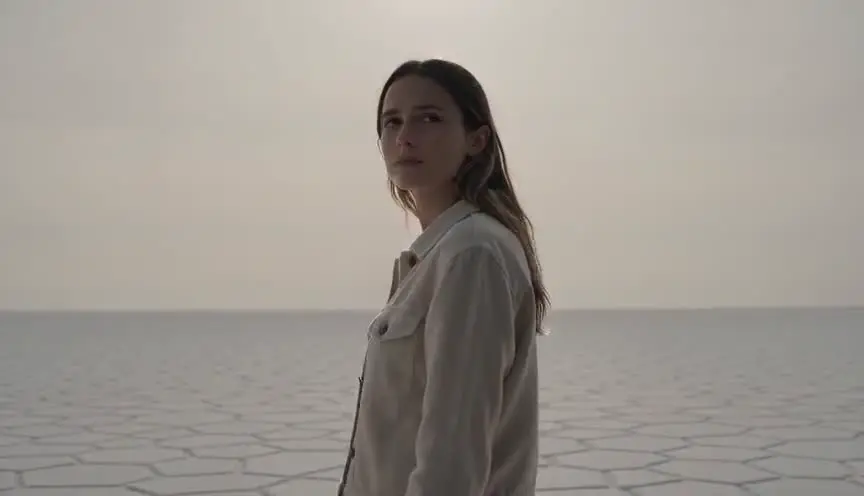
Bounce light sends a source into a surface, a white card, a wall, a ceiling, the sand, and uses the reflection to light the scene. The light arrives soft and wide, so faces look gentle and shadows stay open.
Also calledBounced fillReflected lightBounce card lighting
Lighting
Why it works on screen
Bounce light is how cinematographers make faces feel human. It fills shadows without announcing itself, and it brings back detail in skin, especially darker skin tones, without flattening them. It serves intimacy, memory, childhood, summer, tenderness and any scene where the audience should feel close and safe with a character. It can also carry color: sunlight bounced off green grass, a red wall, a pool. A scene earns careful bounce when the emotional truth sits in small changes on a face and the light must never compete with them.
The shot list line
- Size
- Medium two-shot
- Angle
- Eye level
- Movement
- Static
- Lens
- 50mm
- Duration
- 5 to 8 s
Put the sun behind the actors, then bounce it back into their faces with a large white or silver card just out of frame, and let the pool add moving reflections.
Screenplay
On the page
Bounce is a technical choice and has no place in a screenplay. A writer can still help by choosing surfaces with a strong presence: a white-washed courtyard, a sunlit pool, a snowy field, a room full of pale linen. Those places reflect light by nature and hint at the gentle look. Write the place, not the reflection. The size of the bounce, its color and its distance from the actor go in the shot list and the lighting plan.
EXT. HOTEL POOL - NAXOS - LATE AFTERNOON
White walls, white tiles, water so bright it hurts to look at.
The sisters sit at the edge with their feet in the pool: ELENI (34), a surgeon, and DAPHNE (27), who never finished anything.
Light from the water ripples across their faces.
Daphne pushes an envelope across the tiles. Eleni does not open it.
ELENI
Is this the money, or the apology?
Storyboard
In the storyboard
Draw the actors and the main source, such as the sun or a lamp, marked with a circle. Draw the bounce surface as a rectangle just outside the frame line, labeled "white card", "silver" or "wall". Add an arrow from the source to the surface and a second arrow from the surface to the faces. Shade only lightly, since bounce keeps shadows soft. Note the color of the reflecting surface if it tints the skin.
Pairs well with
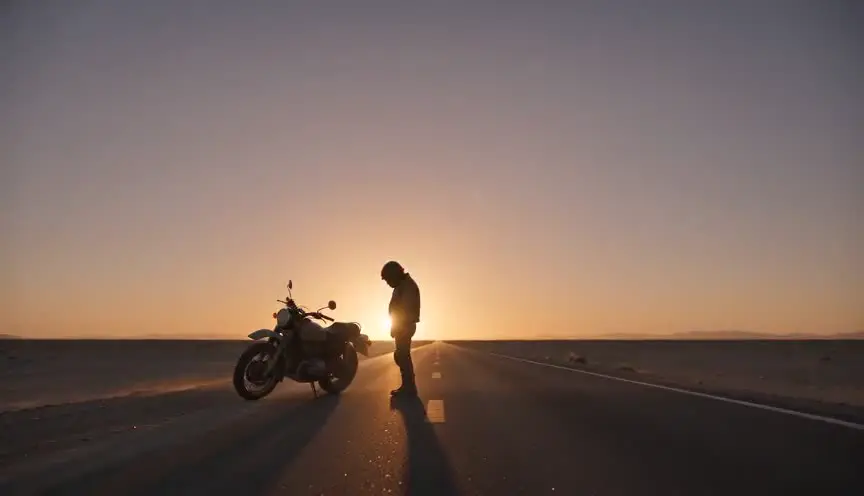
Placing the sun or the key behind the actors gives a bright rim and a luminous background. Bounce then returns soft light to the faces, a classic and inexpensive way to shoot exteriors.
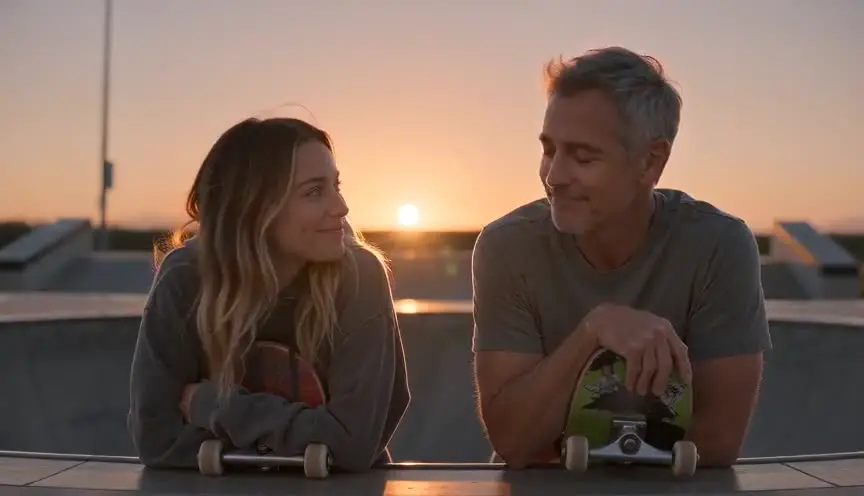
A two-shot needs light that flatters both faces at once. One large bounce between the actors and the camera covers them evenly, keeping the conversation balanced.
Reference
Watch it in
Days of Heaven (1978)
Nestor Almendros used the glow of the sky after sunset and light reflected off the wheat to give faces warmth without direct lamps.
Moonlight (2016)
James Laxton wrapped the actors in bounced, soft sources so dark skin tones show rich, even detail with no harsh edges.
The Tree of Life (2011)
Emmanuel Lubezki shaped daylight with reflectors and bounced sun, softening faces in the house and the yard of a Texas childhood.
ScreenWeaver
Set it up in ScreenWeaver
Set the scene in a bright, reflective place in your screenplay, and ScreenWeaver breaks it down into shots automatically. Open each shot, set framing, angle, movement and duration, then add a note on the main source and the bounce surface. Characters and the location carry from shot to shot, which keeps the light direction steady across the coverage. The AI previsualization lets you check that the faces read softly against the brighter background.
Start writing for freeThe prompt behind this clip
This is the exact prompt that rendered the clip at the top of the page. Keep the description of the camera and the light, change the subject and the place.
Bounce light. In a dim garage workshop, a young mechanic holds a large white reflector board at chest height; sunlight from the open door hits the white board and bounces up onto his face, softly filling the shadows under his eyes and chin with a warm, even glow and no hard edges. He tilts the board and the soft light on his face shifts smoothly. Static camera, medium close-up. No text.
Common mistakes
- 01
Color cast from the surface
A green lawn or a yellow wall turns skin sickly when used as bounce. Check the reflecting surface and cover it with white fabric if the tint does not serve the story.
- 02
Bounce too far away
Reflected light loses strength quickly. A card five meters away does almost nothing. Move it as close as the frame allows and use a bigger surface for more wrap.
- 03
Flattening everything
Too much bounce from every side erases the shape of the face. Keep one side a little darker so the face still has volume and direction.