14mm ultra-wide lensInside the space, with no escape
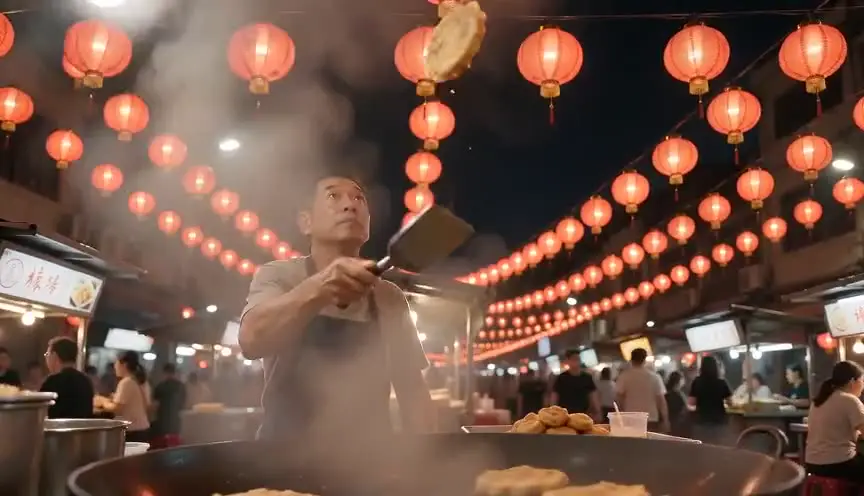
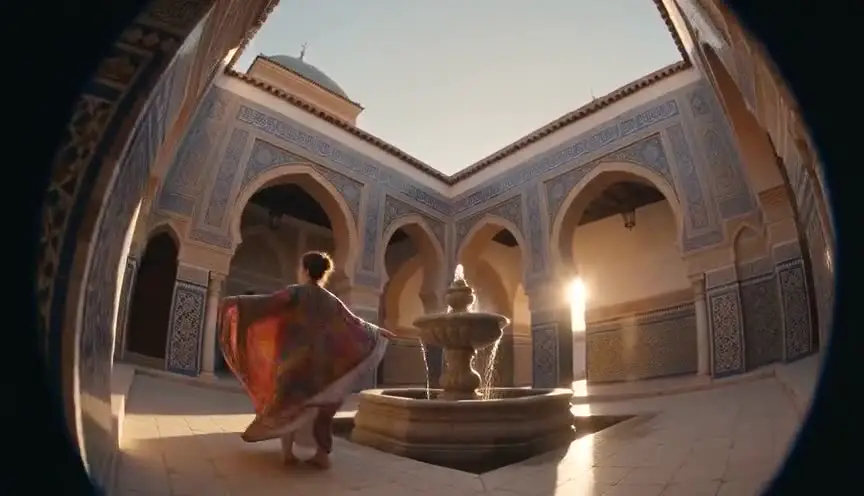
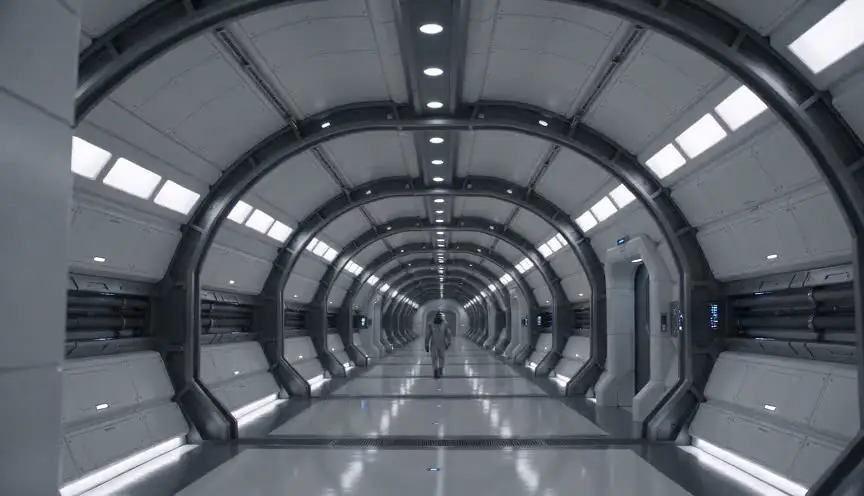
A 14mm ultra-wide lens takes in an enormous field of view, stretching the edges of the frame and exaggerating the distance between near and far objects. Close to a face it distorts, far from it it makes a landscape swallow people, and the audience feels placed right inside the space.
Also calledUltra-wide lensSuperwide lensWide-angle distortion lens
Lenses and optics
Why it works on screen
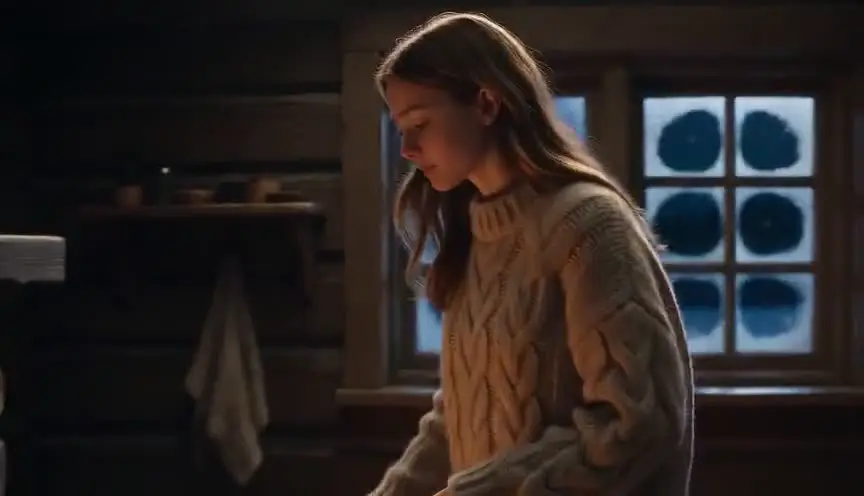
An ultra-wide lens makes space itself a character. In a wilderness it shows how vast and hostile the world is around a person. In a cramped cockpit or corridor it makes walls lean in and ceilings press down. Close to a face, it bends features and feels unstable, which suits madness, panic, intoxication and comedy. Use it for immersion, claustrophobia, survival and chaos. A scene earns it when the audience should feel physically present and slightly off balance, or when the environment should dominate the character.
The shot list line
- Size
- Medium close-up in a tight space
- Angle
- Eye level or slightly low
- Movement
- Handheld or slow push
- Lens
- 14mm prime
- Duration
- 3 to 6 s
Keep vertical lines away from the frame edges unless you want them to bend, and keep faces near the center, where distortion is lowest.
Screenplay
On the page
Lenses are a director's and cinematographer's decision, so do not write "14mm" in a spec script. You can write what the lens will express: a cockpit so tight the walls seem to close in, a forest that towers over a person, a face too close for comfort. Physical details of the space are enough. If you are also directing, put the focal length in the shot list and the look book, where it guides the camera team without slowing the reader.
INT. SALVAGE SHIP - COCKPIT - DEEP SPACE
A cockpit built for one, holding three. Cables hang from the ceiling. Warning lights blink on every panel.
PILOT RIN KAZAMA (17, oversized flight suit) grips the controls, her face inches from the cracked canopy.
Behind her, engineer OGUNDIPE (60s) and a cargo robot, BOLT, are crushed against the hatch.
RIN
Hold on to something.
OGUNDIPE
There is nothing to hold on to.
Storyboard
In the storyboard
Draw the space with exaggerated perspective: walls leaning outward toward the frame edges, the nearest object huge, the far wall small. Place the face near the center of the panel and bend the lines around it slightly. Add a note, 14mm, near and wide, and mark the camera distance to the subject. If the camera moves, draw an arrow and an end frame showing how the space stretches around the subject.
Pairs well with
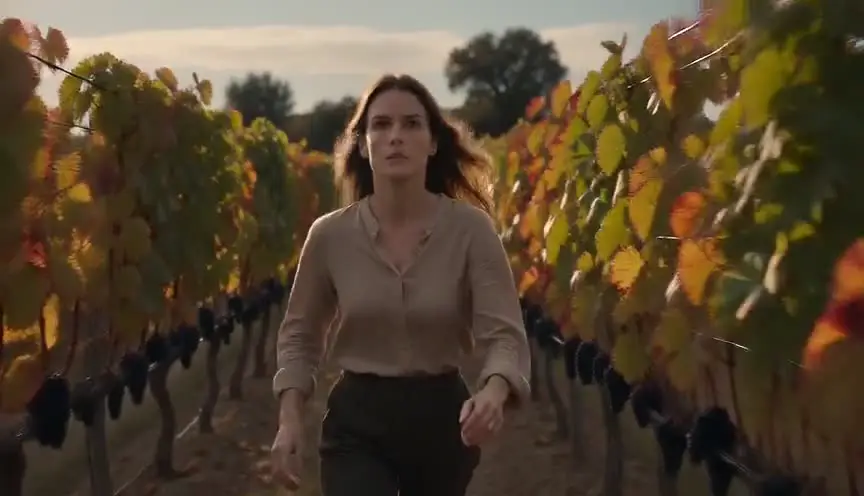
Handheld movement on an ultra-wide lens stays readable because shake is less visible on wide angles. Together they plunge the audience into chaos or panic.
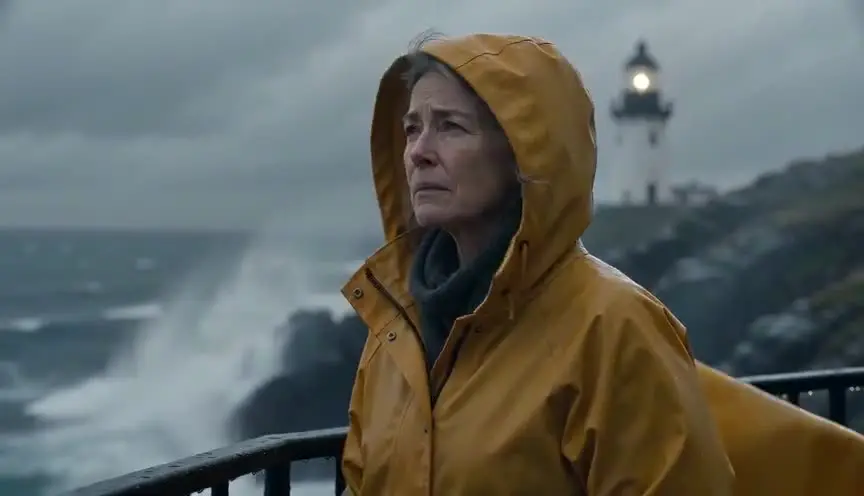
Cut from an ultra-wide shot in the chaos to a long lens close-up. The sudden compression and calm isolate a character's moment of clarity.
Reference
Watch it in
The Revenant (2015)
Emmanuel Lubezki shot much of the film on 12 to 14mm lenses in natural light, so the wilderness looms over and presses on the characters.
Birdman (2014)
Lubezki used ultra-wide lenses in the narrow backstage corridors, keeping the long takes immersive and a little claustrophobic.
ScreenWeaver
Set it up in ScreenWeaver
Describe the tight space or the vast landscape in your action lines, and ScreenWeaver breaks the scene down into shots automatically. Open the shot, set a medium close-up at eye level or slightly low, with a handheld movement or a slow push and a short duration, and note the 14mm lens on the shot. The characters and the location carry from shot to shot. Use the AI previsualization to see how the space stretches before you commit the setup to the shot list.
Start writing for freeThe prompt behind this clip
This is the exact prompt that rendered the clip at the top of the page. Keep the description of the camera and the light, change the subject and the place.
14mm ultra-wide lens shot. The camera is very close to a skateboarder's face and board as he rolls toward the lens in a concrete skate park: his face and hands look big and stretched, the ramps and sky behind him bend and curve at the edges of the frame, and the space looks huge and deep. Handheld following, bright afternoon sun. No text.
Common mistakes
- 01
Faces at the edges
Ultra-wide lenses stretch anything near the frame edges. A face placed there looks deformed. Keep people near the center unless distortion is the point.
- 02
Using it for every shot
Constant distortion tires the audience and flattens the effect. Keep the 14mm for moments of immersion, chaos or space, and use normal lenses for calm dialogue.
- 03
Too far from the subject
From a distance, the ultra-wide makes people tiny and unreadable. Get close to faces or objects to create depth and presence.