Layered depthThree planes, one living world
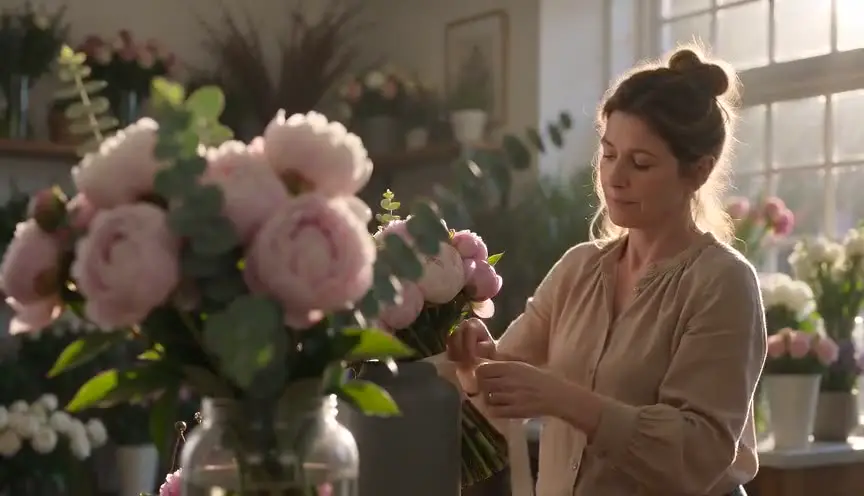
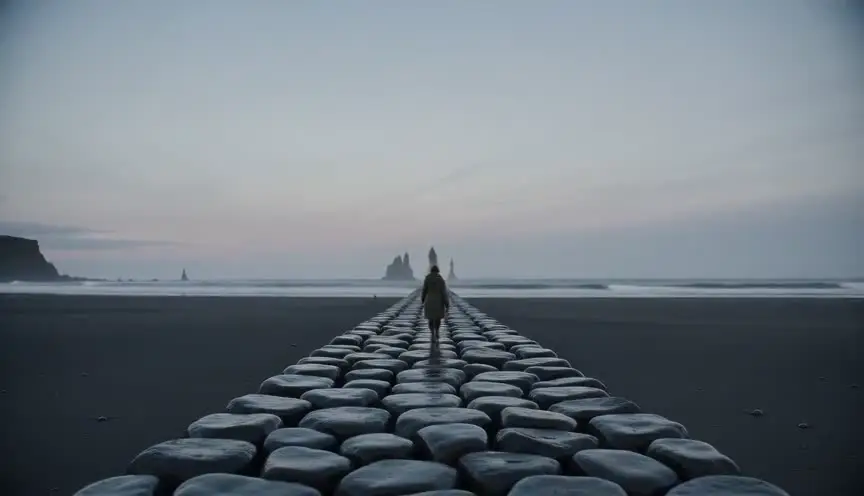
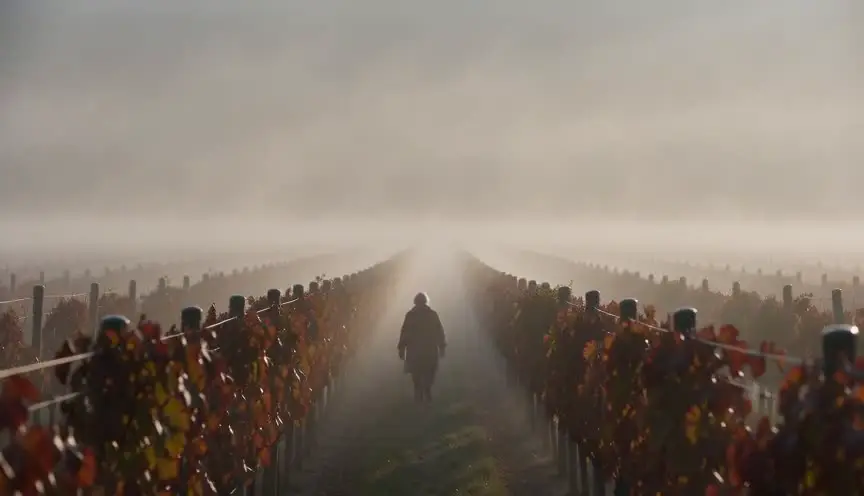
Layered depth stages the frame in three planes: something near the lens, the main action in the middle, and life continuing in the background. The audience reads the scene as a real, crowded place where several things happen at once.
Also calledDepth stagingForeground-midground-backgroundDimensional composition
Composition
Why it works on screen
Depth staging lets a single shot tell parallel stories. A cook argues with the owner in the middle plane while a dishwasher overhears in the foreground and a customer walks out in the background. Nobody needs a cut to connect them. Use it for busy workplaces, family gatherings, conspiracies and scenes where what the background characters do matters. It serves tension, irony, comedy and a sense of community. A scene earns layered depth when more than one person has a stake in the moment, or when the environment itself is pushing on the characters.
The shot list line
- Size
- Medium wide shot
- Angle
- Eye level
- Movement
- Static or slow push through the planes
- Lens
- 25mm to 32mm with deep stop
- Duration
- 6 to 10 s
Stage one clear action per plane and light each plane separately, so the three layers separate in tone even when everything is in focus.
Screenplay
On the page
Layered staging comes from writing the whole room, not from camera words. In the action lines, show what several people are doing at different distances: who is close to the door, who is at the stove, who is outside the window. Keep each layer to a short sentence so the page stays fast. A director reads that as a staged frame. Do not write "in the background" repeatedly; describe positions naturally and leave planes and focus to the shot list.
INT. RESTAURANT KITCHEN - MEXICO CITY - NIGHT
Service at full boil. Steam, shouted orders, pans on every burner.
Near the pass, PACO (19, dishwasher) scrubs a pot and listens.
At the grill, chef REBECA ANAYA (40s) holds a ticket up to the owner, ÁLVARO (60s), in a suit too clean for this room.
REBECA
You sold it. Without telling us.
Beyond them, through the swinging door, a table of six stands up and leaves.
Storyboard
In the storyboard
Divide the panel into three depths with faint horizontal bands or overlapping outlines. Draw the foreground element large at one edge, the main characters mid-size in the center, and the background action small and clear. Label each plane with a number and a note on what happens there. Mark focus as deep or add a rack arrow. If people move between planes, draw their paths with dotted arrows and note the timing.
Pairs well with
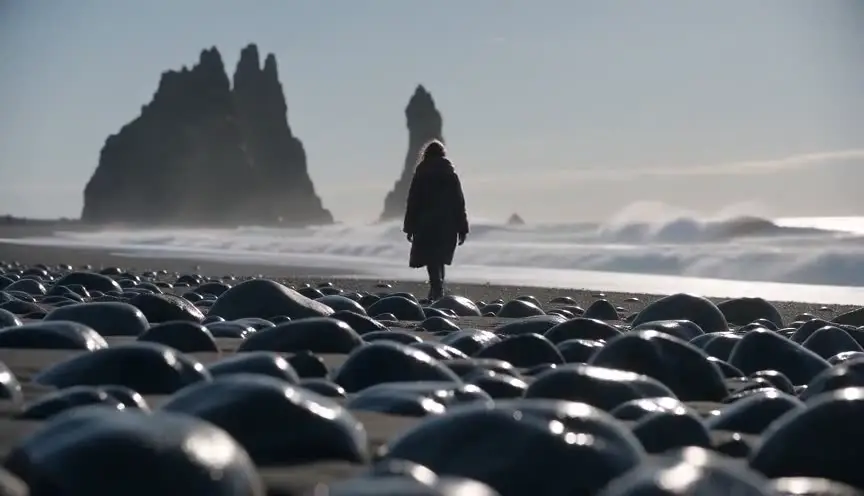
Deep focus keeps all three planes sharp, so the audience can choose where to look. Use it when every layer carries story, and the tension comes from seeing them together.

A layered frame held as a long take lets characters cross between planes, trading places and importance, without a cut interrupting the life of the room.
Reference
Watch it in
Citizen Kane (1941)
Gregg Toland's deep focus sets action in near, middle and far planes of the same frame, a reference that cinematographers still study.
Blade Runner 2049 (2017)
Roger Deakins stacks fog, light shafts and set pieces at different distances, so each shot reads as clear layers of space.
ScreenWeaver
Set it up in ScreenWeaver
Write what happens at each distance in your action lines, and ScreenWeaver breaks the scene down into shots automatically. Open the key shot, set a medium wide framing at eye level, with a static movement or a slow push, and a duration long enough to read all three planes. The characters and the location carry from shot to shot, so the background extras stay in place across angles. Check in the AI previsualization that each layer separates and the main action stays readable.
Start writing for freeThe prompt behind this clip
This is the exact prompt that rendered the clip at the top of the page. Keep the description of the camera and the light, change the subject and the place.
Layered depth: inside a night subway car, a static eye-level shot on a 35mm lens holds three distinct planes at once. In the foreground, close to the lens, a middle-aged man's hand grips a pole, slightly soft with cool fluorescent light. In the midground, sharply focused, a young woman in a red coat sits reading. In the background, blurred commuters stand near the sliding doors under flickering overhead light. The train rocks gently, window reflections slide past, nothing changes position, the three layers stay fixed and distinct. No text.
Common mistakes
- 01
Three planes, one tone
If foreground, middle and background share the same brightness and color, depth collapses. Light them differently, use haze or contrast, so the eye separates the layers.
- 02
Background upstages the scene
Extras doing big actions behind a quiet dialogue steal attention. Keep background action simple and time it so it peaks between the important lines.
- 03
Staging for a flat lens
A long lens compresses the planes into one. Layered depth wants a wider focal length and a camera placed inside the space, not across the room.