Split screenTwo moments in one frame
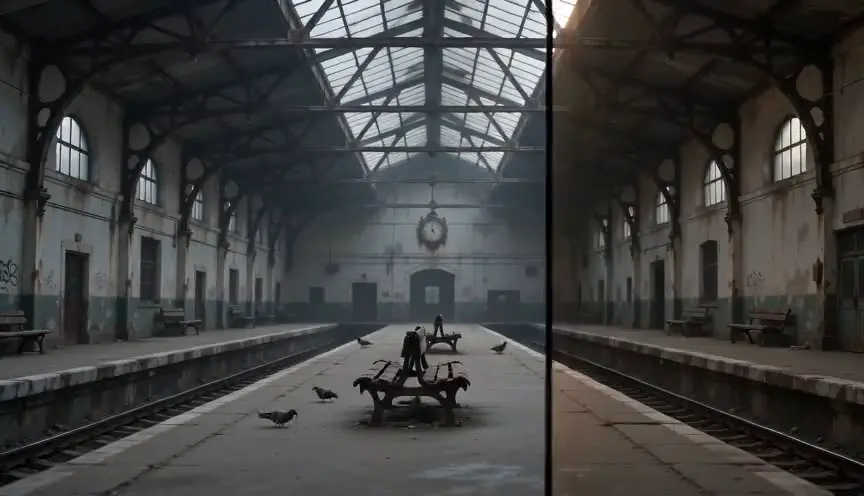
A split screen divides the frame into two or more panels, each showing a different shot at the same time. The audience compares the images directly and reads connections, contrasts and timing that alternating cuts would hide.
Also calledMulti-screenScreen divisionSplit-frame
Editing and transitions
Why it works on screen
Split screen makes simultaneity visible. Two people on a phone call, lovers living parallel days, a heist seen from four positions at once, a couple in the same bed but separated by a hard line: the frame itself becomes the story's argument. It serves suspense, comedy, romance and loneliness. It can show that two characters are thinking the same thing, or that they will never meet. A scene earns it when the comparison is the point and a cut would lose the timing between the halves. It can also energize a montage, packing more action into a short time.
The shot list line
- Size
- Medium or close-up on each side
- Angle
- Mirrored angles (one looking left, one looking right)
- Movement
- Mostly static, or matched movement on both sides
- Lens
- Same focal length on both sides
- Duration
- 4 to 10 s per split
Frame each half for its final panel shape, and have the actors look toward the center line so the two sides feel connected.
Screenplay
On the page
SPLIT SCREEN is an accepted screenplay heading, so a writer may use it when the division is part of the story, such as two characters on the phone mirrored side by side. Introduce it clearly, describe each side briefly, and close it with a return to full frame. Use it for one or two sequences rather than as a habit. Panel sizes, borders and timing of each side belong in the shot list and editing notes.
INT. DORM ROOM - TORONTO - NIGHT
ZOFIA NOWAK (19) lies on her bunk, phone to her ear, snow at the window.
SPLIT SCREEN WITH:
INT. KITCHEN - KRAKÓW - MORNING
Her older sister KASIA (27) stands at the stove in pajamas, flipping pancakes, phone wedged on her shoulder.
They both laugh at the same moment, then fall quiet together.
KASIA
Say it first.
On the left, Zofia pulls her blanket over her head.
Storyboard
In the storyboard
Draw the frame divided by a clear line, vertical or horizontal, and sketch each shot within its panel. Label each panel with location and time. Add small arrows for eyelines, usually pointing toward the dividing line. Note whether the border is a hard line, a soft blend or a moving split. If the split opens or closes during the shot, draw a start and end panel with the line's movement.
Pairs well with
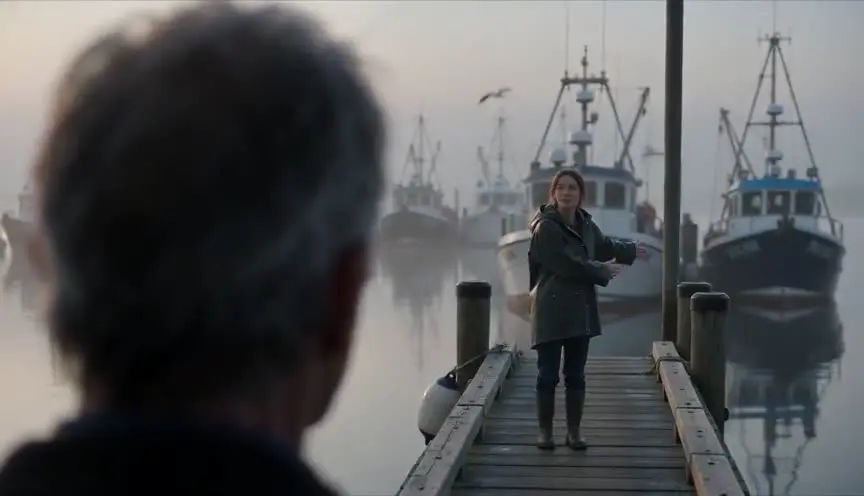
Over-the-shoulder shots before the split establish each character in their space. When the frame divides, the audience already knows both sides and can read the comparison instantly.

Returning to a full-frame close-up after a split puts all the attention back on one face, often the one who breaks the silence or makes the decision.
Reference
Watch it in
The Thomas Crown Affair (1968)
Grids of split panels show a robbery from many angles at once, a landmark of the technique in mainstream film.
Requiem for a Dream (2000)
Two lovers lie in one bed, yet a line in the frame splits them apart, making their growing distance plain to see.
ScreenWeaver
Set it up in ScreenWeaver
Write SPLIT SCREEN with a line for each side in your screenplay, and ScreenWeaver breaks the scene down into shots automatically. In the storyboard, give each side's shot a framing and angle that mirror the other, such as one character looking right and the other left, with matching movement and duration. Characters and locations carry from shot to shot. Use the AI previsualization to judge timing, then note the panel layout in your shot list.
Start writing for freeThe prompt behind this clip
This is the exact prompt that rendered the clip at the top of the page. Keep the description of the camera and the light, change the subject and the place.
Split screen: a single frame divided by a sharp vertical line down the center, no gradient, no shadow. On the left half, a young woman in a linen dress walks steadily through a golden sunflower field, shot with a 35mm lens, her hand brushing the tall stalks. On the right half, an older man on a bicycle rides along a dirt path at the edge of the same field, shot with a 50mm lens, dust rising behind his wheels. Both actions run at the same natural speed under warm late afternoon light, and the dividing line stays perfectly still while each half moves independently. No text.
Common mistakes
- 01
Eyelines pointing away
If both characters look toward the outer edges, the split feels disconnected. Aim eyelines toward the center line to create a conversation across the divide.
- 02
Too much in each panel
Busy compositions in every panel overwhelm the eye. Keep each half simple, with one clear subject, so the comparison reads quickly.
- 03
Using it as decoration
Split screens with no reason to compare feel like a gimmick. Use them when simultaneity, contrast or parallel lives are the heart of the scene.