Triangular compositionThree points, one relationship
Triangular composition arranges three faces, figures or lights so that they form a triangle in the frame. The eye travels from point to point around it, and the audience reads the group as a single relationship with a clear shape.
Also calledTriangle compositionPyramid compositionCompositional triangle
Composition
Why it works on screen
A triangle is the natural geometry of a family, a love story with a third person, a boss and two rivals. When it sits on a wide base with its point at the top, it feels stable and hierarchical: the person at the apex rules. Turn it upside down, or tip it, and the balance becomes fragile. Use it for confrontations of three, inheritance scenes, negotiations, and moments when one person must choose between two others. A scene earns a triangular frame when the drama is literally between three people, or three things, pulling on each other.
The shot list line
- Size
- Medium wide shot
- Angle
- Eye level or slightly low
- Movement
- Static
- Lens
- 32mm to 40mm
- Duration
- 5 to 8 s
Block the three faces at different heights so their positions draw a clear triangle, with the dominant character at the apex.
Screenplay
On the page
Triangles come from blocking, and blocking can be implied in the action. Write where three people are in relation to each other: one standing, two seated; one at the head of the table, two on either side; one in the doorway and two on the bed. Keep it to positions that matter for the drama, and let power show in who is higher. Do not write "triangle" on the page. The exact geometry, the lens and the angle belong in the shot list.
INT. FARMHOUSE KITCHEN - COUNTY CLARE - NIGHT
A scrubbed table. A single bulb over it. A deed of sale lies in the middle.
Siblings MAEVE (50s) and COLM DUNNE (40s) sit on opposite sides, not looking at each other.
Their younger brother FINTAN (30s, still in his coat) stands at the head of the table, hands on the back of their late father's chair.
FINTAN
One of you signs. Or neither of us keeps it.
Maeve slides the pen toward Colm. He doesn't touch it.
Storyboard
In the storyboard
Place three dots for the three faces or key points, then connect them faintly with lines so the triangle is visible. Draw the characters on those points, noting who stands and who sits. Mark the apex with a small star if one character dominates. If the triangle will shift during the scene, draw a second panel with the new shape and an arrow for the movement that changes it. Note the lens, the camera height and the duration.
Pairs well with
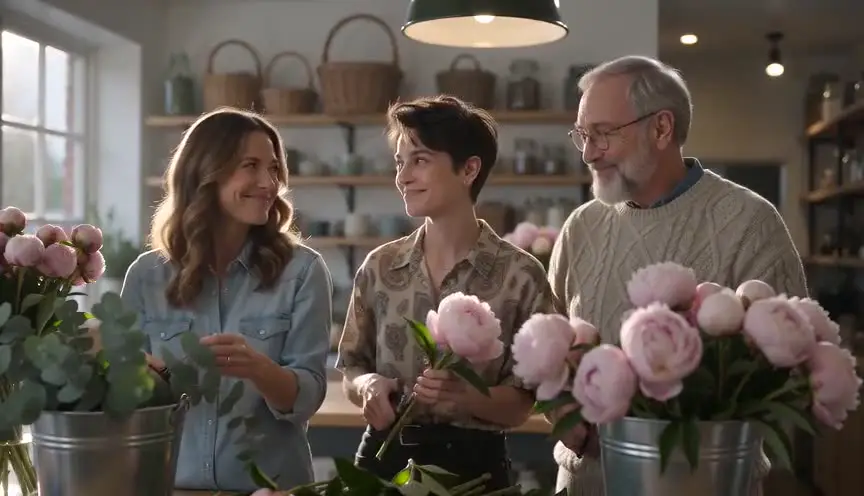
A three-shot is the natural home of a triangular composition. Stage the three characters as a triangle in the three-shot, then break it into singles when the alliance splits.
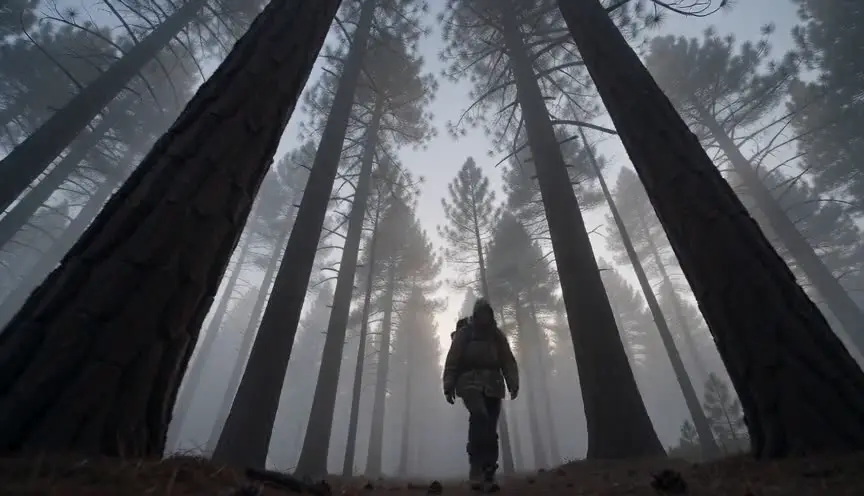
A slightly low angle strengthens the apex of the triangle, making the person at the top feel even more dominant over the two at the base.
Reference
Watch it in
Barry Lyndon (1975)
Kubrick and John Alcott often set people and candle flames into triangles, in the manner of eighteenth century group portraits.
The Godfather (1972)
Coppola repeatedly groups three family members into a steady pyramid, which turns loyalty and rank into a visible shape.
ScreenWeaver
Set it up in ScreenWeaver
Write the positions of the three characters into your action lines, and ScreenWeaver breaks the scene down into shots automatically. Open the key shot, set a medium wide framing at eye level, static, with a duration long enough to read all three faces. Arrange the characters as a triangle in the storyboard frame. They carry from shot to shot along with the location, so the singles that follow keep the same geography. Use the AI previsualization to test whether the apex reads as intended.
Start writing for freeThe prompt behind this clip
This is the exact prompt that rendered the clip at the top of the page. Keep the description of the camera and the light, change the subject and the place.
Triangular composition: a static locked-off wide shot inside a sunlit pottery workshop shows three points of visual weight forming a triangle, a seated potter at the wheel at the base left, a standing apprentice holding raised clay at the base right, and a hanging pendant lamp glowing above between them forming the apex. Warm side light from a large window rakes across shelves of finished pots in the foreground and background, deepening the sense of depth. The camera does not move, only the potter's hands slowly shape the clay and dust drifts through the light, keeping the eye moving along the triangle's edges. No text.
Common mistakes
- 01
Three heads in a row
Placing three people at the same height turns the triangle into a line. Vary height through standing, sitting and leaning, so the shape reads at a glance.
- 02
Wrong person at the top
The apex carries power. If the weakest character ends up highest by accident, the frame contradicts the scene. Block the hierarchy on purpose.
- 03
A triangle that never changes
Relationships shift during a scene. If the geometry stays frozen, the image stops telling the story. Let a character stand, sit or move to rebuild the triangle.