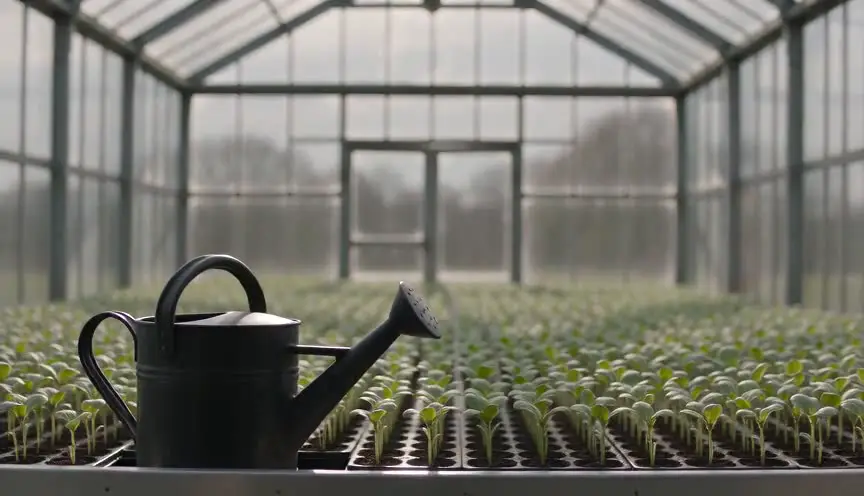
Golden ratioA frame that pulls the eye inward
Golden ratio composition places the subject on lines set at roughly 1 to 1.618, or at the tight end of a spiral that curls through the frame. The eye travels along the shapes of the image and settles on one point, so the shot feels composed with care rather than simply balanced.
Also calledGolden spiralFibonacci spiralPhi grid
Composition
Why it works on screen
Use it when a single point in the frame must feel inevitable: the face everything leads to, the object a scene has been circling, the small figure in a large world. The spiral carries the eye from the busy part of the image to the quiet center of attention, so it suits reveals, contemplative openings and portraits that should feel like paintings. It serves wonder, fate, stillness and focus. A scene earns it when the audience has time to look, a held shot with no rush, where the arrangement itself tells them what matters most.
The shot list line
- Size
- Medium wide shot
- Angle
- Eye level or slightly high
- Movement
- Static or very slow push in
- Lens
- 35mm or 40mm
- Duration
- 5 to 8 s
Load a phi grid or spiral overlay on the monitor and set the focal point, usually the eyes or the hands, where the spiral closes.
Screenplay
On the page
The golden ratio never belongs in a spec script. It is a precise compositional tool, and naming it on the page sounds like a lesson in geometry, not drama. Write the path of attention instead: what the eye crosses first, what it arrives at, how the scene gathers around one small thing. If your action lines move from the wide world to a single detail, the director has what they need. Mark phi grids and spirals on the storyboard and in the shot list, where the camera team uses them.
INT. BAKERY - BEFORE DAWN
Flour hangs in the air. Racks of cooling loaves curve along one wall toward the back.
At the end of the curve, under the only bulb, SEBASTIÃO NETO (70s, forearms dusted white) shapes a last loaf with slow hands.
His granddaughter LUÍSA (19) watches from the doorway, apron still folded.
He presses a thumbprint into the dough. Always the same place.
SEBASTIÃO
Your turn tomorrow.
Storyboard
In the storyboard
Sketch a faint spiral over the panel, starting wide in one corner and closing on the focal point. Arrange the set pieces, props and light along its curve so they lead toward the subject. Mark the focal point with a small circle and write what it is. If the shot pushes in, add an arrow toward that point and draw an end frame. Note the lens and whether the spiral opens left or right, so the operator can mirror it if needed.
Pairs well with

After a golden ratio frame lands the eye on a small detail, cut to an insert of that detail. The audience already knows where to look, so the insert feels like an answer, not a repetition.

An establishing shot built on a phi grid can open a sequence with a sense of order, placing the key building or window where the next scene will begin.
Reference
Watch it in
American Beauty (1999)
Film schools often use the rose petal fantasy to show a spiral that funnels the eye toward the young woman's face at its center.
There Will Be Blood (2007)
Robert Elswit's oil field frames are a common teaching case for phi placement, with Plainview set away from center against wide empty land.
ScreenWeaver
Set it up in ScreenWeaver
Describe in your action lines how the scene leads toward one detail, and ScreenWeaver breaks it down into shots automatically. Open the shot, set a medium wide framing at eye level, keep the movement static or a slow push, and give it a duration long enough for the eye to travel. Place the focal point off center in the storyboard frame, along the spiral you have in mind. Characters, locations and references carry from shot to shot, and the AI previsualization lets you test the arrangement.
Start writing for freeThe prompt behind this clip
This is the exact prompt that rendered the clip at the top of the page. Keep the description of the camera and the light, change the subject and the place.
Golden ratio composition in a busy ramen kitchen at night. A middle-aged Japanese woman chef stands slightly left of center, about two fifths from the frame's left edge, ladling broth into a bowl under warm hanging bulbs. Steam curls up from pots in the foreground right, tracing a soft curve that leads the eye toward her hands. Behind her, blurred cooks move past shelves of bowls, layered in depth. Camera is locked off on a low tripod, 50mm lens, shallow depth of field, no camera movement, only steam and background motion shift within the frame. No text.
Common mistakes
- 01
Forcing the spiral onto any frame
Drawing a spiral after the fact proves nothing. The shapes in the set, the light and the blocking must actually curve toward the subject, or the composition only exists in the overlay.
- 02
Confusing it with thirds
Phi lines sit closer to the center than third lines. If you simply use a thirds grid, you get a slightly different balance. Choose one on purpose and keep it consistent in a sequence.
- 03
No time to read it
A careful spiral in a two second cut is wasted. The eye needs a few seconds to travel the curve, so give golden ratio frames room in the edit.