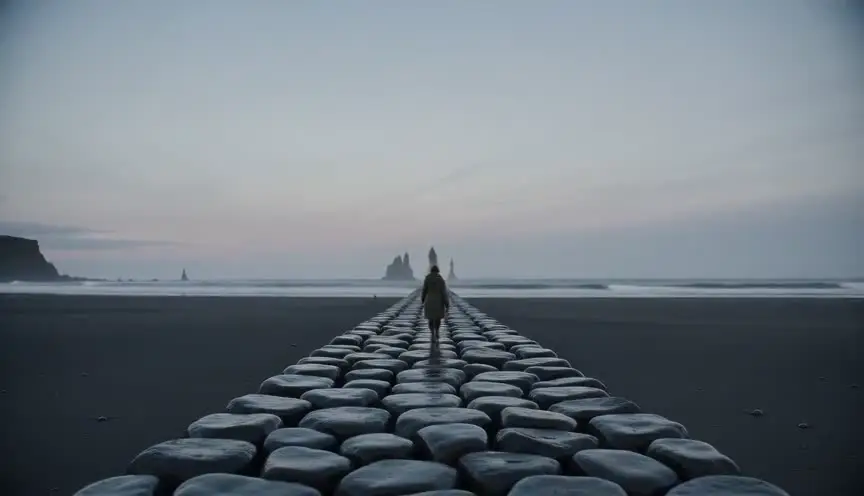
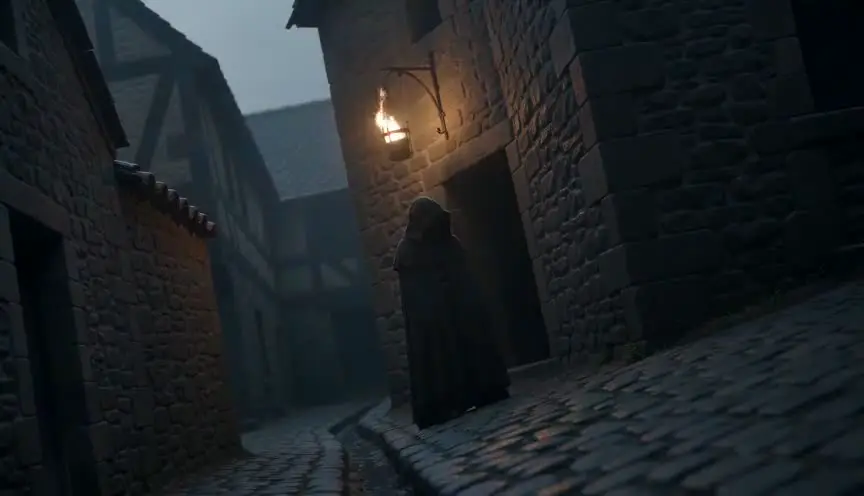
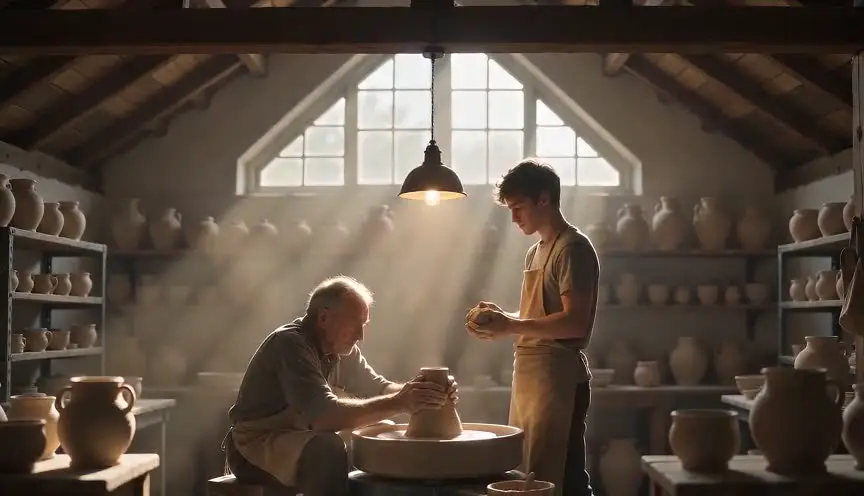
Diagonal compositionEnergy running corner to corner
Diagonal composition arranges the main lines of a shot, such as stairs, ropes, rooftops, shadows or bodies, on a slant across the frame. The image feels in motion even when nothing moves, and the audience senses instability or drive.
Also calledDiagonal linesDiagonal framingOblique composition
Composition
Why it works on screen
Horizontal lines feel calm, verticals feel stable, diagonals feel like something is happening. A staircase slicing the frame puts a character mid-climb in their own story. A roofline running corner to corner makes a chase feel steep before anyone jumps. Use diagonals for action, pursuit, ambition, danger and moral slippage. They also create power relations: a person at the high end of a diagonal dominates the one at the low end. A scene earns diagonal composition when the ground itself should feel unsteady, or when a character is climbing or falling.
The shot list line
- Size
- Wide or medium wide shot
- Angle
- Low angle along the slope
- Movement
- Static or tilt following the climb
- Lens
- 24mm to 35mm
- Duration
- 3 to 5 s
Find the camera position where the main line runs from one corner toward the opposite corner, and keep the horizon level unless you want a Dutch angle too.
Screenplay
On the page
Diagonals come from places and movement, so write those. A fire escape, a sloping street, a ramp, a ladder, a rope stretched between two buildings: any of them gives the director a slanted line to use. Describe who is higher and who is lower when that matters. Avoid writing "diagonal frame" or "tilted" on the page; that is camera work. The angle, the lens and the exact slope belong to the shot list and storyboard.
EXT. FIRE ESCAPE - WAREHOUSE - NIGHT
Iron stairs zigzag up the brick wall, wet with rain.
CALLA MORETTI (30s, black gloves, a canvas bag strapped across her chest) climbs fast, two steps at a time.
One landing below, her partner JUNE PARK (20s) stops, breathing hard.
JUNE
The roof door's alarmed. You know that.
Calla keeps climbing. The stairs creak under her.
Storyboard
In the storyboard
Draw the dominant line first, a staircase, a rope or a roof edge, from one corner of the panel toward the opposite corner. Place the characters along it, noting who is higher. Use arrows along the diagonal for movement direction, and a curved arrow for a tilt if the camera follows. Add a note that the horizon stays level. Under the panel, write the lens, the camera height and the duration.
Pairs well with
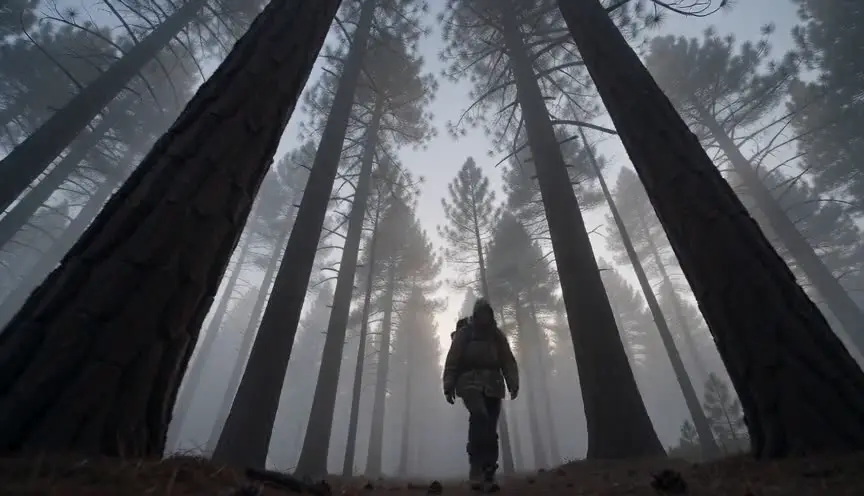
A low angle steepens every diagonal in the set. Combine them when a character is climbing toward power or danger, and the slope should feel almost impossible.
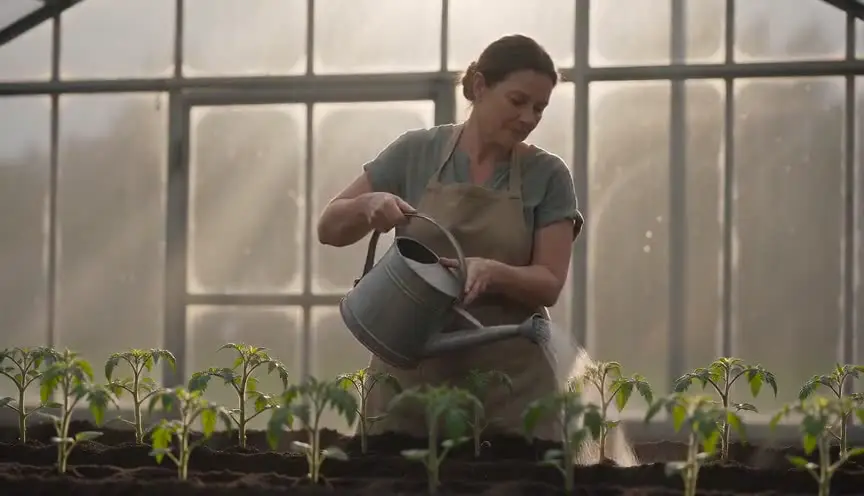
Follow a scene of steep diagonals with a static, level frame when the action stops. The return to horizontals tells the audience the danger or the chase is over.
Reference
Watch it in
The Third Man (1949)
Carol Reed slants doorways, stairs and shadows across the frame, so the ruined city feels bent and no one in it seems honest.
Citizen Kane (1941)
Gregg Toland uses sloping staircases and ceilings in deep focus to magnify the scale of rooms and the power gaps between people.
ScreenWeaver
Set it up in ScreenWeaver
Put the stairs, the slope or the rope in your action lines, and ScreenWeaver breaks the scene down into shots automatically. Open the shot, set a wide framing with a low angle along the slope, choose a static movement or a tilt, and a short duration for energy. The location carries from shot to shot, so the same fire escape keeps its direction across angles. Use the AI previsualization to confirm the line runs corner to corner and screen direction stays clear.
Start writing for freeThe prompt behind this clip
This is the exact prompt that rendered the clip at the top of the page. Keep the description of the camera and the light, change the subject and the place.
Diagonal composition: a wide static shot of a vineyard in autumn, rows of grapevines cutting sharply from the bottom left corner of the frame to the top right corner, golden late afternoon light raking across the orange and rust colored leaves. A worker in a dark green jacket walks along the diagonal row, moving from close to the camera toward the vanishing point, staying aligned with the diagonal line the entire time. The camera does not pan, tilt or zoom, holding the frame locked so the diagonal geometry of the vine rows stays constant while only the worker's motion changes. No text.
Common mistakes
- 01
Mixing diagonal and Dutch
Tilting the camera to create diagonals changes the meaning: a Dutch angle says the world is wrong. If you want energy, find diagonals in the set and keep the horizon level.
- 02
Lines fighting each other
Several slopes crossing in different directions make the frame chaotic. Pick one dominant diagonal and let others echo it or stay horizontal.
- 03
Breaking screen direction
A climb that rises left to right in one shot and right to left in the next confuses geography. Keep the diagonal's direction consistent across a sequence.