Frame within a frameBoxed in by the world
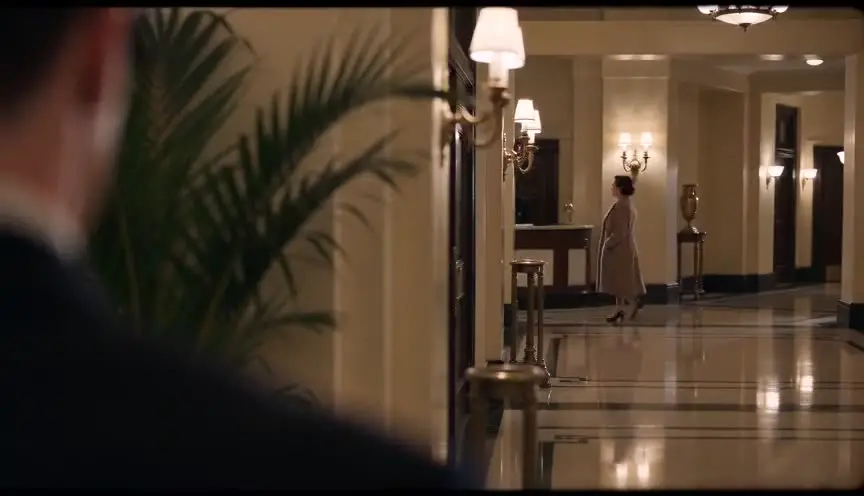
A frame within a frame uses a doorway, a window, a mirror or an arch inside the shot to enclose the subject a second time. The audience's attention narrows to that inner rectangle, and the character looks held, watched or trapped by the space.
Also calledFraming deviceInternal frameNatural frame
Composition
Why it works on screen
The inner frame is a statement about a character's situation. A face in a small window says confinement. A figure seen through a doorway from another room says distance, exclusion or a secret the rest of the house does not share. A couple framed together in an arch says they belong to each other, for now. Use it for isolation, surveillance, belonging and loss of freedom. A scene earns it when the space between the camera and the character matters: a wall, a threshold, a pane of glass the character cannot or will not cross.
The shot list line
- Size
- Medium shot inside a wider frame
- Angle
- Eye level, through the opening
- Movement
- Static or slow push toward the opening
- Lens
- 35mm to 50mm
- Duration
- 4 to 7 s
Keep the opening's edges clean and parallel to the frame, and expose for the inner space so the eye goes through the doorway.
Screenplay
On the page
You can suggest an internal frame on the page without camera language, because doors and windows are part of the action. Write where the character is in relation to the threshold: seen through a hatch, standing inside a doorway, looking out of a porthole. Put the observer on the other side if there is one. That is enough for a director to frame it. Do not write "framed by the door" in every scene; save the image for moments when the barrier means something, and leave the exact composition to the shot list.
INT. FERRY - CAR DECK STAIRWELL - NIGHT
A narrow steel door with a round window, salt-streaked.
Through it: the passenger lounge, warm and loud. A birthday. Paper hats.
EIRIK HALVORSEN (50s, deckhand's jacket) stands in the cold stairwell and looks in through the porthole.
At the center of the party, his daughter SIGRID (20s) blows out candles. She does not look toward the door.
Eirik lifts a hand to the glass. Then lowers it and goes down the stairs.
Storyboard
In the storyboard
Draw the outer frame, then draw the doorway, window or arch as a thick second rectangle inside it. Shade the surrounding wall darker and place the subject in the inner opening. If someone watches from our side, sketch them in the foreground, soft. Mark any push toward the opening with an arrow, and a closing door with a curved arrow and an end frame. Note which space is exposed for and the duration.
Pairs well with
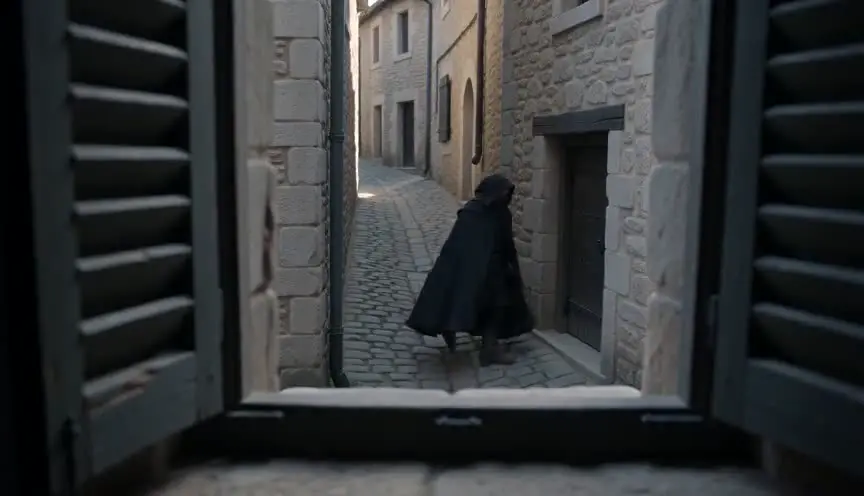
A frame within a frame seen from a hidden position turns naturally into a voyeur shot. Cut to the watcher, then back through the opening, and the audience knows who is looking.
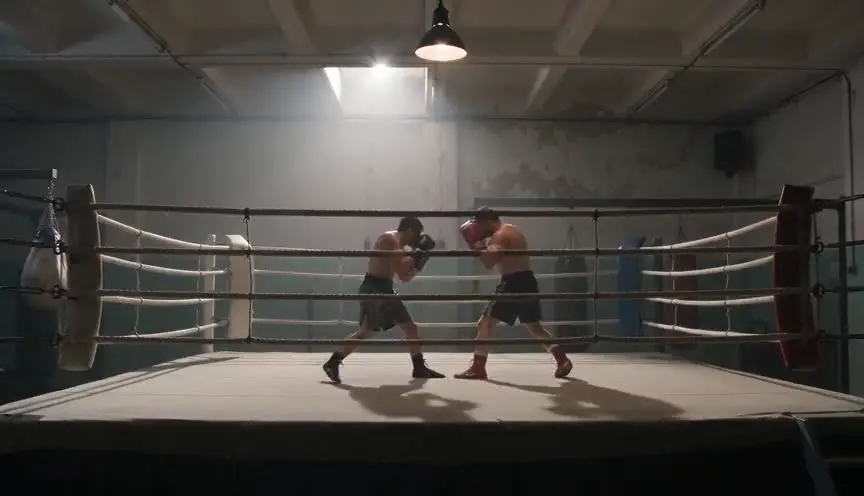
Establish the whole room first in a wide shot, so when you frame the character through the door, the audience understands exactly what the threshold separates.
Reference
Watch it in
Citizen Kane (1941)
Gregg Toland boxes Kane inside doorways and windows in deep focus, so the rooms seem to wall him off from everyone else.
The Godfather (1972)
The ending shows Kay through an office doorway just before the door shuts on her, making her exclusion from Michael's world final.
ScreenWeaver
Set it up in ScreenWeaver
Write the threshold into the action, a door, a window or a hatch, and ScreenWeaver breaks the scene down into shots automatically. Open the shot, set the framing to a medium shot through the opening at eye level, with a static movement or a slow push, and a duration that lets the barrier register. The location carries from shot to shot, so the doorway stays the same across angles, and the AI previsualization shows whether the inner frame reads clearly before the shoot.
Start writing for freeThe prompt behind this clip
This is the exact prompt that rendered the clip at the top of the page. Keep the description of the camera and the light, change the subject and the place.
Frame within a frame: a static camera looks through a tall arched doorway of a Victorian library, the dark wooden arch filling the outer edges of the frame while a scholar in a tweed coat stands beyond it at a reading desk lit by a single brass lamp. The 50mm lens holds both the archway and the scholar in sharp focus, with rows of leather bound books receding into soft shadow behind him. Warm lamplight glows inside the doorway while the arch itself stays in cool shadow, deepening the sense of looking into another space. The camera holds perfectly still for the full shot. No text.
Common mistakes
- 01
The inner frame is crooked
A doorway at an angle to the camera makes a trapezoid, not a frame. Square the camera to the opening unless the tilt is part of the idea.
- 02
Exposing for the wrong room
If the wall around the opening is brighter than the space inside, the eye stays outside. Light the inner area as the brightest part of the frame.
- 03
Framing everyone that way
Once every character is seen through doors, the device stops meaning isolation. Keep it for the characters and beats where the barrier tells the story.