Tungsten balanceWarm lamps, cold windows
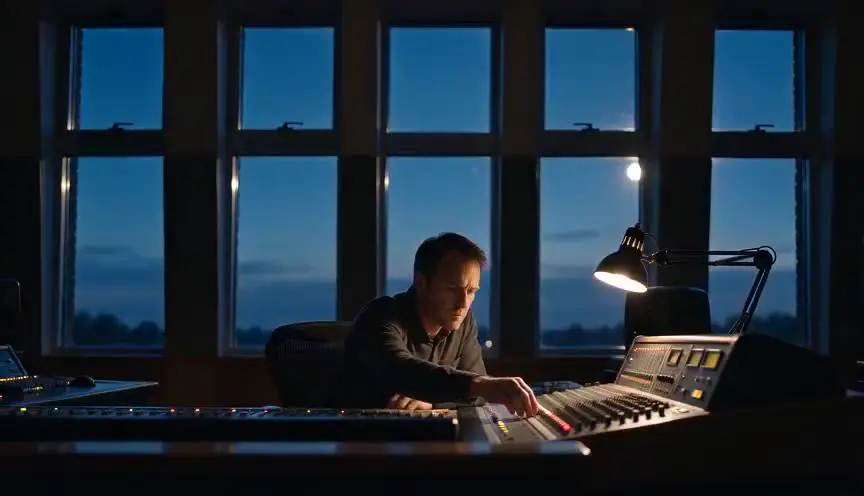
Tungsten balance sets the camera to around 3200K, the color of incandescent bulbs, so lamps look neutral and daylight turns strongly blue. The audience sees a frame split between human warmth indoors and a cold world outside the window.
Also calledTungsten white balance3200K white balanceIndoor color balance
Color and film look
Why it works on screen
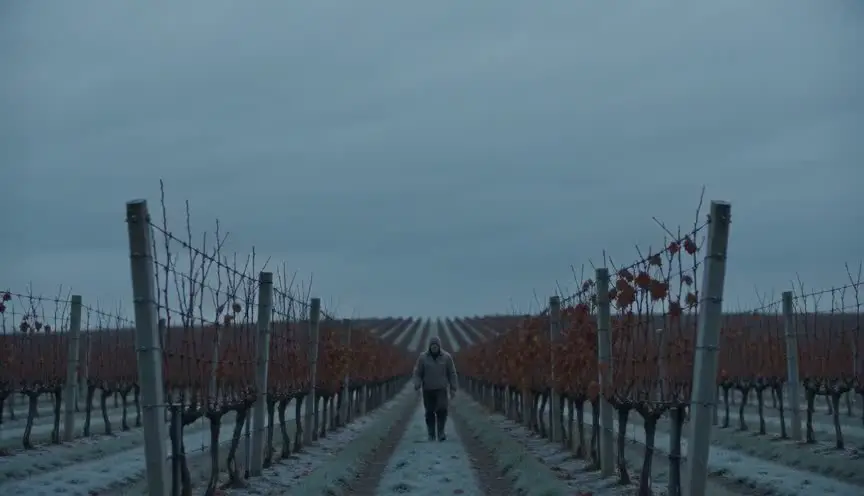
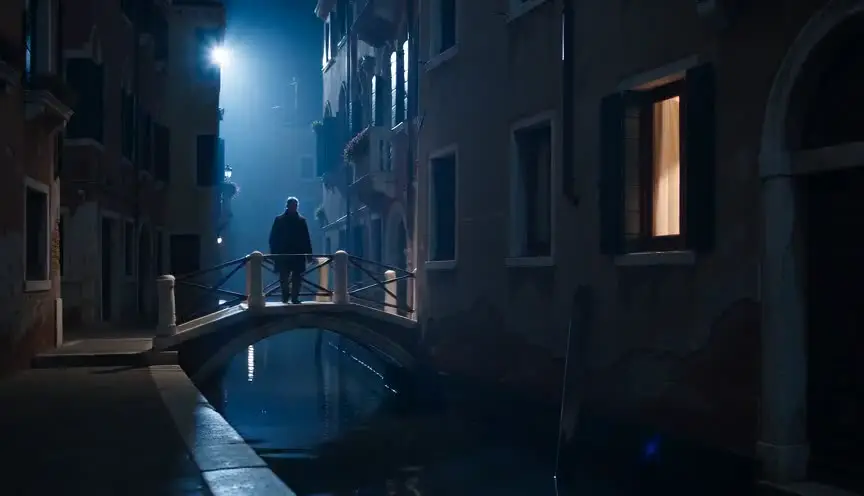
White balance is a storytelling choice. Balanced for tungsten, a room lit by lamps feels normal and safe, while every window, every doorway and every exterior glows blue and distant. That split serves loneliness, early mornings after bad nights, the cold outside world pressing on a shelter, or a whole storyline set in a colder emotional climate. Shooting exteriors on tungsten balance turns daylight into an icy blue, which can also start a day for night conversion. A scene earns it when the contrast between inside and outside, or between warmth and cold, carries the emotion.
The shot list line
- Size
- Medium shot
- Angle
- Eye level
- Movement
- Static
- Lens
- 35mm
- Duration
- 5 to 10 s
Set the camera to 3200K, light the actors with tungsten or tungsten-gelled LEDs so skin reads neutral, and let the window and any daylight fall naturally blue.
Screenplay
On the page
White balance is a camera setting, and it never appears in a spec script. What the writer controls is the mix of light: a lamp in the room, blue dawn at the window, the glow of a TV at night against a gray morning. Describing both sources suggests the contrast. If a whole storyline has a cold cast, keep its weather and hours consistent. The color temperature, the gels and the decision to balance for tungsten go in the shot list and the lighting plan.
INT. GUESTHOUSE ROOM - DAWN
A bedside lamp still on from the night. Outside the window, the harbor is blue and gray and waking up.
SEO-YUN (19) packs a small suitcase in silence: a hairbrush, a phone charger, a photo she decides to leave.
On the bed, her mother MI-KYUNG (50s) pretends to sleep, eyes open, facing the wall.
Seo-yun turns off the lamp. The room goes blue.
SEO-YUN
(whispering)
I will call when I arrive.
Storyboard
In the storyboard
Color the interior light around the lamp in neutral or slightly warm tones, and color everything that comes from the window in a clear blue. Draw the line where the two lights meet on the actor's face or the wall. Mark each source with a small symbol and its temperature, for example 3200K for the lamp and 5600K for the window. Note the camera balance under the panel.
Pairs well with
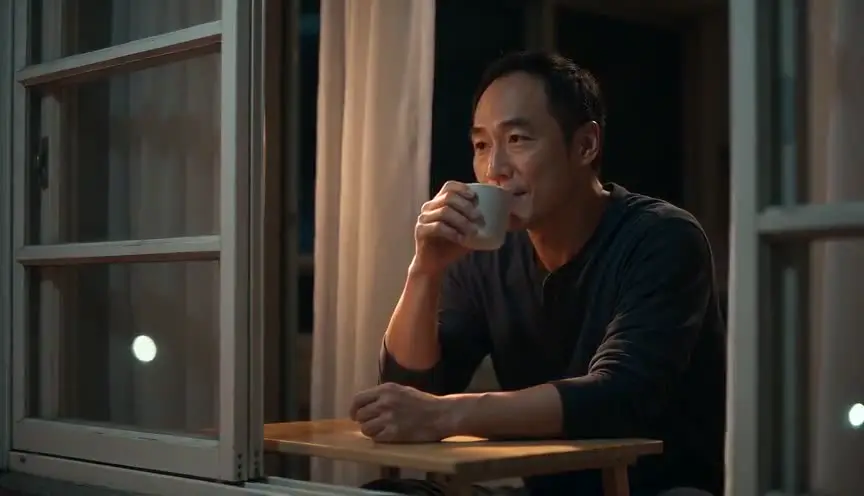
A window full of daylight becomes the cold half of the frame under tungsten balance. The contrast between the blue window and the lamp inside shows the gap between the shelter and the world outside.
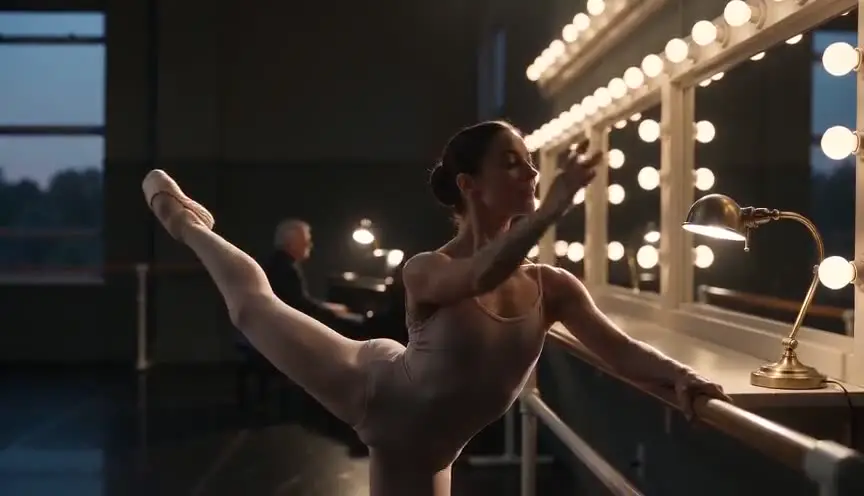
Lamps in the frame justify the neutral light on the actors and give the audience a warm anchor, so the blue beyond them reads as intentional rather than an error.
Reference
Watch it in
Traffic (2000)
For the Ohio storyline, Soderbergh used tungsten stock without correcting for daylight, so exteriors and window-lit rooms turn cold blue, opposite the warm Mexico scenes.
Mad Max: Fury Road (2015)
John Seale filmed many night scenes by day with tungsten balance, shifting sky and desert toward blue as the starting point for the day for night grade.
ScreenWeaver
Set it up in ScreenWeaver
Write both light sources into your action lines, the lamp and the window, and ScreenWeaver breaks the screenplay down into shots automatically. Open each shot, set the framing, angle, movement and duration, and add a tungsten balance note with the color of each source. Characters and locations carry from shot to shot, so the blue window and the warm lamp stay where they are, and the AI previsualization lets you judge the contrast.
Start writing for freeThe prompt behind this clip
This is the exact prompt that rendered the clip at the top of the page. Keep the description of the camera and the light, change the subject and the place.
Tungsten balance: a static locked-off shot inside a glass greenhouse at dusk, camera at eye level on a middle-aged woman in a canvas apron misting rows of tomato plants under warm tungsten grow lamps that render her skin and the leaves in neutral, accurate color. Through the glass panels behind her, the fading daylight outside reads as a strong cool blue, unmatched to the interior light. The camera holds perfectly still for the full four seconds while she moves slowly between plants, the color contrast between the warm interior and the blue exterior staying constant and unchanged. No text.
Common mistakes
- 01
Mixing by accident
A daylight LED on the actor under tungsten balance turns their face blue. Check every fixture's temperature, and gel anything that should read neutral.
- 02
No warm anchor
Without a tungsten source in or near the frame, the whole image just looks blue and wrong. Give the audience a lamp or a practical to measure against.
- 03
Fixing it in post
Correcting a cold cast later affects everything, including skin. If you want the split, build it on set, not in the grade.