Zoom into the eyeGoing inside a character's head
A zoom into the eye pushes the frame from a face down to a single eye, sometimes all the way into the iris. The audience feels they have entered a character's mind at the instant of decision, fear or memory.
Also calledPush into the eyeEye punch zoomZoom to iris
Camera movement
Why it works on screen
Use it on the moment before action or at the doorway to the inner world. A standoff where everyone waits for the first move, a chess prodigy about to commit, a witness whose memory is about to open into a flashback. It serves tension, resolve, obsession and the subjective. Cutting between several eyes stretches time and builds suspense. Pushing into the iris can transport the audience into a vision or a past. A scene earns it after a long buildup of waiting, when nothing remains but the gaze, or when the story needs a clear bridge from the outside world into the character's head.
The shot list line
- Size
- Close-up to extreme close-up on one eye
- Angle
- Eye level, straight on
- Movement
- Zoom in or push in from the face to the eye
- Lens
- 70-200mm zoom, or a macro lens for the final iris
- Duration
- 1 to 4 s
Light the eye with a clear catchlight so the iris reads on a big screen, and ask the actor to hold still and blink just before the move.
Screenplay
On the page
A spec script should not say "zoom". Write the gaze and the stillness around it: everyone frozen, the clock loud, the character's eyes fixed on one thing. If the push leads into a memory or a vision, a transition like DISSOLVE TO: or a heading such as FLASHBACK signals it fairly. The choice of a crash zoom, a slow push or a digital move, and the exact final size, belong to the director and the shot list.
INT. PALACE OF CHESS - TBILISI - DAY
A hushed tournament hall. One board still in play under a spotlight.
NINO BERIDZE (14, sleeves pulled over her hands) stares at the board. Her clock ticks. Eleven seconds.
Across from her, the grandmaster leans back, arms crossed, certain.
Nino's gaze stops on a single square. Her pupils widen.
She reaches for the knight.
Storyboard
In the storyboard
Draw two or three panels: the full face, then the eye filling the frame, and if needed the iris alone. Add a converging frame line or a set of nested rectangles to show the zoom path. Mark the speed with a word such as crash, fast or slow. If the shot is cut against another character's eyes, draw both strips side by side and number the order of the cuts.
Pairs well with
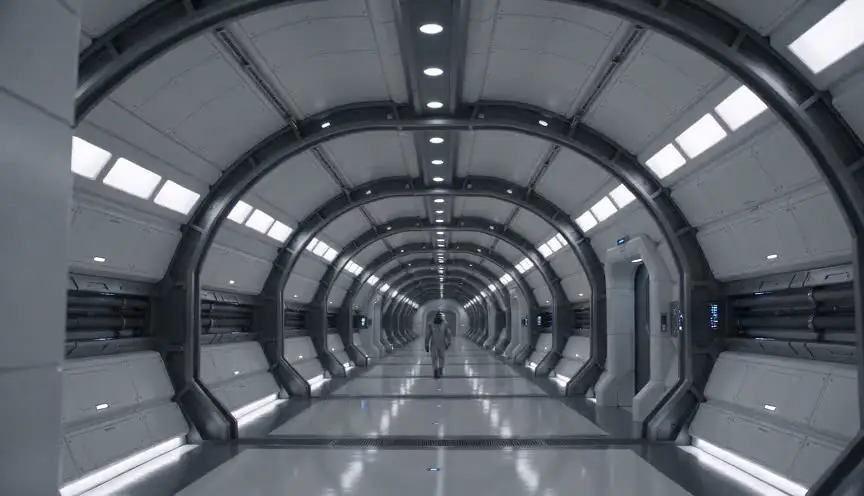
An extreme wide shot of the arena, desert or hall before the push shows how small the characters are in the space. Zooming into the eye then leaps from the whole world to one mind.
Cross-cutting between two or three pairs of eyes stretches a standoff. Each cut shortens as the zooms get tighter, until the action finally breaks the tension.
Reference
Watch it in
The Good, the Bad and the Ugly (1966)
In the three-way duel, Sergio Leone cuts from one gunslinger's eyes to another's with fast zooms, stretching the wait before anyone draws.
Once Upon a Time in the West (1968)
The final duel pushes tight on the eyes of Harmonica and Frank, tying the revealed memory to the violence about to erupt.
Vertigo (1958)
Saul Bass's opening titles travel from a woman's face to her eye and into the iris, where spinning spirals bloom.
ScreenWeaver
Set it up in ScreenWeaver
Write the gaze and the stillness before the decision, and ScreenWeaver breaks the scene down into shots automatically. Open the key shot, set the framing to close-up at eye level, choose a push-in or zoom movement, and keep the duration short. The character carries from shot to shot, so the same eye appears in the wider coverage and in any flashback that follows. Use the AI previsualization to set the rhythm of the cuts between eyes.
Start writing for freeThe prompt behind this clip
This is the exact prompt that rendered the clip at the top of the page. Keep the description of the camera and the light, change the subject and the place.
Zoom into the eye: a weathered man in his fifties stands beside a parked truck on a cracked desert highway at dusk, orange sky glowing behind him. The camera stays completely still on a tripod as the lens optically zooms from a medium shot of his face to an extreme close-up filling the frame with his right eye, the iris catching the last amber light. The zoom takes three seconds, the background dissolving into soft blur, focus locked sharp on the eye the entire time, no camera position change, no cut. No text.
Common mistakes
- 01
The eye goes soft
At the end of a long zoom, focus often misses and the iris turns into a blur. Pull focus with care, stop down if the light allows, and rehearse the move.
- 02
No buildup
Zooming into an eye without a long wait before it feels random and even comic. The push needs the pressure of the scene behind it.
- 03
Dead eyes
An eye with no catchlight looks flat and lifeless in extreme close-up. Place a small light or reflection so the eye glistens and the audience reads emotion.