Car mount shotThe driver held still, the city rushing
A car mount shot fixes the camera to the body of a vehicle, on the hood, the door or the dashboard, so the people inside stay framed while the road moves around them. The audience rides in the car with the characters, trapped in the same small space.
Also calledCar rig shotVehicle mount shotHood mount shotHostess tray shot
Camera movement
Why it works on screen
The car is a confessional with a clock. Two people who cannot leave, a driver who must keep their eyes on the road, a journey with a destination that approaches whatever they say. Car mounts serve intimacy, confrontation, escape and solitude. The fixed frame makes the characters feel boxed in, while the world outside the glass moves on without them. A scene earns it when the conversation needs a closed space and a deadline, or when a character is alone with a decision and the road is the only witness. It also grounds action: a real car, a real road, real faces.
The shot list line
- Size
- Medium close-up on the driver
- Angle
- Eye level, through the windshield or side window
- Movement
- Locked to the vehicle while it drives
- Lens
- 24mm to 35mm
- Duration
- Full dialogue exchange, 20 to 60 s
Secure the rig with the grip team, use a tow or process trailer if the actor must act rather than drive, and plan a safe closed route with repeatable turns.
Screenplay
On the page
A spec script simply sets the scene inside the vehicle: INT. TAXI - MOVING - NIGHT. That heading already tells the director they will need rigs. Write what the characters do and what passes outside when it matters: a police car, a billboard, rain. Never write where the camera is mounted. The choice between hood mount, door mount, a tow rig or a process trailer belongs to the director and the shot list.
INT. TAXI - MOVING - MUMBAI - NIGHT
SANJAY KADAM (45, cap pushed back) drives with one hand, the other on the horn. Neon from the Worli sea link sweeps across his face.
In the back seat, PRIYA SHAH (26) in full bridal red, jewelry clinking, pulls the pins out of her hair one by one.
SANJAY
Madam, the hall was the other way.
PRIYA
I know. Keep going.
Storyboard
In the storyboard
Draw a small top view of the car with the camera positions marked as numbered dots: hood, passenger door, rear seat. For each position, draw one panel showing the character and what passes behind the glass. Add motion streaks outside the windows. Note the rig type under each panel, the speed of the car and whether the actor drives or is towed.
Pairs well with
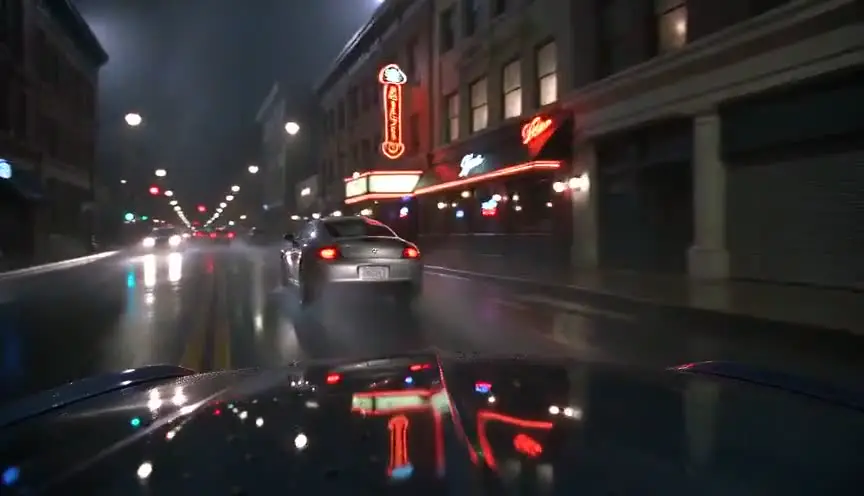
Cutting from the calm interior mount to an exterior chase car view shows the vehicle in its world. The rhythm moves from intimate faces to the danger of the road.
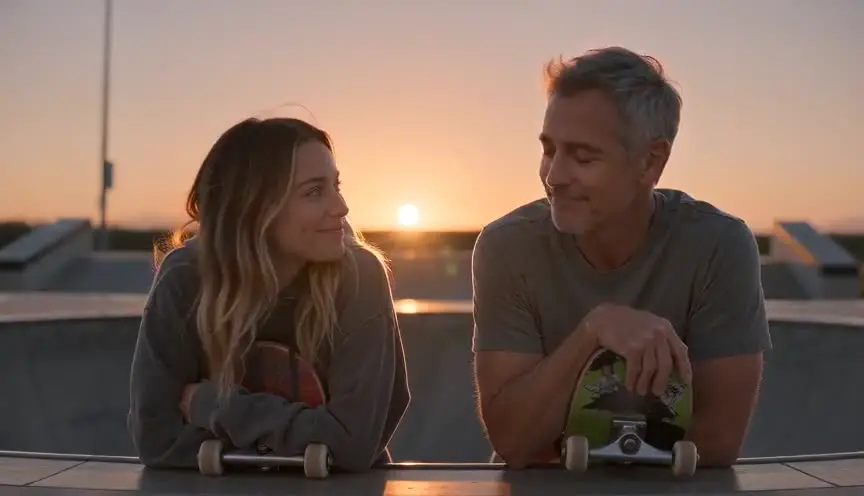
A wide two-shot through the windshield, driver and passenger side by side, sets up the relationship before cutting to singles on each face from door or dashboard mounts.
Reference
Watch it in
Drive (2011)
Mounts on the hood and dashboard keep the driver's face close and calm while the neon streets of Los Angeles smear across the glass.
Locke (2013)
Almost every shot is filmed from rigs attached to one moving car, so a single motorway journey becomes a real-time portrait of a man.
Mad Max: Fury Road (2015)
Cameras bolted to real vehicles capture drivers in the middle of genuine desert pursuits, so the stunts carry physical weight.
ScreenWeaver
Set it up in ScreenWeaver
Set the scene inside the vehicle with a moving heading, and ScreenWeaver breaks it down into shots automatically. Open each shot of the conversation, set a medium close-up at eye level, keep the movement locked to the car and give durations that cover the lines. The characters and the car carry from shot to shot, so the interior and the costume stay the same from the hood to the door angle. Check the coverage in the AI previsualization.
Start writing for freeThe prompt behind this clip
This is the exact prompt that rendered the clip at the top of the page. Keep the description of the camera and the light, change the subject and the place.
Car mount shot, camera clamped to the passenger side window of a sedan, 35mm lens framing a woman in her fifties from the chest up as she drives past a modern glass office tower. Her face and the car interior stay perfectly steady in frame while the glass tower's reflective facade streams past behind her in a smooth horizontal blur, sunlight flaring briefly across the window glass. No text.
Common mistakes
- 01
A static background
If the car is parked and nothing moves outside, the scene feels false. Drive for real, use a tow rig, or plan convincing moving backgrounds in advance.
- 02
Only one angle
A single hood mount for a long scene becomes monotonous. Plan at least two or three positions, driver, passenger and a wider view, to give the editor choices.
- 03
Actors who must drive
Asking an actor to act while driving on a public road is unsafe and hurts the performance. Use a tow rig, a process trailer or a closed road whenever possible.