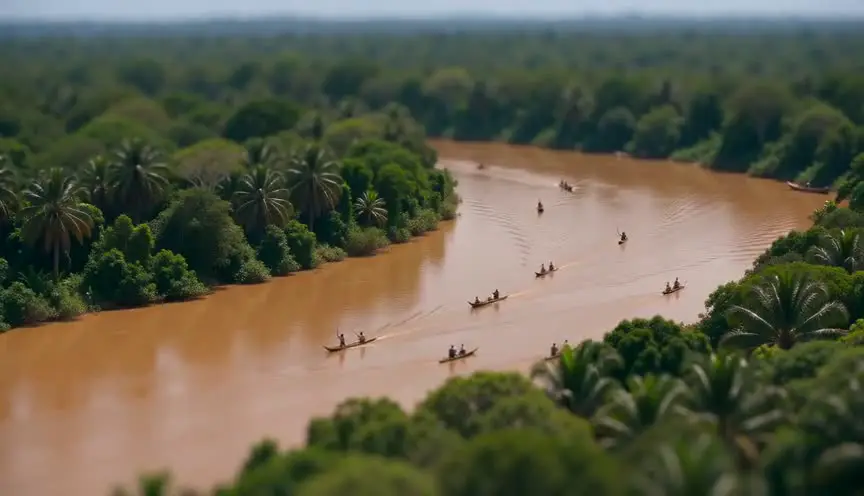
Aerial shotSeeing the world from above
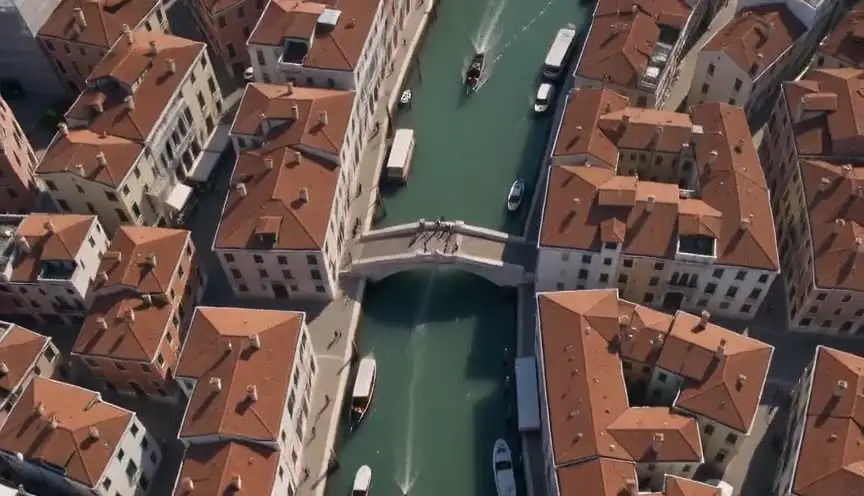
An aerial shot films the scene from high in the air, from a drone, a helicopter or a plane, often moving slowly over a landscape, a city or a road. The audience sees the world from a distance no person on the ground could reach and feels its scale.
Also calledDrone shotHelicopter shotSky shot
Camera movement
Why it works on screen
The aerial view is about context and mood. It can open a film by showing a lonely car on an endless road, a city sprawling to the horizon, or an island in a storm. It can make characters look tiny against nature, or turn human structures into patterns. It serves openings, journeys, transitions, epic scale and the feeling of fate watching from above. A scene earns it when the relationship between the characters and their environment is the story: isolation in the wilderness, a family crossing a country, a city swallowing its people.
The shot list line
- Size
- Extreme wide shot
- Angle
- High angle or bird's-eye view
- Movement
- Aerial flight: forward, lateral or tracking a vehicle
- Lens
- 24mm to 50mm equivalent, longer from a helicopter
- Duration
- 6 to 20 s
Schedule for the right light, confirm flight permits and airspace, and give the pilot a clear start and end point relative to the subject.
Screenplay
On the page
A spec script can hint at an aerial view without directing it. Describe the landscape at its biggest scale and the tiny figure or vehicle within it: a single car on a mountain road, a boat on a gray sea. That contrast in scale tells the director a high view fits. Avoid "aerial shot" or "drone shot" in the text. In the shot list, note the height, the path, the time of day and the aircraft.
EXT. HIGHLAND ROAD, INTERIOR OF ICELAND - LATE EVENING
Black lava fields to every horizon. Moss the color of old limes. No trees, no houses.
A single rented campervan crawls along a gravel road that twists like dropped string.
Inside, HELGA and BJORN SVENSSON (70s, matching fleeces) sit in silence, a paper map between them.
The road forks. Neither of them says which way.
The van stops in the middle of nowhere.
Storyboard
In the storyboard
Draw an extreme wide panel showing the landscape with the subject as a tiny shape. Add a top-down map with the flight path as a line and arrows, and mark the subject's path if it is moving. Note the altitude, the speed, the direction relative to the sun and the duration. Label AERIAL, with the aircraft type, and mark where the subject must be when the shot begins.
Pairs well with
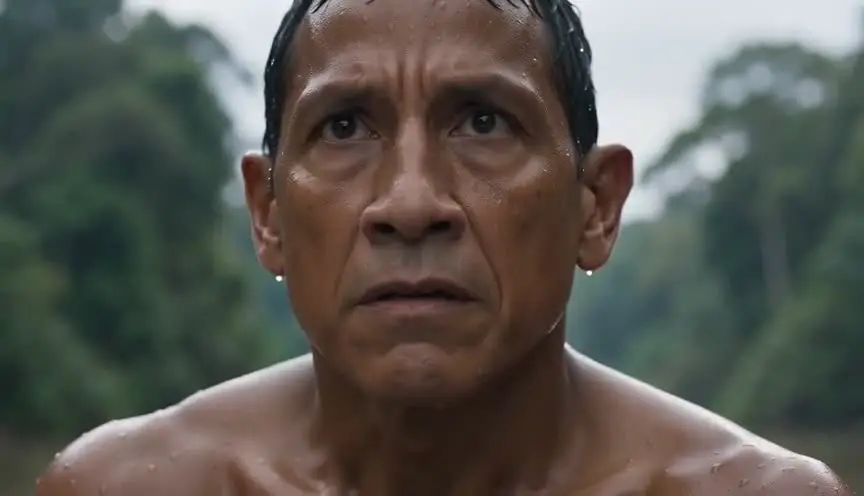
Cut from the aerial view down to a close-up of the character. The jump from the whole landscape to a face makes both feel bigger: the world immense, the person vulnerable.
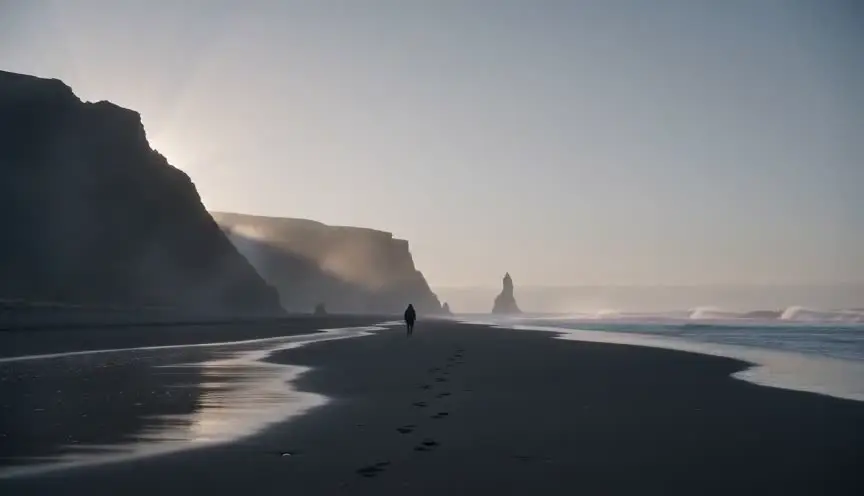
An aerial shot often serves as the establishing shot of a new location. A second, ground-level establishing shot then brings the audience down to human scale.
Reference
Watch it in
Apocalypse Now (1979)
Cameras on helicopters ride with the gunships as they sweep along the coast into the attack, making the assault feel vast and almost divine.
The Shining (1980)
The opening follows a lone car on winding mountain roads from far above, and the family already looks tiny against a cold, empty landscape.
Koyaanisqatsi (1982)
Long flights over cities and highways turn roads, cars and buildings into flowing abstract patterns seen from the sky.
ScreenWeaver
Set it up in ScreenWeaver
Write the landscape and the tiny figure within it in your screenplay, and ScreenWeaver breaks the scene down into shots automatically. Open the shot, set the framing to extreme wide, set the angle to high or bird's-eye, choose an aerial flight as the movement and give it a long duration. Characters, vehicles and the location carry from shot to shot, so the van or the road stays consistent. Check the scale in the AI previsualization.
Start writing for freeThe prompt behind this clip
This is the exact prompt that rendered the clip at the top of the page. Keep the description of the camera and the light, change the subject and the place.
Aerial shot of a small fishing harbor at dawn, drone camera flying forward at a steady altitude of about eighty meters, wide lens capturing the curved stone breakwater, rows of moored wooden boats, and pale morning light reflecting off calm water. The camera glides smoothly north along the coastline, tilting slightly downward to reveal a middle-aged fisherman untying ropes on a wooden dock, horizon staying level throughout the move. Thin fog drifts low over the rooftops in the distance. No text.
Common mistakes
- 01
Postcard without purpose
A beautiful aerial shot that says nothing about the story is travel footage. Link the view to the characters: their isolation, their journey, their place in the world.
- 02
Wrong light
Midday sun flattens landscapes from above. Aerial shots often need the low light of morning or evening to reveal texture. Plan the time of day carefully.
- 03
Too many aerials
Cutting to the sky between every scene becomes a crutch. Use aerial shots when the change of scale or place matters.