Ground level shotThe world from the floor up
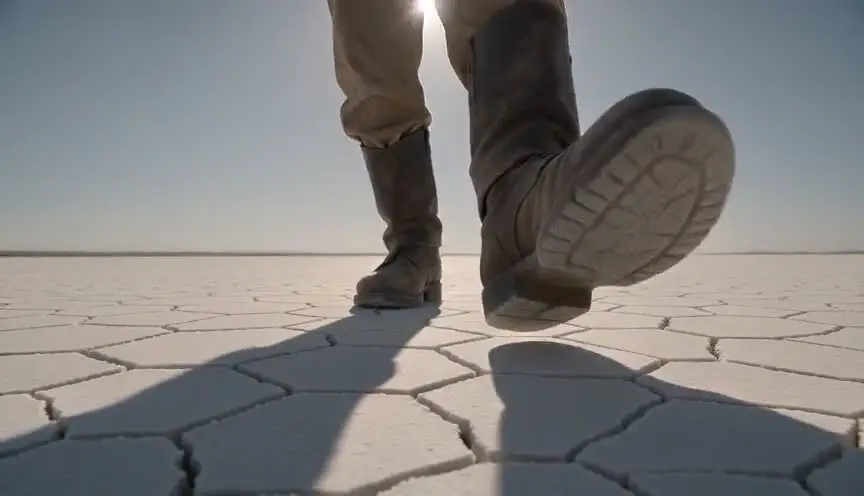
A ground level shot rests the camera on or just above the floor and keeps it roughly level, so the ground stretches toward the horizon and small things fill the foreground. The audience notices boots, wheels, dust and insects before they notice faces.
Also calledFloor-level shotGround-level angleStreet-level shot
Camera angles
Why it works on screen
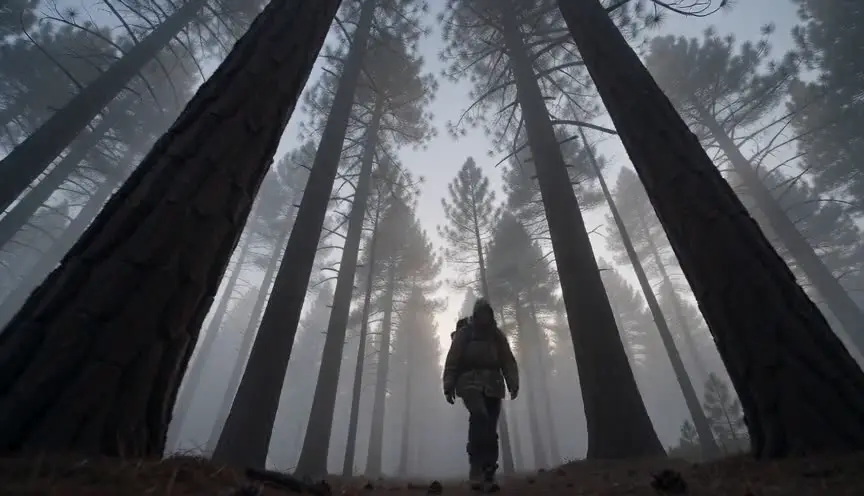
Unlike a worm's-eye view, which tilts up at a towering figure, a ground level shot looks along the floor. That changes what matters. Footsteps become events, a coin rolling across tiles becomes suspense, and a road seems endless. It serves tension before violence, the world of children and animals, arrivals and departures, and the hidden life under ordinary surfaces. A scene earns it when a detail near the ground carries the story, when waiting must feel heavy, or when the film wants a stranger, lower viewpoint than the adults in the scene would ever take.
The shot list line
- Size
- Wide shot with a close foreground
- Angle
- Ground level, lens a few centimeters above the floor, nearly level
- Movement
- Static, or a low tracking move along the ground
- Lens
- 18mm to 35mm
- Duration
- 3 to 8 s
Rest the camera on a sandbag or a low mount and keep the horizon near the top third, so the ground fills the frame and the foreground detail stays sharp.
Screenplay
On the page
Do not write the angle in a spec script. Let the ground carry the action: boots stop in the dust, a ball rolls under a car, water drips onto a platform, a cat crosses a kitchen floor. Those details give the director a reason to put the camera down low. If the viewpoint belongs to a child or an animal, establish them first and describe what they see at their height. The lens height and the rig go in the shot list.
EXT. MAIN STREET, OPAL MINING TOWN, OUTBACK - NOON
Red dust. Heat shimmer at the far end of the road.
A bearded dragon lizard sits in the middle of the street, unbothered.
A pair of cracked leather boots stops a step from it.
The lizard does not move. Neither do the boots.
Further down the road, a second pair of boots steps out of the pub door and into the sun.
Storyboard
In the storyboard
Draw a low horizon line near the top of the panel, with the ground filling most of the frame and converging toward it. Put the key detail large in the foreground: a boot, a wheel, a lizard, a puddle. Place figures small in the distance or cut at the knees. Add a small side sketch with the camera on the floor and a level line of sight. Note the focus plan, foreground or background, and any movement along the ground.
Pairs well with

Cut from the ground level view of boots or hands to an extreme close-up of eyes. The jump from the floor to the face turns a waiting pattern into a standoff between people.
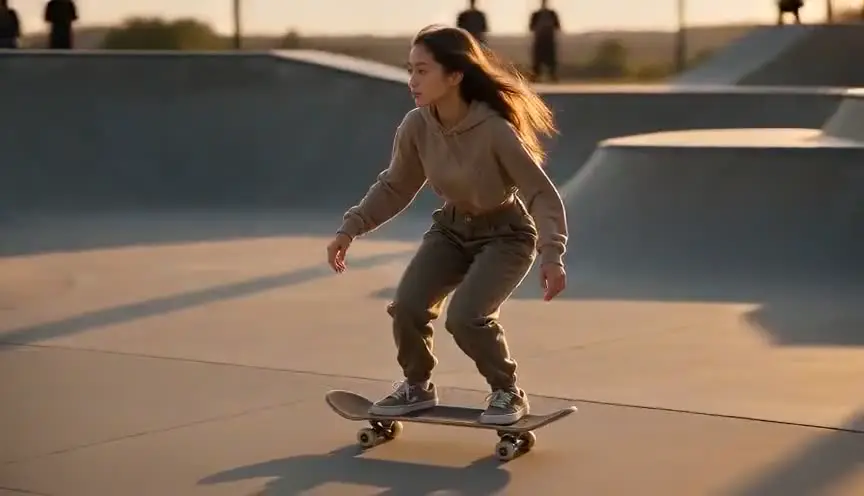
Start with a static ground level frame, then move the camera along the floor with a character or an object. The low tracking move keeps the strange viewpoint while carrying the story forward.
Reference
Watch it in
Once Upon a Time in the West (1968)
The station opening dwells on boots, spurs and dripping water from floor height, turning idle waiting into a slow, tense ritual.
The Shining (1980)
A Steadicam rides just above the floor behind Danny's tricycle, so wheels, carpets and thresholds rule his trip through the hotel's halls.
Blue Velvet (1986)
The opening sinks under a suburban lawn, where beetles crawl at ground level and reveal the menace beneath the neat surface.
ScreenWeaver
Set it up in ScreenWeaver
Write the ground detail into your action lines, and ScreenWeaver breaks the scene down into shots automatically. Open the shot, set the framing to a wide shot with a close foreground, choose a ground level angle, keep the movement static or a low track, and give it three to eight seconds. The characters and the location carry from shot to shot, so the street or the floor stays consistent. Use the AI previsualization to check the balance between foreground and horizon.
Start writing for freeThe prompt behind this clip
This is the exact prompt that rendered the clip at the top of the page. Keep the description of the camera and the light, change the subject and the place.
Ground level shot on a rooftop basketball court at dusk, camera resting almost flush with the painted concrete, lens pointed slightly upward with a 24mm wide angle. A barefoot young man in athletic shorts steps into frame from the right, his sneakers and calves filling the lower half of the image as city rooftops and a hazy orange sky stretch above him. The camera stays locked in place, only his legs and the basketball bouncing once into frame move, catching dust kicked up off the worn court surface. No text.
Common mistakes
- 01
Tilting up by habit
Once the camera is low, operators tend to tilt up to find faces, which turns the shot into a worm's-eye view. Keep it level if the ground is the subject.
- 02
Dead foreground
A low camera with nothing near the lens just shows a lot of floor. Place a meaningful object or action in the foreground so the angle has a purpose.
- 03
Unsafe rig
Floor-level cameras sit where actors, wheels and horses move. Mark the position, brief the cast, and protect the lens with a plate or a crash box when needed.