Hip level shotWhere the hands decide
A hip level shot places the camera at the height of a standing character's waist, framing hands, belts and holsters with the body rising above. The audience watches what people are about to do with their hands before their faces tell them.
Also calledWaist level shotBelt level shotHip shot
Camera angles
Why it works on screen
At hip height, the hands become the drama. The angle serves standoffs, draws, reaches for a weapon or a wallet, and the tense second before a decision. It also feels slightly low and slightly anxious, so a standing character gains a little weight in the frame. Westerns made it famous for duels, but it works wherever a gesture near the waist matters: a nurse's hand near a syringe tray, a bouncer's hand on a door, a child reaching for a pocket. A scene earns it when the audience must watch for the move that will settle everything.
The shot list line
- Size
- Medium shot, framed from knees to chest or full figure
- Angle
- Hip level, level or slightly tilted up
- Movement
- Static, or a slow push toward the hands
- Lens
- 35mm to 50mm
- Duration
- 2 to 5 s
Set the lens at belt height of the standing actor and keep the hands in the lower third, with enough headroom to cut quickly to the eyes.
Screenplay
On the page
Leave the angle out of a spec script. Write the hands and what they hover near: a holster, a sword hilt, a phone in a back pocket, a set of keys. Stretch the moment in the action lines with small physical beats, a thumb moving, fingers flexing, so the reader feels the wait. That is exactly what a director will frame at hip height. The lens height and the cutting pattern between hands and eyes belong in the shot list.
EXT. PIAZZA, SMALL TOWN IN SICILY - NOON
Siesta. Shutters closed. A dog asleep under a Vespa.
At opposite ends of the square: NINO (10) and his cousin CARMELA (10). Each has a water pistol tucked into the waistband of their shorts.
Carmela's fingers twitch.
Nino wipes his palm on his shirt.
From a balcony, NONNA ROSARIA (80s) rings a small brass bell.
Storyboard
In the storyboard
Draw the figure cut at the chest or neck, with the belt, hands and holster or pocket in the center of the panel. Mark the hand's possible move with a small dotted arrow. Add a side sketch with the camera at waist height and the line of sight level. For a standoff, draw matching panels for both characters in the same framing, then a close-up panel of eyes, and note the cutting rhythm between them.
Pairs well with
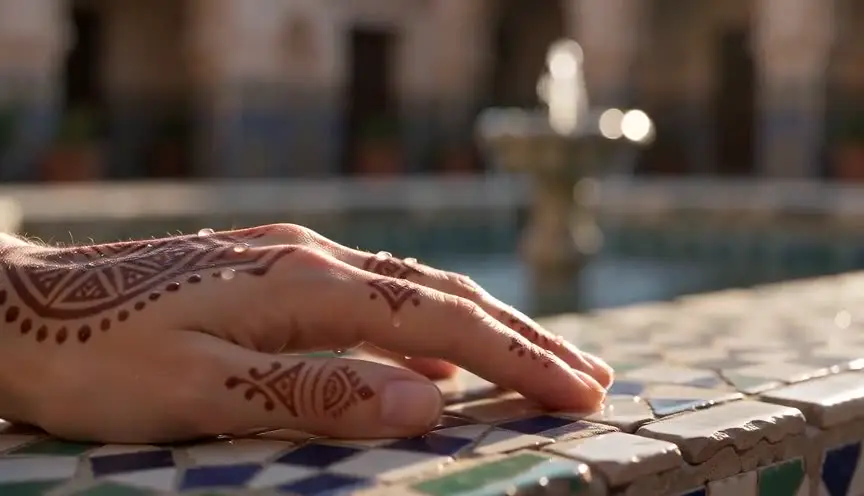
Cut from the hip level frame on the hands to an extreme close-up on the eyes, then back again. The rhythm between the hand and the gaze builds a standoff shot by shot.
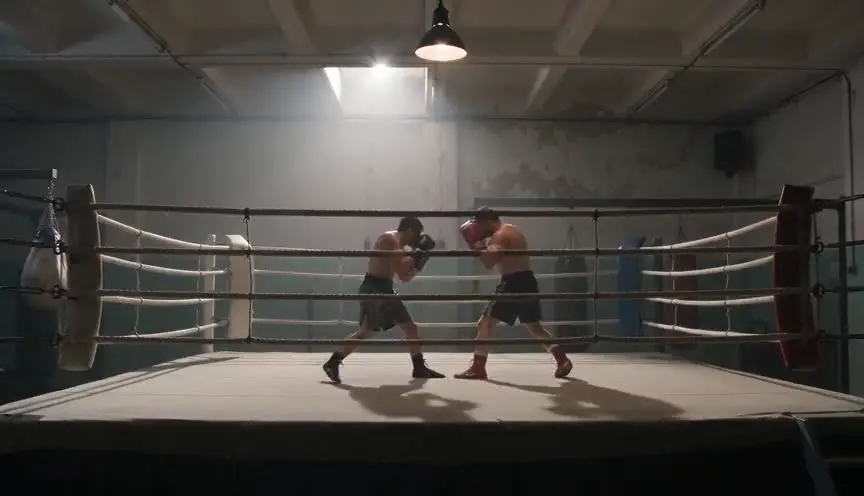
Before going to hip level, establish the distance between the opponents in a wide shot. The audience knows how far apart they stand, which makes every small hand move feel dangerous.
Reference
Watch it in
The Good, the Bad and the Ugly (1966)
Leone drops to belt height during the cemetery duel, framing holsters and hands before the tight close-ups of the three faces.
Once Upon a Time in the West (1968)
In the final duel, Leone keeps the camera close to the gun belts, isolating the hands of Harmonica and Frank before either man draws.
ScreenWeaver
Set it up in ScreenWeaver
Write the hands and the wait into your action lines, and ScreenWeaver breaks the scene down into shots automatically. Open the shot, set the framing to a medium shot centered on the waist, choose a hip level angle, keep the movement static or a slow push toward the hands, and give it two to five seconds. The characters and the location carry from shot to shot, so both opponents match. Use the AI previsualization to set the cutting rhythm between hands and eyes.
Start writing for freeThe prompt behind this clip
This is the exact prompt that rendered the clip at the top of the page. Keep the description of the camera and the light, change the subject and the place.
Hip level shot: camera fixed at waist height, about 95 centimeters above the ground, level with the horizon, on a rain-slicked lighthouse platform during a storm. A weathered lighthouse keeper in a yellow raincoat strides toward the lighthouse door, one gloved hand brushing a coiled rope hanging from his belt, as rain lashes sideways and waves explode against the rocks behind him. The camera stays static, framing him from mid-thigh to shoulder, keeping his hands and hip at the center of the frame while the storm rages in the background. No text.
Common mistakes
- 01
Hands out of frame
If the actor's hands drift above the frame line, the shot loses its subject. Rehearse the gesture, and frame for the full move, not just the rest position.
- 02
Holding the angle too long
Hip level is a tension shot and wears off quickly. Cut to the eyes or a wide shot before the frame starts to feel like a missed headshot.
- 03
No payoff
Watching hands for a long time sets up an action. If nothing happens, the audience feels cheated. Make sure the gesture, or its refusal, pays off.