Sparknify Human vs. AI Film Festival · Guide

How to win the Sparknify Human vs. AI Film Festival.One emotion, two tracks, a blind jury of professors.

The 2026 call closed on 31 August and the films premiered in San Francisco on 26 September. The 2027 call has no date yet. Here are the rules, the three judging stages and how to be ready when the portal reopens, with the screenplay and storyboard started in ScreenWeaver.
  • 2026 call closed
  • AI-Generated track
  • Blind final jury
Lost Garden · Episode 1

Independent guide. ScreenWeaver does not organise Sparknify Human vs. AI Film Festival and is not affiliated with Sparknify. Rules read on 1 October 2026. Official page

Available today in ScreenWeaver: free screenwriting, and a storyboard generated from your screenplay with Storyboard Beta, $9.99 a month.

Rolling out: video generation of each shot, powered by Seedance, with the Filmmaker plan.

The rules on one card

The last published rules, from 2026.

Sparknify runs a short film festival that puts human-made and AI-generated films in front of the same blind final jury. The 2026 call is closed. The page offers a notification for the 2027 portal and no dates, so the rules below are the last ones published.
Status
2026 closed, 2027 portal not announced
Tracks
Human-Produced or AI-Generated short films
Length
1 to 30 minutes, credits included
AI-Generated rule
Whole film made with generative AI, AI voice and music
Emotion
Choose one of eight, from Joy to Disgust
Top award
Sparknify Humanity Award, US $3,000
Entry fee
Waived until 31 August 2026, a fee after that
2026 scale
3,000+ films received, 32 official selections

Source: the festival page and its FAQ, read on 1 October 2026. A prize amount is published only for the Humanity Award. The festival can change everything for 2027: read the page again when the portal opens.

What the rules say about AI

Two tracks, and no mixing.

Every film declares one method, and the rules for each method are strict. The AI-Generated track is the one for a film made with ScreenWeaver and Seedance.
  • The AI-Generated track

    The entire film must be created with generative AI tools. Limited conventional editing is allowed in post-production: sequencing, trimming, colour correction, sound mixing and final assembly. The visual and audio elements must clearly show an AI-generated origin.

  • AI voice and AI music

    In this track, voice and music must be AI-generated, and may rest on scripts, prompts or concepts developed with AI help. A recorded human voice or a licensed song is outside the rule.

  • No hybrids

    A film that mixes traditional production with AI-generated scenes is not eligible in either category and is disqualified, says the FAQ. Pick one method per film.

  • CAD and 3D renders

    Images or video made mainly with CAD or 3D modeling software are generally not considered AI-generated. A 3D animation pipeline does not count as this track.

  • The Human-Produced track

    Conventional cameras and editing only, real human voices, and no generative AI at any stage, on pain of disqualification. A track you cannot enter with an AI film, so do not try.

Key dates

No 2027 date yet.

These are the dates of the edition that just ended. They are the best guide to the <b>rhythm of the next call</b>.
  1. 31 Aug 2026

    Submissions closed

    The regular entry fee was waived up to this date. After it, the page says an entry fee applied to late submissions.

  2. 26 Sep 2026

    Premiere and awards

    Four screening sessions at 11 AM, 1 PM, 3 PM and 5 PM at the Delancey Street Screening Room, 600 The Embarcadero, San Francisco, then the awards.

  3. 2027, not announced

    The next portal

    The page offers a sign-up to be notified when the 2027 portal opens. No dates, fees or rules are confirmed.

How films are judged

Three stages, then a blind final.

No weights are published. The festival says what each jury looks at, and the last stage scores cinematic quality and emotional power without telling jurors how a film was made. Your AI film is judged next to human work.
  • Creative and technical innovation

    The Grand Jury of AI Innovation lists it first. Show something a camera could not shoot, and show that you steered it instead of accepting what the model gave.

  • Originality

    32 films were selected out of more than 3,000. An idea the jurors have met in ten AI shorts will not get through stage one, where weak storytelling removes a film.

  • Storytelling and coherence

    The same jury weighs visual and narrative coherence. One emotion, one character, one change, and a look that does not drift between shots.

  • Emotional impact

    You name one emotion at submission, and the final jury judges how powerfully the film evokes it. A film that half-delivers two feelings loses to one that delivers a single feeling in full.

  • Cinematic execution

    How well AI is used as a filmmaking tool: faces that stay the same, clean hands, sound that sits with the image. Stage one removes subpar visuals before anyone weighs the story.

The organiser can change the process for 2027. The Humanity Award does not favour origin, but outcome, in the festival’s own words.

Who decides

Four audiences, one blind room.

The 2026 jurors are described by role, not by name. What the page does tell you is who sees your film, and in what order.
  • Technical jurors, stage one

    They remove films below the minimum: subpar visuals, weak storytelling, low production value, an incomplete submission, a format error, rights or originality concerns. This is the first cut, and it is made on technique.

  • Grand Jury of AI Innovation

    Generative AI specialists, technology leaders and researchers. They judge only AI-generated films and nominate the strongest in each emotion. Technique alone will not move them: they also weigh story and emotional impact.

  • Grand Jury of Academia

    More than 200 film school professors worldwide, per the page. They watch AI-generated and human-made films side by side, not told which is which, and vote on cinematic quality and emotional power.

  • The 2025 panel, as a guide

    No 2026 names are published. The 2025 judges included Aaron Lo, technical director at Pixar, Larissa Schwartz, professor of generative AI at the University of Colorado Boulder, and Anton Kaes, professor of film and media at UC Berkeley. Plan for people who have watched a lot of AI film.

Eight emotions

Pick one feeling and own it.

You declare the dominant response your film creates in the audience. The 2026 premiere ran four sessions by pair: Joy and Sorrow, Intensity and Serenity, Love and Hate, Desire and Disgust. Each emotion had four or five selections. Six cards, the last one covering the three darkest.
  • 01

    Joy

    Happiness, warmth and optimism through timing, tone and release. Comedy, family, musicals, animation, fantasy, adventure.

    Animation and fantasy are named here, friendly ground for generated worlds. Aim for release, not cuteness: the audience must exhale at one precise moment.

  • 02

    Sorrow

    Loss, reflection or grief: cinema that slows time and makes sorrow felt, not merely observed.

    Keep dialogue near zero and let held shots carry it. A face that stays the same across the whole film matters more here than anywhere else.

  • 03

    Intensity

    Anger, tension, outrage. Action, crime, war, suspense, survival, disaster, psychological thriller.

    The most crowded emotion in 2026, with five selections. Action tests every weakness of generated video, so cut on the impact and keep the geography simple.

  • 04

    Serenity

    Calm, balance and quiet satisfaction. Slice of life, nature, meditation, contemplative stories.

    Few cuts, soft light, slow movement. The Best Cinema winner of 2026 sat in this emotion. Restraint is the whole craft: nothing may call attention to the tool.

  • 05

    Love

    Connection, closeness and care, whether romantic, familial or communal.

    In 2026, the Humanity Award and the Best AI-Generated film were both screened as Love films. Make it small: two people, one gesture, one place.

  • 06

    Hate, Desire and Disgust

    To unsettle and disturb, to make the audience want and yearn, to provoke repulsion or moral revulsion. Thrillers, neo-noir, psychological horror, grotesque satire.

    The easiest three to overdo. One disturbing detail, held a beat too long, beats a montage of shock.

The 2026 winners

What five facts teach.

The 2026 Sparknify Humanity Award went to Down The Hatch, directed by Alexandra Lukina of the United States, for its portrayal of love and devotion. Gabriel Mellin’s Brazilian film The Way You Sea Me won the Best Cinema Award, and Mooshin Rhee’s BENCH, from South Korea, was named Best AI-Generated Film. The page does not say which method made Down The Hatch.

  1. 01

    Love won twice. Down The Hatch and BENCH were both screened as Love films. The simplest feeling took both the top prize and the AI track.

  2. 02

    The AI winner runs close to the limit. BENCH is 28 minutes 20 in the premiere programme, against a 30 minute cap. Long is allowed. Still, the median selected film runs about 8 minutes.

  3. 03

    About one film in a hundred. 32 official selections out of more than 3,000 submissions, spread over eight emotions. Your real competition is the four or five films in your emotion.

  4. 04

    Rules move between years. The 2025 Best AI-Generated award went to The Monkey With Its Tongue Out by Sebastian Arriagada of Chile, a film that blends real and AI-generated images. The 2026 FAQ bars such hybrids from both categories. Copy the lesson, not the recipe.

  5. 05

    The final jury is blind. Nobody tells the professors how a film was made, so the film cannot lean on being made with AI. It has to move a room on its own.

From script to screen

Lost Garden: a feeling in six shots.

The festival asks what happens to the audience, and the Source Tree scene of Lost Garden, episode 1 tries to answer it without faces: the feeling travels through a giant fingertip, a blank helmet and a sleeping child. An animated fantasy by the ScreenWeaver team with Seedance, shown as a screenplay page and then six shots, each as a storyboard frame and a final image.

Logline. A small knight wakes up in a dead world and learns he is the last guardian of a seed that could bring the garden back.

Screenplay · episode 1 · the Source Tree

INT. HEART OF THE ROOTS - NIGHT

Living roots coil around LANTERN and pin him down. A voice stops them.

THE SOURCE TREE

Stop. He is my guest.

A giant woman of roots and white lilies opens her arms over the cavern.

Her eyes open. Blue, and vast.

THE SOURCE TREE

Welcome to you, Lantern Knight.

She lifts him in her palm, like a lamp.

THE SOURCE TREE

Do not be afraid. I will not harm you.

In the dark, a seed of light opens. Inside the flower, a sleeping child.

THE SOURCE TREE

You must find yours. Protect her.

CUT TO:

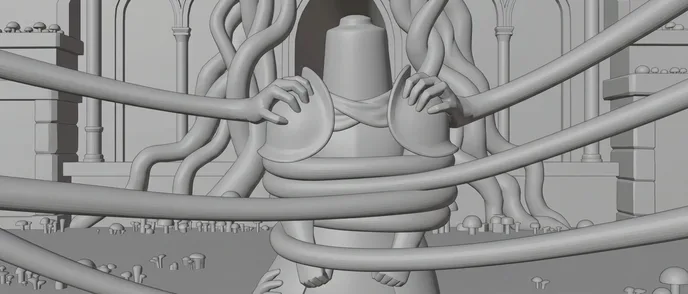
  1. A small lantern-helmed knight bound by thick roots in a ruined hall
    Storyboard frame of the trap shot, in grey
    01

    Medium · the trap

    Medium shot, Lantern bound by thick living roots in a ruined hall, glowing blue mushrooms on the floor, cold light

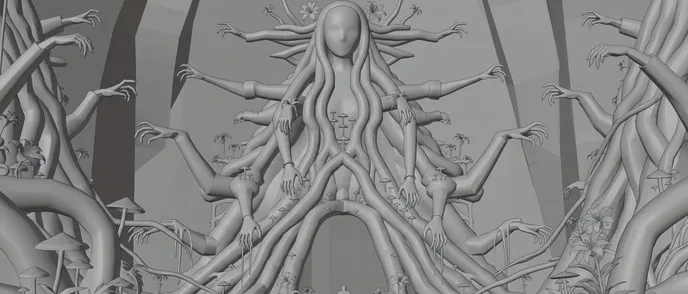
  2. A giant woman made of roots and white lilies spreads her many arms in a dark cavern
    Storyboard frame of the wide shot, in grey
    02

    Wide · the Source Tree

    Symmetrical wide shot, a giant woman made of roots, arms spread with many hands, white lilies, blue glyphs

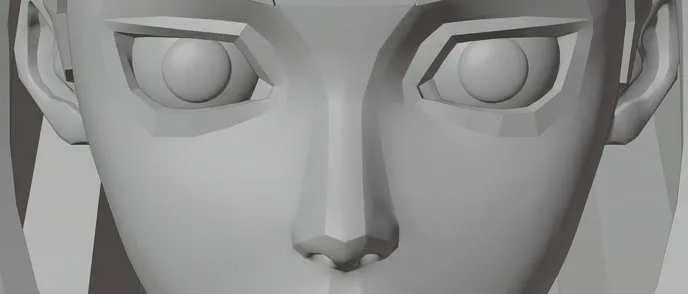
  3. Extreme close-up of a giant pale face with piercing blue eyes
    Storyboard frame of the eyes close-up, in grey
    03

    Extreme close-up · the eyes

    Extreme close-up on the giant's face, piercing blue eyes opening, pale skin, soft light from below

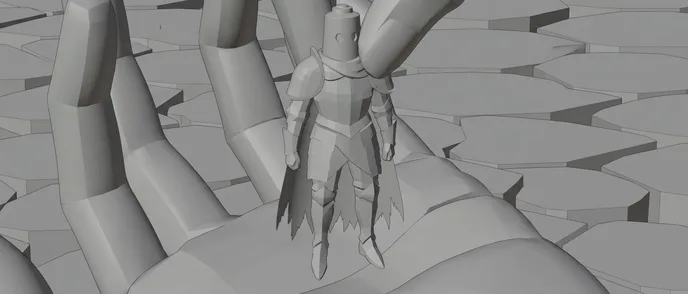
  4. A tiny armored knight stands in the middle of a giant open hand
    Storyboard frame of the palm shot, in grey
    04

    High angle · the palm

    High angle, the tiny knight standing in the center of a giant open palm, stone floor far below

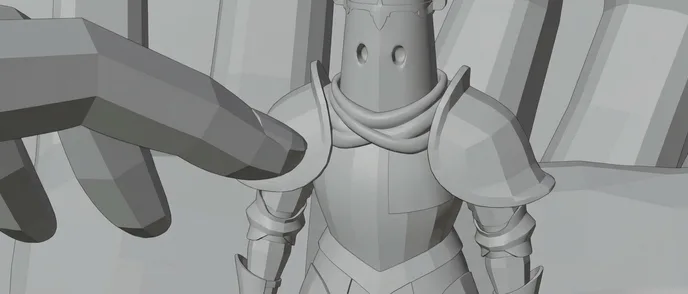
  5. A giant fingertip gently touches the chest of a small armored knight
    Storyboard frame of the touch close-up, in grey
    05

    Close-up · the touch

    Close-up, a giant fingertip gently touches the knight's armored chest, faceless helm, emotion through posture

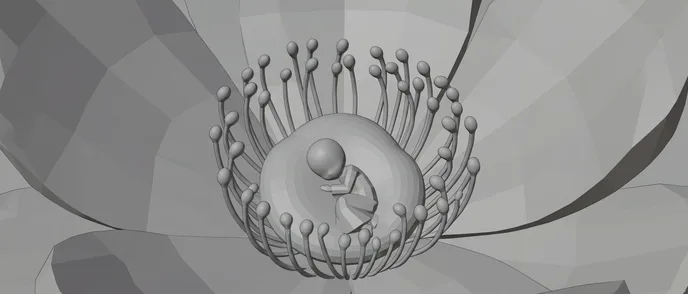
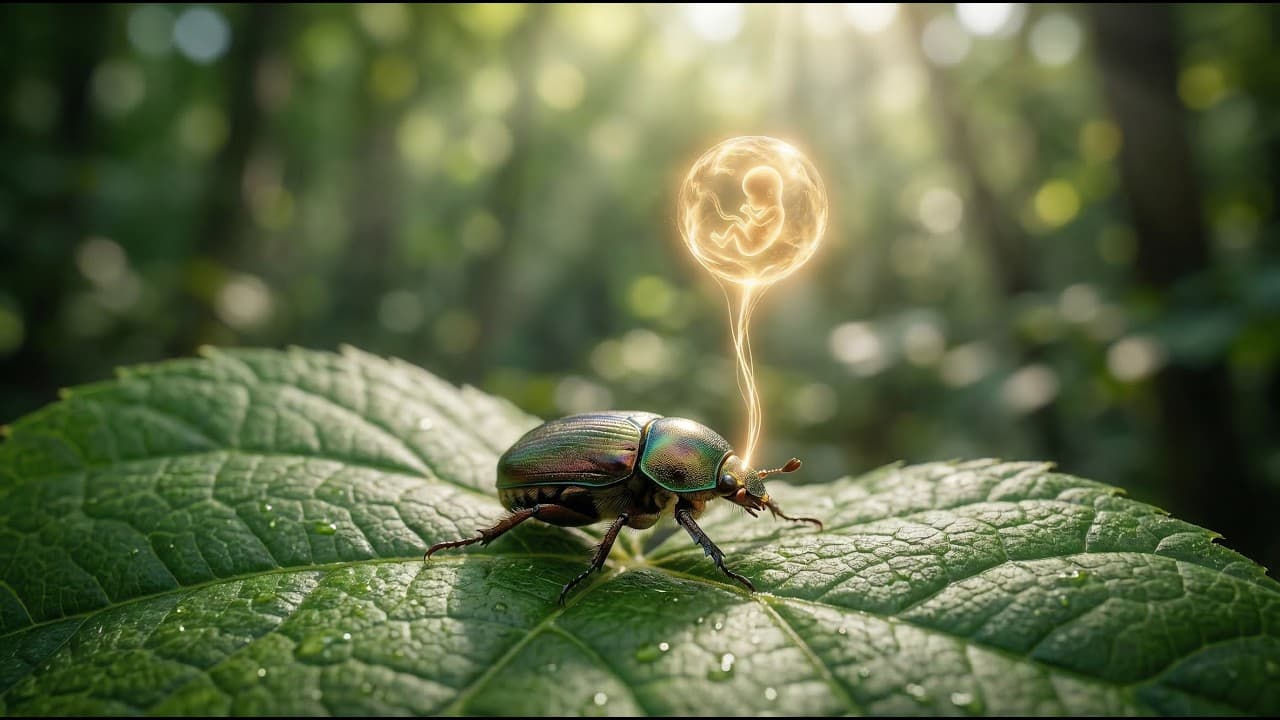
  6. A sleeping pink-haired child curled inside a glowing blue flower
    Storyboard frame of the seed insert, in grey
    06

    Insert · the seed

    Top-down insert, a glowing pale blue flower opening, a sleeping child with pink hair curled inside

Lost Garden, episode 1, 17 minutes, so well under the 30 minute cap. Seedance footage, directed by the ScreenWeaver team, and a finalist at the AI London Festival. The scene shown starts at roughly 7 minutes 35 in the player.

The script

An 8 minute film built around one feeling.

The cap is 30 minutes including credits, but the median 2026 selection ran about 8. At 8 minutes you write about eight screenplay pages and 100 to 120 shots of 4 seconds, a size where voice and music can be generated too.
  1. 0:00 to 1:00

    The promise

    Show the feeling in the first image, before any explanation.

  2. 1:00 to 3:00

    The build

    Add pressure in small steps, one beat of the chosen emotion at a time.

  3. 3:00 to 6:30

    The peak

    The scene the whole film was built to reach. Give it the most generations and the best sound.

  4. 6:30 to 8:00

    The aftertaste

    What the audience carries out of the room. The final jury scores how strongly it lingers.

Because voice and music must be AI-generated in this track, treat sound as a department with its own list of takes. Decide in the storyboard where the music enters and where the silence plays.

Step by step

Be ready before the portal opens.

With no date there is no countdown, so use the quiet months. The 2026 call ran to the end of August, which means a film started now is done long before the next window closes.
  1. 01

    Now

    Choose the emotion

    Pick the one of the eight where you have a true story. Write the promise of the film in one sentence: what the audience will feel, and when.

  2. 02

    Month one

    Write the screenplay

    Eight pages, one character, one change. Write them for free in ScreenWeaver and read every spoken line aloud, because each one will be generated.

  3. 03

    Month two

    Storyboard and sound plan

    Generate the storyboard from the screenplay, then mark where the music enters and which voice speaks each line. Sound is planned before the picture exists.

  4. 04

    Months three and four

    Generate the footage

    Scene by scene with Seedance, from the storyboard and the approved references. Keep the shots of the peak scene longest in the edit.

  5. 05

    Month five

    Edit inside the rules

    Stay within the allowed list: sequencing, trimming, colour correction, sound mixing and assembly. Nothing shot with a camera, no recorded voice.

  6. 06

    When the portal opens

    Submit

    Press the notify button on the festival page today. When the call opens, reread the rules, name your emotion and submit before any fee starts.

Ways to be disqualified

Seven traps in the AI-Generated track.

Most come from the FAQ, not the front page. Reread them when the 2027 page goes up, because the festival can change them.
  • A hybrid film

    Live action with generated scenes is not eligible in either category and is disqualified. The festival wants one method per film.

  • A recorded voice or a licensed song

    In the AI-Generated track the voice and the music must be AI-generated. A voice recorded by a person, even yours, is outside the rule.

  • A 3D animation passed off as AI

    Images or video made mainly in CAD or 3D software are generally not considered AI-generated. Keep the render pipeline out of an AI submission.

  • Running over 30 minutes

    The limit is 1 to 30 minutes, credits included. Long credits count.

  • The wrong emotion

    The FAQ’s test: if someone describes your film in one emotional word after watching it, what is the word? If two fit, the same film may be submitted again under a second emotion, each entry judged separately.

  • A late, non-refundable entry

    The regular fee was waived in 2026, but late entries paid a fee, and all fees are non-refundable, even if you withdraw or are disqualified.

  • A tech demo

    Stage one removes subpar visuals and weak storytelling. A reel of impressive shots with no story does not reach the AI jury.

Why ScreenWeaver

The festival is tool-agnostic. The film still needs a plan.

Sparknify names no required tool. What it requires is a film made entirely with generative AI. ScreenWeaver covers the work before and around the footage: screenplay, storyboard and footage in one connected project.
  • Powered by Seedance 2.0 and 2.5

    The footage pipelines run on Seedance, so the picture of an AI-Generated entry can be made there. Voice and music also have to be AI-generated: plan them in the storyboard and credit the tools you use for them.

  • One emotion, tracked shot by shot

    Each shot is linked to its scene and its storyboard frame, so you can check on the board that every shot serves the feeling you declared, before spending a generation.

  • The same face from the first frame

    Approve a character once and the project keeps that face in every shot. For Sorrow, Love and Serenity, where nothing hides a changing face, that is the difference between a film and a set of clips.

  • Start for free, wait for the portal

    The Screenwriter plan costs $0 with no expiry, so the film can be written while the 2027 call is still unannounced. Storyboard Beta adds the storyboard for $9.99 a month, and the Filmmaker plan will bring the footage.

Real productions

International festival-recognized films have been written and produced with ScreenWeaver.

ScreenWeaver is already being used as a creative workspace for real AI film productions, from cinematic shorts to animated series pilots selected, nominated, and awarded by international festivals.

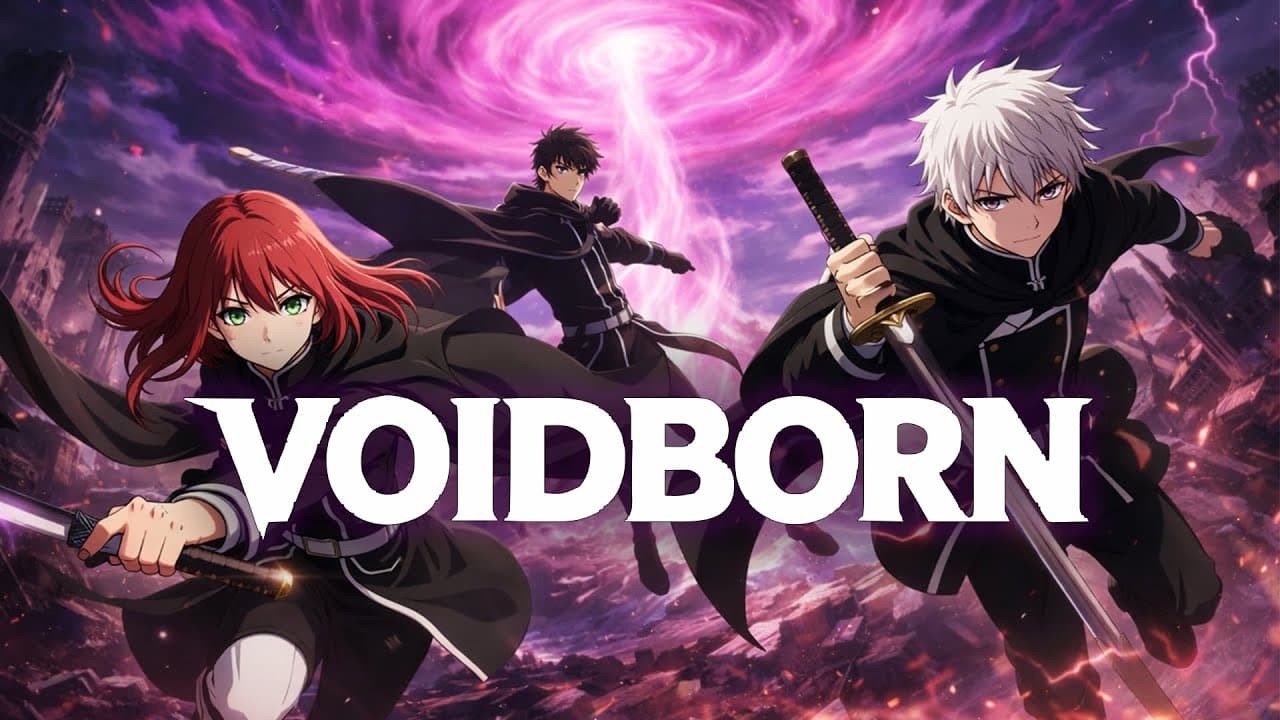
  • Video thumbnail for VOIDBORN

    VOIDBORN

    AI animated / cinematic short

    Festival recognition

    • 1st Place Silver

      Mondial Chroma Awards

    • 2nd Place Dreamina

      Mondial Chroma Awards

    • Award Winner

      Seoul International AI Film Festival

  • Video thumbnail for Les Fils du Vinnana

    Les Fils du Vinnana

    AI short film

    Festival recognition

    • Honorable Mention

      Top Quark Film Festival

    • People's Choice Nominee

      Illuminate Oneness of Humanity

    • Nominee

      ALTFF Supershort

  • Video thumbnail for Lost Garden

    Lost Garden

    AI animated series pilot

    Festival recognition

    • Finalist

      AI London Festival

The pipeline

Write. Board. Produce.

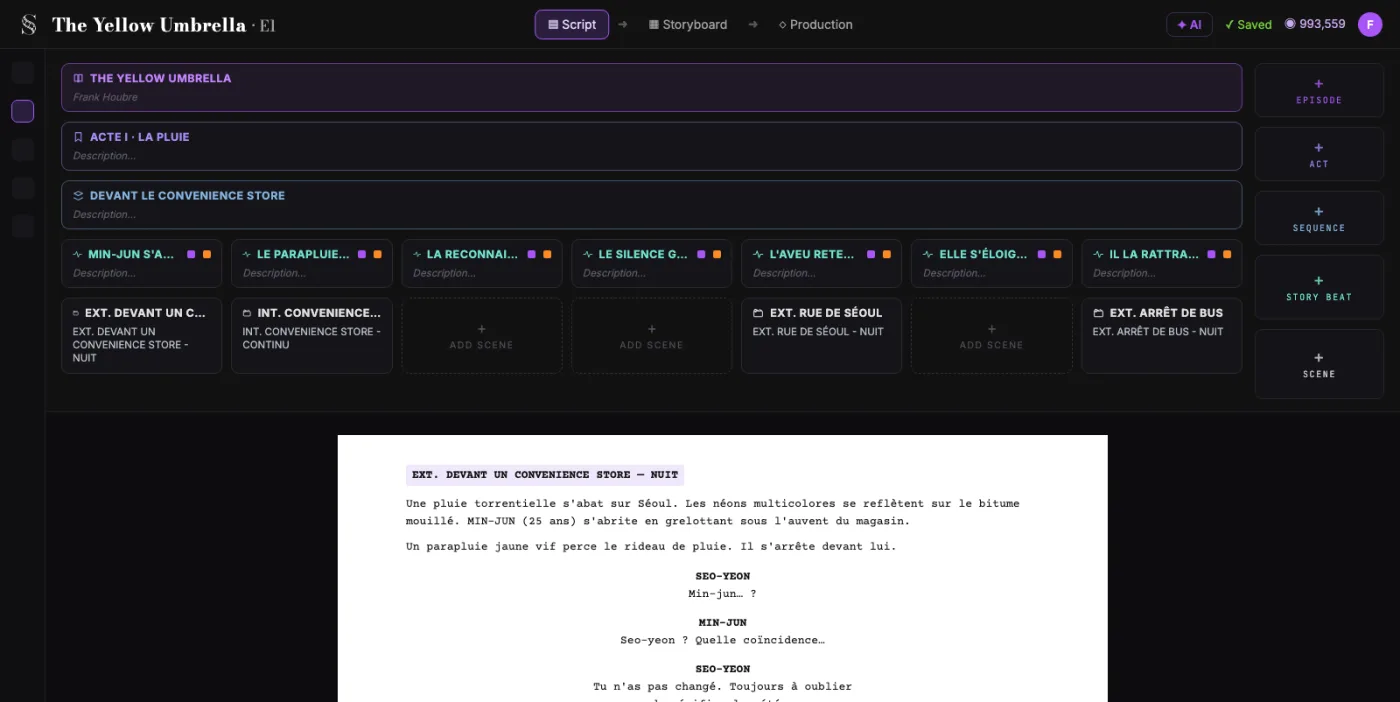
  1. ScreenWeaver screenplay editor: acts, sequences and beats above the formatted script of The Yellow Umbrella

    01The screenplay, enriched

    An industry-standard screenplay editor, and more: a visual outline and beat editor, your writing inspirations (notes, photos, audio) kept next to the page, and an AI researcher to support your writing, not replace it.

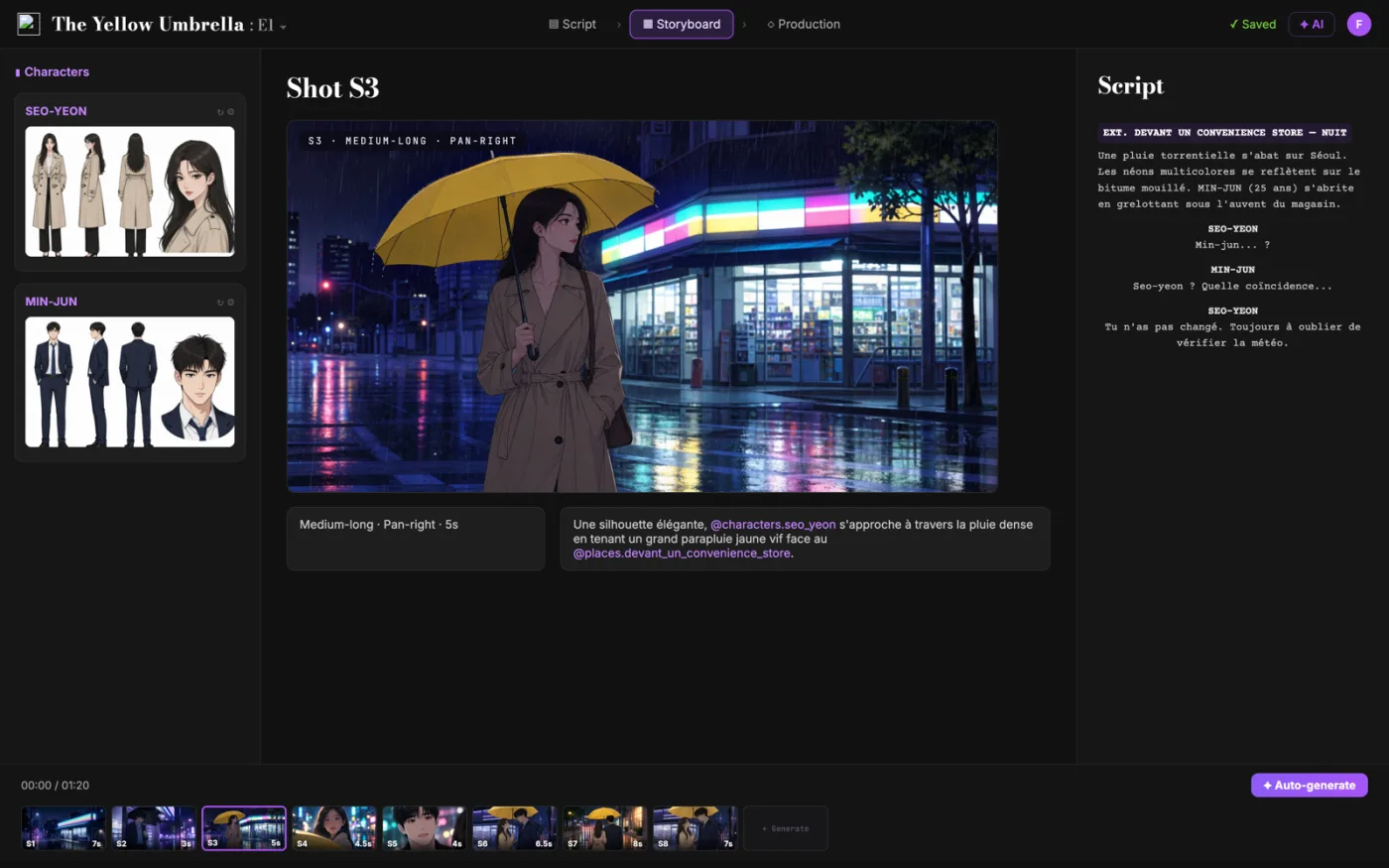
  2. ScreenWeaver storyboard: shot S3 of The Yellow Umbrella with characters, shot settings and the script beside it

    02The storyboard, made easy

    Shot breakdown generated from your screenplay, manual control over every shot (frame, angle, movement, duration), and generative AI previsualization in one click.

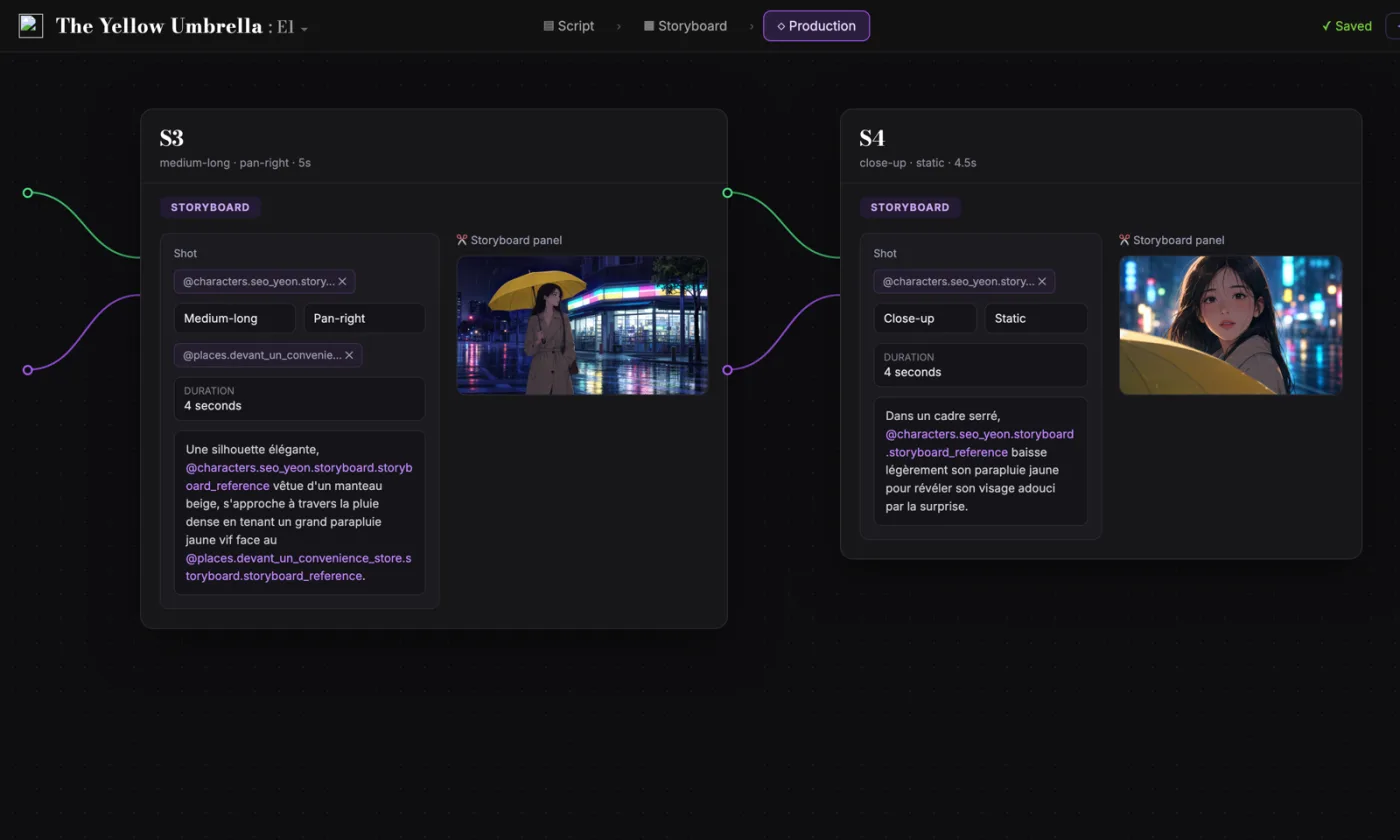
  3. ScreenWeaver production canvas: shots S3 and S4 as connected nodes carrying their storyboard panels and prompts

    03AI production, with finesse

    Footage generation pipelines connected to your screenplay and storyboard. Optimized out of the box, fully editable workflow.

FAQ

Sparknify Human vs. AI Film Festival, your questions

How do you win the Sparknify Human vs. AI Film Festival?
Pick the AI-Generated track and one of eight emotions. Technical jurors cut weak films, a Grand Jury of AI Innovation nominates the best, and 200+ film school professors then vote blind on cinematic quality and emotional power. Make a film that makes one feeling land.
Is the 2027 edition open?
Not yet. The 2026 submissions closed on 31 August 2026 and the films premiered on 26 September. The official page offers a sign-up to be notified when the 2027 portal opens and gives no dates.
Can I enter a film made with ScreenWeaver?
The festival names no required tool, but the AI-Generated track asks for a film created entirely with generative AI, with AI voice and music. ScreenWeaver covers the screenplay and storyboard today, and its footage pipelines run on Seedance. Voice and music come from the tools you choose.
Can an AI film beat a human film?
In the final stage, yes: professors judge both kinds side by side, blind to origin, and the Humanity Award goes to the most powerful film whatever its method. Each track also has its own prize, Best Picture and Best AI-Generated.
How long can the film be?
From 1 to 30 minutes, credits included. The median film screened in 2026 ran about 8 minutes.
Is there a fee?
In 2026 the regular fee was waived until 31 August, and late entries paid an unspecified fee. All fees were non-refundable. Fees for 2027 have not been published.
Can I submit a work in progress, or a film shown elsewhere?
Yes. The FAQ says both works in progress and previously screened films are eligible. For a work in progress, label it as one when you submit.
Do I need professional production quality?
No. The festival says emotional truth, clarity of intent and the power to move an audience matter most. Stage one still removes subpar visuals, so clean beats polished.

No date yet. Start with the page.

Draft the screenplay on the free plan while you wait for the dates.