OpenArt Music Video Awards · Guide

How to win the OpenArt Music Video Awards.30 to 120 seconds, 29 awards, one platform to make it on.

The first season ran from 15 October to 16 November 2025 with a ceremony scheduled in San Francisco on 30 January 2026. No second season is announced. Here are the rules, the honest limit for a ScreenWeaver film, and how to prepare a music video now. The shots themselves have to be made on OpenArt.
  • Footage on OpenArt only
  • 30 to 120 seconds
  • $50,000 in prizes
Voidborn · Episode 0

Independent guide. ScreenWeaver does not organise OpenArt Music Video Awards and is not affiliated with OpenArt. Rules read on 1 October 2026. Official page

Available today in ScreenWeaver: free screenwriting, and a storyboard generated from your screenplay with Storyboard Beta, $9.99 a month.

Rolling out: video generation of each shot, powered by Seedance, with the Filmmaker plan.

The rules on one card

What the first season asked for.

OpenArt, the AI creation platform, ran its first Music Video Awards on the theme of Emotions, with 29 awards. The call ended in November 2025, and the page still shows that timeline. These are the last rules published, and one of them settles where your footage comes from.
Status
First season over, no second call announced
Prize pool
$50,000 across 29 awards
Grand prize
Music Video of the Year, $1,000
Length
30 to 120 seconds, only the first 120 judged
Made on
Most visuals on OpenArt, no other visual generator
Theme and formats
Emotions: singing, narrative, lyrics or visualizer
Music
Licensed by you, or an authorised track
Who can enter
18 and over, no NSFW, no fake engagement

Source: the OMVA page on openart.ai, read on 1 October 2026. It states no entry fee and publishes no scoring grid. OpenArt posted the Creative Excellence winners on X, which we could not read, so no winner is named here.

The 2025 season

A 32 day window, then two months of waiting.

These are the dates of the only season so far. They show <b>how short a call was</b>, which matters if a second one is announced.
  1. 15 Oct 2025

    Competition opens

    Creation starts, with in-person events at MIT, NYU, Berklee, UCSD and Babson, and city events in New York, Los Angeles and San Francisco.

  2. 16 Nov 2025

    Entries close

    Three steps: create the video on OpenArt, share it on social media, then fill in the submission form.

  3. 17 to 30 Nov

    Judging

    Two weeks for the panel of 29 named judges, from musicians to film and VFX executives.

  4. Week of 1 Dec

    Winners announced

    OpenArt posted the Creative Excellence Awards winners on X.

  5. 30 Jan 2026

    Grand Finale

    The Grand Finale and awards ceremony, scheduled in San Francisco.

What the awards reward

Four craft prizes beside the grand prize.

OpenArt publishes no scoring grid. The closest thing is the list of Creative Excellence Awards: four prizes of $500 next to the $1,000 Music Video of the Year. We read them as the four things the panel looks for.
  • Best Visuals

    Image first. Choose one palette and one light and keep them for ninety seconds. Most visuals must come from OpenArt, so choose a look its models do well.

  • Best Character Design

    A recurring face gives a music video an identity. A sponsor award also goes to the best consistent OpenArt character, so one character held steady counts twice.

  • Best Storytelling

    Even sixty seconds need a beginning, a turn and an end. Narrative video is one of the four formats, and a story that follows the lyrics reads faster than one that fights them.

  • Best Use of AI

    The prize for a method, not only a result. Use the generator for what only it can do, and say what you did in the post that carries your entry.

The page does not say how the 29 awards are decided. The social media awards are fan choices on TikTok, Instagram, YouTube, X and Reddit, so a video also needs an audience, not only a jury.

Who decides

Twenty-nine judges, four worlds.

The page names 29 judges. Grouped by what they do for a living, they tell you what the video must survive.
  • Music

    Ralph Rieckermann, ex-Scorpions bassist, the AI musician Xania Monet, the singer Akini Jing, Mike Caren of Artist Publishing Group, Byron Miller of Atlantic Music Group and Hana Jallaf of Hana Road Music Group. They hear the song first: a video cut on the beat beats a prettier one that ignores it.

  • Film and VFX

    Erich Archer, an Emmy-winning creative executive, Andres Reyes, COO of Boxel Studio, Issa Sissoko, AI film producer and director, the screenwriter Max Simonson and Erik Weaver, head of virtual production at the USC Entertainment Technology Center. They read shots and structure.

  • AI creators and technologists

    King Willonius, on the TIME 100 list of influential people in AI, the creator of the virtual idol Yuri, the YouTuber Dan Kieft, Jiajian Min of MIT AI Film Hack and Paul Limon of the GenAI studio Phatty Acid. They know which tricks are easy now, so easy tricks will not impress them.

  • Platform and media

    Stella, OpenArt’s head of growth, John Cleary of Epidemic Sound, Justin Hackney of Wonder Studios, Benson Zhang of Chapter 2 Entertainment and the Blur Media Group founders Eric Suerez and Adam Vaserstein. People who think in reach and replay value.

Formats and tracks

Four formats, and a menu of songs.

The theme is Emotions. You choose a format, then a song: your own, an AI-generated one, or one of the authorised tracks offered by the celebrity partners. Under each choice, the angle we would take.
  • 01

    Singing video

    Sing your song with a virtual artist.

    The face is the film. Build one character sheet first and reuse it in every shot, because a singer who changes between shots breaks the song.

  • 02

    Narrative video

    Bring your music to life with a story.

    The format closest to a short film, and the one that suits a script. Write the story as a three-scene screenplay before you open the generator.

  • 03

    Lyrics video

    Make your words move with the beat.

    Text is the weak point of generated video. Add the words in editing, not in the prompt, and use the generator for the picture behind them.

  • 04

    Visualizer

    Turn your track into pure visual vibes.

    No character to keep, so it is the easiest format to finish. It is also the easiest to forget: give it one idea, such as a place that changes with the music.

  • 05

    Celebrity tracks

    Yuri, Ralph Rieckermann, Xania Monet, Akini Jing and Stellar offered songs. Granny Spills asked for music of your choice, pink visuals and a relationship theme.

    These songs came with strict terms: no remixing, no use of the artist’s image or voice. The prize is a handpicked shoutout, and the cost is less freedom.

  • 06

    Sponsor choice awards

    $500 each from Kling, fal and Epidemic Sound, plus best consistent OpenArt character, best video made exclusively with OpenArt and best one-click music video.

    Most of these reward OpenArt features. Pick one sponsor award and design the video to be a clear example of it.

From script to screen

Voidborn: a strike built to be cut on a beat.

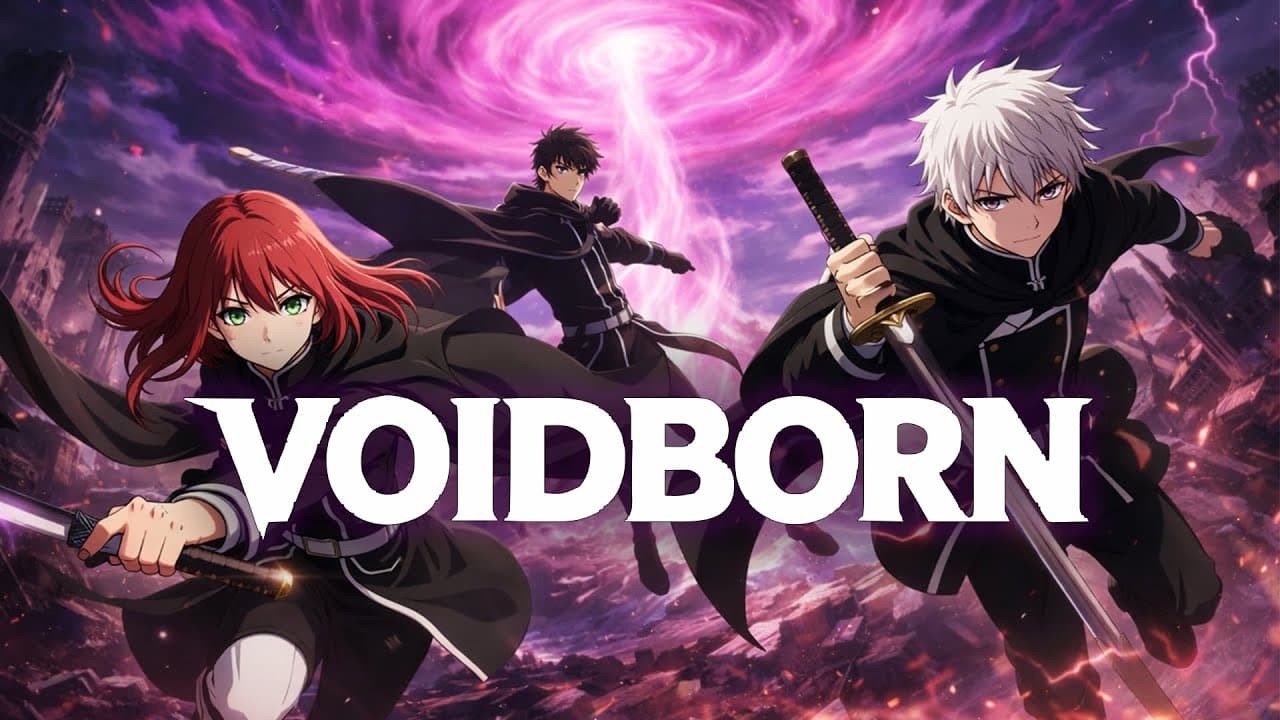
Voidborn, episode 0 is an anime by the ScreenWeaver team, made with Seedance, and the ruins scene speaks to Best Visuals and Best Character Design: one swordsman and one blank-faced automaton across six shots, and a last strike made to land on a beat. Below, the screenplay page, then each shot from storyboard frame to final image.

Logline. Every seven years, the Rift opens and swallows the world’s dreams. A swordsman sworn to a blind seer escorts her through its levels, toward a promise they made to a girl left behind.

Screenplay · episode 0 · English subtitles

EXT. RUINS OF THE FIRST LEVEL - NIGHT

Broken towers under a violet sky. SIM, a swordsman in a black cloak, walks beside LADY MARIA, blindfolded, all in white.

SIM

Tell me, Maria... do you think Leia believes we are still alive?

MARIA

We made a promise... the two of us.

A line of white automatons rises from the ruins.

AUTOMATON

The Rift will wait for no one.

SIM

What are machines doing at this level?

One automaton steps forward. Its face is blank.

AUTOMATON

We must return to the surface.

Its eyes ignite red.

SIM

I am Sim, guardian of Lady Maria... and I will proceed with your execution.

Steel meets steel. Lightning runs down the blade.

CUT TO:

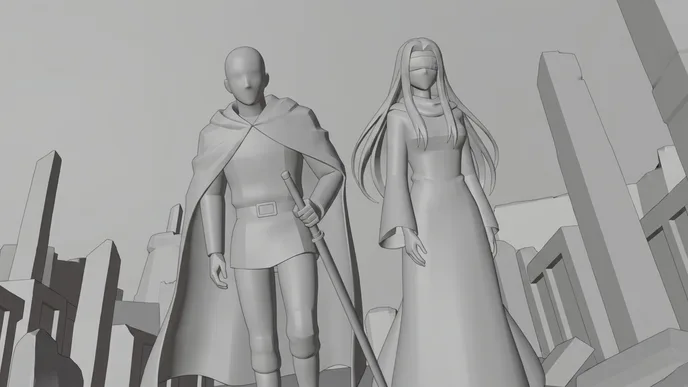
  1. A swordsman in a black cloak and a blindfolded woman in white walk through ruins at night
    Storyboard frame of the wide shot, in grey
    01

    Wide · the pair

    Wide shot, a bald swordsman in a black cloak and a blindfolded red-haired woman in white walk through night ruins

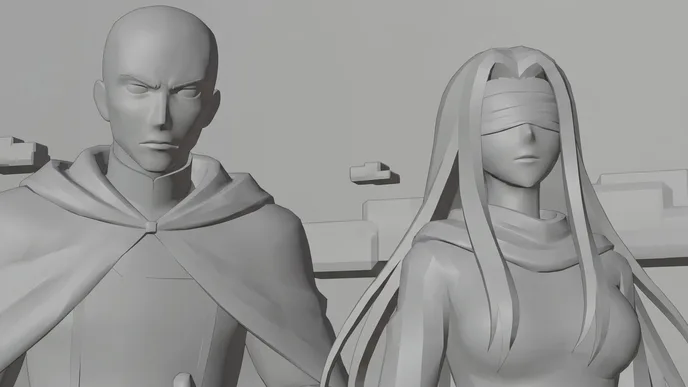
  2. Medium two-shot of a bald swordsman and a blindfolded red-haired woman
    Storyboard frame of the two-shot, in grey
    02

    Two-shot · the promise

    Medium two-shot, the swordsman and the blindfolded seer side by side, violet night sky, broken towers

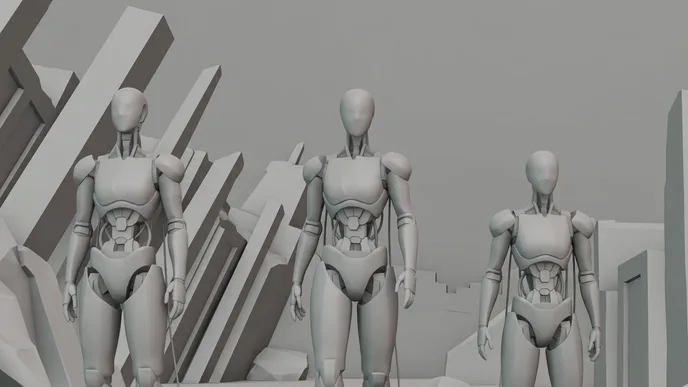
  3. Three white humanoid automatons stand in night ruins
    Storyboard frame of the automatons shot, in grey
    03

    Wide · the machines

    Wide low angle, three white humanoid automatons standing in the ruins, cold blue moonlight

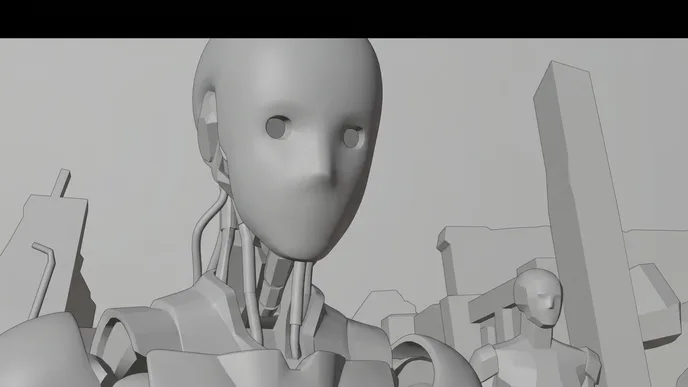
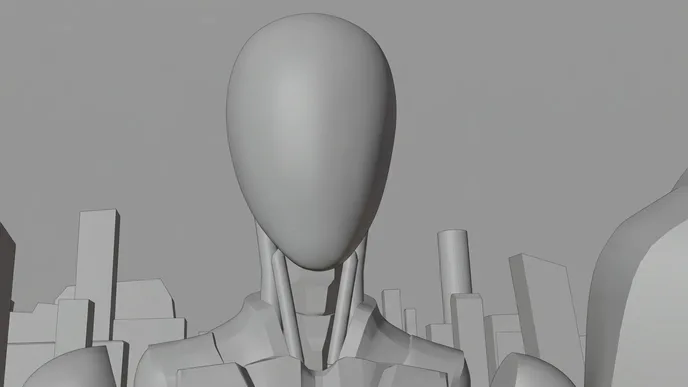
  4. Close-up of a white automaton with a smooth blank face
    Storyboard frame of the blank face close-up, in grey
    04

    Close-up · the blank face

    Close-up on an automaton's smooth faceless head, black eye slots, cables at the neck, ruins behind

  5. A white automaton's eyes glow red
    Storyboard frame of the red eyes close-up, in grey
    05

    Close-up · the red eyes

    Same framing, the automaton's eyes ignite red, the swordsman's shoulder out of focus in the foreground

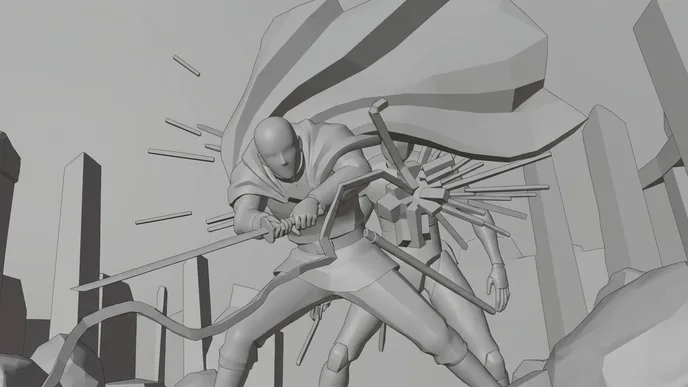
  6. A swordsman strikes with a katana wreathed in lightning and sparks
    Storyboard frame of the clash shot, in grey
    06

    Action · the clash

    Dynamic low angle, the swordsman strikes with his katana, lightning running along the blade, sparks, cape flying

Voidborn, episode 0, 13 minutes, far longer than the 120 second limit, so you would cut a section like this one. The ScreenWeaver team’s film won 1st Place Silver and 2nd Place Dreamina at the Mondial Chroma Awards, and an award at the Seoul International AI Film Festival. It was not made on OpenArt, so it would not qualify here. Playback begins in the ruins, about 7 minutes in.

The storyboard

A 90 second video, cut to the song.

Only the first 120 seconds are judged, so aim for 90. That is about 20 to 25 shots, one every four seconds, each pinned to a bar of the music.
  1. 0:00 to 0:10

    The hook

    A striking image on the first beat. The first seconds decide whether anyone watches the rest.

  2. 0:10 to 0:35

    The verse

    Introduce the character and the place. Cut slowly, on the downbeats.

  3. 0:35 to 1:15

    The chorus

    The strongest images, the fastest cuts, the character at their clearest.

  4. 1:15 to 1:30

    The last image

    A held frame that answers the first one. Leave it on the last chord.

Count in beats of the music, not in seconds. Mark the chorus on the storyboard and give it the best generations: it is the part people share.

If a second call opens

Think before the call, generate during it.

No second season is announced. The first call lasted 32 days, so this plan puts all the thinking before the call and only the generating inside it.
  1. 01

    Before the call

    Choose the track

    A song you hold the rights to, an AI-generated track, or an authorised one if the partners return. Read what the terms say about editing the music before you fall in love with a song.

  2. 02

    Before the call

    Write the video

    A one-page treatment, then the lyrics broken into scenes, one verse per scene. Write it for free in ScreenWeaver and keep the story to three scenes.

  3. 03

    Before the call

    Storyboard to the song

    Generate the storyboard from the screenplay and pin each frame to a bar. Fix the character and the look on one reference sheet.

  4. 04

    Days 1 to 20 of the call

    Generate on OpenArt

    Make every shot on OpenArt, following the storyboard. Note the model and the settings that worked for each shot.

  5. 05

    Days 21 to 32

    Cut, post and submit

    Edit in Adobe or CapCut, which the rules allow. Post on a network where your audience is, then fill in the form.

Ways to be removed

Seven ways to lose the entry.

They sit in the contest guidelines and in the terms of each song. Read both before the first generation.
  • Another visual generator

    Most visuals must be created with OpenArt. Adobe or CapCut can enhance the video, but other visual generators are not allowed.

  • Editing an authorised song

    The celebrity tracks may not be remixed, edited or altered in any form, and may not be used outside the contest or for any commercial purpose.

  • An artist’s face or voice

    For Yuri, Granny Spills, Akini Jing and Stellar, the use of the artist’s image, likeness or voice is strictly prohibited.

  • A song with an end date

    For Yuri’s tracks, any extra creation or social posting with the song after 11 November 2025 was prohibited. A song licence can end before the contest does.

  • Running past 120 seconds

    Only the first 120 seconds are evaluated. A twist in the last 30 seconds is wasted.

  • Music you do not own

    Each entrant is responsible for the copyright licences. OpenArt suggests AI-generated tracks, platform libraries or the celebrity tracks.

  • An entry that is not yours

    The video must be your original work, and drawing inspiration needs substantial modification. NSFW content, fake engagement and entrants under 18 are all out.

Why ScreenWeaver

OpenArt makes the footage. ScreenWeaver plans the video.

A ScreenWeaver render would not qualify here, because the awards ask for visuals made on OpenArt. What ScreenWeaver covers is the work that decides the result: the treatment, the shot plan and the storyboard.
  • A treatment that follows the song

    Break the lyrics into scenes, give each verse a place and a change, and mark the chorus. The structure exists before anyone spends a generation.

  • A storyboard pinned to the beat

    Every frame is tied to its scene, with framing, angle and duration you can adjust. You arrive on OpenArt knowing the 20 shots you need and which reference keeps the character the same.

  • Seedance, a sponsor of these awards

    The page lists Seedance among the Silver sponsors, and Seedance 2.0 and 2.5 are the models behind ScreenWeaver’s footage pipelines. For this contest, though, the footage still has to be made on OpenArt.

  • A free first step

    The Screenwriter plan costs $0 with no end date. Storyboard Beta is $9.99 a month, and the Filmmaker plan covers footage. For music videos in general, see our AI music video generator page.

Real productions

International festival-recognized films have been written and produced with ScreenWeaver.

ScreenWeaver is already being used as a creative workspace for real AI film productions, from cinematic shorts to animated series pilots selected, nominated, and awarded by international festivals.

  • Video thumbnail for VOIDBORN

    VOIDBORN

    AI animated / cinematic short

    Festival recognition

    • 1st Place Silver

      Mondial Chroma Awards

    • 2nd Place Dreamina

      Mondial Chroma Awards

    • Award Winner

      Seoul International AI Film Festival

  • Video thumbnail for Les Fils du Vinnana

    Les Fils du Vinnana

    AI short film

    Festival recognition

    • Honorable Mention

      Top Quark Film Festival

    • People's Choice Nominee

      Illuminate Oneness of Humanity

    • Nominee

      ALTFF Supershort

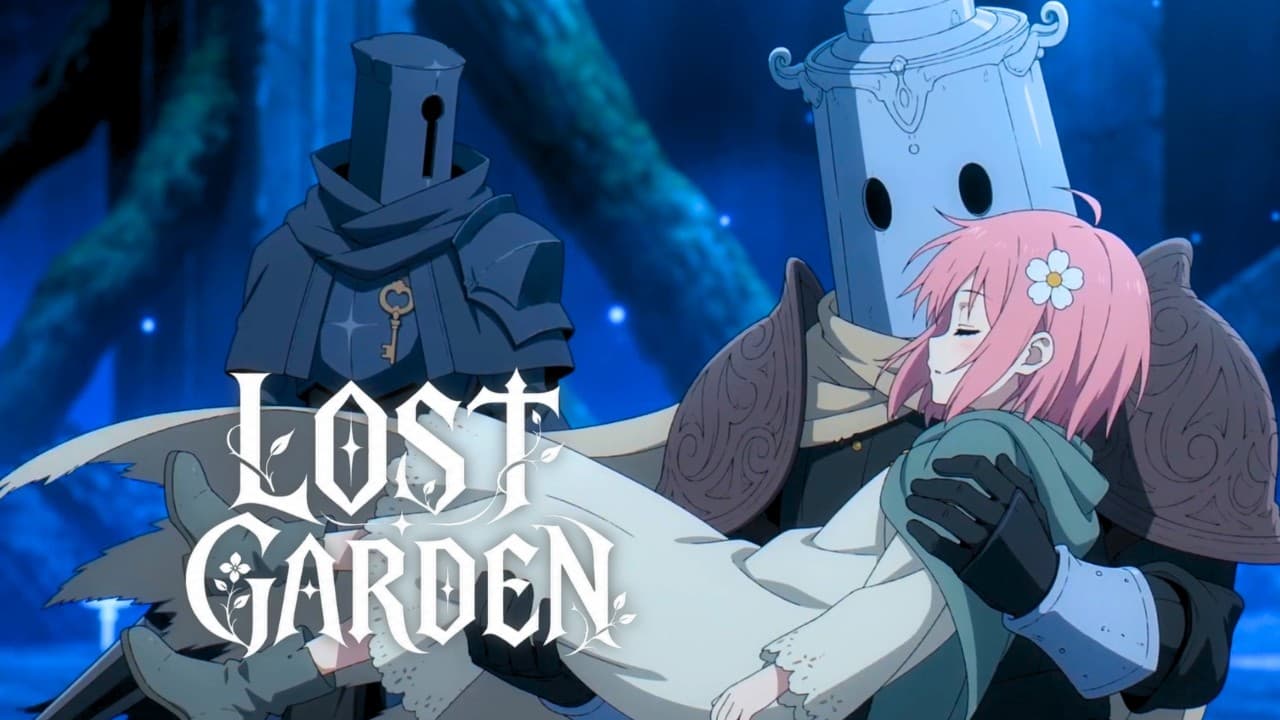
  • Video thumbnail for Lost Garden

    Lost Garden

    AI animated series pilot

    Festival recognition

    • Finalist

      AI London Festival

The pipeline

Write. Board. Produce.

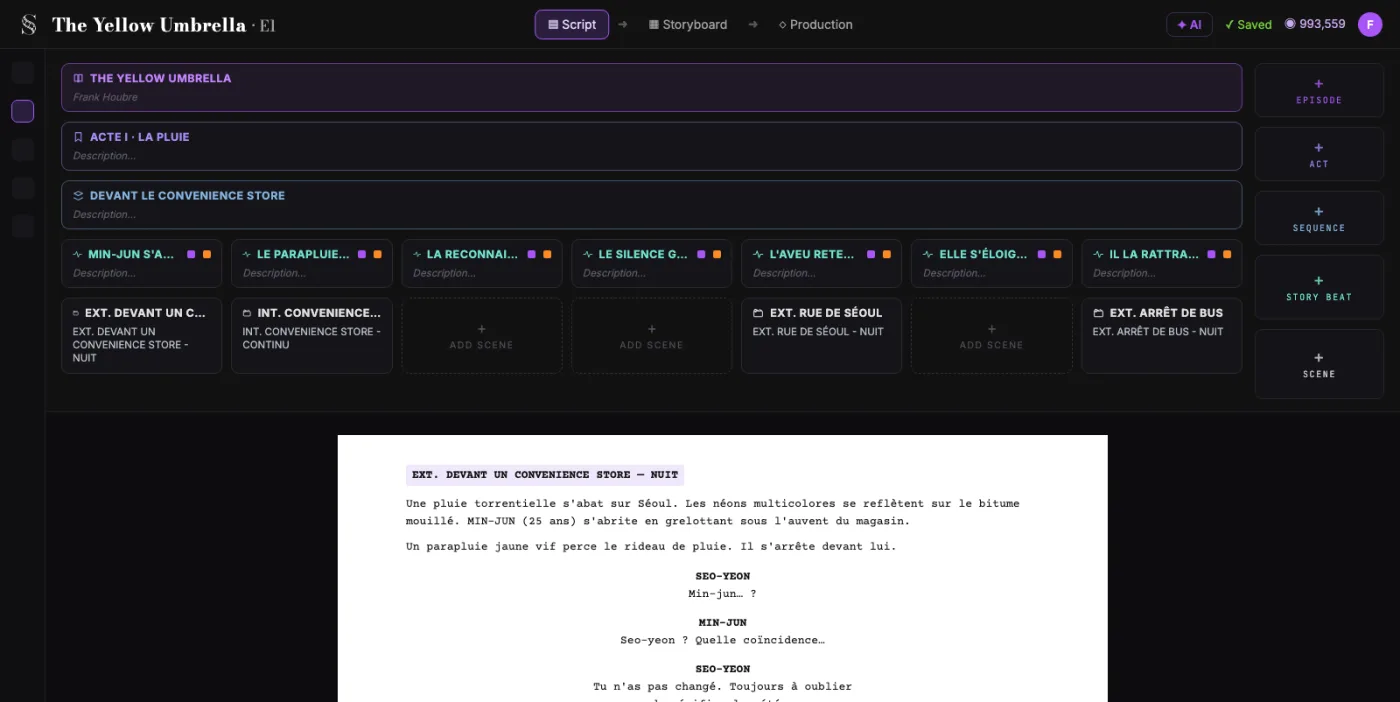
  1. ScreenWeaver screenplay editor: acts, sequences and beats above the formatted script of The Yellow Umbrella

    01The screenplay, enriched

    An industry-standard screenplay editor, and more: a visual outline and beat editor, your writing inspirations (notes, photos, audio) kept next to the page, and an AI researcher to support your writing, not replace it.

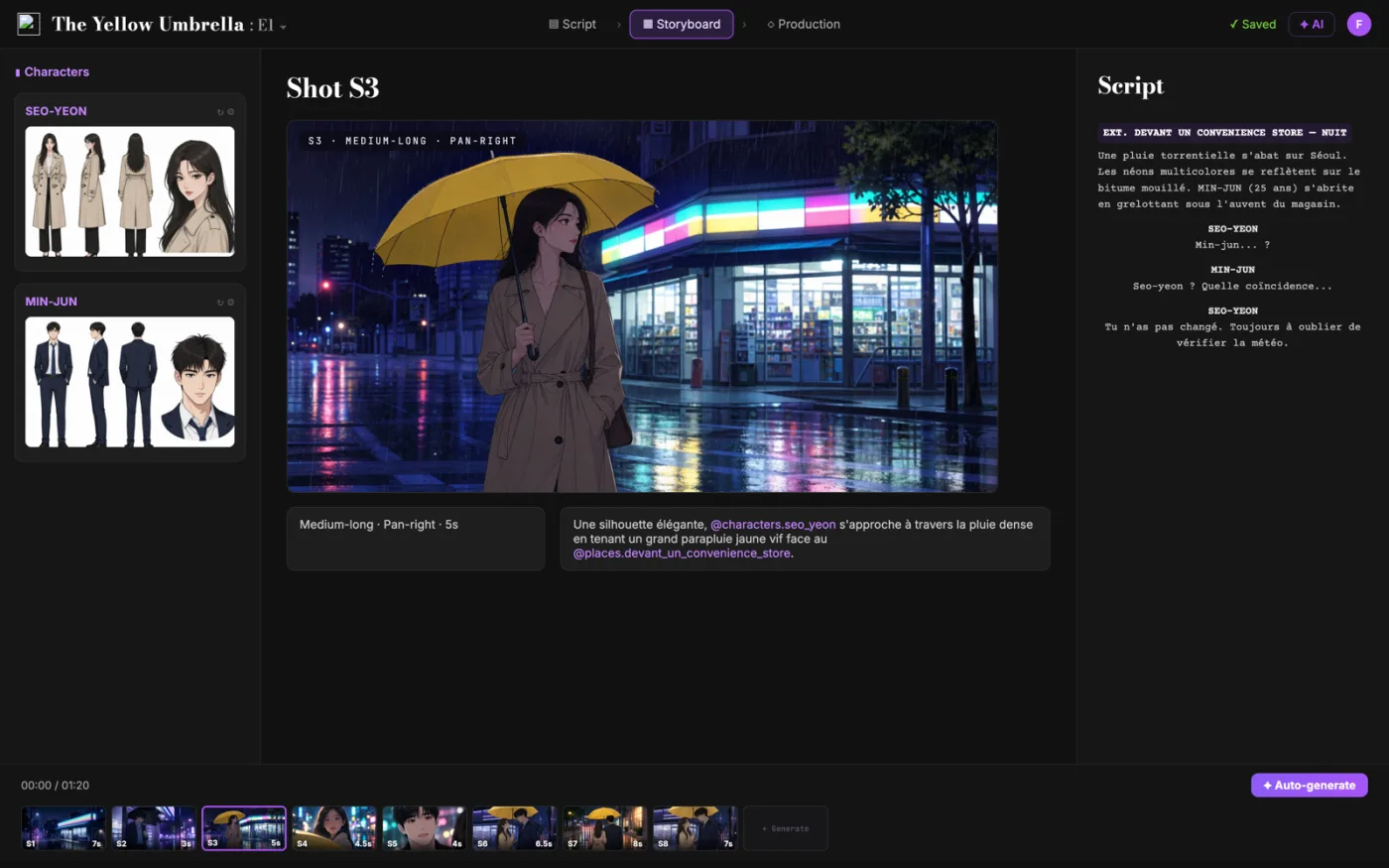
  2. ScreenWeaver storyboard: shot S3 of The Yellow Umbrella with characters, shot settings and the script beside it

    02The storyboard, made easy

    Shot breakdown generated from your screenplay, manual control over every shot (frame, angle, movement, duration), and generative AI previsualization in one click.

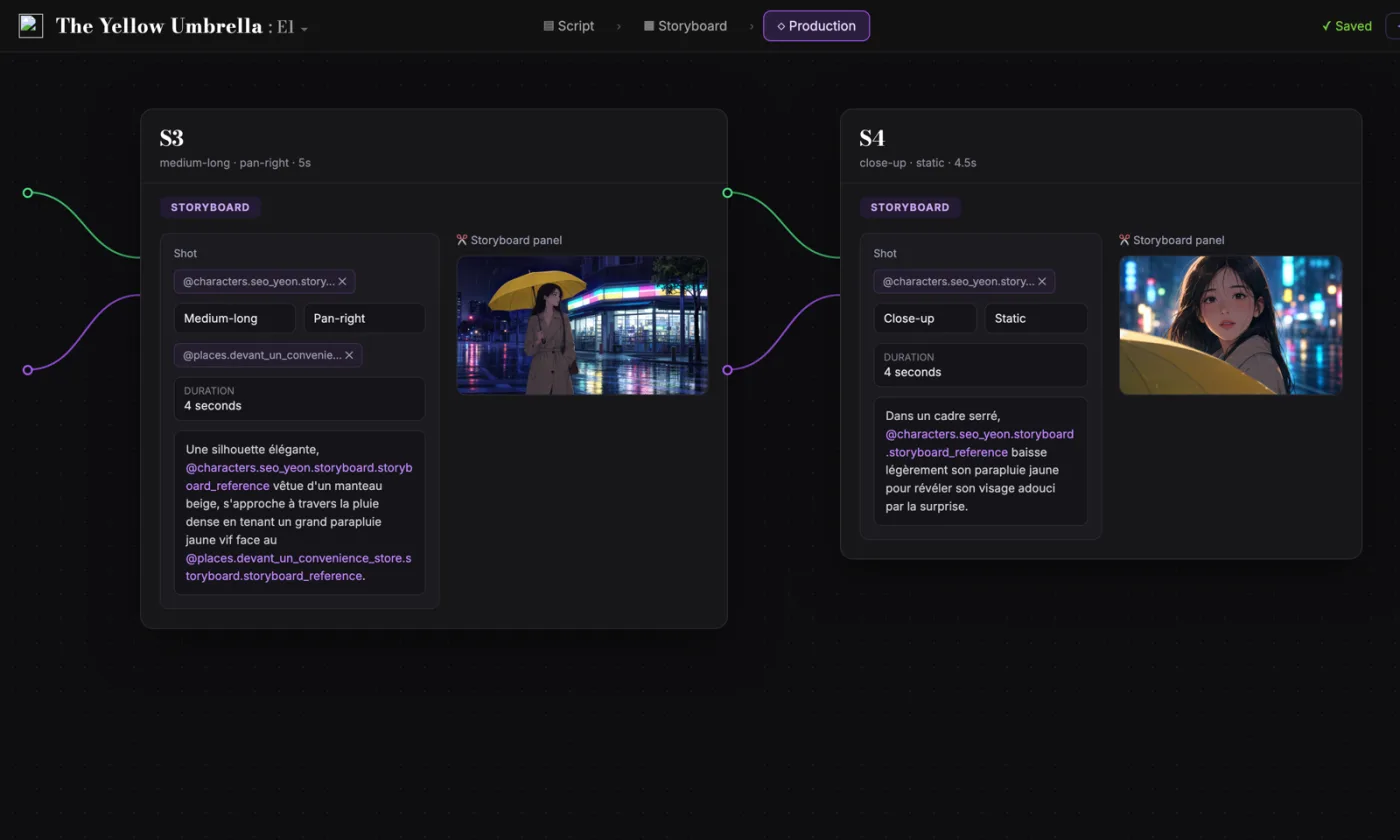
  3. ScreenWeaver production canvas: shots S3 and S4 as connected nodes carrying their storyboard panels and prompts

    03AI production, with finesse

    Footage generation pipelines connected to your screenplay and storyboard. Optimized out of the box, fully editable workflow.

FAQ

The OpenArt Music Video Awards, your questions

How do you win the OpenArt Music Video Awards?
The page publishes no scoring grid. It lists 29 awards, led by Music Video of the Year at $1,000 and four $500 craft prizes: visuals, character design, storytelling and use of AI. Make a 30 to 120 second video on OpenArt, with one look, one character and a cut that follows the song.
Is there a second season?
None is announced. The official page still shows the 2025 timeline, with the ceremony scheduled for 30 January 2026 in San Francisco. OpenArt’s newer program is the Ad Awards, covered in our OpenArt Ad Awards guide.
Can ScreenWeaver make the footage for my entry?
Not the footage. The rules ask for most visuals to be made with OpenArt and bar other visual generators. ScreenWeaver covers the treatment, the screenplay and the storyboard, and you then generate the shots on OpenArt.
How long must the video be?
Between 30 and 120 seconds. A longer entry is judged on its first 120 seconds only.
Do I have to use a celebrity track?
No. Those tracks are one way in. The rules also accept music you own or have licensed, and OpenArt suggests AI-generated tracks and platform libraries.
Who is on the jury?
The page lists 29 judges: musicians such as Ralph Rieckermann and Xania Monet, film and VFX executives, AI creators and platform leaders. It does not say how many judge each award.
Do I keep the rights to my video?
Yes. You keep full ownership, and you grant OpenArt and its sponsors the right to share your entry on official social channels and in marketing.
How big is the prize pool?
$50,000 in cash across 29 awards, from $1,000 for Music Video of the Year down to $200 for genre and social media awards, plus an OpenArt subscription, Times Square billboard exposure and celebrity shoutouts.

Plan the video first. Generate second.

Draft the treatment on the free plan, then pin the storyboard to the song.