AI Creativity Awards 2026 · Guide

How to win the AI Creativity Awards.One film category, one disclosure form, 1 November.

The AI Creativity Awards cover eight creative fields. For a filmmaker, one matters: Motion & Film. The deadline is 1 November 2026, there is no cash prize, and the AI disclosure counts beside the picture. Here is how to enter, and how to prepare the film in ScreenWeaver.
  • Deadline 1 November 2026
  • Recognition, no cash prize
  • AI disclosure is judged
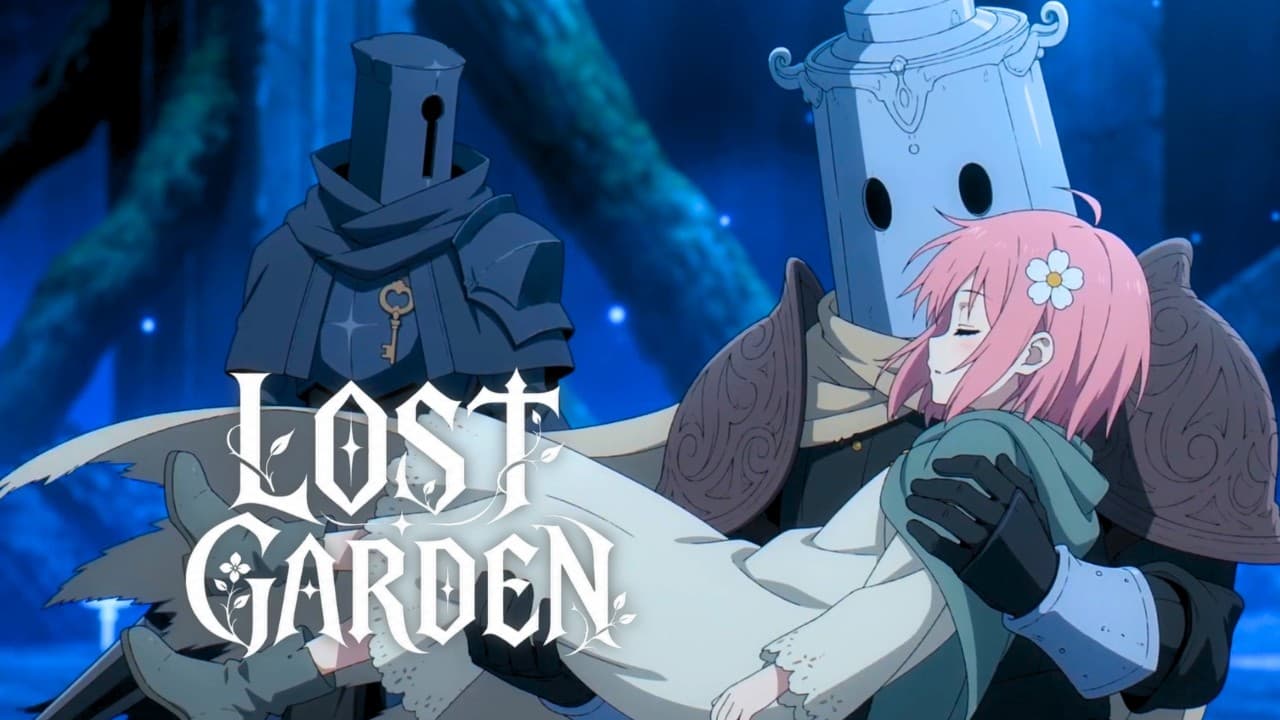
Lost Garden · Episode 2

Independent guide. ScreenWeaver does not organise AI Creativity Awards and is not affiliated with Graphic Competitions. Rules read on 1 October 2026. Official rules

Available today in ScreenWeaver: free screenwriting, and a storyboard generated from your screenplay with Storyboard Beta, $9.99 a month.

Rolling out: video generation of each shot, powered by Seedance, with the Filmmaker plan.

The rules on one card

What the 2026 launch edition asks for.

AI Creativity Awards is run by Graphic Competitions, an independent platform for art and design opportunities founded in 1998 by Francesco Natali. The 2026 edition is the first: online, worldwide and recognition-first. It is a multi-field award, and film is one of eight categories.
Deadline
1 November 2026, entries opened 1 June
Results
1 December 2026
Entry fee
£35 standard, £15 student or recent graduate
Prize
No cash: title, digital laurels, results feature, certificate
Film category
Motion & Film, from short film to commercial
AI rule
At least partly generated, improved or assisted by AI, disclosed
Media
No video upload: a private or unlisted link and a thumbnail
Rights
You keep ownership, with a limited licence for judging and promotion

Source: aicreativityawards.com, its rules, categories, prizes, fees, timeline, FAQ, AI policy and submission terms, read on 1 October 2026. The site names no jurors and publishes no weights. Fees are charged in GBP, and the dollar and euro amounts it shows are approximate.

Key dates

Thirty-one days left.

The calendar is short and clear: <b>one month to the deadline, one month to the results</b>. The early entry price has already ended.
  1. 1 Jun 2026

    Submissions open

    The public entry form opened to creators worldwide.

  2. 1 Sep 2026

    Early pricing ended

    The £25 early entry is gone. The standard £35 applies until the deadline.

  3. 1 Nov 2026

    Deadline

    Paid entries must be complete by this date. An entry is eligible for judging only once payment is done.

  4. 1 Dec 2026

    Results

    Winners and selected entries are published, with creator credit and a short AI-use summary.

How entries are reviewed

Six things jurors look at.

No weights are published. The FAQ lists six review points, and the category page adds what jurors watch in film: story, rhythm, craft, AI integration, and whether the piece holds together beyond the novelty of the tool.
  • Creative ambition

    Aim for a point of view, not a showcase. The awards say they welcome polished work and experiments alike, as long as the experiment has something to say.

  • Execution

    Finished pieces with clear direction, pacing, sound and a link that works. The category page names loose clips, model tests and trailer fragments as not a fit.

  • Originality

    A new model is not a premise. The film has to be about something that you could not guess from the tool that made it.

  • Relevance to the category

    Motion & Film takes short film, title sequence, music video, animation or commercial. Enter where jurors will actually watch, and say why the work fits.

  • Quality of the AI disclosure

    Jurors read it. It covers the level of AI involvement, the tools or models, what was generated and what was human-made or human-directed, and who owns the source material.

  • Responsible use of source material

    Own it, license it or have permission. Do not use a real person’s likeness or voice in a deceptive or non-consensual way.

The AI policy says a mostly generated work can be strong. A hidden or exaggerated AI role can get an entry rejected or disqualified.

The categories

Four of the eight categories matter to a film.

The eight categories span image, film, design, music, writing, interactive work, fashion and responsible AI. A filmmaker’s work touches four of them. Under each, how it applies to a film project.
  • 01

    Motion & Film

    Short film, title sequence, music video, animation, commercial, or moving-image work using AI generation, enhancement, editing or compositing.

    Send a private or unlisted video URL, with a thumbnail or short PDF notes. The category wants finished pieces with direction, pacing and sound, not a clip reel.

  • 02

    Writing & Narrative

    Poetry, fiction, scripts, narrative design, essays and conceptual writing with transparent AI collaboration.

    A screenplay is writing, and it uploads as a PDF. Keep the excerpt readable and show an editorial hand: generic chatbot prose and prompt transcripts are listed as not a fit.

  • 03

    Music & Audio

    Music, sound design, voice, audio narrative and sonic identity shaped with AI tools.

    If the score or the voices are the strong part of your film, they can compete alone, with honest disclosure on voices, samples and training material. AI voice work needs permission from the rights holders.

  • 04

    Responsible AI Creativity

    Work that foregrounds consent, provenance, accessibility, sustainability, transparency or public value.

    A film whose method shows the ethical choice: consented faces, clean sources, a visible process. Policy statements do not count, and jurors look for substance over claims.

From script to screen

Lost Garden: a scene, shown the way a juror needs it.

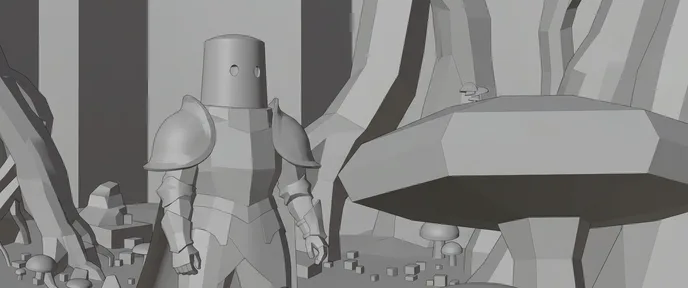
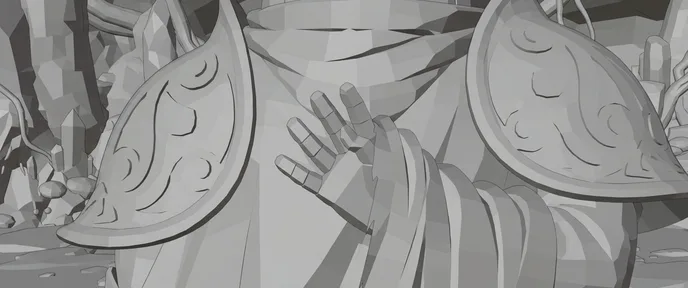
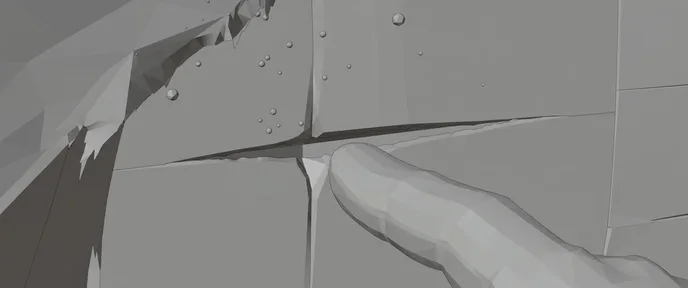
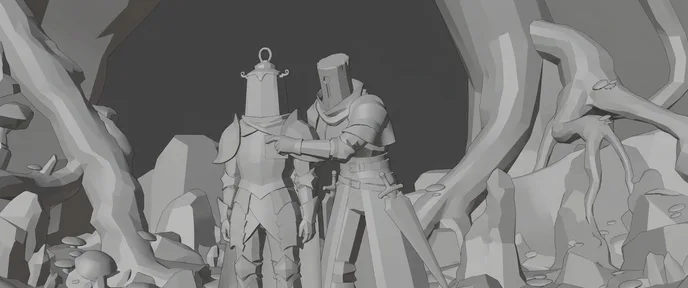
Lost Garden, episode 2 is an animated series by the ScreenWeaver team, made with Seedance, and this is its opening. Each shot appears as a screenplay line, a storyboard frame and a final image, which is also the evidence a good AI disclosure rests on. A quiet scene of two knights with no effect for its own sake: a film that holds together beyond the tool.

Logline. A newborn knight whose inner light is leaking away crosses a world that has stopped hoping, to find the one blacksmith who can seal his armor.

Screenplay · episode 2 · page 1

INT. UNDERGROUND CAVERN - LOWER PATH - CONTINUOUS

Blue mushrooms the size of houses. LANTERN, a small knight with a lantern for a helm, walks alone.

He presses a hand to his chest. Sparks of light slip between his fingers.

SERRURE

Hold on. You're losing something.

Serrure lifts the edge of the cloak. A gash in the armor. Blue light leaks out like smoke.

SERRURE

That's your energy. What keeps you standing.

He grips Lantern's shoulder. Two knights alone among the crystals.

SERRURE

A suit that leaks goes out. Eventually.

Under the giant mushrooms, the road climbs into the dark.

SERRURE

So. We follow the road.

Serrure points the way. Lantern follows.

CUT TO:

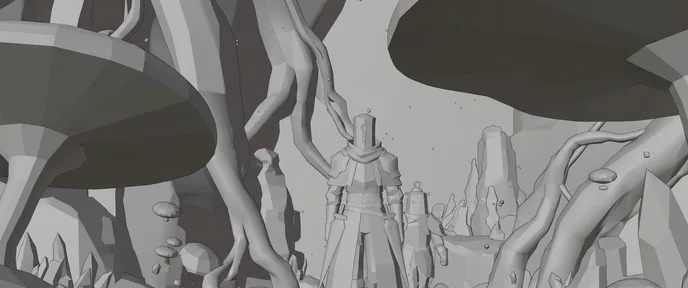
  1. A small knight with a lantern helm stands by a giant glowing blue mushroom in a crystal cavern
    Storyboard frame of the same wide shot, in grey
    01

    Wide · the world

    Wide shot, Lantern alone by a giant glowing blue mushroom, crystal cavern, roots, drifting spores, cold blue light

  2. Close-up of an armored chest under a cream cloak, a gloved hand, a spark of light
    Storyboard frame of the chest close-up, in grey
    02

    Close-up · the chest

    Close-up on Lantern's chest, his gloved hand pressed to the cloak, a spark of light escaping between the fingers

  3. A torn gash in an armor plate leaking bright blue light, a finger pointing at it
    Storyboard frame of the wound insert, in grey
    03

    Insert · the wound

    Extreme close-up, Serrure's finger near a torn gash in the back plate, blue light leaking out like luminous smoke

  4. Two armored knights side by side, one with a hand on the other's shoulder, in a crystal cavern
    Storyboard frame of the two-shot, in grey
    04

    Two-shot · the bond

    Medium two-shot among crystals and roots, Serrure's hand on Lantern's shoulder, faceless armors, emotion through posture only

  5. Two small knights walk beneath two giant glowing blue mushrooms
    Storyboard frame of the wide shot, in grey
    05

    Wide · the scale

    Wide low angle, the two knights tiny beneath two giant glowing mushrooms, blue crystals in the foreground, mist

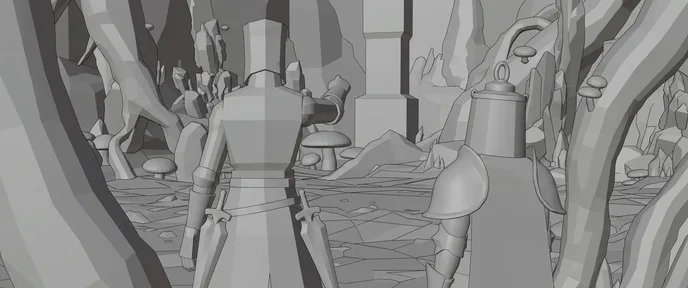
  6. Seen from behind, a tall dark knight points ahead while the small lantern knight looks on
    Storyboard frame of the over-the-shoulder shot, in grey
    06

    Over the shoulder · the road

    Over-the-shoulder from behind, Serrure points ahead into the cavern, Lantern beside him, roots framing the path

Lost Garden, episode 2, 21 minutes, hosted on Vimeo. For Motion & Film you would host a cut of about four minutes as an unlisted link, since the awards accept no video files. The viewer opens inside the cave.

The script

Four minutes a juror will finish.

No length is stated, and jurors open a link. Four minutes is a safe size: about four screenplay pages and 50 to 60 shots of 4 seconds, short enough to finish in a month.
  1. 0:00 to 0:25

    The first frame

    A watchable link opens on an image that tells the tone of the film.

  2. 0:25 to 1:35

    The premise

    Say what the film is about without a line of explanation.

  3. 1:35 to 3:10

    The turn

    A real change in the situation. This is what separates a film from a model test.

  4. 3:10 to 4:00

    The landing

    Close on a final image and let it sit. Do not end on a burst of effects.

A film is judged through a link, so the thumbnail and the first ten seconds are your poster. Check them on a phone before you pay.

Week by week

From the idea to the payment page.

Thirty-one days. The film is made in the middle two weeks, and the disclosure is written along the way, not on the last night.
  1. 01

    By 7 October

    Write the film and start the log

    A four-page screenplay, written free in ScreenWeaver. Open a notes file for the disclosure on day one: tools, versions, what you generated, what you directed.

  2. 02

    By 14 October

    References and storyboard

    Approve one reference for each character and each place, then let the storyboard be generated from the pages. Fix framing and duration shot by shot before any footage exists.

  3. 03

    By 21 October

    Generate the footage

    Run the scenes through Seedance in storyboard order. Note every tool and every re-roll worth recording: this feeds the process statement.

  4. 04

    By 28 October

    Edit, sound and link

    Cut to about four minutes, mix the sound, upload to Vimeo or YouTube as private or unlisted, and export a thumbnail. Test the link in a private window.

  5. 05

    By 1 November

    Disclose, pay, submit

    The form has five steps: entrant, work, AI disclosure, media, review and payment. Pay the £35. The entry cannot be edited after payment.

Ways to be marked incomplete

Eight traps in a short entry form.

The form is light, which is why the mistakes are in the details. Each one below is named in the FAQ or the terms.
  • Uploading the video

    No direct video upload is accepted. Use an external private or unlisted YouTube, Vimeo or Frame.io link.

  • A link that dies

    Keep it alive through judging and the results announcement. An inaccessible link can mark the entry incomplete or lead to disqualification.

  • A model test as a film

    Loose clips, model tests and trailer fragments are listed as not a fit for Motion & Film. Send a finished piece.

  • A vague disclosure

    If the AI role is hidden, exaggerated or described misleadingly, the entry may be rejected or disqualified. Be plain about what the tools did.

  • Paying and then fixing

    Entries cannot be edited on the site after payment. An essential correction goes through the organiser, so check the form before you pay.

  • Rights you do not hold

    Client material, performers, voices, datasets, trademarks and archival footage all need permission. Check the music and the voices first.

  • Expecting a refund

    Fees are generally non-refundable once an entry is processed. Each extra category is paid separately.

  • Leaving payment for last

    An entry is eligible for judging only after payment is complete. A form filled in and left unpaid counts for nothing.

Why ScreenWeaver

A short film is a pipeline. So is the disclosure.

These awards accept any AI workflow, and want it explained. ScreenWeaver keeps screenplay, storyboard and footage in one connected project, which is where an honest process statement comes from.
  • Powered by Seedance 2.0 and 2.5

    The awards impose no tool. ScreenWeaver’s footage pipelines run on Seedance, and you list the model and its version in the disclosure form, with the other tools you used.

  • A process you can show

    Each shot is linked to its scene and its storyboard frame. When the form asks what was generated and what was directed, the project already holds the answer.

  • A script that can enter on its own

    The screenplay exports as a PDF, which is exactly what the Writing & Narrative category accepts. The same project feeds the film and the writing.

  • A cheap first month

    The Screenwriter plan is free and never expires, against a £35 entry fee that you pay only once the film exists. Storyboard Beta is $9.99 a month, and footage generation is part of the Filmmaker plan.

Real productions

International festival-recognized films have been written and produced with ScreenWeaver.

ScreenWeaver is already being used as a creative workspace for real AI film productions, from cinematic shorts to animated series pilots selected, nominated, and awarded by international festivals.

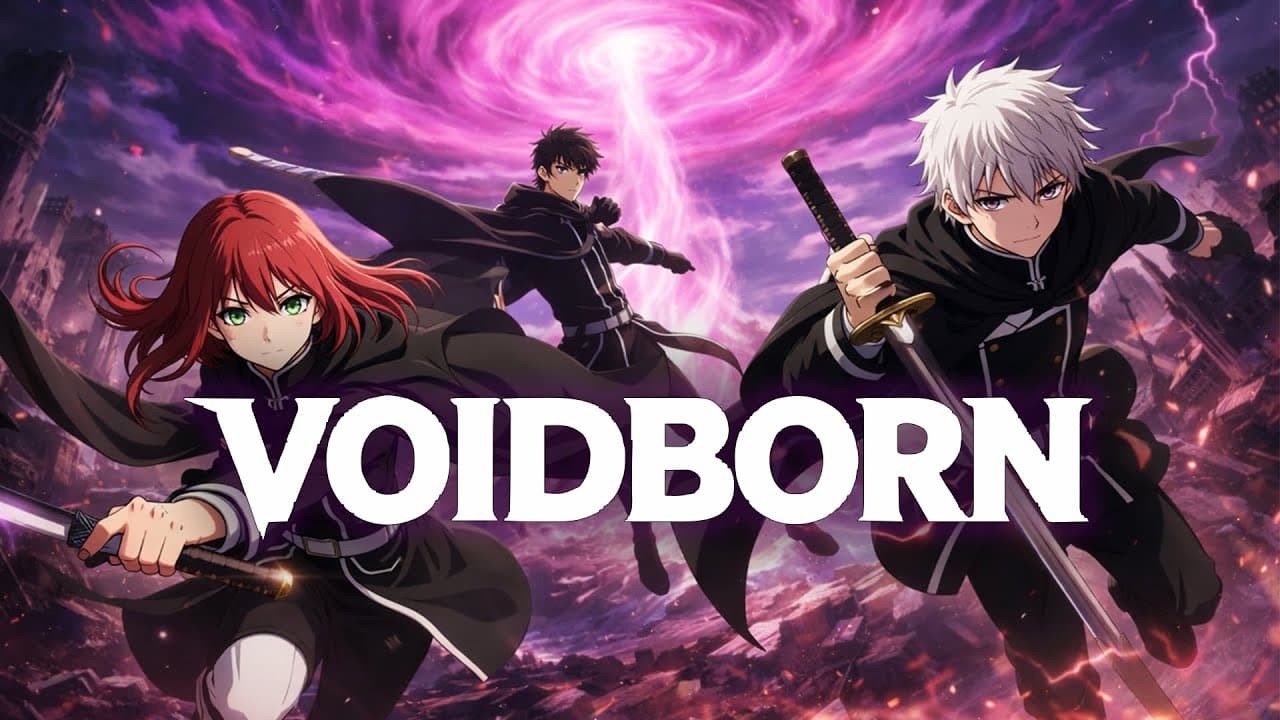
  • Video thumbnail for VOIDBORN

    VOIDBORN

    AI animated / cinematic short

    Festival recognition

    • 1st Place Silver

      Mondial Chroma Awards

    • 2nd Place Dreamina

      Mondial Chroma Awards

    • Award Winner

      Seoul International AI Film Festival

  • Video thumbnail for Les Fils du Vinnana

    Les Fils du Vinnana

    AI short film

    Festival recognition

    • Honorable Mention

      Top Quark Film Festival

    • People's Choice Nominee

      Illuminate Oneness of Humanity

    • Nominee

      ALTFF Supershort

  • Video thumbnail for Lost Garden

    Lost Garden

    AI animated series pilot

    Festival recognition

    • Finalist

      AI London Festival

The pipeline

Write. Board. Produce.

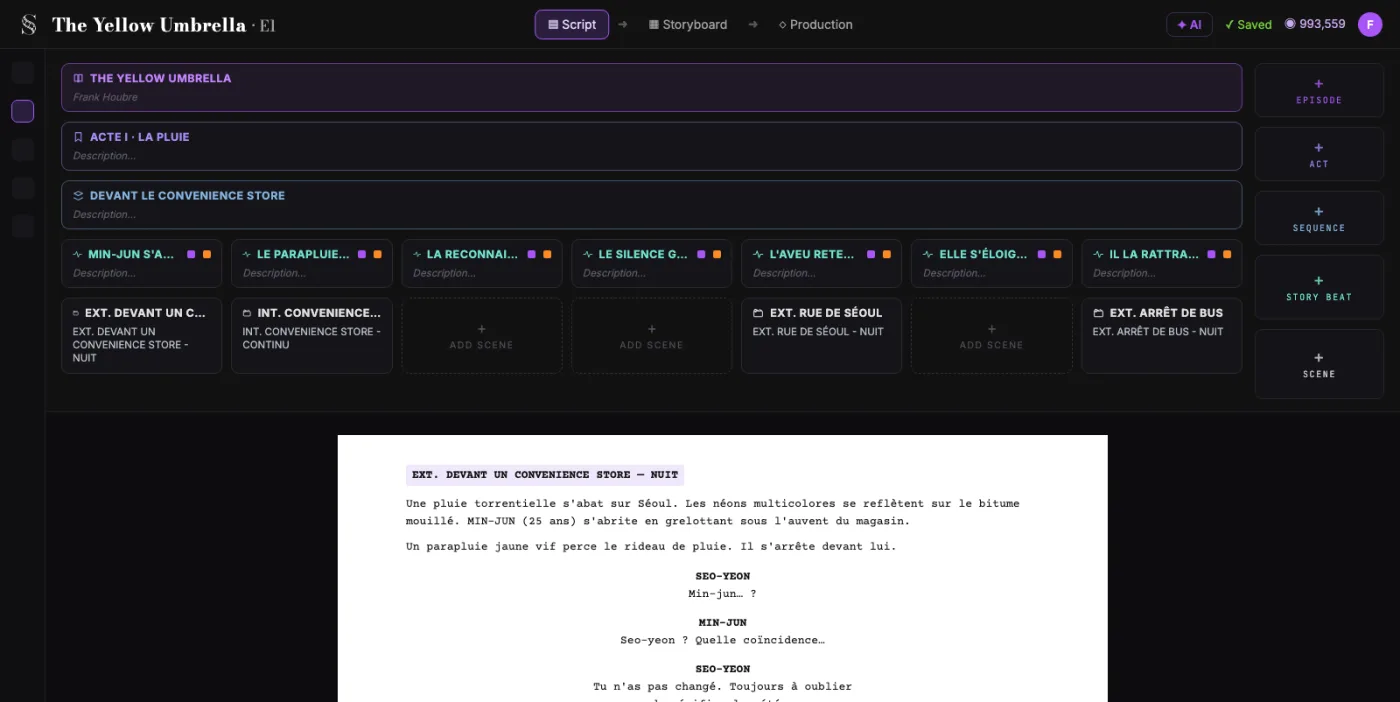
  1. ScreenWeaver screenplay editor: acts, sequences and beats above the formatted script of The Yellow Umbrella

    01The screenplay, enriched

    An industry-standard screenplay editor, and more: a visual outline and beat editor, your writing inspirations (notes, photos, audio) kept next to the page, and an AI researcher to support your writing, not replace it.

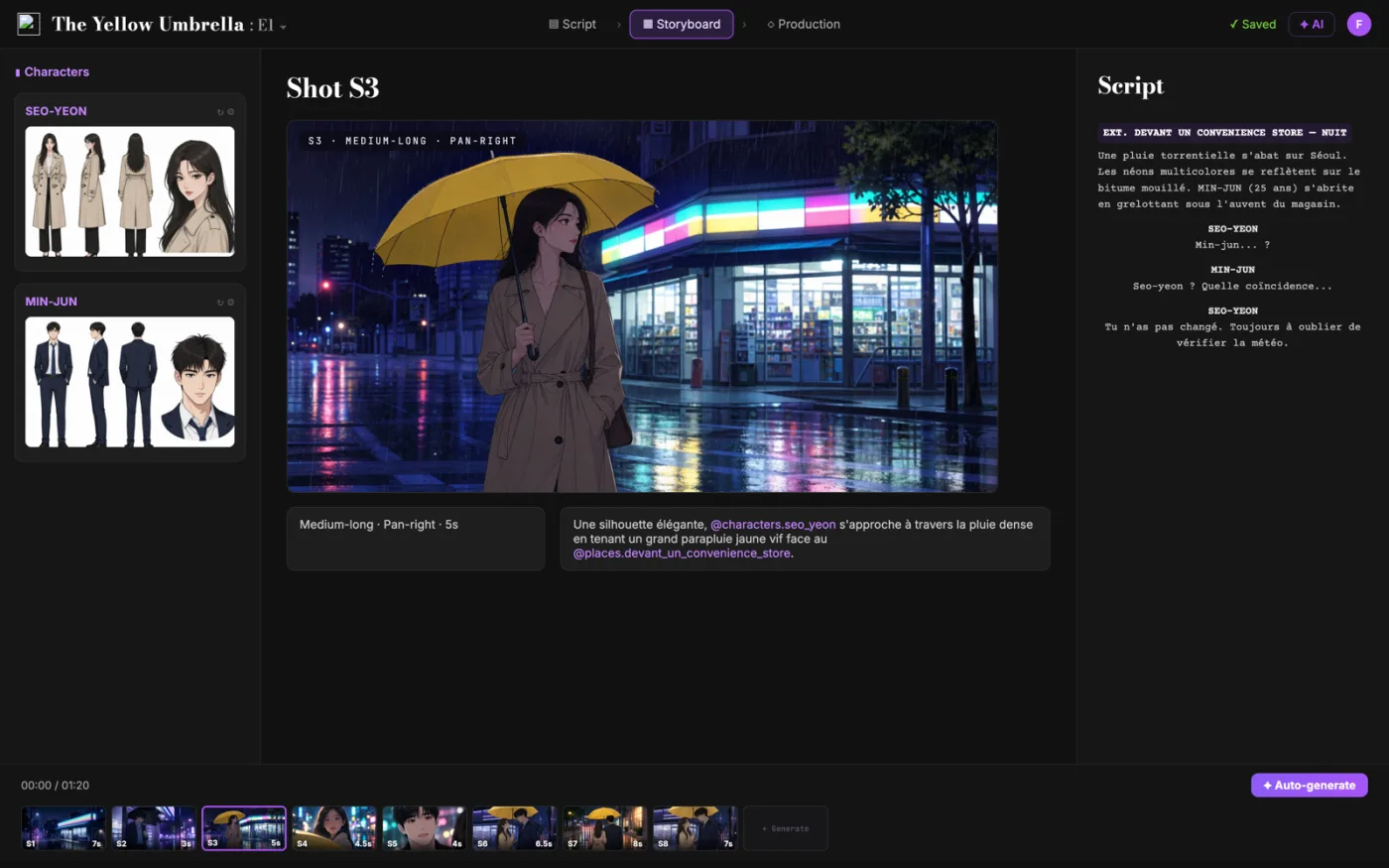
  2. ScreenWeaver storyboard: shot S3 of The Yellow Umbrella with characters, shot settings and the script beside it

    02The storyboard, made easy

    Shot breakdown generated from your screenplay, manual control over every shot (frame, angle, movement, duration), and generative AI previsualization in one click.

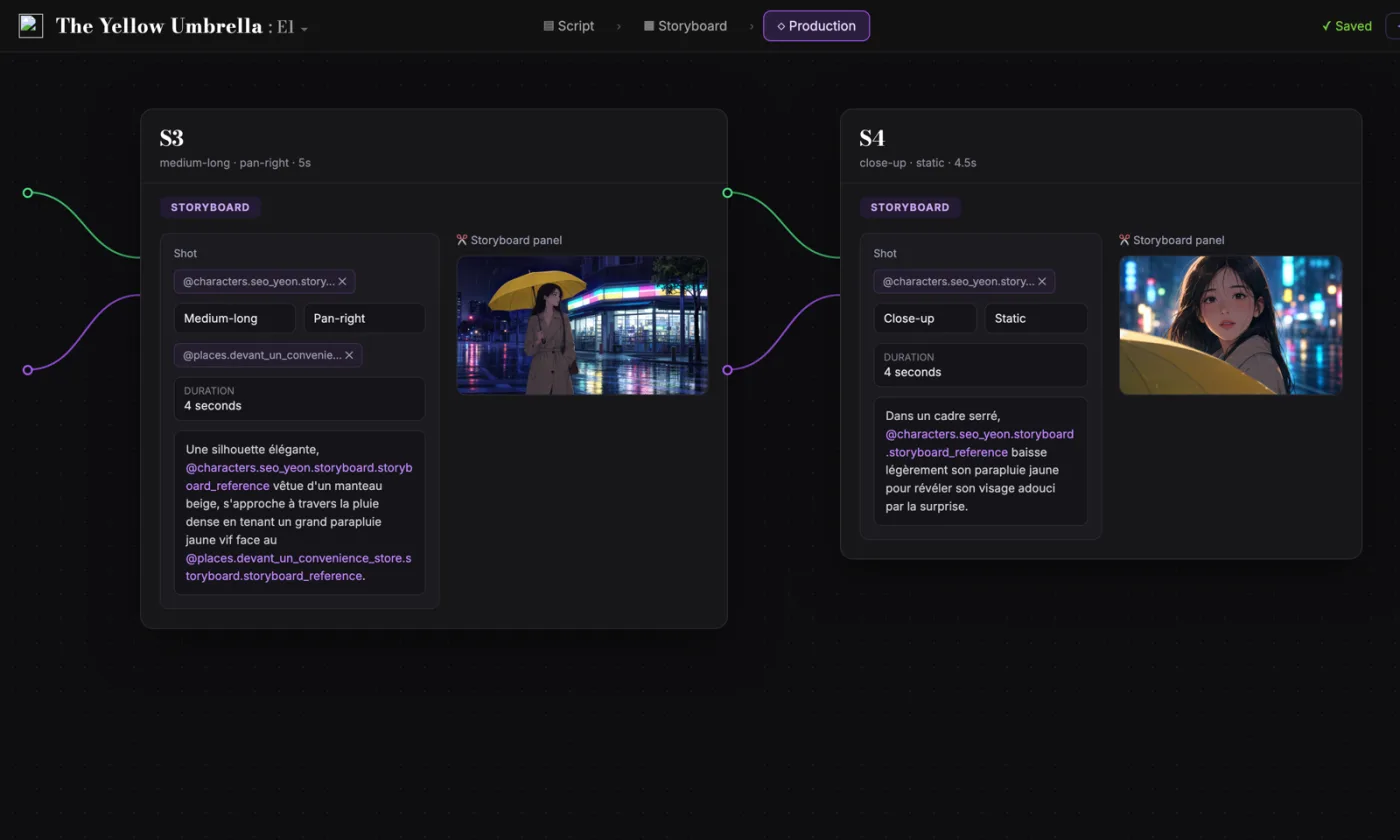
  3. ScreenWeaver production canvas: shots S3 and S4 as connected nodes carrying their storyboard panels and prompts

    03AI production, with finesse

    Footage generation pipelines connected to your screenplay and storyboard. Optimized out of the box, fully editable workflow.

FAQ

The AI Creativity Awards, your questions

How do you win the AI Creativity Awards?
Enter Motion & Film with a finished piece and a plain AI disclosure. Jurors review creative ambition, execution, originality, category relevance, the quality of the disclosure and the handling of source material. No weights are published. A film with one idea and an honest process note is the target.
Is there a cash prize?
No. The 2026 launch edition gives an official title, digital laurels, a public results feature and a digital certificate. The site says it promises no travel, exhibition space, grants or paid commissions.
What is the deadline and the fee?
The deadline is 1 November 2026. The standard entry is £35, and £15 for current students and recent graduates, defined as finishing a course within 24 months. The £25 early price ended on 1 September.
Is ScreenWeaver a valid way to make the film?
Yes. The awards require no particular tool, only a clear disclosure. Screenplay and storyboard are available in ScreenWeaver today, and the footage pipelines are built on Seedance 2.0 and 2.5. Name every tool in the form.
How do I submit a video?
As an external private or unlisted link, from YouTube, Vimeo, Frame.io or similar, plus a thumbnail. Direct video upload is not accepted, and the link must stay live through judging and the results.
Who judges?
The site names no jurors. The organiser is Graphic Competitions, an independent platform founded in 1998. Entries are reviewed by a jury for the six points listed in the FAQ.
What must the AI disclosure include?
The level of AI involvement, the tools or models, which parts were generated or transformed, which parts were human-made or directed, whether you own the source material and whether third-party material was used. Full prompt logs are not required by default.
Who owns the film afterwards?
Yes. You keep ownership and grant a limited licence for administration, judging, promotion, results and archive. You may enter the same work in more than one category if it truly fits, with a separate fee for each.

One month. Open the page tonight.

Start the screenplay on the free plan, and keep every note for the disclosure.