Golden Dunes Dubai 2026 · Guide

How to win the Golden Dunes AI awards.Three AI categories. One gold Clapboard.

Golden Dunes is a Dubai film festival with sixteen awards, three of them for AI work, judged by actors and producers. The final deadline is 20 October 2026. Here are the rules, the jury and a plan for the 19 days left.
  • Final deadline 20 October 2026
  • AI-Short, AI-Commercial, AI-Music Video
  • Jury from Hollywood and the Gulf
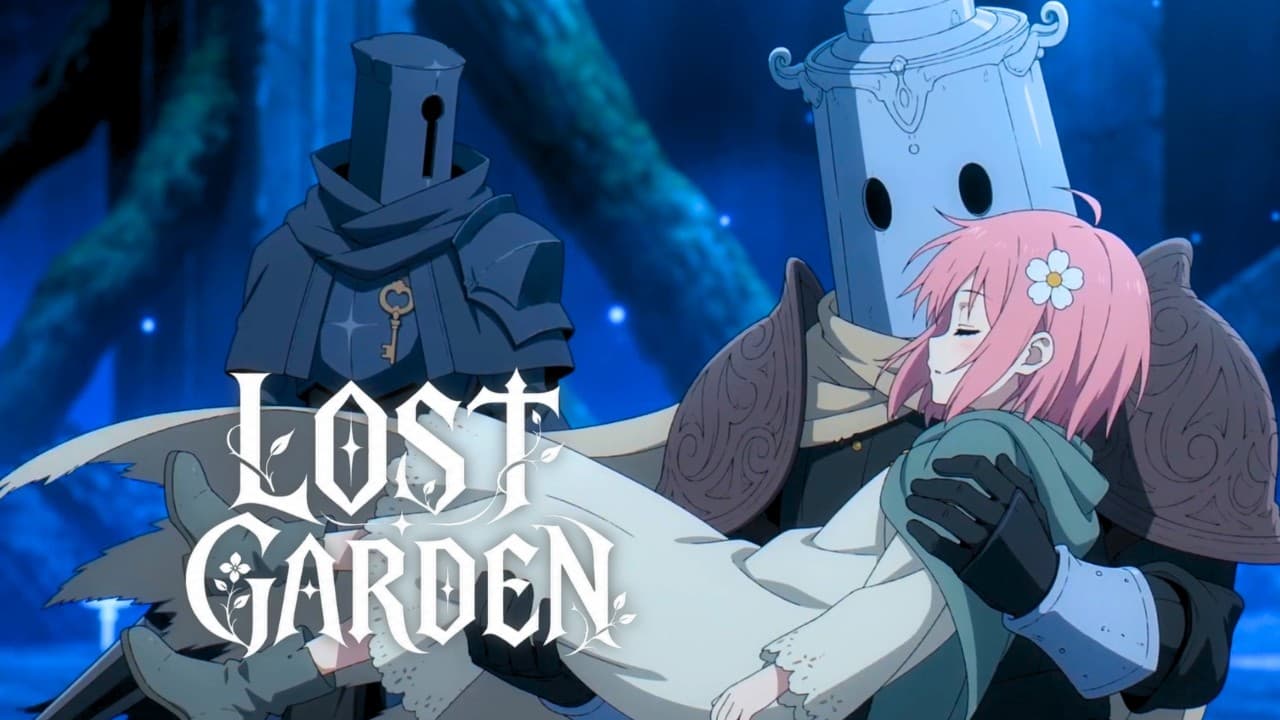
Lost Garden · Episode 1

Independent guide. ScreenWeaver does not organise the Golden Dunes Dubai International Film Festival and is not affiliated with it or with AZ Filmz. Rules read on 1 October 2026. Official site

Available today in ScreenWeaver: free screenwriting, and a storyboard generated from your screenplay with Storyboard Beta, $9.99 a month.

Rolling out: video generation of each shot, powered by Seedance, with the Filmmaker plan.

The rules on one card

What Golden Dunes asks of an AI film.

Golden Dunes is a general film festival with an AI wing, not an AI-only event. Its AI films compete on the same stage and to the same standard as features, documentaries and animation.
Festival
28 to 30 November 2026, Dubai
Final deadline
20 October 2026
AI awards
Best AI-Short, AI-Commercial and AI-Music Video
Entry fee
$50, or $35 for students
Short film length
Under 30 minutes
Where to submit
FilmFreeway only
Language
English subtitles if the dialogue is not English
Trophy
A 24-karat gold-plated Clapboard

Source: the festival site (home, submit, awards and venue pages), read on 1 October 2026. The full rules and terms sit on its FilmFreeway listing, which blocks automated reading: check technical specs there before you pay. Selections are announced on 12 November.

Key dates

Nineteen days to the last deadline.

Early pricing is over. From today, the only date that matters is the last day to enter.
  1. 13 Jan 2026

    Submissions opened

    The call went live worldwide on FilmFreeway at the start of the year.

  2. 1 May 2026

    Earlybird closed

    Pricing of $45 standard and $30 student ended. It is now $50 and $35.

  3. 20 Oct 2026

    Final deadline

    The last day to submit. The site marks it as open now.

  4. 12 Nov 2026

    Official Selections

    The 2026 selections are announced. Selected films receive digital laurels and promotion.

  5. 28 to 30 Nov 2026

    The festival

    Screenings on the 28th, the awards gala on the 29th, panels and workshops on the 30th.

How films are judged

Four words, no weights.

The festival lists four criteria and publishes no points. An AI film is judged to the same standard as every other category, so the technique earns nothing by itself. What the screen does is what counts.
  • Originality

    A jury drawn from film and television is not surprised by a generated image any more. The idea has to be the surprise. Choose a premise you have not seen in another AI short.

  • Storytelling

    Performers sit on this jury, and they judge a story by what a character wants and does. Give your lead a clear want and one decision that costs something.

  • Technical execution

    For AI work this means steady faces, clean hands, a consistent world and a mix that matches the picture. A glitch left in the final cut is read as carelessness, not as style.

  • Artistic vision

    The difference between a sequence of clips and a film. One palette, one way of framing, one tone, held from the first shot to the last. A single point of view is what makes a jury say direction.

The jury’s decision is final, and there is no published breakdown of points. Do not optimise for one criterion: a film that is solid on all four beats one that is brilliant on one.

Who decides

Eight jurors, none of them AI specialists.

The festival lists eight jurors for 2026. They come from acting, producing, writing, business and journalism, and none is introduced as an AI specialist. Write for viewers, not for prompt engineers.
  • Three actors

    Ron Perlman, Shohreh Aghdashloo and Cuba Gooding Jr. sit on the panel. Actors watch faces and performance first. A character whose face drifts between shots will be seen at once.

  • Producers and writers

    Phillip B. Goldfine, an Academy Award-winning producer, and Pete Goldfinger, screenwriter on the Saw franchise. They read structure: a clear setup, a turn, an ending that lands.

  • A documentary executive and a Gulf business leader

    Levon Davis is a vice president of documentaries at Unanimous Media. Dr. Rashed Mohammed Zubair Al Farooq is group CEO of Speedy Comics Group. Expect a view on audience appeal and on brand work, which matters for the AI-Commercial award.

  • A journalist and filmmaker

    Adelle Nazarian is a documentary filmmaker and journalist. A film with something to say, told plainly, suits a viewer who spends her days on real stories.

The three AI awards

Pick one category and aim at it.

There is no theme. There are three awards for AI-made work among sixteen. Each is described in one line on the site, so the way you read that line is your brief.
  • 01

    Best AI-Short Film

    Short films where AI plays a significant role in the craft. Under 30 minutes.

    The broadest award and the one the festival’s own FAQ defines: significant use of AI in writing, directing, editing or VFX. Aim for 4 to 8 minutes, which is long enough for a real story and short enough to keep polished.

  • 02

    Best AI-Commercial

    Commercials and branded work built with AI at the core.

    Short, product-first and tightly written. Use an invented brand, not a real one: you must hold rights to everything on screen. A 30 to 60 second spot is a faster win than a drama in 19 days.

  • 03

    Best AI-Music Video

    Music videos where AI drives the visual language.

    The track sets the structure, which saves you a screenplay. The risk is rights: you must hold full rights to the music. Use your own track or one you have cleared in writing.

The 2025 winners

What last year’s list tells you.

The 2025 edition awarded Echo as Best AI-Short Film and The Hipsters as Best AI-Commercial. We have not watched either and will not describe them. The list itself still teaches three things.

  1. 01

    The AI awards are real awards. Echo and The Hipsters appear in the same winners list as Best Feature Film, Best Director and Best Documentary, with the same trophy.

  2. 02

    No AI music video winner appears on the 2025 list. The category looks new or untested, so there is no template to copy. That is an opening for an original idea.

  3. 03

    Animation had its own winner, It Could Have Been Me, and Best Short Film went to The Children of Light. Check on FilmFreeway whether one film can enter several categories before you choose.

A film built for a jury

Lost Garden: six shots to read a face.

Lost Garden, episode 1 is an animated series made by the ScreenWeaver team with Seedance. Here is its Source Tree scene as a screenplay page, six storyboard frames and the six final images. Look at the close-up on the eyes: this is the kind of shot an actor on a jury will judge.

Logline. A small knight wakes up in a dead world and learns he is the last guardian of a seed that could bring the garden back.

Screenplay · episode 1 · the Source Tree

INT. HEART OF THE ROOTS - NIGHT

Living roots coil around LANTERN and pin him down. A voice stops them.

THE SOURCE TREE

Stop. He is my guest.

A giant woman of roots and white lilies opens her arms over the cavern.

Her eyes open. Blue, and vast.

THE SOURCE TREE

Welcome to you, Lantern Knight.

She lifts him in her palm, like a lamp.

THE SOURCE TREE

Do not be afraid. I will not harm you.

In the dark, a seed of light opens. Inside the flower, a sleeping child.

THE SOURCE TREE

You must find yours. Protect her.

CUT TO:

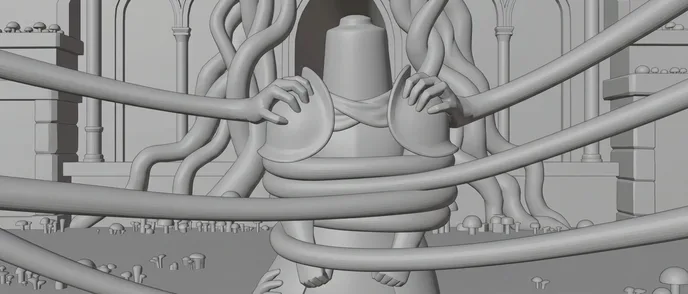
  1. A small lantern-helmed knight bound by thick roots in a ruined hall
    Storyboard frame of the trap shot, in grey
    01

    Medium · the trap

    Medium shot, Lantern bound by thick living roots in a ruined hall, glowing blue mushrooms on the floor, cold light

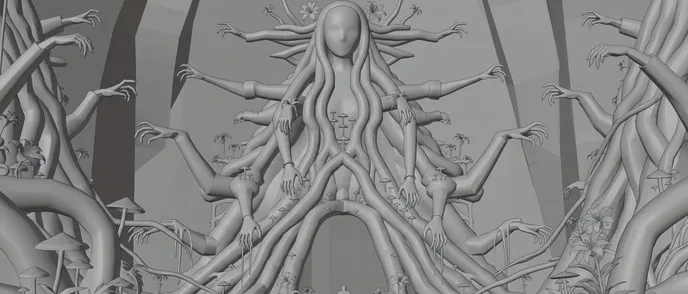
  2. A giant woman made of roots and white lilies spreads her many arms in a dark cavern
    Storyboard frame of the wide shot, in grey
    02

    Wide · the Source Tree

    Symmetrical wide shot, a giant woman made of roots, arms spread with many hands, white lilies, blue glyphs

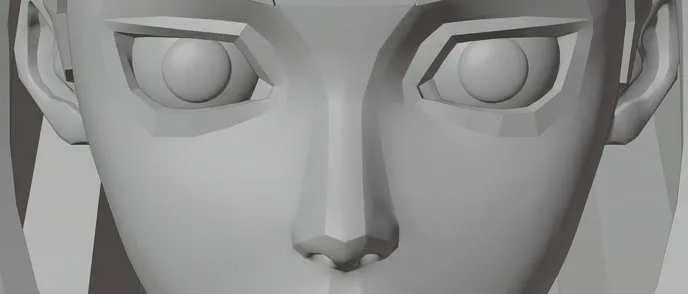
  3. Extreme close-up of a giant pale face with piercing blue eyes
    Storyboard frame of the eyes close-up, in grey
    03

    Extreme close-up · the eyes

    Extreme close-up on the giant's face, piercing blue eyes opening, pale skin, soft light from below

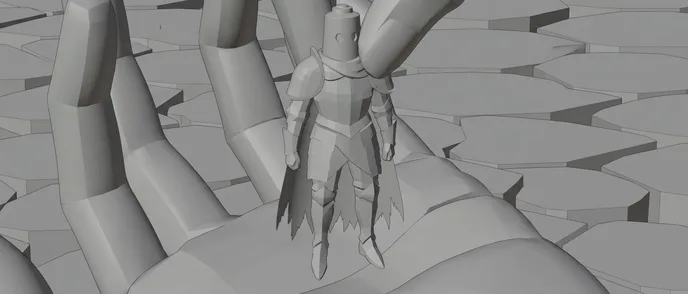
  4. A tiny armored knight stands in the middle of a giant open hand
    Storyboard frame of the palm shot, in grey
    04

    High angle · the palm

    High angle, the tiny knight standing in the center of a giant open palm, stone floor far below

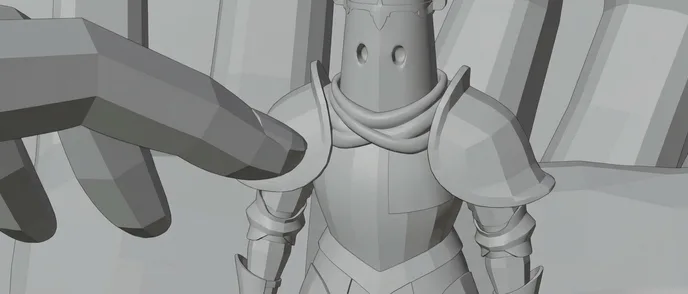
  5. A giant fingertip gently touches the chest of a small armored knight
    Storyboard frame of the touch close-up, in grey
    05

    Close-up · the touch

    Close-up, a giant fingertip gently touches the knight's armored chest, faceless helm, emotion through posture

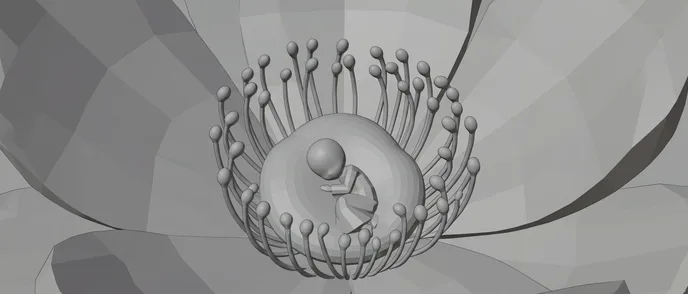
  6. A sleeping pink-haired child curled inside a glowing blue flower
    Storyboard frame of the seed insert, in grey
    06

    Insert · the seed

    Top-down insert, a glowing pale blue flower opening, a sleeping child with pink hair curled inside

Lost Garden, episode 1 runs 17 minutes, which fits under the 30 minute ceiling for a Golden Dunes short without a single cut. The ScreenWeaver team made it with Seedance, and it was a finalist at the AI London Festival. Press play to start on the Source Tree scene.

The script

A 6 minute short in four movements.

Nineteen days is not long. A six minute film is about 6 pages and 70 to 100 shots, a size you can generate, review and cut properly.
  1. 0:00 to 0:40

    The image

    A face, a place and a question. The jury sees your film among many others on the same night.

  2. 0:40 to 2:00

    The want

    Make the lead’s want visible without dialogue. Actors on a jury read it in a look.

  3. 2:00 to 4:40

    The pressure

    Three scenes, each costing the lead more. Keep the number of characters and locations low.

  4. 4:40 to 6:00

    The decision

    One choice, one consequence, one last image. End on a face, not on a logo.

Choose the smallest cast you can. Two faces to keep consistent across 80 shots is a technical execution grade you can win. Seven faces is one you will lose.

Day by day

Nineteen days, one film.

From 1 October to 20 October. The festival site marks submissions as open now, so aim to submit on the 19th and keep the 20th as your margin.
  1. 01

    1 to 3 October

    Choose the category and the idea

    Decide between AI-Short, AI-Commercial and AI-Music Video. Write five loglines and tell them aloud. Keep the one people ask a question about.

  2. 02

    4 to 6 October

    Write the screenplay

    Five to six pages. Open a free Screenwriter project in ScreenWeaver and keep to industry format. Cut every line of dialogue you can replace with a look.

  3. 03

    7 to 9 October

    References and storyboard

    Lock one reference per character and per place, then storyboard each shot from the screenplay. Approve the storyboard before you generate anything.

  4. 04

    10 to 15 October

    Generate the footage

    Work through the storyboard one scene at a time. ScreenWeaver’s video generation is rolling out: if it is not on your account yet, use your storyboard as the plan and generate with a tool whose terms you have read.

  5. 05

    16 to 18 October

    Edit, sound and subtitles

    Cut, mix, add English subtitles where the dialogue is not English, and write down the origin of every music and sound file.

  6. 06

    19 to 20 October

    Submit on FilmFreeway

    Upload, pay the $50 fee ($35 for students) and check that the film plays. If the film is not ready, aim for the next edition. An unfinished film costs a fee and earns nothing.

What costs you the entry

Six ways to miss the screening.

These come from the festival’s own essentials and FAQ. The full terms are on FilmFreeway, so read them before you pay.
  • Submitting outside FilmFreeway

    The site calls FilmFreeway the official and only channel for Golden Dunes. An email with a link is not an entry.

  • Rights you cannot show

    You must hold full rights to the film, including the music, the visuals and the AI-generated content. A music track of unknown origin is the classic problem.

  • No English subtitles

    Any film with dialogue in another language needs English subtitles. A film in French or Arabic is welcome, an unsubtitled one is not.

  • The wrong length

    Shorts run under 30 minutes and features over 60. A 40 minute film belongs to neither. Stay under 30.

  • Choosing the wrong category

    AI-Commercial means branded work with AI at the core. AI-Music Video means AI drives the visual language. A story told in a thirty second ad is not an AI-Short.

  • Counting on a gala seat

    The awards gala is private: about one hundred guests, by invitation, at Belcanto on the rooftop of Dubai Opera. Selection gives you passes to the awards night, but check them before you book travel.

Why ScreenWeaver

A jury of film people deserves a film, not a clip reel.

Golden Dunes judges a finished film. ScreenWeaver keeps screenplay, storyboard and footage in one connected project, so a short film can reach the finish line in days.
  • The structure a producer reads

    Industry-format screenplays, an outline and beats, then a storyboard built from the pages. The festival lists producers and screenwriters on its jury, and a film written like this reads like their kind of film.

  • Faces that survive eighty shots

    Characters, locations and references are set once and carried into every shot. This is the technical execution criterion, and the one an actor will notice first.

  • Footage made on Seedance

    The footage pipelines are powered by Seedance 2.0 and 2.5 and are connected to your script and storyboard. They are rolling out with the Filmmaker plan, so keep a fallback in your 19 day plan.

  • Free to start tonight

    The Screenwriter plan costs $0 and does not expire, which gets the screenplay done in the first week. Storyboard Beta is $9.99 a month.

Real productions

International festival-recognized films have been written and produced with ScreenWeaver.

ScreenWeaver is already being used as a creative workspace for real AI film productions, from cinematic shorts to animated series pilots selected, nominated, and awarded by international festivals.

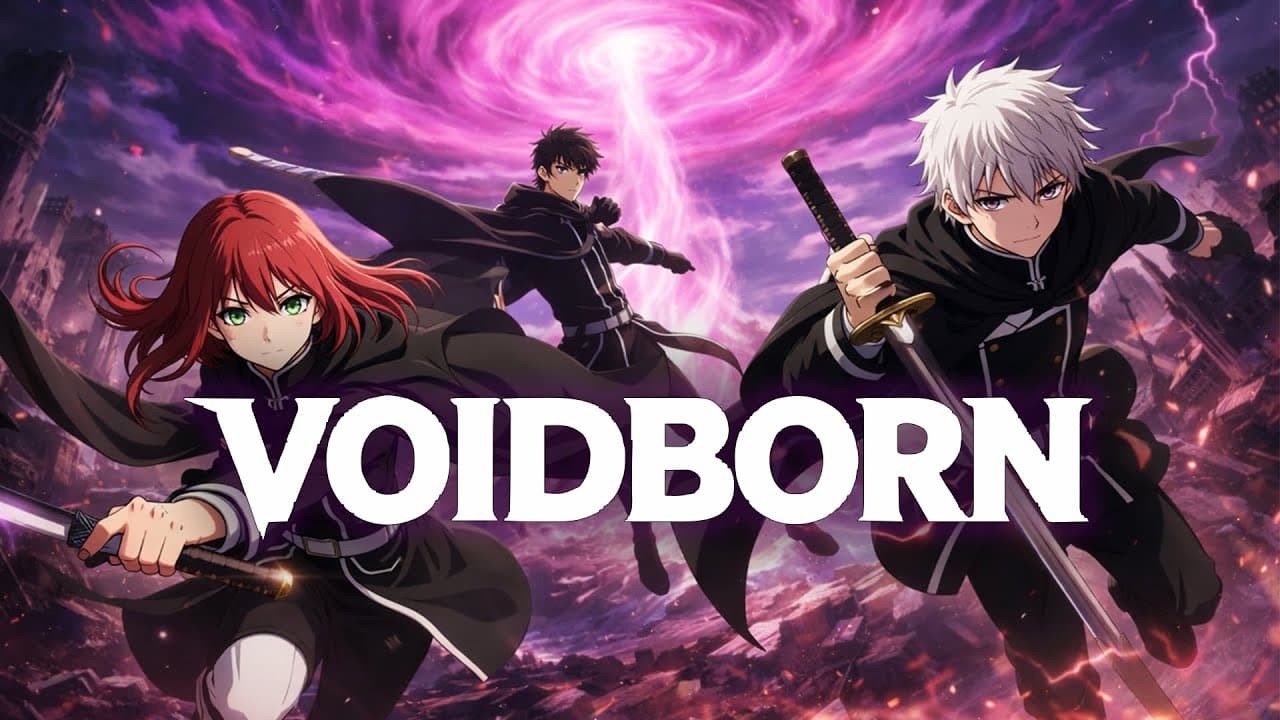
  • Video thumbnail for VOIDBORN

    VOIDBORN

    AI animated / cinematic short

    Festival recognition

    • 1st Place Silver

      Mondial Chroma Awards

    • 2nd Place Dreamina

      Mondial Chroma Awards

    • Award Winner

      Seoul International AI Film Festival

  • Video thumbnail for Les Fils du Vinnana

    Les Fils du Vinnana

    AI short film

    Festival recognition

    • Honorable Mention

      Top Quark Film Festival

    • People's Choice Nominee

      Illuminate Oneness of Humanity

    • Nominee

      ALTFF Supershort

  • Video thumbnail for Lost Garden

    Lost Garden

    AI animated series pilot

    Festival recognition

    • Finalist

      AI London Festival

The pipeline

Write. Board. Produce.

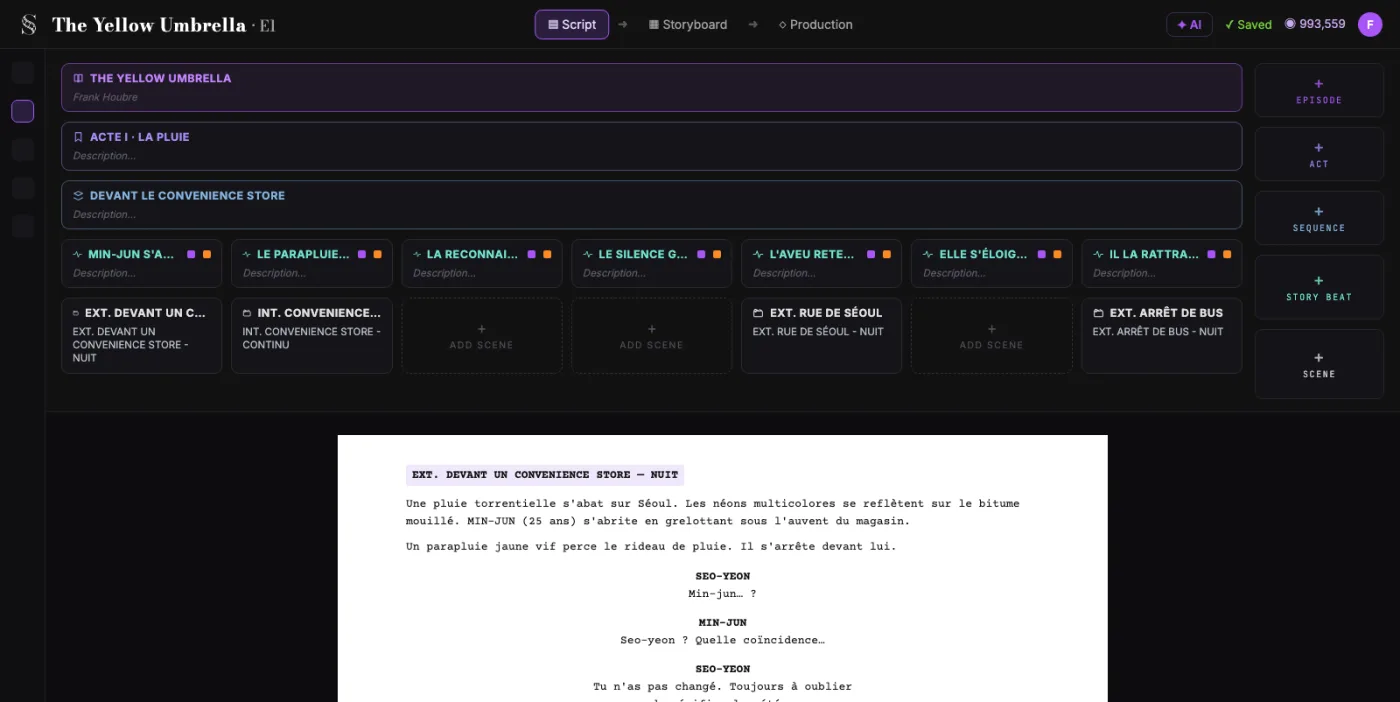
  1. ScreenWeaver screenplay editor: acts, sequences and beats above the formatted script of The Yellow Umbrella

    01The screenplay, enriched

    An industry-standard screenplay editor, and more: a visual outline and beat editor, your writing inspirations (notes, photos, audio) kept next to the page, and an AI researcher to support your writing, not replace it.

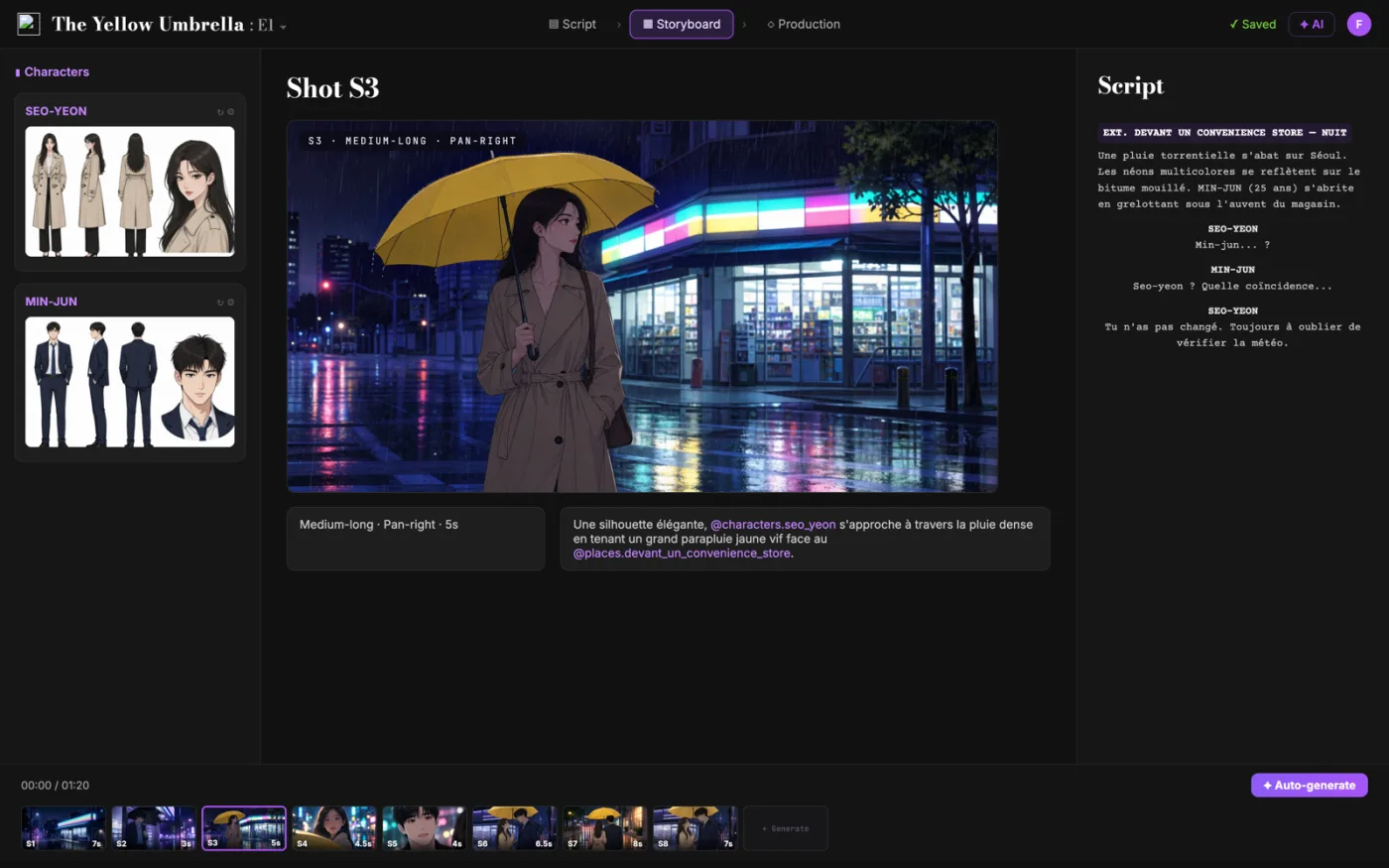
  2. ScreenWeaver storyboard: shot S3 of The Yellow Umbrella with characters, shot settings and the script beside it

    02The storyboard, made easy

    Shot breakdown generated from your screenplay, manual control over every shot (frame, angle, movement, duration), and generative AI previsualization in one click.

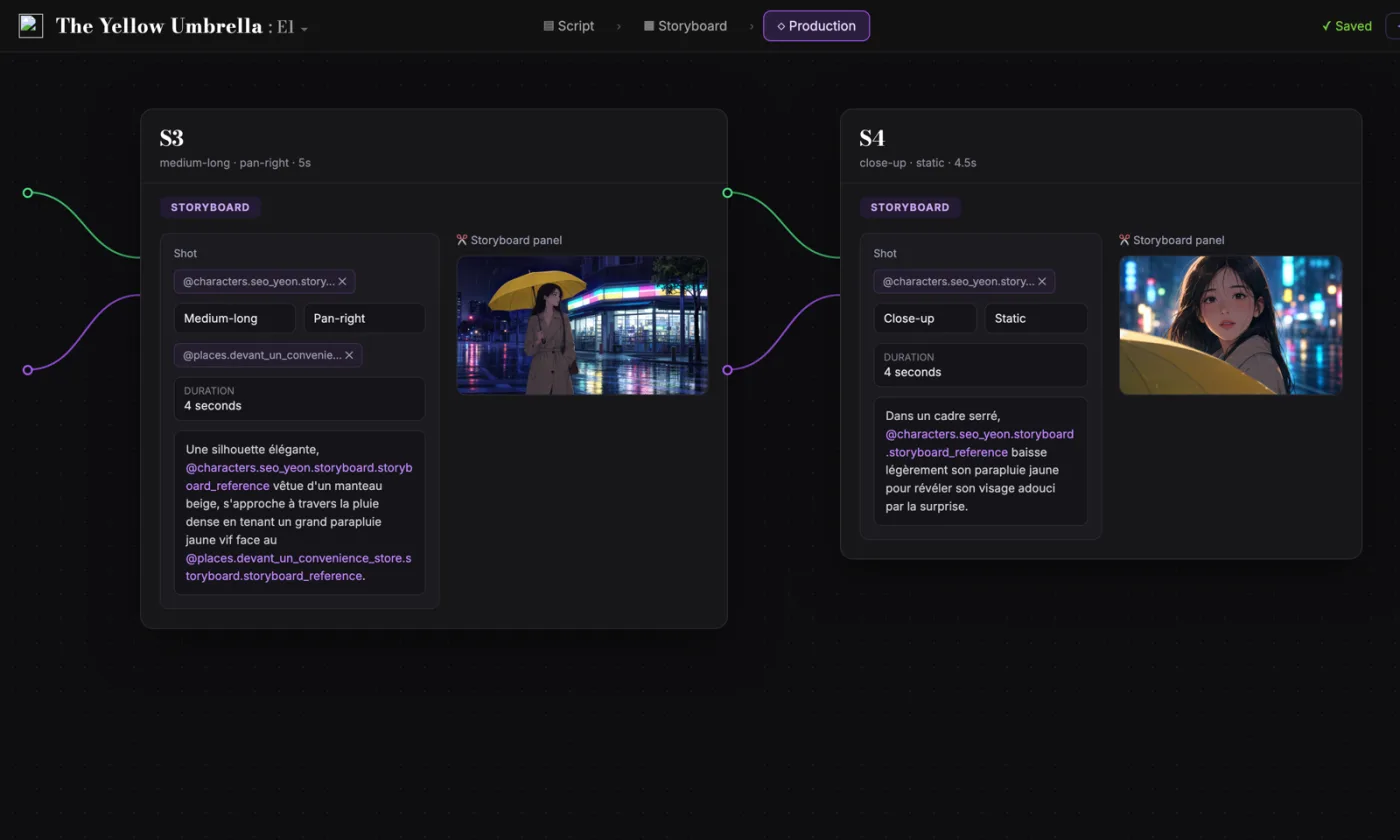
  3. ScreenWeaver production canvas: shots S3 and S4 as connected nodes carrying their storyboard panels and prompts

    03AI production, with finesse

    Footage generation pipelines connected to your screenplay and storyboard. Optimized out of the box, fully editable workflow.

FAQ

Golden Dunes AI awards, your questions

How do you win a Golden Dunes AI award?
A jury scores originality, storytelling, technical execution and artistic vision, with the AI categories judged to the same standard as every other award. Choose AI-Short, AI-Commercial or AI-Music Video, keep the cast small and finish a polished film rather than an ambitious one.
What counts as an AI film at Golden Dunes?
The FAQ says work that significantly uses artificial intelligence in writing, directing, editing or VFX. You must hold full rights to everything in the film, AI-generated content included.
What is the deadline and what does it cost?
The final deadline is 20 October 2026, on FilmFreeway only. The fee is $50, or $35 for students. The earlybird price ended on 1 May.
Can my film be in a language other than English?
Yes, with English subtitles for any dialogue. Golden Dunes presents itself as an international festival, open to filmmakers from every country.
Who is on the jury?
Eight jurors for 2026, including Ron Perlman, Shohreh Aghdashloo, Cuba Gooding Jr. and the Academy Award-winning producer Phillip B. Goldfine. The festival lists their names on its awards and jury page.
What do winners get?
A 24-karat gold-plated Clapboard presented at the gala on 29 November, official laurels, a screening of the winning films, media exposure and networking with producers and distributors. No cash prize is listed.
Can ScreenWeaver make a Golden Dunes film?
For the screenplay and storyboard, today. Footage on Seedance 2.0 and 2.5 arrives with the Filmmaker plan, now rolling out. Golden Dunes imposes no tool, but you must hold the rights to what you submit.
Do I keep ownership of the film?
Yes. The festival gets a non-exclusive right to screen the film and to use short clips and stills for promotion, and nothing more.

Nineteen days. Start with the page.

Nineteen days is enough for a short film that is well written. Open the editor and begin today.