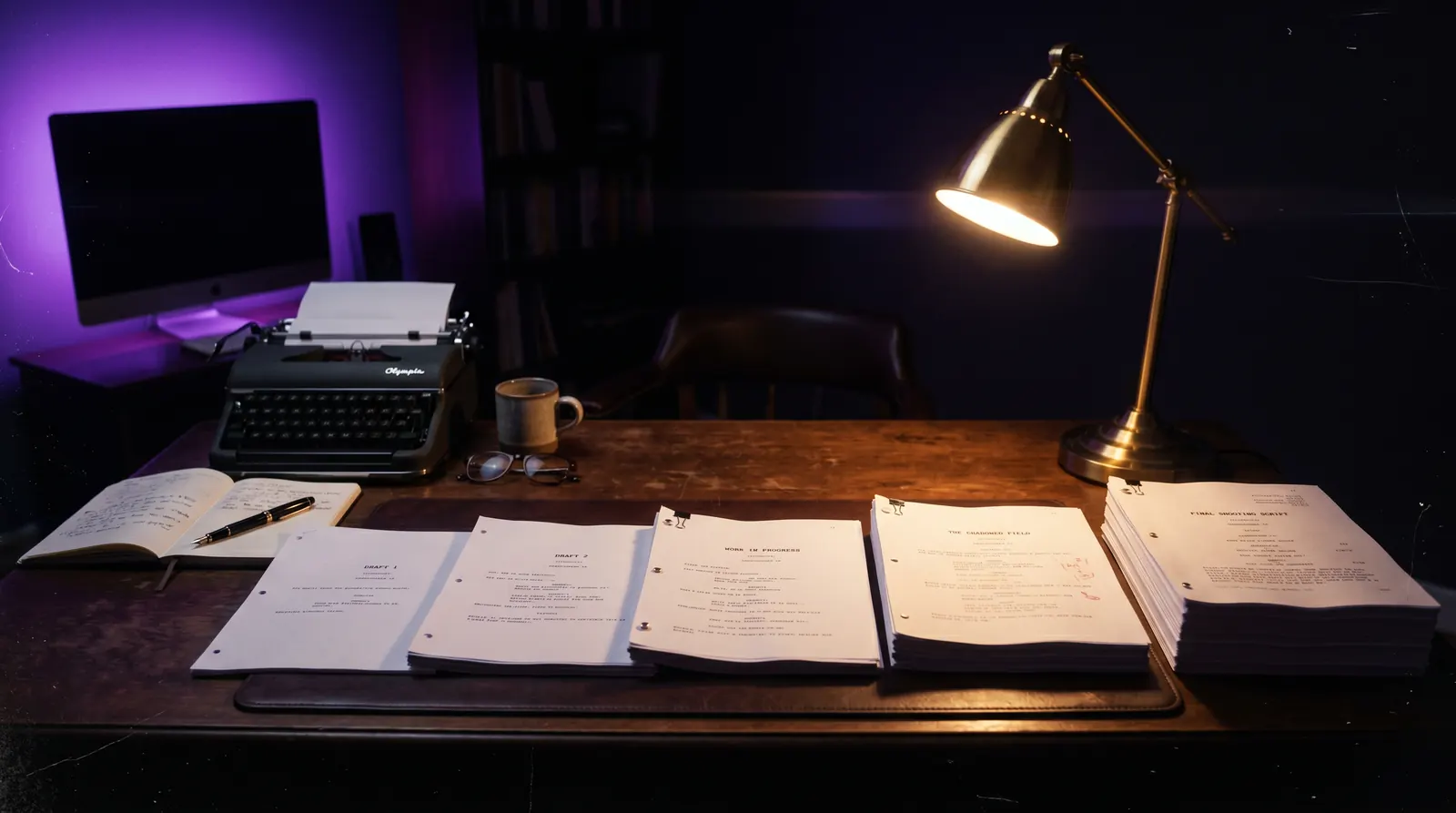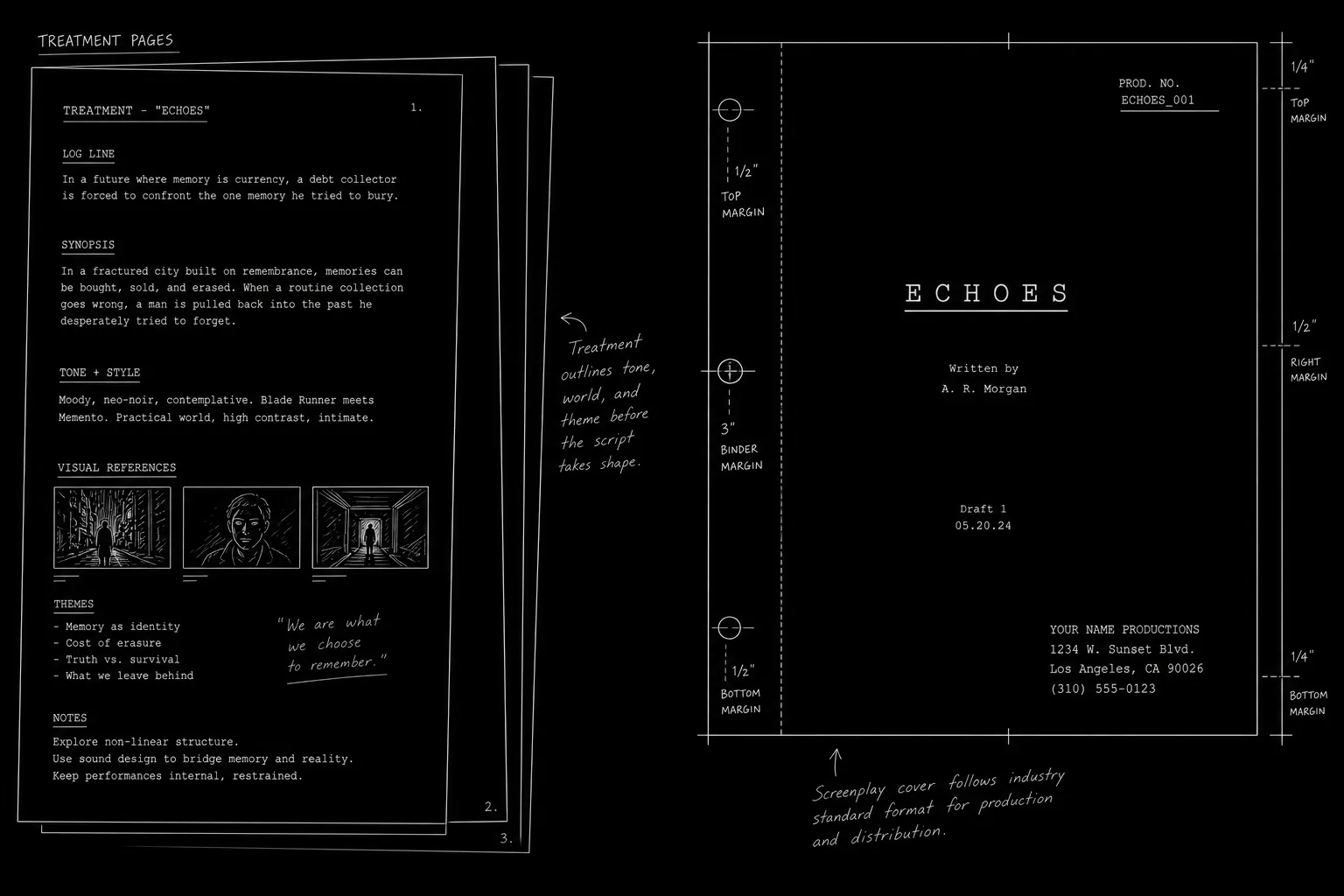

Short answer: a music video treatment runs 1 to 3 pages of written concept, roughly 500 to 1,000 words, plus a visual reference section that brings the full pitch deck to 8 to 15 pages once mood board images are included. There is no page-per-minute rule here: the real timing convention is a shot list keyed to the song's structure, intro, verse, chorus, bridge, so the artist and label can see exactly which image lands on which line.
The precise answer, by section
A treatment deck is judged on how well it sells the look and the timing, not on prose length.
| Section | Typical length | What it needs to do |
|---|---|---|
| Concept/treatment prose | 1-3 pages, 500-1,000 words | State the tone, world, and why this director, fast |
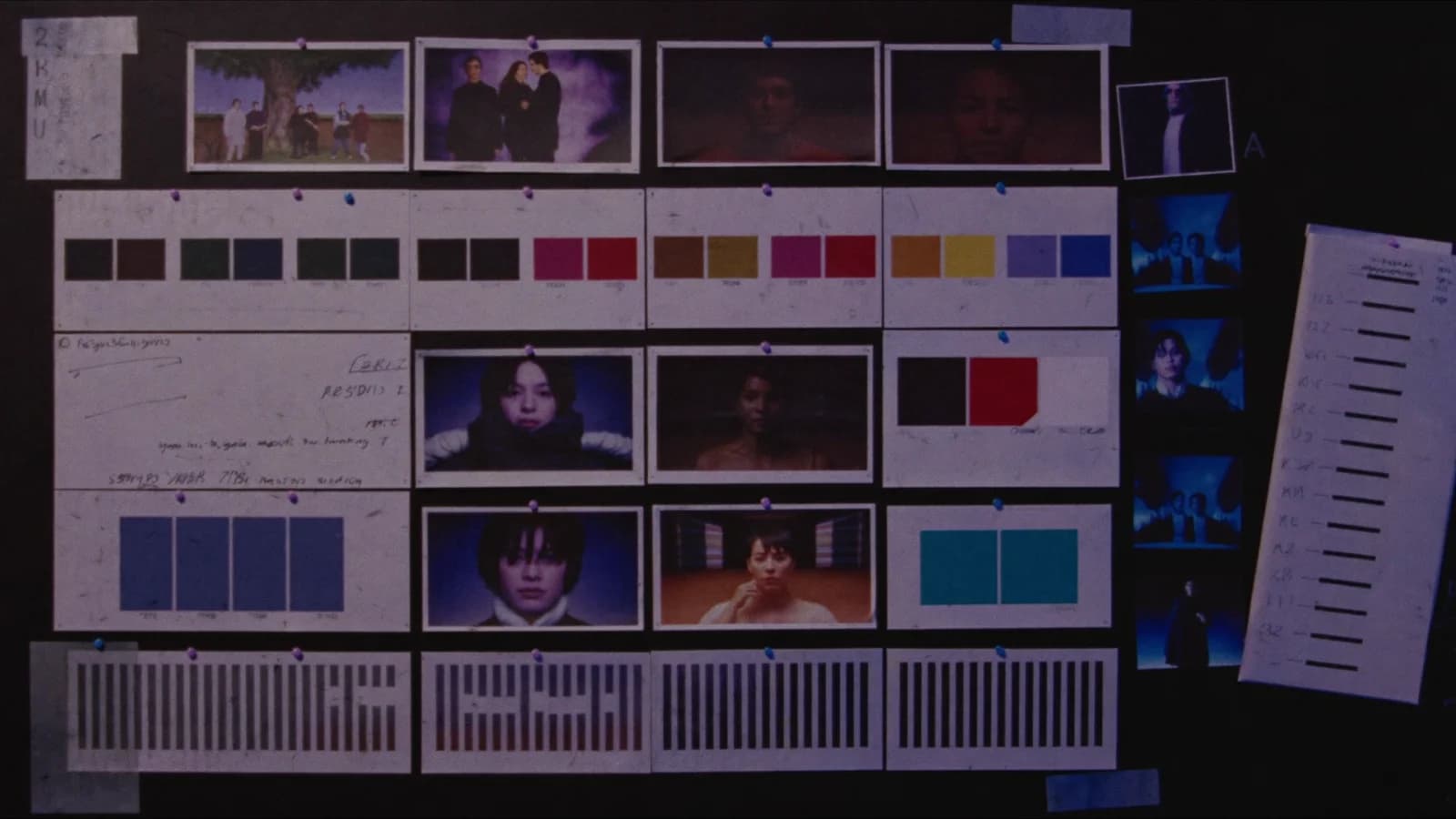
| Visual references / mood board | 5-10 pages of images | Show the look and palette instead of describing it |
| Shot list keyed to timecode | 1-2 pages | Map key visual beats to the song's verse/chorus/bridge timestamps |
| Full treatment deck | 8-15 pages total | The combined document sent to the artist or label |
For how treatment length works in a different medium, feature film, see How to Write a Feature Film Treatment. The underlying discipline, say less, show more, holds across both, even though the page math is not the same.
The nuance that changes the answer
Two things separate a music video treatment from every other length convention on this site.
Images do the work prose does everywhere else. A feature treatment persuades a producer with sentences. A music video treatment persuades an artist with a mood board. Directors who write four pages of dense prose instead of curating six pages of strong reference images read as directors who do not trust their own visual instincts, even when the writing is good.
Timing means song structure, not runtime. There is no one-page-per-minute rule for a 3-minute video, because a music video is not read like a script, it is watched against a track everyone in the room already knows by heart. What matters is precision: naming the exact timestamp where the chorus hits and describing the shot that lands there shows the artist you listened closely, which is what actually wins the pitch.
Mapping beats to the track
Treat the song's structure the way a screenwriter treats a beat sheet: fixed points the visual concept has to hit on time. Use the Beat Sheet Calculator to lay out your concept's turns the same way you would map a script's midpoint and climax, then align each one to the track's actual timecode before you finalize the shot list. For the beat-by-beat version of that mapping, including which visual devices carry a turn when nobody speaks, see story beats in a music video.
If the video will be generated rather than shot, those timecodes do even more work: the tempo sets the length of every shot before you write a single prompt (one bar lasts 240 divided by the BPM, in seconds). How to make an AI music video takes a signed-off treatment through the artist's reference sheet, a storyboard per section and a cut on the waveform.
Free tool: the Beat Sheet Calculator maps your concept's key beats to precise timing, whether that is a script's page count or a song's structure.
Try it free
Try Screenweaver for free on your script
It is free. Import your existing project, get a clearer view of your outline, and regain control of your story structure in minutes.
Start FreeFAQ
How long should a music video treatment be?
Most run 8 to 15 pages total, but only 1 to 3 of those pages are written prose. The rest is mood board imagery and a timecode-keyed shot list, which do more persuading than paragraphs do in this format.
Do music video treatments need a shot list?
Yes, and it should be keyed to the song's timecode, not just numbered in order. Naming the exact second the chorus or hook lands and describing the shot at that moment is what separates a professional treatment from a mood-board slideshow. Once the treatment is signed off, the same timecodes carry straight into the music video storyboard.
How much of a treatment should be images versus text?
The image-to-text ratio should favor images heavily, often 2 to 1 or more by page count. Prose should state the concept and tone quickly; the mood board should carry the visual argument.
How do I time visual beats to the song instead of guessing?
List the song's structural sections, intro, verse, chorus, bridge, outro, with their actual timestamps, then assign one key visual beat to each section before writing the full shot list. The Beat Sheet Calculator works for mapping either a script or a track's structure this way.
Final Step
Build your next script with Screenweaver
Move from ideas to production-ready pages faster with timeline-native writing and AI-assisted story flow.
Try Screenweaver