LundinStudio AI Film Festival 2027 · Guide

How to win the LundinStudio AI Film Festival.Ten minutes. All-AI visuals. One face that holds.

The rules, the five judging points and a plan to the 21 January 2027 deadline. The festival asks for an original script and footage that is entirely AI-generated. That is the pipeline ScreenWeaver was built around.
  • Deadline 21 January 2027
  • 10 minutes, credits included
  • Character consistency is judged
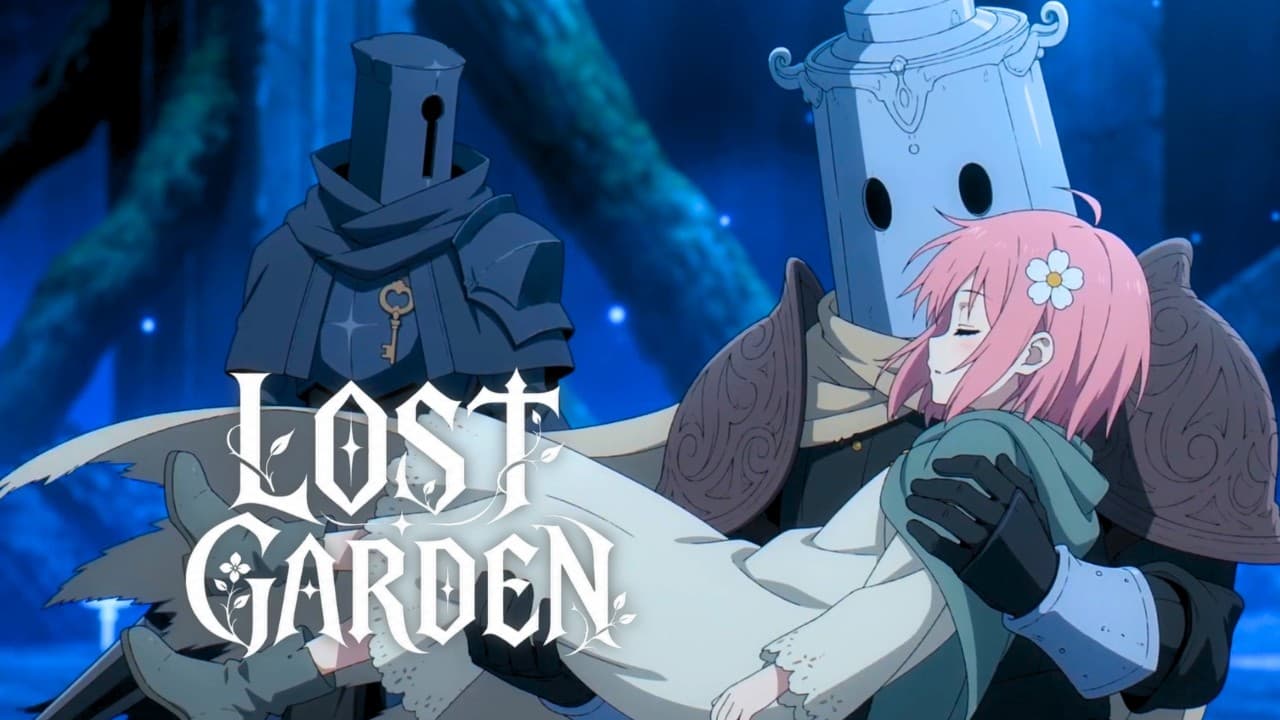
Lost Garden · Episode 2

Independent guide. ScreenWeaver does not organise the LundinStudio AI Film Festival and is not affiliated with LundinStudio. Rules read on 1 October 2026. Official festival site

Available today in ScreenWeaver: free screenwriting, and a storyboard generated from your screenplay with Storyboard Beta, $9.99 a month.

Rolling out: video generation of each shot, powered by Seedance, with the Filmmaker plan.

The call at a glance

What the 2027 season asks for.

LundinStudio is a small studio in Helensburgh, New South Wales, and this is its third annual AI film festival. It runs one category, Best AI Short Film, and the rules read like a brief.
Edition
Third annual, 2027 season
Deadline
21 January 2027
Event
18 and 19 March 2027, with a live stream of ten finalists
Category
One: Best AI Short Film
Running time
1 to 10 minutes, credits included
AI requirement
All visual footage AI-generated, from an original script
Delivery
MP4 or MOV, FullHD or 4K. English subtitles for other languages
Prizes
A laurel, and up to $300 plus your submission fee

Source: aifilmfestival.com.au (home, How It Works, Jurors and Awards pages), read on 1 October 2026. The entry fee is not shown on those pages, and FilmFreeway could not be read. The GenFlix listing shows a prize of AU$150: confirm the amount with the organiser.

Key dates

Sixteen weeks, one stage.

The 2027 season is open and the deadline is 21 January. <b>Count back from the middle of January</b> and leave a week for files and subtitles.
  1. 16 Apr 2026

    Season opens

    Entries are taken on FilmFreeway and on GenFlix, the two platforms the festival links to.

  2. 21 Jan 2027

    Final deadline

    The last day to submit. The pages we read give no hour and no time zone, so send a day early.

  3. Before the event

    Ten finalists chosen

    Of all the submissions, ten finalists are selected and showcased. The site does not say when they are told.

  4. 18 to 19 Mar 2027

    Live event stream

    A live stream with the finalists and the jurors. In 2026 it ran on 21 and 22 March, with showings timed for Los Angeles, Berlin and Sydney.

How films are judged

Five points, in the festival's own order.

The festival lists what AI short films are judged on, and character consistency has a line of its own. No weights are published, so read the list as five equal bets.
  • Storytelling

    Ten minutes at most, so one character, one want and one change. The script must be original, which also means no remake of a known story. Write it before you generate it.

  • Character consistency

    The face, the costume, the build and the voice must stay the same from shot 1 to the last. This is the point where AI films fail most visibly, and the festival names it. Fix a reference per character and use it every time.

  • Pacing

    Shot lengths and cut points that serve the story, not the render. A generated shot rarely needs more than four to six seconds. Cut the second half of every shot that is only there to be pretty.

  • Cinematography

    Framing, lens language, light and movement. A film that keeps one lens logic reads as shot by someone. A film that changes it every cut reads as generated.

  • Overall production value

    Sound, subtitles, titles, a clean master at FullHD or 4K. This is where small fixes pay: a mix, a music licence, a clean title card.

All five count together. A beautiful film whose hero changes face fails the second point and drags the rest.

Who decides

Four named people and a live stream.

Unlike some AI festivals, LundinStudio publishes who is on the panel. The site gives names, and no biographies.
  • The named panel

    The Jurors page lists Dennis Lundin as Festival Director, and three Festival Judges: Russell Palmer, Adam Bennett and Niels Kollerup. Nothing more is said about them.

  • Ten finalists on stage

    Of all the submissions, ten finalists are showcased on a live stream. In 2026 the winner came from the ten nominated shorts, so you have to reach the ten first.

  • Prize partners

    The Awards and Prizes block credits Melies AI and Saga AI. The site does not say what each one gives, so do not count on a subscription.

  • A small festival

    The prizes are modest: a laurel and up to $300 plus your submission fee. The real value is the laurel, the live stream and a finished short in a global programme.

The 2026 winner

What The Story of Water teaches.

The 2026 award went to The Story of Water. The festival's page describes Dr Joyce, a woman whose life has been defined by water, from her childhood to a flood that changed it. It calls the film a narrative that moves between the personal and the infinite, with water as a witness, a question and a way home. The page gives no running time, director or tool list, so these lessons come from that description only.

  1. 01

    One element carries the film. Water is the witness, the question and the way home. A single recurring element also gives a generator a stable anchor.

  2. 02

    A life across time is a consistency test. From childhood to a flood, Dr Joyce must stay recognisable at different ages. If your story spans years, plan one reference per age.

  3. 03

    Intimate and vast at once. The festival's wording points to a personal story that opens onto something bigger. A small person in a large frame is a strength of AI imagery.

  4. 04

    Ten films reached the stage. The 2026 event showed ten nominated shorts, with sessions timed for Los Angeles, Berlin and Sydney. Design the film for a screen anywhere and for sound on, in English or subtitled.

Page to screen

Lost Garden: the same knight in every shot.

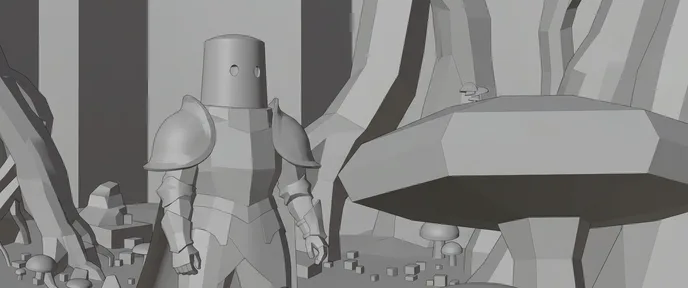
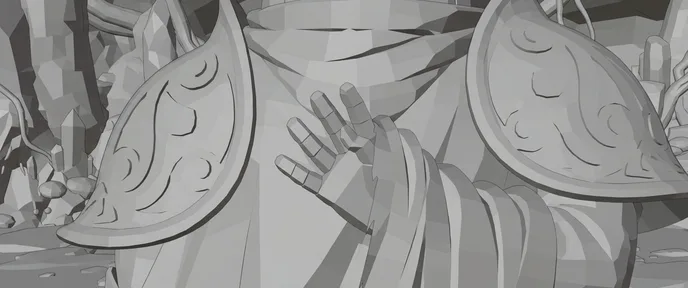
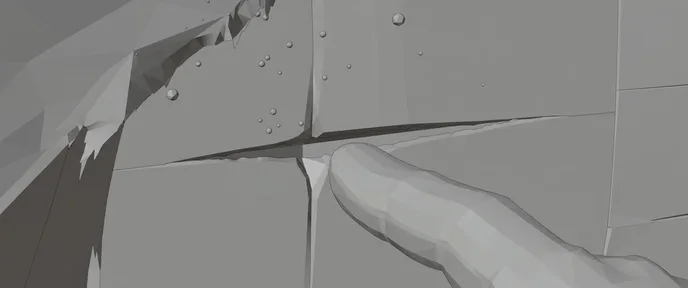
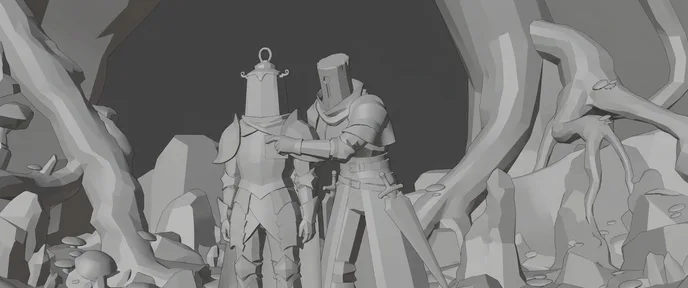
Character consistency is a named criterion here. This is the opening of Lost Garden, episode 2, an animated series by the ScreenWeaver team: the screenplay page, then each shot as a storyboard frame and as the final image, with the same lantern-helmed knight and the same companion across the six cuts.

Logline. A newborn knight whose inner light is leaking away crosses a world that has stopped hoping, to find the one blacksmith who can seal his armor.

Screenplay · episode 2 · page 1

INT. UNDERGROUND CAVERN - LOWER PATH - CONTINUOUS

Blue mushrooms the size of houses. LANTERN, a small knight with a lantern for a helm, walks alone.

He presses a hand to his chest. Sparks of light slip between his fingers.

SERRURE

Hold on. You're losing something.

Serrure lifts the edge of the cloak. A gash in the armor. Blue light leaks out like smoke.

SERRURE

That's your energy. What keeps you standing.

He grips Lantern's shoulder. Two knights alone among the crystals.

SERRURE

A suit that leaks goes out. Eventually.

Under the giant mushrooms, the road climbs into the dark.

SERRURE

So. We follow the road.

Serrure points the way. Lantern follows.

CUT TO:

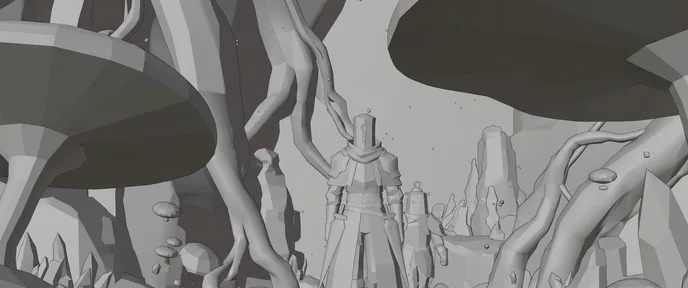
  1. A small knight with a lantern helm stands by a giant glowing blue mushroom in a crystal cavern
    Storyboard frame of the same wide shot, in grey
    01

    Wide · the world

    Wide shot, Lantern alone by a giant glowing blue mushroom, crystal cavern, roots, drifting spores, cold blue light

  2. Close-up of an armored chest under a cream cloak, a gloved hand, a spark of light
    Storyboard frame of the chest close-up, in grey
    02

    Close-up · the chest

    Close-up on Lantern's chest, his gloved hand pressed to the cloak, a spark of light escaping between the fingers

  3. A torn gash in an armor plate leaking bright blue light, a finger pointing at it
    Storyboard frame of the wound insert, in grey
    03

    Insert · the wound

    Extreme close-up, Serrure's finger near a torn gash in the back plate, blue light leaking out like luminous smoke

  4. Two armored knights side by side, one with a hand on the other's shoulder, in a crystal cavern
    Storyboard frame of the two-shot, in grey
    04

    Two-shot · the bond

    Medium two-shot among crystals and roots, Serrure's hand on Lantern's shoulder, faceless armors, emotion through posture only

  5. Two small knights walk beneath two giant glowing blue mushrooms
    Storyboard frame of the wide shot, in grey
    05

    Wide · the scale

    Wide low angle, the two knights tiny beneath two giant glowing mushrooms, blue crystals in the foreground, mist

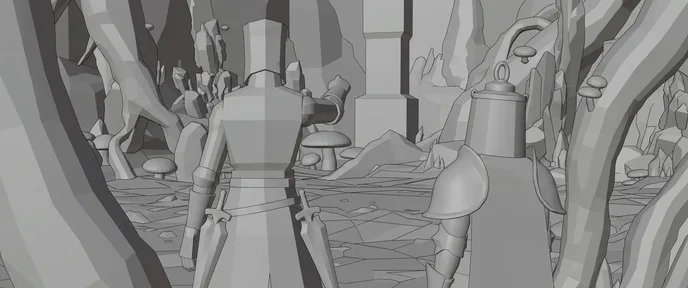
  6. Seen from behind, a tall dark knight points ahead while the small lantern knight looks on
    Storyboard frame of the over-the-shoulder shot, in grey
    06

    Over the shoulder · the road

    Over-the-shoulder from behind, Serrure points ahead into the cavern, Lantern beside him, roots framing the path

Lost Garden, episode 2 runs 21 minutes, twice the festival's cap, and is made of long scenes like this one. A 9 minute cut would take one scene arc and its two main characters. An animated series by the ScreenWeaver team made with Seedance; episode 1 was a finalist at the AI London Festival. The player opens on this opening scene.

The script

Nine minutes, credits included, in five movements.

The cap is 10 minutes with credits. Aim for 9 so the edit has room. That is about 8 screenplay pages and 70 to 100 shots of 4 to 6 seconds, with 20 seconds of credits.
  1. 0:00 to 0:30

    The face

    Open on your hero in a clear light, so the audience learns the face that must stay the same.

  2. 0:30 to 2:00

    The want

    What the hero wants and what stands in the way. One place, one costume.

  3. 2:00 to 6:00

    The road

    Three escalating scenes. Change the light and the set, never the character.

  4. 6:00 to 8:00

    The choice

    The hero decides, and pays. Use the close-ups here, since faces are what is judged.

  5. 8:00 to 9:00

    The echo

    An image that answers the first one, then 20 seconds of credits.

Count credits in the 10 minutes. Title card, credits and logos all run on the clock, so keep them short.

Week by week

From the first line to the form.

Sixteen weeks from 1 October, which is generous for a 9 minute film. Spend the first half on the script and the characters, because the second half is only generation and edit.
  1. 01

    October 2026

    Idea and logline

    Ten loglines, one winner, built on a single recurring element and one hero. Test it on three people.

  2. 02

    November 2026

    Script and character bible

    Write the screenplay free in ScreenWeaver, in industry format. Then fix the hero: face, build, costume, voice, and each age if the story spans years.

  3. 03

    Early December

    Storyboard every shot

    Generate the shot breakdown and storyboard, then set framing, angle, movement and duration for each shot. Count the shots: stay under a hundred.

  4. 04

    December 2026

    Generate the footage

    Scene by scene with Seedance in ScreenWeaver as video generation reaches your plan, always from the same references. Reject any take where the face drifts.

  5. 05

    Early to mid January 2027

    Edit and sound

    Cut to 9 minutes, credits included. Mix dialogue, music and effects, and license every track.

  6. 06

    Mid January

    Subtitles and master

    Add English subtitles for non-English dialogue, and export MP4 or MOV in FullHD or 4K. Watch it once on a phone.

  7. 07

    By 21 January 2027

    Submit

    Choose FilmFreeway or GenFlix and read the terms there. Check the prize on the platform, as the GenFlix listing differs from the official site.

Ways to be rejected

Eight ways to be out before the panel.

Six conditions are printed on the site. Two more come from the platforms. Every one is checkable before you submit.
  • A shot that is not generated

    All visual footage must be AI-generated. A stock clip, a screen capture or a filmed insert breaks the rule, even for a single shot.

  • A script that is not yours

    The film must be based on an original script. An adaptation of a story under copyright, or a recreation of a known film, is not original.

  • Eleven minutes with the credits

    The limit is 10 minutes including credits. Slow end titles, a long logo animation or a post-credit scene use that time.

  • A hero whose face moves

    Character consistency is judged. A face that ages, changes hair or loses a scar between shots is the most visible failure in AI cinema.

  • Music and assets you cannot license

    You must own the copyrights or hold licence agreements for what you use. Generated music still needs terms you can show.

  • Foreign dialogue, no subtitles

    Non-English dialogue must carry English subtitles. Burn them in or attach them in the platform's format.

  • The wrong file

    Only MP4 or MOV, in FullHD or 4K. Check the codec on a second computer before you upload.

  • Trusting one page

    The prize amount differs between the official site and the GenFlix listing, and no entry fee is shown on the pages we read. Confirm both with the organiser before you pay.

Why ScreenWeaver

All-AI visuals need a pipeline, not a prompt.

The festival asks for an original script and footage that is entirely generated. ScreenWeaver was built for exactly that brief: screenplay, storyboard and footage in one connected project.
  • A script first

    The festival requires an original script, and ScreenWeaver starts there. Write in industry format, free, then derive the shot breakdown from it.

  • Characters that carry

    The hero, the sets and the references stay attached from one shot to the next. That is the answer to the consistency criterion, not a patch after the fact.

  • Seedance 2.0 and 2.5 inside

    Footage is generated with Seedance in ScreenWeaver. The festival imposes no tool, so you can also mix in other generators as long as every visual is generated.

  • Start for free today

    Writing is free on the Screenwriter plan, $0 and no expiry. Storyboard Beta is $9.99 a month. Video generation comes with the Filmmaker plan, now rolling out.

Real productions

International festival-recognized films have been written and produced with ScreenWeaver.

ScreenWeaver is already being used as a creative workspace for real AI film productions, from cinematic shorts to animated series pilots selected, nominated, and awarded by international festivals.

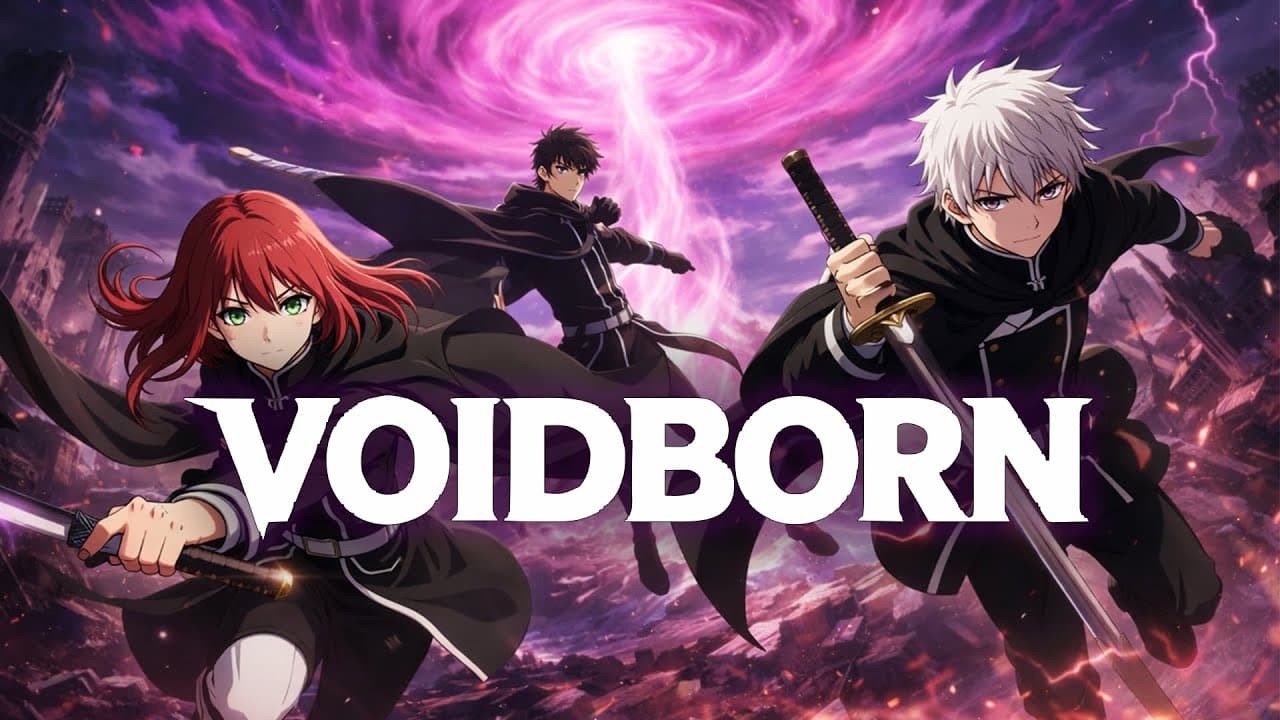
  • Video thumbnail for VOIDBORN

    VOIDBORN

    AI animated / cinematic short

    Festival recognition

    • 1st Place Silver

      Mondial Chroma Awards

    • 2nd Place Dreamina

      Mondial Chroma Awards

    • Award Winner

      Seoul International AI Film Festival

  • Video thumbnail for Les Fils du Vinnana

    Les Fils du Vinnana

    AI short film

    Festival recognition

    • Honorable Mention

      Top Quark Film Festival

    • People's Choice Nominee

      Illuminate Oneness of Humanity

    • Nominee

      ALTFF Supershort

  • Video thumbnail for Lost Garden

    Lost Garden

    AI animated series pilot

    Festival recognition

    • Finalist

      AI London Festival

The pipeline

Write. Board. Produce.

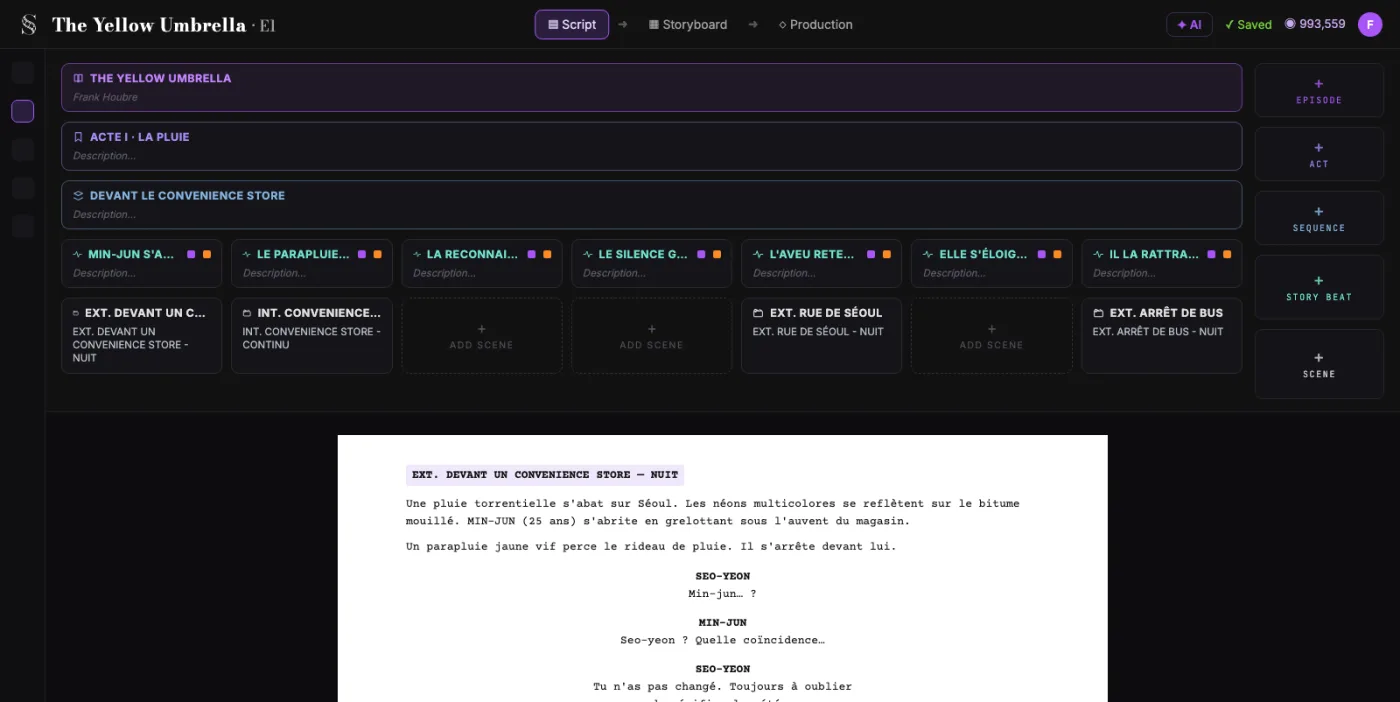
  1. ScreenWeaver screenplay editor: acts, sequences and beats above the formatted script of The Yellow Umbrella

    01The screenplay, enriched

    An industry-standard screenplay editor, and more: a visual outline and beat editor, your writing inspirations (notes, photos, audio) kept next to the page, and an AI researcher to support your writing, not replace it.

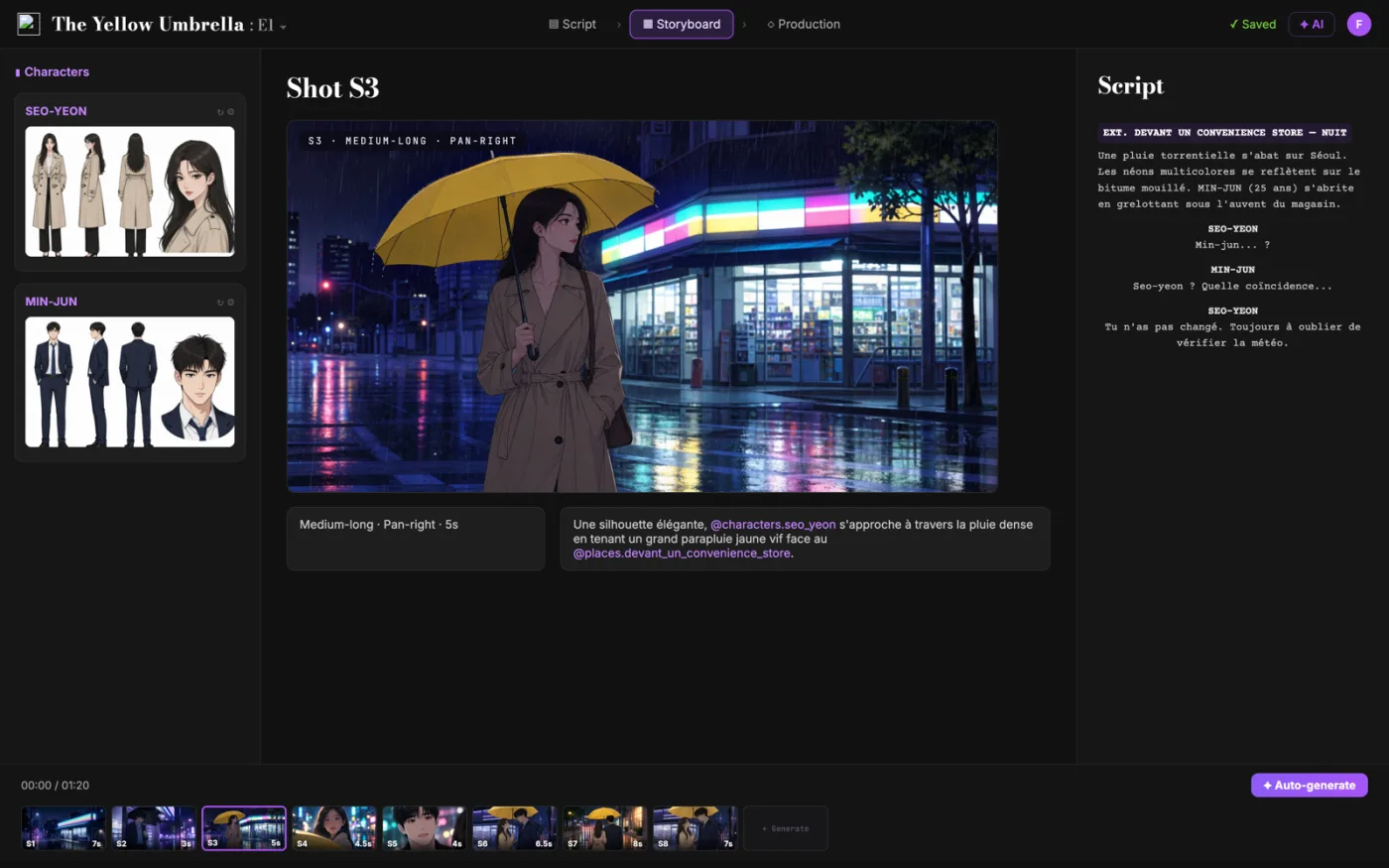
  2. ScreenWeaver storyboard: shot S3 of The Yellow Umbrella with characters, shot settings and the script beside it

    02The storyboard, made easy

    Shot breakdown generated from your screenplay, manual control over every shot (frame, angle, movement, duration), and generative AI previsualization in one click.

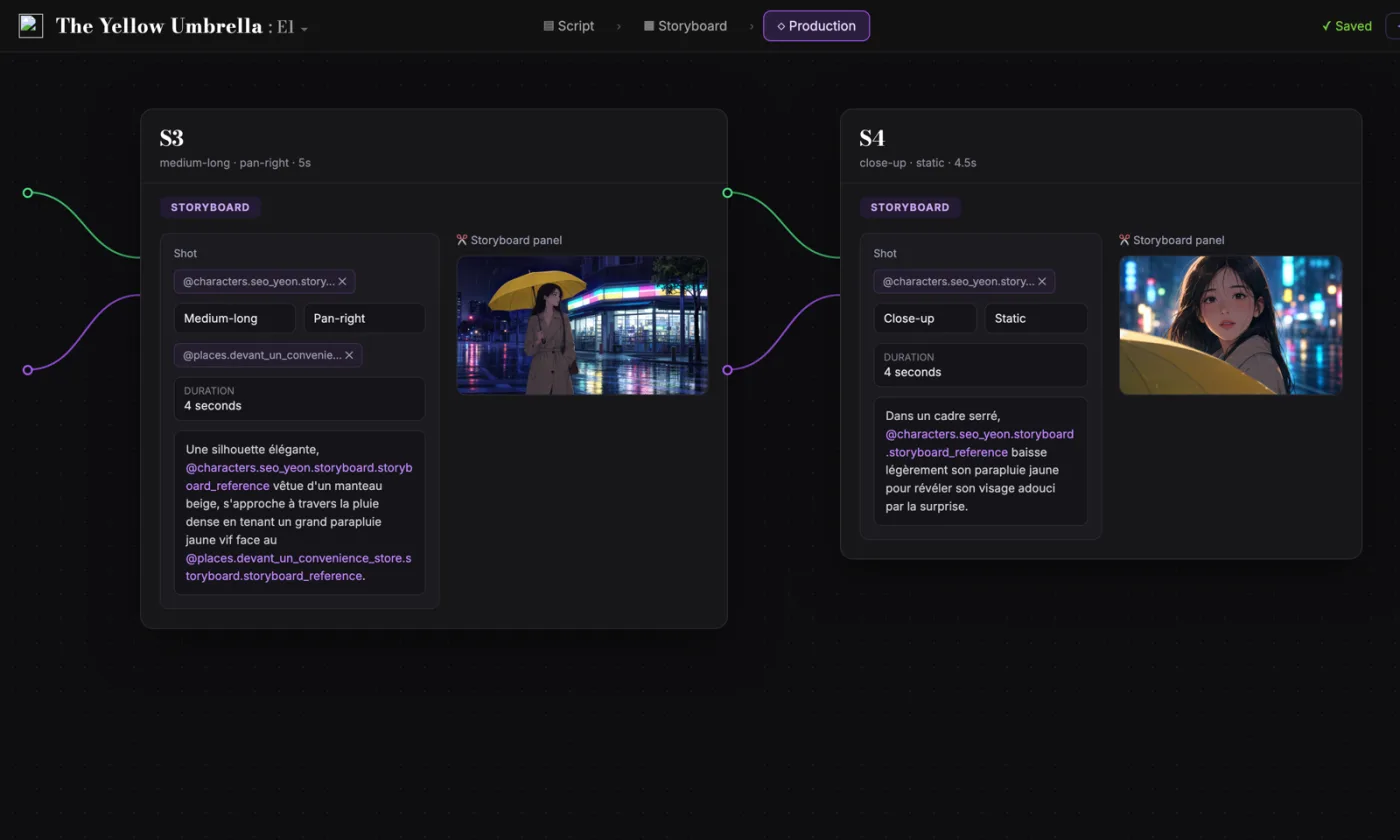
  3. ScreenWeaver production canvas: shots S3 and S4 as connected nodes carrying their storyboard panels and prompts

    03AI production, with finesse

    Footage generation pipelines connected to your screenplay and storyboard. Optimized out of the box, fully editable workflow.

FAQ

LundinStudio AI Film Festival, your questions

How do you win the LundinStudio AI Film Festival?
AI short films are judged on storytelling, character consistency, pacing, cinematography and overall production value. No weights are published. One consistent hero and a finished story in under 10 minutes cover most of it.
How long can the film be?
From 1 to 10 minutes, credits included. Aim for 9 minutes, so the edit keeps a margin.
Must all footage be AI-generated?
Yes. All visual footage must be AI-generated, and the film must be based on an original script. The site also requires you to own the copyrights or hold licence agreements for what you use.
When is the deadline?
21 January 2027. The live event is on 18 and 19 March 2027, where ten finalists are showcased.
What do winners get?
A laurel, and up to $300 plus your submission fee, according to the festival site. The site says more is coming. The GenFlix listing shows AU$150, so confirm the amount.
Can ScreenWeaver make a film that fits the rules?
Yes. No tool is imposed, and all visuals must be generated, which is how ScreenWeaver works. Its footage pipelines run on Seedance 2.0 and 2.5. Any shot you add from another source must be generated too.
Who is on the jury?
The site names Festival Director Dennis Lundin and three Festival Judges: Russell Palmer, Adam Bennett and Niels Kollerup. No biographies are given.
Where do I submit and what does it cost?
On FilmFreeway or on GenFlix, the two platforms the site links to. The pages we read do not show the entry fee, so check it on the platform before you pay.

Sixteen weeks. One hero. One page.

Write the screenplay free today. Fix your hero, storyboard the film, then generate it with Seedance.