Inspiring Asia Micro Film Festival 2026 · Guide

How to win the Inspiring Asia Best AI Film Award.Six minutes. One theme. $10,000.

The rules, the five judging criteria and the AI disclosure the festival requires. The 2026 entry window closed on 6 July and the Grand Final is on 25 October 2026 in Manila. Here is how to be ready for the next call.
  • Grand Final 25 October 2026
  • 3 to 6 minute films
  • Tools must be disclosed
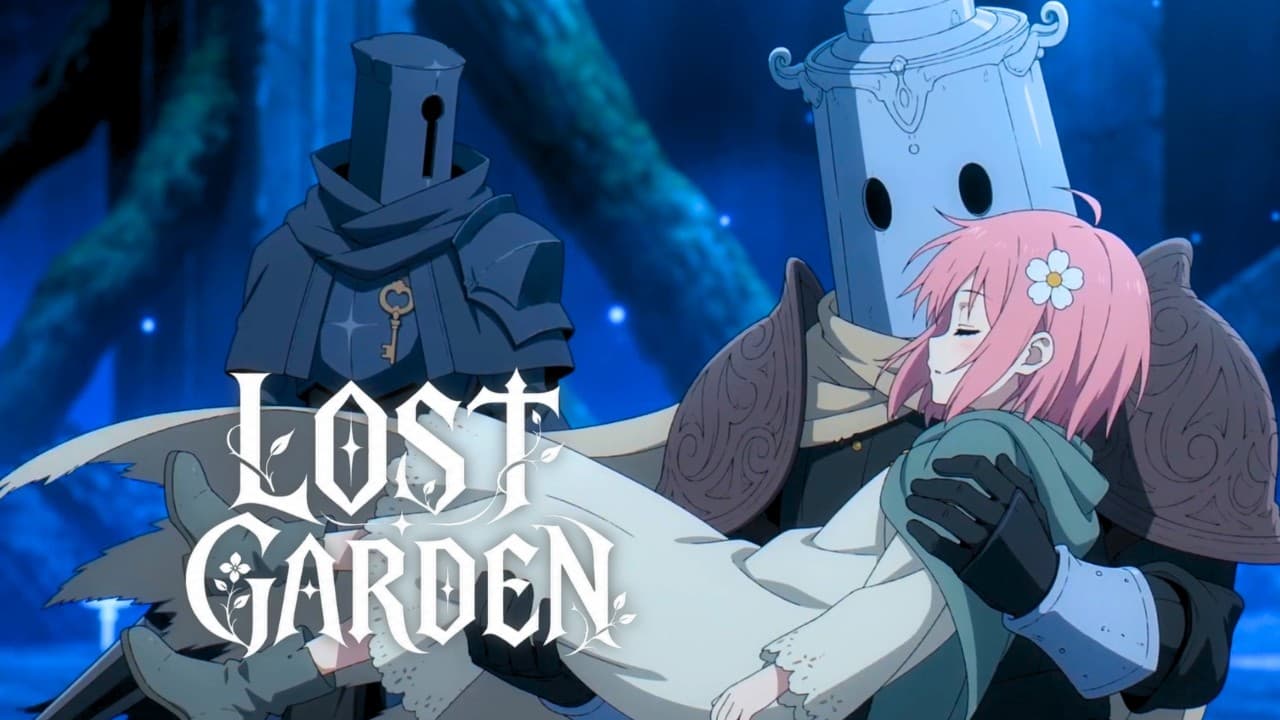
Lost Garden · Episode 1

Independent guide. ScreenWeaver does not organise the Inspiring Asia Micro Film Festival and is not affiliated with Inspiring Asia or its organising partners. Rules read on 1 October 2026. Official AI Film page

Available today in ScreenWeaver: free screenwriting, and a storyboard generated from your screenplay with Storyboard Beta, $9.99 a month.

Rolling out: video generation of each shot, powered by Seedance, with the Filmmaker plan.

The rules on one card

What Inspiring Asia asks of an AI film.

This is a social impact festival that added an AI prize, not an AI festival. The film has to be about the year's theme and well made. The 2026 theme is Community Empowerment, and the next one is not announced.
2026 theme
Community Empowerment: Belonging, Resilience, Thriving
Entry window
Closed. Direct submissions ended on 6 July 2026
Grand Final
25 October 2026, Manila, Philippines
Best AI Film prize
$10,000 at the Grand Final
Length and format
3 to 6 minutes, 16:9, MP4, MOV or AVI
AI share
Fully AI, AI-assisted or hybrid
Entry fee
None mentioned on the official pages
Where to submit
Your regional portal, or Other Regions

Source: the 2026 festival page, the 2026 AI Film page, the Other Regions page and the 2025 AI Film page on inspiringasia.org, read on 1 October 2026. The 2027 call is not announced.

The festival's AI policy

Four rules about how you use AI.

Inspiring Asia has a written AI policy on its AI Film page. It welcomes AI and asks for transparency and rights in return.
  • Separate tracks

    The festival says AI should complement and not replace human creativity, and so it created separate tracks for AI Films and Micro Films. An AI Film entry is reviewed under the Best AI Film Award only. It is not considered for the Best Micro Film Award.

  • How much AI is allowed

    Any amount. The page says a film may be fully AI-generated, AI-assisted, or a hybrid that combines human direction with original footage, animation, design, editing, sound or generated elements. What matters is a clear creative vision tied to the theme.

  • What you must disclose

    Every AI Film entry must name the primary AI tools or platforms used, describe the extent of their use, and explain how AI was integrated into the process. It must also confirm you hold the rights and permissions for all content in the film.

  • The rights declaration

    If the film contains AI-generated or AI-assisted content, you confirm it was made with appropriate rights, permissions and ethical consideration, and that it does not knowingly infringe the rights, likeness, voice, image, music or copyrighted work of anyone else.

Key dates

The 2026 call is shut. The final is still ahead.

Entries closed in July and the AI semi-final was set for 26 September. For the next edition, <b>the 2026 calendar is the best guide</b>: a spring announcement and a deadline in the first days of July.
  1. 23 Mar 2026

    Call for submissions

    The call was announced on 23 March. The submission portals opened in May, regional and direct.

  2. 6 Jul 2026

    Direct deadline

    Final deadline for direct submissions. Regional deadlines varied by country and were announced separately.

  3. 1 Sep 2026

    Regional finalists

    Regional judging ran from July to August, and the finalists were announced on 1 September.

  4. 26 Sep 2026

    AI semi-final

    The semi-final round for the Best AI Film category was scheduled for 26 September.

  5. 25 Oct 2026

    Grand Final

    The award ceremony and Grand Final in Manila. Best AI Film is one of three prizes, next to Best Micro Film and Best Project.

How films are judged

Five criteria, and the last one is the theme.

The festival lists five criteria with a definition for each and publishes no weights. The fifth makes it different from a pure AI contest.
  • Creativity and originality

    The uniqueness of the concept, the artistic vision and the use of AI tools. Pick a community story that nobody tells in a generated film, and use AI where it lets you show what a camera could not.

  • Technical execution

    The quality of the AI-assisted production: image generation, animation, VFX, sound design, editing and how they fit together. The definition asks that technology serve the filmmaker's vision.

  • Storytelling and narrative

    Structure, pacing, character development and emotional resonance. In six minutes that means one person, one change, and an ending the audience feels.

  • Cinematic excellence

    Composition, cinematography, art direction, editing, sound and atmosphere, together with the audience experience. A consistent look from the first to the last shot reads as direction.

  • Social impact and relevance

    The film's ability to raise awareness, inspire reflection or make people want to act on the theme. A film that is beautiful and off theme loses ground here.

Criteria quoted from the 2026 AI Film page. The festival also says the film must express a clear creative vision that connects meaningfully with the festival theme.

Who decides

A committee, a regional round, no names.

The festival publishes no jury list for the AI Film Award. It does describe the route a film takes, and who supports the AI category.
  • The regional phase

    Each regional festival judges and honours its local entries. Regional finalists advance to the main phase. Prizes at the regional level vary and are announced by each region.

  • The direct track

    Direct submissions made through Other Regions are reviewed centrally by the Inspiring Asia Committee, shortlisted against the judging criteria, then compete with regional finalists in the main phase.

  • An AI partner

    MiniMax Hailuo is the AI Innovation Partner. AI Film entrants can get 2,000 credits for Hailuo by giving their UID. The festival says the UID is used only for credits and does not affect the judging.

  • A note from 2025

    The 2025 call said the AI award was judged exclusively by MiniMax. The 2026 pages do not repeat this and name no jurors. Ask the organisers who sits on the AI panel if it matters to your plans.

The theme

Community Empowerment, in four words.

The festival defines the 2026 theme as people drawing on their collective strengths to shape their futures. Its tagline is Belonging, Resilience, Thriving. The theme changes every year, so these cards are a model of how to read one.
  • 01

    Belonging

    People bound not by borders but by belonging, mutual care and shared purpose.

    Show a group acting together in a place that feels real. Keep one recurring face and one recurring place so the community is recognisable.

  • 02

    Resilience

    The strength to keep going, to build back, to hold on with dignity and hope.

    A setback that is shown, not told. Let one gesture of repair carry the middle of the film.

  • 03

    Thriving

    Not only survival: communities that grow, take part and flourish.

    End on an image of growth that audiences can describe, since the festival wants films that inspire action.

  • 04

    Voices often unheard

    The theme page asks for work that amplifies voices that are too rarely heard.

    Be careful with generated people who stand for real communities. Say what is imagined and avoid caricature.

The 2025 edition

What changed from 2025 to 2026.

The Best AI Film Award existed in 2025 as well, with a different theme and a looser format. Comparing the two calls shows how the festival moves its rules from year to year.

  1. 01

    The theme changes every year. The 2025 theme was Youth Mental Well-being, under the call to action To Be Seen. In 2026 it is Community Empowerment. A film made for one year does not fit the next.

  2. 02

    The length tightened. The 2025 call asked for 2 to 7 minutes and recommended 5. The 2026 call asks for 3 to 6. Aim for 5 and you are safe in both.

  3. 03

    The AI route is clearer. In 2026 the festival publishes a written AI policy, a disclosure list and a rights declaration, and routes AI films through regional portals or Other Regions.

  4. 04

    The prize stayed at $10,000. The Grand Final prize for Best AI Film was $10,000 in both editions. The 2025 final was in Singapore on 25 October 2025. We could not verify the 2025 winner on an official page.

A scene on the theme

Lost Garden: a small knight, a giant hand.

The Source Tree scene from Lost Garden, episode 1, an animated fantasy by the ScreenWeaver team, made with Seedance. A tiny guardian stands in the open palm of something far larger. That is belonging and resilience told in six shots, and it answers the fifth criterion without a word of explanation. It would be cut to about five minutes for this festival.

Logline. A small knight wakes up in a dead world and learns he is the last guardian of a seed that could bring the garden back.

Screenplay · episode 1 · the Source Tree

INT. HEART OF THE ROOTS - NIGHT

Living roots coil around LANTERN and pin him down. A voice stops them.

THE SOURCE TREE

Stop. He is my guest.

A giant woman of roots and white lilies opens her arms over the cavern.

Her eyes open. Blue, and vast.

THE SOURCE TREE

Welcome to you, Lantern Knight.

She lifts him in her palm, like a lamp.

THE SOURCE TREE

Do not be afraid. I will not harm you.

In the dark, a seed of light opens. Inside the flower, a sleeping child.

THE SOURCE TREE

You must find yours. Protect her.

CUT TO:

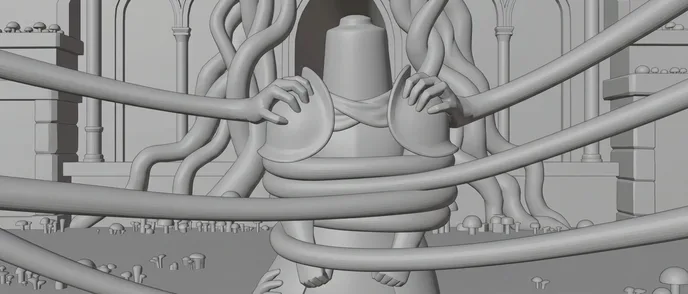
  1. A small lantern-helmed knight bound by thick roots in a ruined hall
    Storyboard frame of the trap shot, in grey
    01

    Medium · the trap

    Medium shot, Lantern bound by thick living roots in a ruined hall, glowing blue mushrooms on the floor, cold light

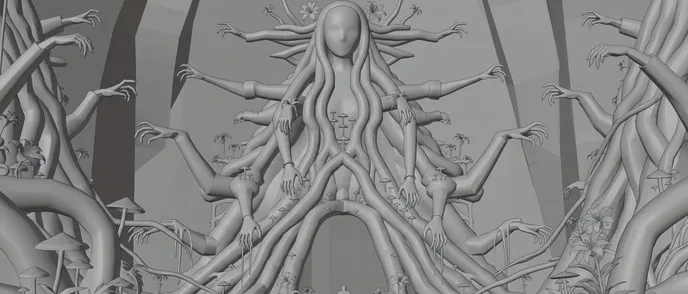
  2. A giant woman made of roots and white lilies spreads her many arms in a dark cavern
    Storyboard frame of the wide shot, in grey
    02

    Wide · the Source Tree

    Symmetrical wide shot, a giant woman made of roots, arms spread with many hands, white lilies, blue glyphs

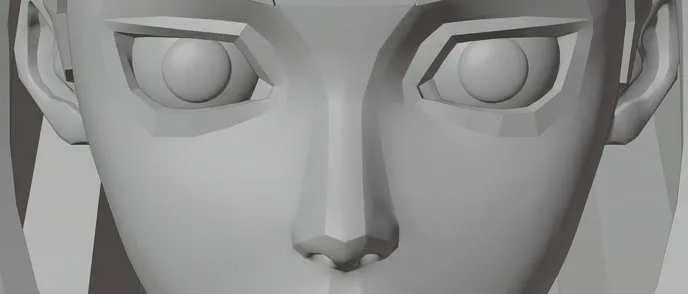
  3. Extreme close-up of a giant pale face with piercing blue eyes
    Storyboard frame of the eyes close-up, in grey
    03

    Extreme close-up · the eyes

    Extreme close-up on the giant's face, piercing blue eyes opening, pale skin, soft light from below

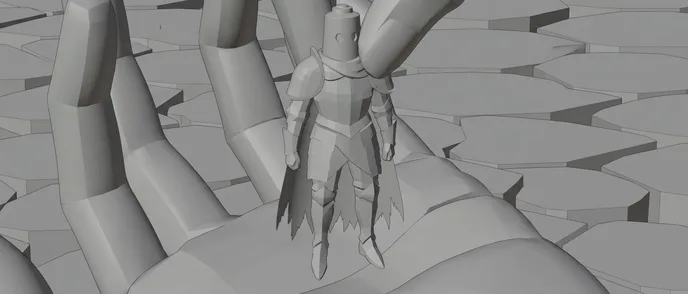
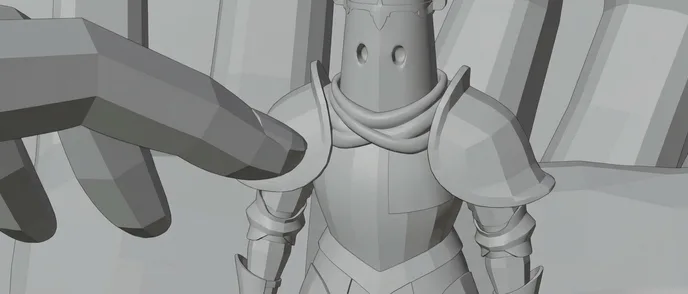
  4. A tiny armored knight stands in the middle of a giant open hand
    Storyboard frame of the palm shot, in grey
    04

    High angle · the palm

    High angle, the tiny knight standing in the center of a giant open palm, stone floor far below

  5. A giant fingertip gently touches the chest of a small armored knight
    Storyboard frame of the touch close-up, in grey
    05

    Close-up · the touch

    Close-up, a giant fingertip gently touches the knight's armored chest, faceless helm, emotion through posture

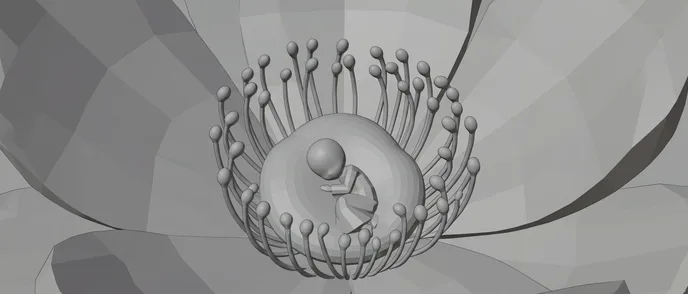
  6. A sleeping pink-haired child curled inside a glowing blue flower
    Storyboard frame of the seed insert, in grey
    06

    Insert · the seed

    Top-down insert, a glowing pale blue flower opening, a sleeping child with pink hair curled inside

Lost Garden, episode 1, 17 minutes, almost three times the 6 minute ceiling. A festival cut would keep this scene and trim around it. The first episode was an AI London Festival finalist. The player opens on the Source Tree, about seven and a half minutes in.

The script

A 5 minute film in four movements.

The format is 3 to 6 minutes. Aim for 5 minutes: about five screenplay pages and 50 to 60 shots of 4 to 6 seconds. That gives a 30 second margin on both sides of the limits.
  1. 0:00 to 0:30

    A place, a person

    Open on the community's ordinary day. Name nobody, show everything: hands, a doorway, a shared task.

  2. 0:30 to 1:30

    What is at stake

    One person wants to change something small for the group. State it in action.

  3. 1:30 to 4:00

    The group acts

    Others join, one at a time. Hold the same palette and the same faces, so the community is recognisable.

  4. 4:00 to 5:00

    The change

    Show the result as an image, not a speech. End with the audience's question: what can I do?

A film that is not in English needs English subtitles. Prepare a landscape poster, a portrait poster and at least three high-resolution stills, which the submission asks for.

Month by month

From the final to the next call.

The next theme will be public only when the call opens, around March if 2026 repeats. This plan builds what does not depend on the theme, then moves fast when it is announced.
  1. 01

    October 2026

    Watch the final

    Look up the Grand Final results after 25 October and note how the winners use their six minutes. Reread the AI policy and the disclosure list.

  2. 02

    November and December 2026

    A bank of true stories

    Collect three community stories you could tell with permission. Write a one line logline for each in the ScreenWeaver logline workshop.

  3. 03

    January and February 2027

    A reusable project

    Set up character sheets, a style guide and a disclosure sheet for tools, extent of use and rights. You will fill them once and reuse them.

  4. 04

    March 2027, expected

    The theme is announced

    Choose the story that fits it best and write five pages the same week. Write free in ScreenWeaver and test the ending on someone outside your circle.

  5. 05

    April and May 2027

    Storyboard and generate

    Draw a frame for each shot, then generate footage with Seedance in ScreenWeaver as video generation reaches your plan. Keep every prompt for the disclosure.

  6. 06

    June 2027

    Finish and submit

    Edit, mix, subtitle in English, export 16:9 and prepare posters and stills. In 2026 the direct deadline was 6 July, so submit early through the right portal.

Ways to lose a spot

Eight traps in the submission form.

The form is checked item by item before any film is judged. Most of these traps are free to avoid, and each one costs a film its place when missed.
  • The wrong portal

    Choose by your country or region of residence, production base or the primary location of your creative team. Vietnam sent AI Film entries to Other Regions in 2026.

  • A film outside 3 to 6 minutes

    The 2026 range is 3 to 6 minutes. A 2 minute teaser or a 7 minute cut, which would have passed in 2025, does not meet it.

  • A vertical format

    The aspect ratio is 16:9 widescreen, at 720p, 1080p or 4K. A 9:16 short drama does not fit this festival.

  • A file outside the range

    The format is MP4, MOV or AVI, and the file must be between 100 MB and 5 GB. A very compressed file or a raw export misses the range.

  • A missing AI disclosure

    You must name the primary AI tools, describe the extent of use and explain how AI was integrated. List every model and tool, including music and voice.

  • No poster or stills

    The submission needs a landscape poster, a portrait poster and at least three high-resolution stills. Export them from final frames, at full resolution.

  • No English subtitles

    There is no language restriction, but a film that is not in English must include English subtitles. A generated voice in another language counts.

  • A film off the theme

    Social impact and relevance is one of five criteria. A film that has nothing to say about the year's theme gives up one of the five, even if it is stunning.

Why ScreenWeaver

No tool is imposed. The story is the test.

Inspiring Asia does not require a model, though its AI partner offers credits for its own. ScreenWeaver gives you screenplay, storyboard and footage in one connected project, which is the shape of a good disclosure.
  • Your disclosure, from the project

    The festival asks for tools, extent of use and integration. Every shot in ScreenWeaver carries its scene, frame and prompt, so the answer comes from the project and not from memory.

  • A community that stays recognisable

    Belonging needs the same faces and places across shots. Characters, locations and references carry from shot to shot, which is what turns a hundred clips into one film.

  • A story first

    Three of the five criteria are about the story and its impact. The Screenwriter plan is free with no time limit, and you can finish the screenplay before spending anything on footage.

  • Start for free today

    Your screenplay can be written for $0, with no expiry. Storyboard Beta is $9.99 a month, and the Filmmaker plan brings Seedance generation, which is still rolling out.

Real productions

International festival-recognized films have been written and produced with ScreenWeaver.

ScreenWeaver is already being used as a creative workspace for real AI film productions, from cinematic shorts to animated series pilots selected, nominated, and awarded by international festivals.

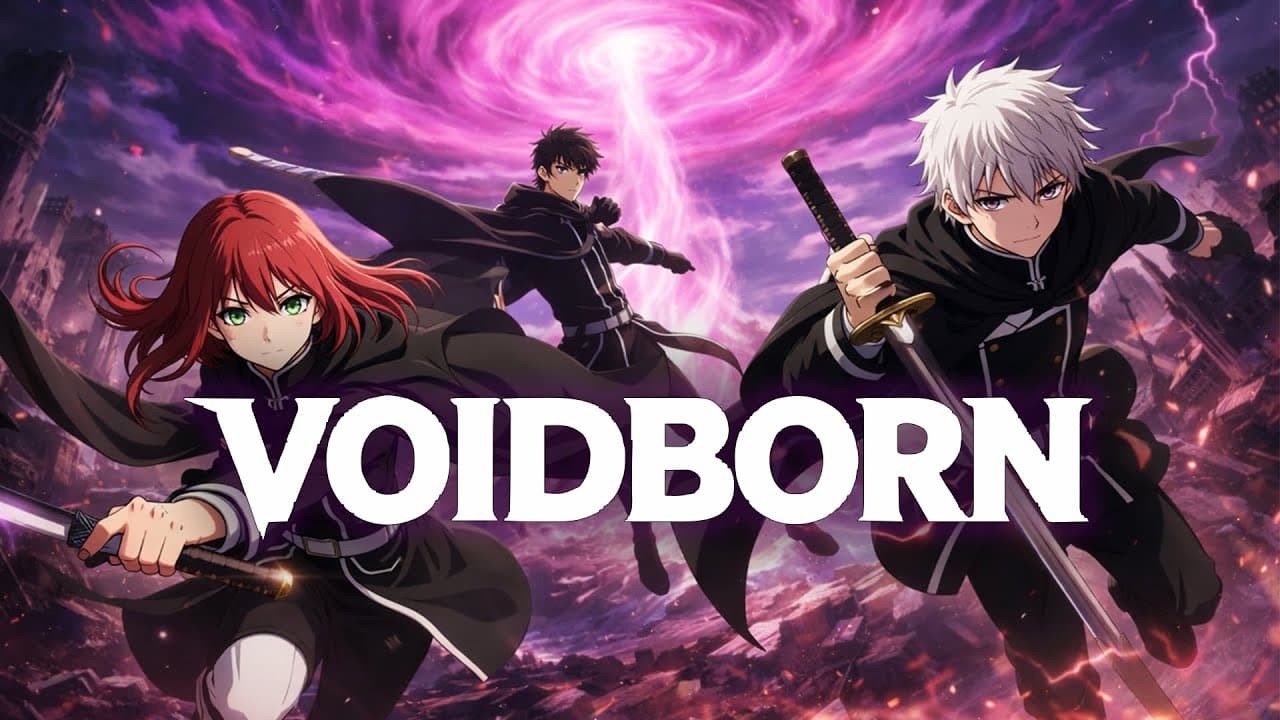
  • Video thumbnail for VOIDBORN

    VOIDBORN

    AI animated / cinematic short

    Festival recognition

    • 1st Place Silver

      Mondial Chroma Awards

    • 2nd Place Dreamina

      Mondial Chroma Awards

    • Award Winner

      Seoul International AI Film Festival

  • Video thumbnail for Les Fils du Vinnana

    Les Fils du Vinnana

    AI short film

    Festival recognition

    • Honorable Mention

      Top Quark Film Festival

    • People's Choice Nominee

      Illuminate Oneness of Humanity

    • Nominee

      ALTFF Supershort

  • Video thumbnail for Lost Garden

    Lost Garden

    AI animated series pilot

    Festival recognition

    • Finalist

      AI London Festival

The pipeline

Write. Board. Produce.

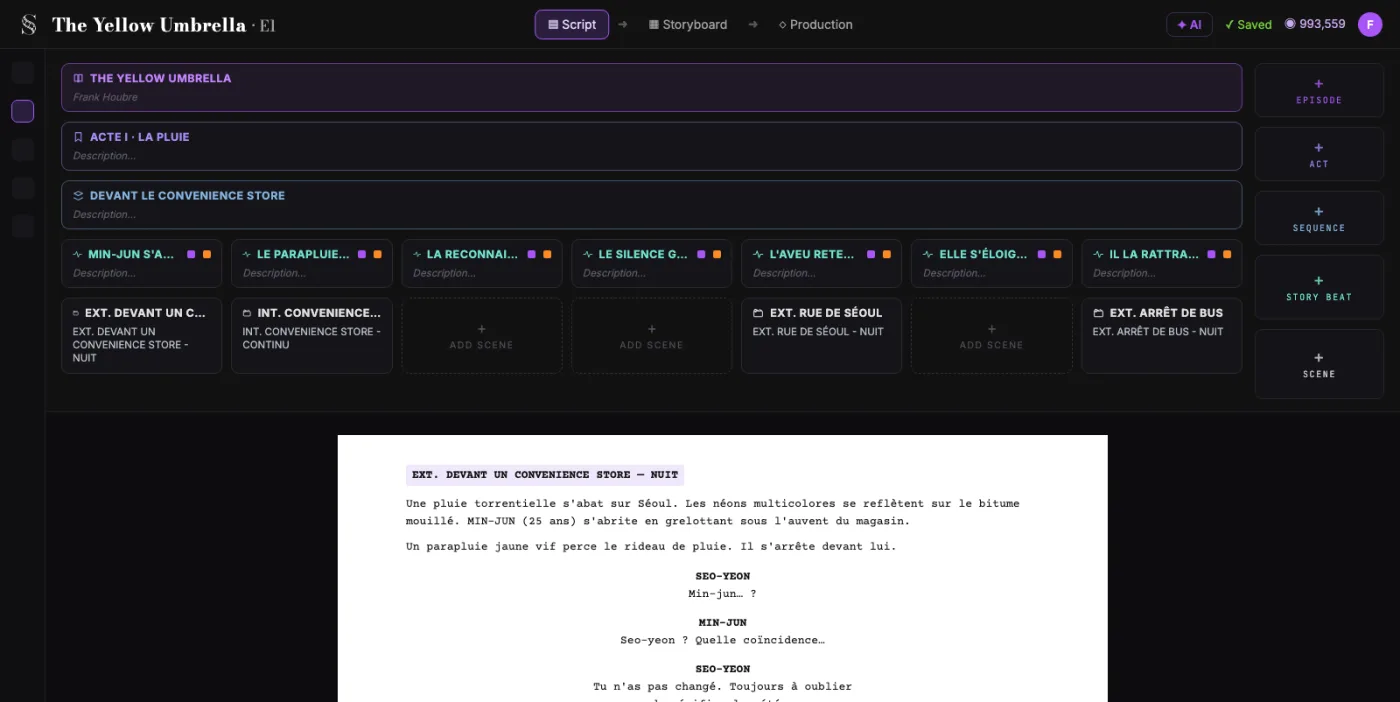
  1. ScreenWeaver screenplay editor: acts, sequences and beats above the formatted script of The Yellow Umbrella

    01The screenplay, enriched

    An industry-standard screenplay editor, and more: a visual outline and beat editor, your writing inspirations (notes, photos, audio) kept next to the page, and an AI researcher to support your writing, not replace it.

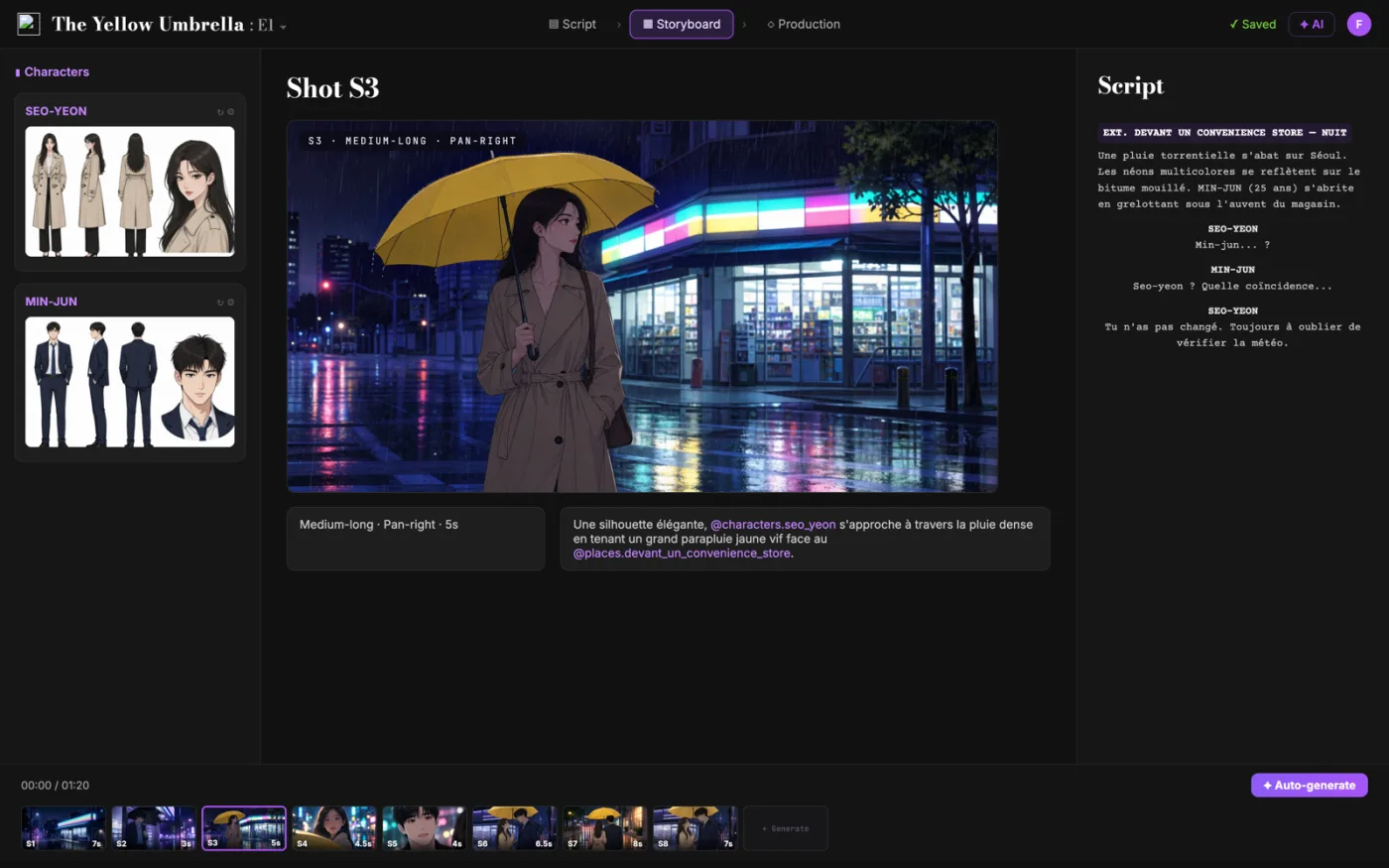
  2. ScreenWeaver storyboard: shot S3 of The Yellow Umbrella with characters, shot settings and the script beside it

    02The storyboard, made easy

    Shot breakdown generated from your screenplay, manual control over every shot (frame, angle, movement, duration), and generative AI previsualization in one click.

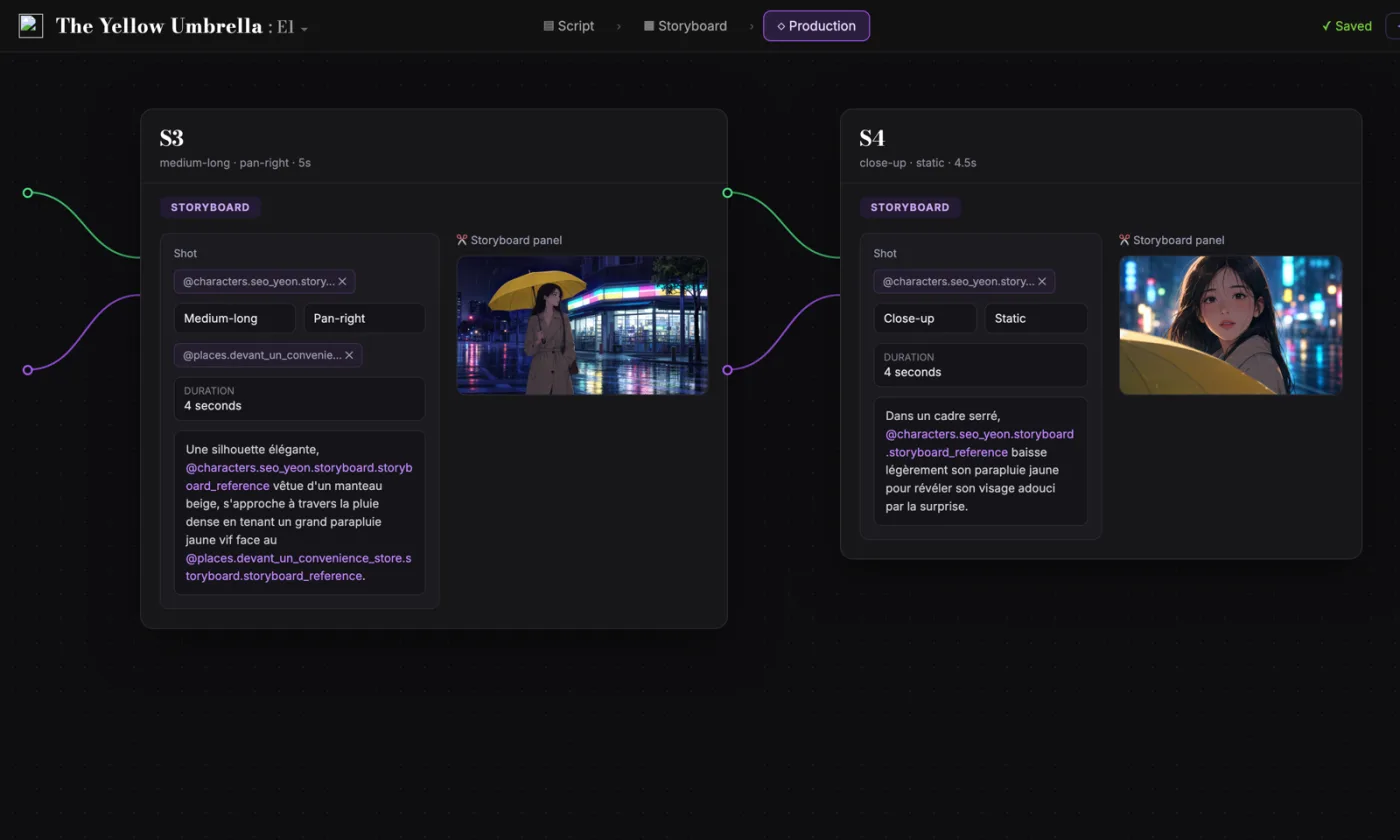
  3. ScreenWeaver production canvas: shots S3 and S4 as connected nodes carrying their storyboard panels and prompts

    03AI production, with finesse

    Footage generation pipelines connected to your screenplay and storyboard. Optimized out of the box, fully editable workflow.

FAQ

Inspiring Asia Best AI Film Award, your questions

How do you win the Inspiring Asia Best AI Film Award?
Make a 3 to 6 minute film on the year's theme that scores on five criteria: creativity, technical execution, storytelling, cinematic excellence and social impact. Disclose your AI tools and confirm your rights. The Grand Final prize is $10,000.
What is the deadline?
For 2026, direct submissions closed on 6 July 2026, and regional deadlines varied by country. The Grand Final is on 25 October 2026 in Manila. No next call is announced.
What is the 2026 theme?
Community Empowerment, with the tagline Belonging, Resilience, Thriving. The 2025 theme was Youth Mental Well-being, and the theme changes each year, so a film made for one theme does not carry over.
How much AI can the film use?
Any. The festival accepts films that are fully AI-generated, AI-assisted or a hybrid. It asks you to disclose the tools, the extent of use and how AI was integrated, and to confirm the rights.
Is there an entry fee?
No fee is mentioned on the official pages. Check your regional portal when the next call opens, since each region runs its own submission process.
Which portal should I use?
The one for your country or region, your production base or the main location of your team. Anyone outside the eight regional festivals uses Other Regions.
Who judges the AI award?
No jury list is published. Regional festivals judge local entries, the Inspiring Asia Committee reviews direct submissions, and MiniMax Hailuo is the AI Innovation Partner. Ask the organisers for the AI panel.
Does the AI award count as the Best Micro Film Award?
No. AI Film entries are reviewed under the Best AI Film Award only and are not considered for Best Micro Film. The Best Project Award goes to a nonprofit or social enterprise, not to a film team.

The theme will change. The craft will not.

Open a free project and keep your story bank ready for the theme.