French New WaveBreaking the rules to feel alive
The French New Wave is a late 1950s and 1960s movement of young directors who shot on real streets with light cameras, natural light and playful editing that broke classical rules. The audience feels the freedom, impatience and improvisation of youth.
Also calledNouvelle VagueGodard styleLeft Bank cinema
Genre looks
Why it works on screen
The style serves characters who refuse to settle: lovers who talk too much, young people drifting, rebels with no clear cause. It favors moments over plot, conversations over action, and moods that change without warning. Jump cuts, direct looks at the camera and sudden digressions keep the audience aware they are watching a film, and that awareness becomes part of the pleasure. A story earns this look when its characters live in the present tense, when the city is a playground, and when the director wants the energy of a first film, even on a tenth.
The shot list line
- Size
- Medium two-shot and close singles
- Angle
- Eye level, loose and casual
- Movement
- Handheld or fluid tracking along streets
- Lens
- Wide to normal, 25mm to 50mm
- Duration
- Variable, with jump cuts inside long conversations
Shoot on real locations with available light, leave room for actors to wander, and let the edit play with continuity.
Screenplay
On the page
Write the spirit, not the technique. New Wave scripts move fast, jump between moods, let characters philosophize over coffee and act on impulse. Keep action lines light and dialogue playful, even contradictory. Do not write jump cuts or freeze frames in a spec script, except FREEZE FRAME when it ends a film or a sequence and truly matters. The editing games are the director's, and they belong in the shot list and the cut.
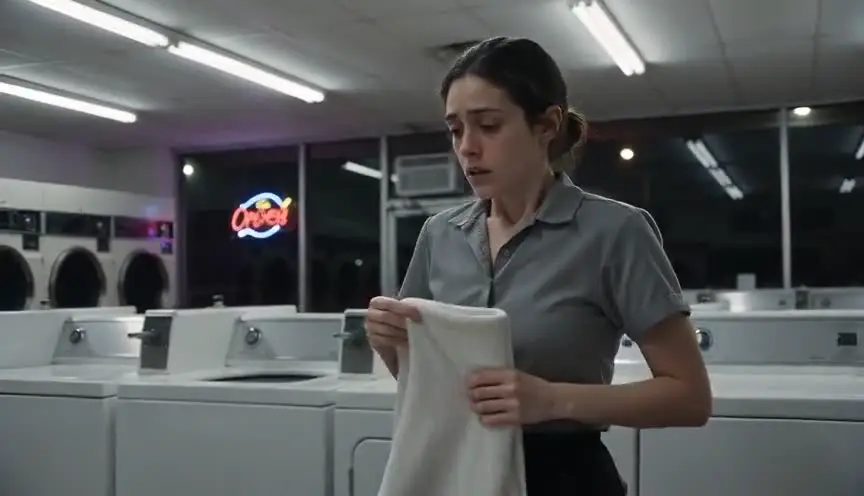
INT. LAUNDROMAT - PLATEAU MONT-ROYAL, MONTREAL - NIGHT
Two dryers turning. A pinball machine blinking alone in the corner.
CLAIRE BEAUDOIN (22, a borrowed man's coat) folds a shirt that is not hers.
MATHIEU LANGLOIS (24, cigarette unlit) sits on the machine next to her, reading her horoscope aloud.
MATHIEU
It says you'll leave a man tonight.
CLAIRE
Then I'd better find one.
Storyboard
In the storyboard
Keep panels loose and quick. Draw a few frames from the same angle with the characters in slightly different positions, and mark them "jump cut". Add a real street background, not a studio set. Use a wavy arrow for handheld and a straight one for a tracking move along a sidewalk. Mark any look to the camera with an eye symbol. Note the light source (window, streetlamp, sun) under each panel.
Pairs well with

Jump cuts inside a conversation compress time and add nervous energy. They became the movement's signature and give a scene an impatient, playful rhythm.
Freezing a final image stops a character in mid-action and hands the question to the audience. After loose, moving scenes, the sudden stillness hits hard.
Reference
Watch it in
Breathless (1960)
Jean-Luc Godard cuts out pieces of continuous conversations, and those jump cuts became the most famous move of the entire movement.
The 400 Blows (1959)
Francois Truffaut films handheld on real Paris streets under natural light, setting the raw, close tone that defined the style.
Jules and Jim (1962)
Truffaut uses freeze frames, whip pans and casual framing to give the love triangle the restless energy of a personal diary.
ScreenWeaver
Set it up in ScreenWeaver
Write your scene with light action lines and lively dialogue, and ScreenWeaver breaks it down into shots automatically. Open each shot and set loose eye-level framings, handheld or tracking movements and durations. Split a long conversation into several shots from the same angle to plan jump cuts. Characters and locations carry from shot to shot, so the street and the couple stay consistent, and the AI previsualization lets you test how the playful rhythm reads.
Start writing for freeThe prompt behind this clip
This is the exact prompt that rendered the clip at the top of the page. Keep the description of the camera and the light, change the subject and the place.
French New Wave style, handheld 16mm camera moving with a person's shoulder through a crowded night market in Taipei, black and white, grainy, slightly unsteady frame that drifts and reframes on its own as stalls, steam and blurred neon shop signs pass close to the lens. Natural available light only, exposure shifting subtly between bright stalls and dark alley gaps, focus loosely following a young woman walking fast between vendors, her face catching light only in glimpses. No text.
Common mistakes
- 01
Jump cuts without purpose
Randomly cutting a take does not make it New Wave. The jumps should compress time, reflect a mood or a character's restlessness, and feel chosen.
- 02
Style without spontaneity
Over-rehearsed actors in perfectly controlled light kill the freshness. Leave room for accidents, real passersby and natural reactions.
- 03
Too much homage
Copying striped shirts, cigarettes and Paris cafés turns the style into a costume. Borrow the freedom and apply it to your own city and your own characters.