TiltRevealing height, power and detail
A tilt rotates the camera up or down on a fixed point, moving the frame vertically across a person, a building or a sky. The audience's gaze climbs or drops, and what waits at the top or bottom feels bigger for having been reached.
Also calledCamera tiltTilt upTilt downVertical pan
Camera movement
Why it works on screen
Tilts deal in scale and status. Tilting up a tower, a giant, or a stranger from boots to face builds anticipation and makes the subject loom. Tilting down from a sky to a street, or from a face to a hand holding a weapon, brings the story back to earth with a detail. It serves arrivals, reveals, intimidation and the sense of being small. A scene earns it when the vertical order of things is part of the meaning: who stands over whom, what hangs above, what lies at a character's feet.
The shot list line
- Size
- Full shot to medium, or wide on architecture
- Angle
- Starting low or high, ending at the reveal
- Movement
- Tilt up or tilt down on a fluid head
- Lens
- 24mm for architecture, 50mm to 85mm on a person
- Duration
- 3 to 8 s
Keep the tripod level and balanced so the head does not drift at the end of the tilt, and rack focus if the subject distance changes.
Screenplay
On the page
Leave "tilt up" out of a spec script. Describe the subject in vertical order instead: shoes, then coat, then face, or sky, then rooftops, then the street. That sequence tells the director the eye should travel, and the reveal falls on the last element. Keep it for introductions and discoveries that deserve a build. If you are directing, the shot list carries the direction, the start and end frames and the speed.
EXT. OFFICE TOWER, FINANCIAL DISTRICT, SINGAPORE - MORNING
Polished shoes, one heel worn down, stop on the marble step.
A secondhand suit, carefully pressed. A folder held with both hands.
Above it, the face of PRIYA NAIR (24), counting her breaths.
Above her, glass. Forty, fifty floors of it, catching the sun.
She lifts her chin and walks in.
Storyboard
In the storyboard
Draw a tall vertical panel, or two stacked panels, showing where the tilt starts and ends. Draw a curved arrow along the side labeled TILT UP or TILT DOWN. Outline the start frame and the end frame inside the tall panel. Note the element the tilt must land on, the duration and any focus change. If the tilt follows a character, add their path with a second arrow.
Pairs well with
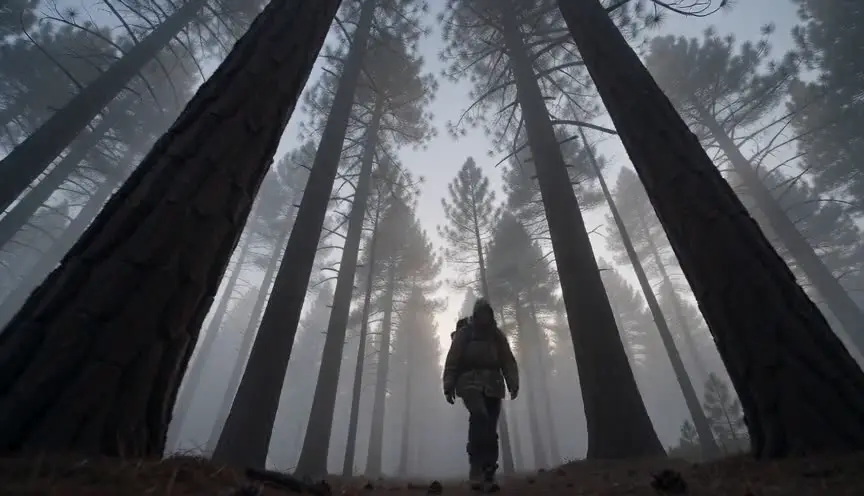
A tilt up often ends in a low angle on the subject. Holding that low angle afterward keeps the sense of power the tilt built, instead of dropping back to a neutral eye level.
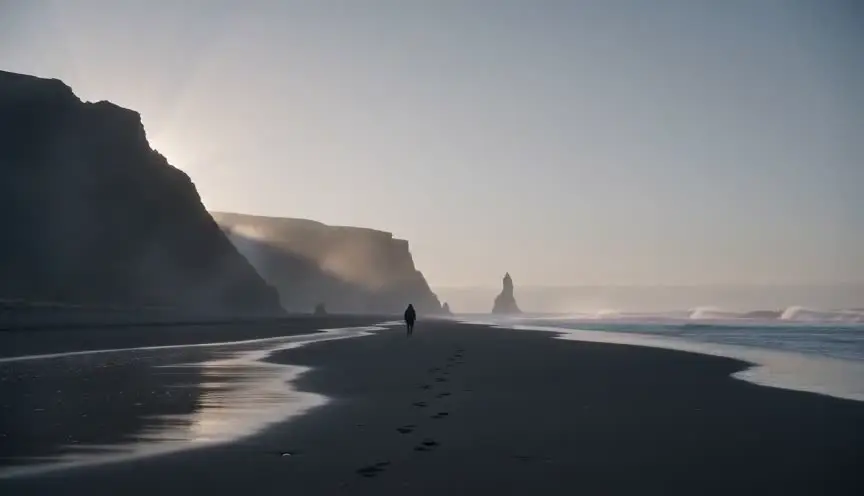
Tilting down from sky or treetops into a street is a classic way to open a scene. The establishing frame at the bottom of the tilt then settles the audience in the new place.
Reference
Watch it in
Star Wars (1977)
After the text crawl, the camera drops from the stars to the curve of a desert planet, and two ships thunder overhead into frame.
Rear Window (1954)
In its opening survey, Hitchcock's camera moves up and down from windows to a thermometer to Jeff's room, telling his story without dialogue.
ScreenWeaver
Set it up in ScreenWeaver
Write the subject in the vertical order you want revealed, and ScreenWeaver breaks the scene down into shots automatically. Open the shot, set the framing and a starting angle, choose a tilt up or tilt down as the movement and give it a duration that lets the reveal land. Characters and the location carry from shot to shot, so the building or person at the end of the tilt matches the rest of the sequence. Test it in the AI previsualization.
Start writing for freeThe prompt behind this clip
This is the exact prompt that rendered the clip at the top of the page. Keep the description of the camera and the light, change the subject and the place.
Tilt up in a Moroccan riad courtyard: the camera sits on a locked tripod at hip height, its base fixed, and pivots smoothly upward along its vertical axis. The frame starts on hand-painted zellige tiles and a trickling fountain, then rises steadily past carved cedar doors and horseshoe arches until it reveals four stories of latticed windows against bright midday sky. A woman in a flowing kaftan crosses briefly near the fountain as the tilt begins. Warm sunlight rakes the plaster walls; the shadows stay fixed while only the framing changes vertically. No text.
Common mistakes
- 01
Tilting past the subject
A tilt that overshoots and corrects back looks clumsy. Rehearse the end frame and set a drag on the head so the operator can stop exactly on the reveal.
- 02
Converging verticals by surprise
Tilting up on a wide lens makes buildings lean inward. That can feel dramatic, but if you want straight lines, use a longer lens from further away or plan for it.
- 03
A reveal the audience saw coming
If the full subject is already visible in a previous shot, the tilt reveals nothing. Hide the top or bottom until the tilt gets there.