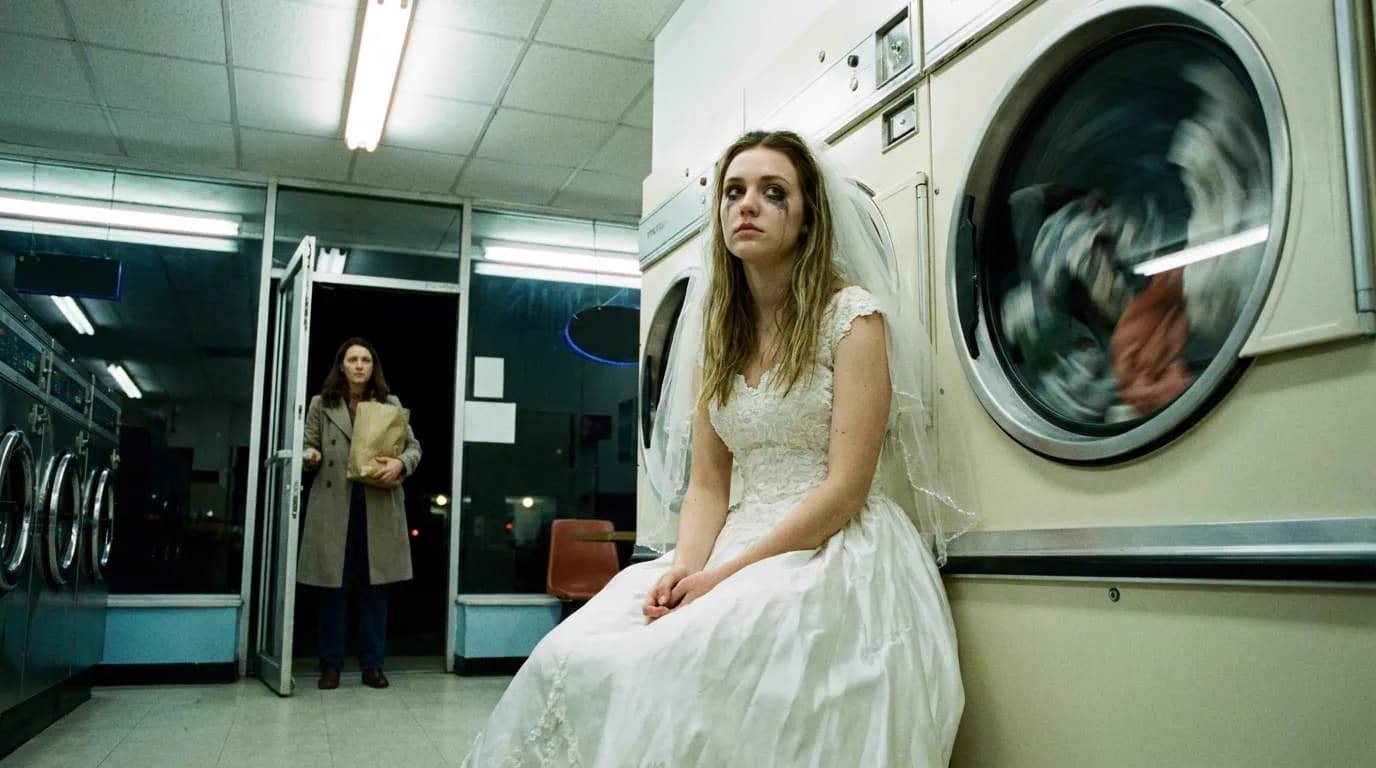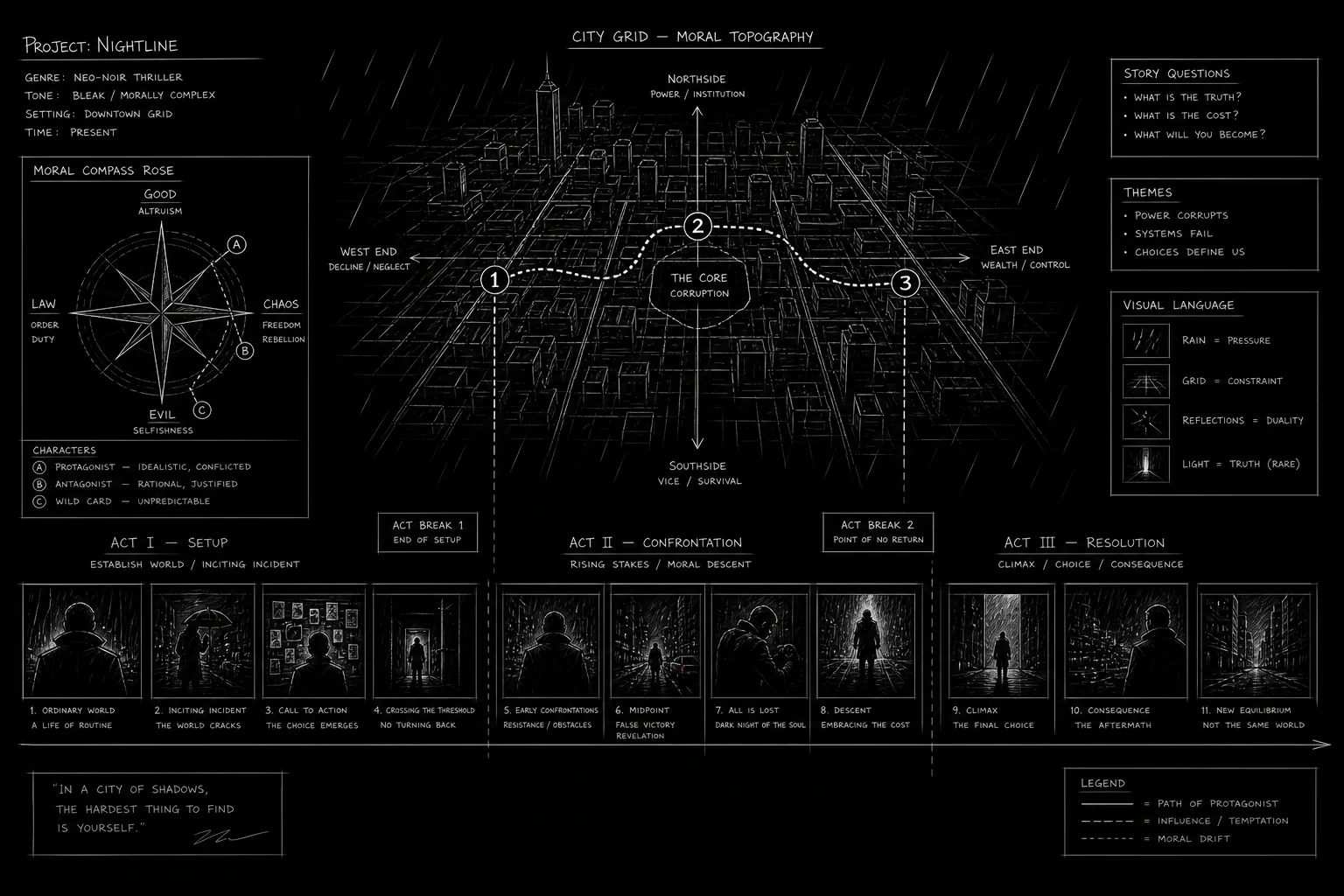

Short drama tropes are not a shortcut. They are the engine that produces a reversal every ninety seconds for seventy episodes, which no original premise does on its own. The ones that sell (contract marriage, hidden heir, secret billionaire, revenge after betrayal, second chance, fated mate) share one property: the premise contains a secret, a clock and a witness, so every episode has something to reveal, something to run out of, and someone to walk in.
This article is the premise half of the short drama pipeline. The structure the tropes feed is in short drama episode structure.
Why the format runs on tropes
A viewer decides in five seconds, on mute, on a phone, whether to keep watching. The only thing that reads in five seconds is a situation they already know: a woman in a wedding dress cutting it off her body; a cleaner picking up a CEO's badge; a man at a grave with a gun. The trope is the premise compressed to a single image.
The second reason is the season. Seventy episodes need seventy turns, and a trope with a good engine generates them. A contract marriage has clauses (deadlines), witnesses (intrusions), signatures (revelations) and a power imbalance that can flip (reversals). That is all four cliffhanger shapes, built in.
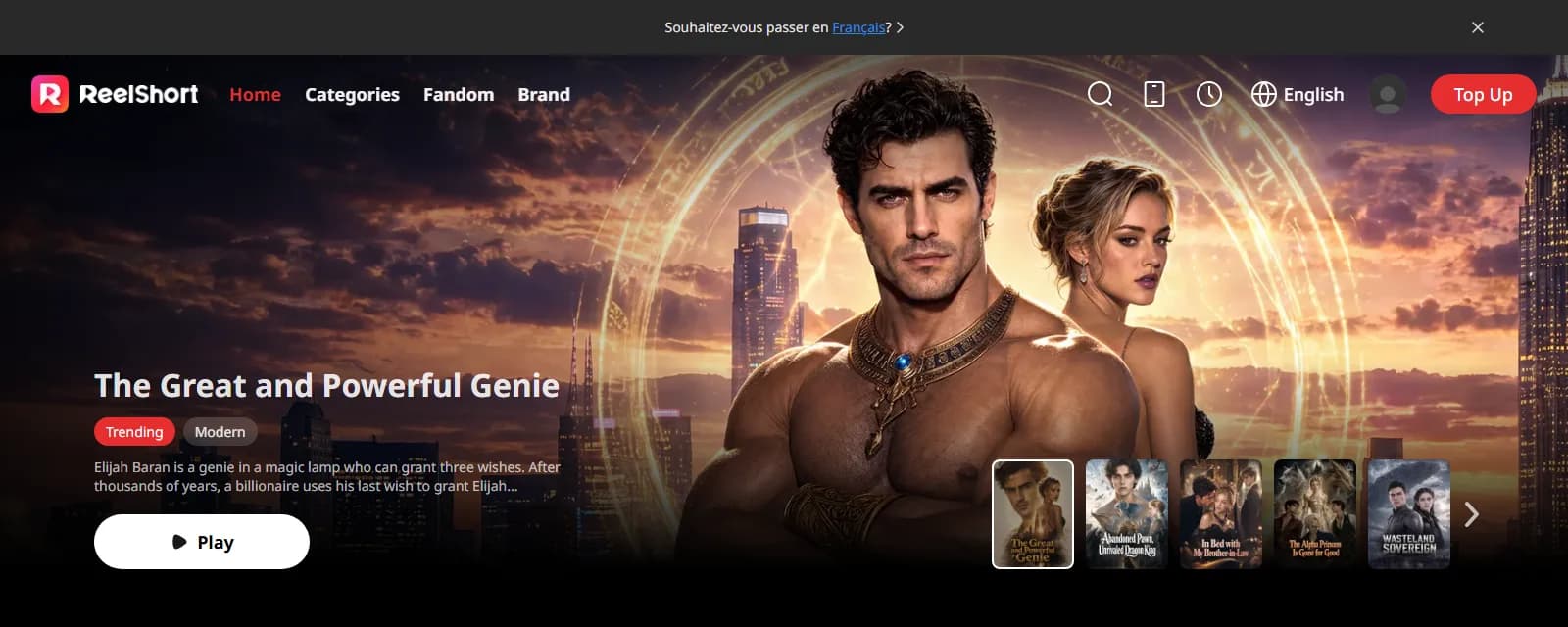
ReelShort's catalogue on 3 September 2026. The titles are the tropes: a fated mate, a forbidden stepsibling, a genie bound to a billionaire's wish. Read the row as a list of engines, not stories.
The engines, and what each one generates
| Trope | The secret | The clock | The witness | Reversals it produces on its own |
|---|---|---|---|---|
| Contract marriage | The marriage is fake, or one of them means it | The contract's end date | The family, the ex, the press | Every clause tested, every public appearance a risk, the moment one of them stops pretending |
| Hidden heir or secret billionaire | The lead is far richer or more powerful than they appear | The day the identity is needed | Everyone who humiliated them | Each humiliation banks a payoff; the reveal can be spent in pieces, one witness at a time |
| Revenge after betrayal | What was done to the lead, and by whom | The plan's stages | The betrayer's new life | Each stage of the plan is an episode; the betrayer's discoveries are the cliffhangers |
| Second chance or rebirth | The lead knows the future, or the past | The date of the original catastrophe | Everyone who doesn't know | Every changed choice creates a new consequence to reveal |
| Fated mate or alpha | The bond, and who it binds | The ceremony, the moon, the challenge | The pack | Rejection, challenge, rival mate, the bond asserting itself at the wrong moment |
| Substitute bride or swapped identity | Who the lead actually is | The wedding, the reveal | The groom's family | Every intimacy is a lie about to be found out |
| Divorce and regret | The husband's mistake, or the wife's secret strength | The divorce paperwork | The new partner | He learns what he lost one episode at a time |
| Amnesia | What was forgotten | The memory returning | Whoever benefited from the forgetting | Each recovered fragment is a revelation |
Pick one engine, add a second as the B plot, and the grid fills itself. Stack four and the season has no spine.
The shape of the hits
Across the catalogues the same skeleton keeps appearing, and it maps exactly onto the five movements.
- The humiliation. Episodes 1 to 3. The lead is wronged in public, and the viewer knows something the room does not.
- The secret held. Up to the paywall. The lead could end it with one sentence and does not, for a reason that costs them.
- The near-misses. The long middle. Witnesses almost see, clocks almost run out, the rival almost wins.
- The exposure. The midpoint. The secret is out, or the power flips, in front of everyone.
- The bill and the payoff. Collapse, then the confrontation everyone came for, then the last reveal saved for the finale.
The humiliation in episode 1 is the whole business model: it makes the viewer want the payoff, and the payoff is behind the paywall.
Genres the platforms are buying
InkTip's guide for writers pitching vertical platforms lists the genres producers ask for: dramas built on love triangles and family betrayals, romantic comedies around dating mishaps, thrillers and crime, claustrophobic horror, supernatural and fantasy hooks, and young adult school drama. Romance dominates every catalogue, with revenge and supernatural close behind, and the AI-labelled series on ReelShort's shelf lean the same way.
The reason romance dominates is not taste. It is production. A romance is two faces in a room. That is the cheapest thing to shoot with a crew and the easiest thing to generate with a model.
Tropes and AI production
For an AI-produced series the trope choice is also a production choice.
| Engine | AI production load | Why |
|---|---|---|
| Contract marriage, divorce and regret | Low | Two leads, four locations, dialogue in close-up |
| Hidden heir, secret billionaire | Low to medium | Same, plus a few public settings with extras kept out of focus |
| Revenge | Medium | More locations, more characters to keep consistent, occasional violence to board around |
| Substitute bride, amnesia | Low | Intimate settings, small cast |
| Fated mate, werewolf | High | Transformations, night exteriors, action, creature work |
| Rebirth or time loop | Medium | Repeated scenes with variations, which is a consistency test |
A first AI season should be a low-load engine with three characters. A werewolf series is a fine fourth season.
Try it free
Try Screenweaver for free on your script
It is free. Import your existing project, get a clearer view of your outline, and regain control of your story structure in minutes.
Start FreeNaming and framing the premise
The title is the trope plus the twist, in the order a thumbnail reads: The Contract Bride's Secret Twin, Divorced, Then He Found Out, The Alpha's Forbidden Mate. The logline is one sentence that contains the secret, the clock and the witness.
The logline workshop forces a premise into that sentence, and if the sentence has no secret or no clock, the engine is missing and the season will run dry by episode 20.
Originality inside the trope
The trope is the engine, not the story. What sells one contract marriage over another is the specific: the clause that is unusual, the reason she needs the money that is not the reason we expect, the witness who is on her side. Write the trope straight for the first three episodes so the viewer knows what they bought, then let the specifics take over.
The other place originality lives is the reversal. Every viewer of a hidden-heir series knows the reveal is coming. They do not know which humiliation gets paid back first, or who is in the room when it happens.
FAQ
What are the most popular short drama tropes?
Contract marriage, hidden heir or secret billionaire, revenge after betrayal, second chance or rebirth, fated mate, substitute bride, divorce and regret, amnesia. Romance dominates the catalogues, with revenge and supernatural next.
Why do short dramas use so many tropes?
Because the viewer decides in five seconds on a muted autoplay, and a trope is a premise that reads in one image. The second reason is the season: 70 episodes need 70 reversals, and a trope with a secret, a clock and a witness generates them.
Can an original premise work as a short drama?
Yes, if it has an engine: a secret that can be threatened, a clock that can run out, and witnesses who can walk in. Most original premises have one of the three. Build the other two in before planning the season.
Which trope is easiest to produce with AI?
Contract marriage, divorce and regret, substitute bride: two or three leads, four or five interiors, dialogue in close-up. Werewolf and fantasy engines carry transformations and night action, which are the hardest things for current video models.
How do I combine tropes without confusing the season?
One engine as the A plot, one as the B plot, no more. The A plot's secret drives the paywall episode, the midpoint and the finale. The B plot fills the ordinary episodes between.
Do the platforms accept non-romance short dramas?
They commission thrillers, crime, horror and supernatural, and InkTip's producer guide lists all of them. Romance still gets the most shelf space because it is the cheapest to make and the most watched, so a non-romance pitch needs a stronger engine to compete.
Final Step
Build your next script with Screenweaver
Move from ideas to production-ready pages faster with timeline-native writing and AI-assisted story flow.
Try Screenweaver