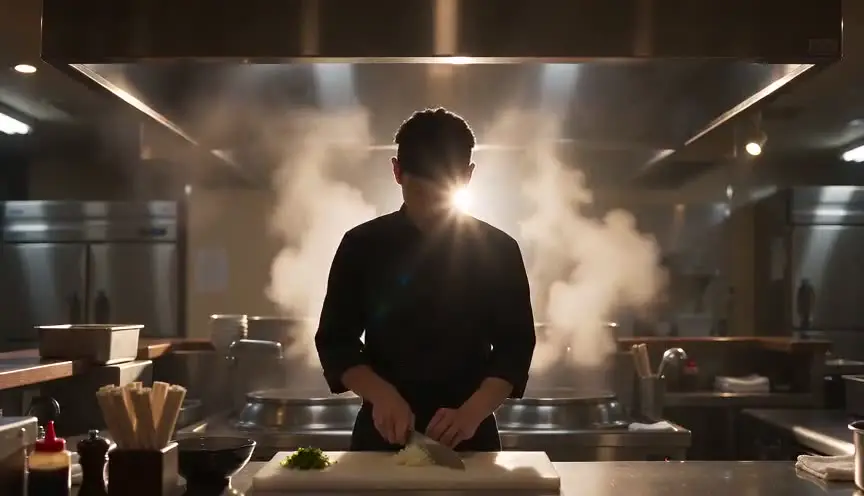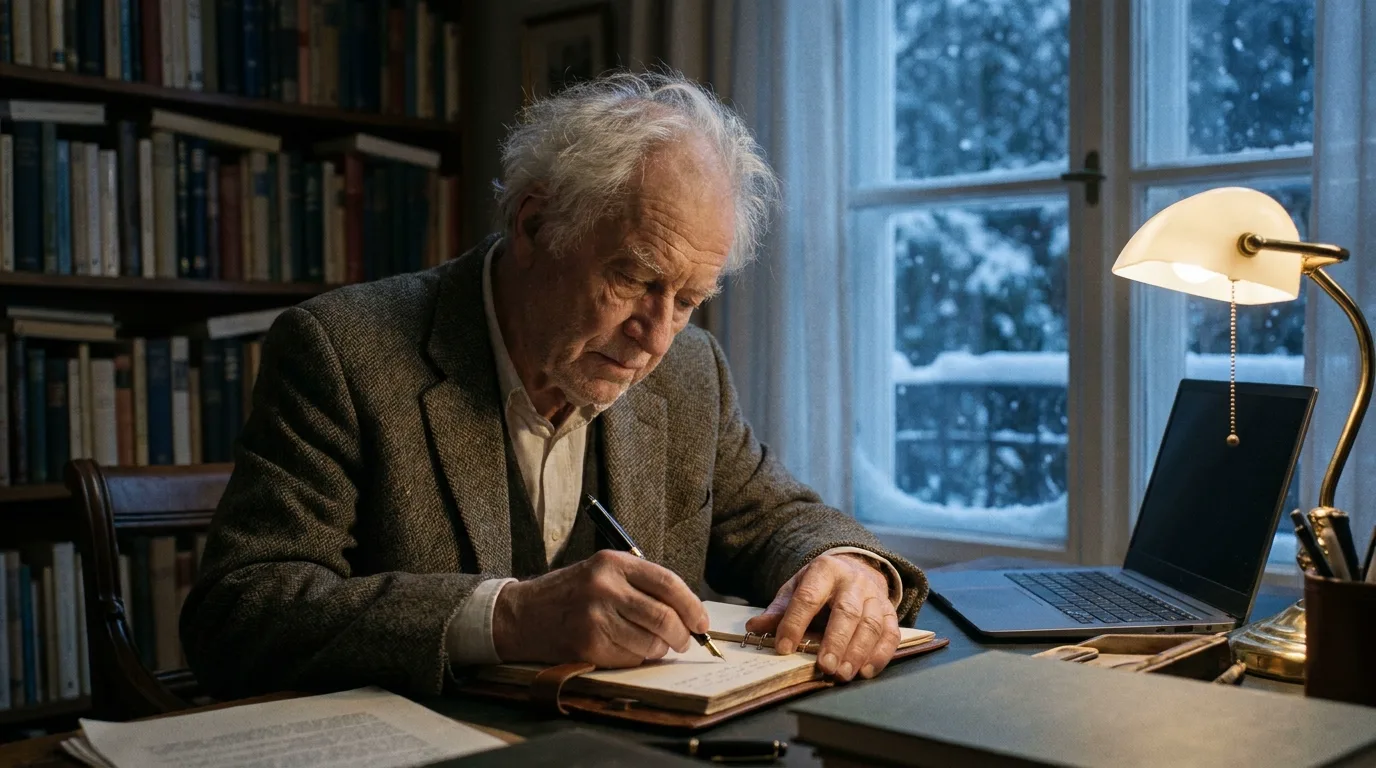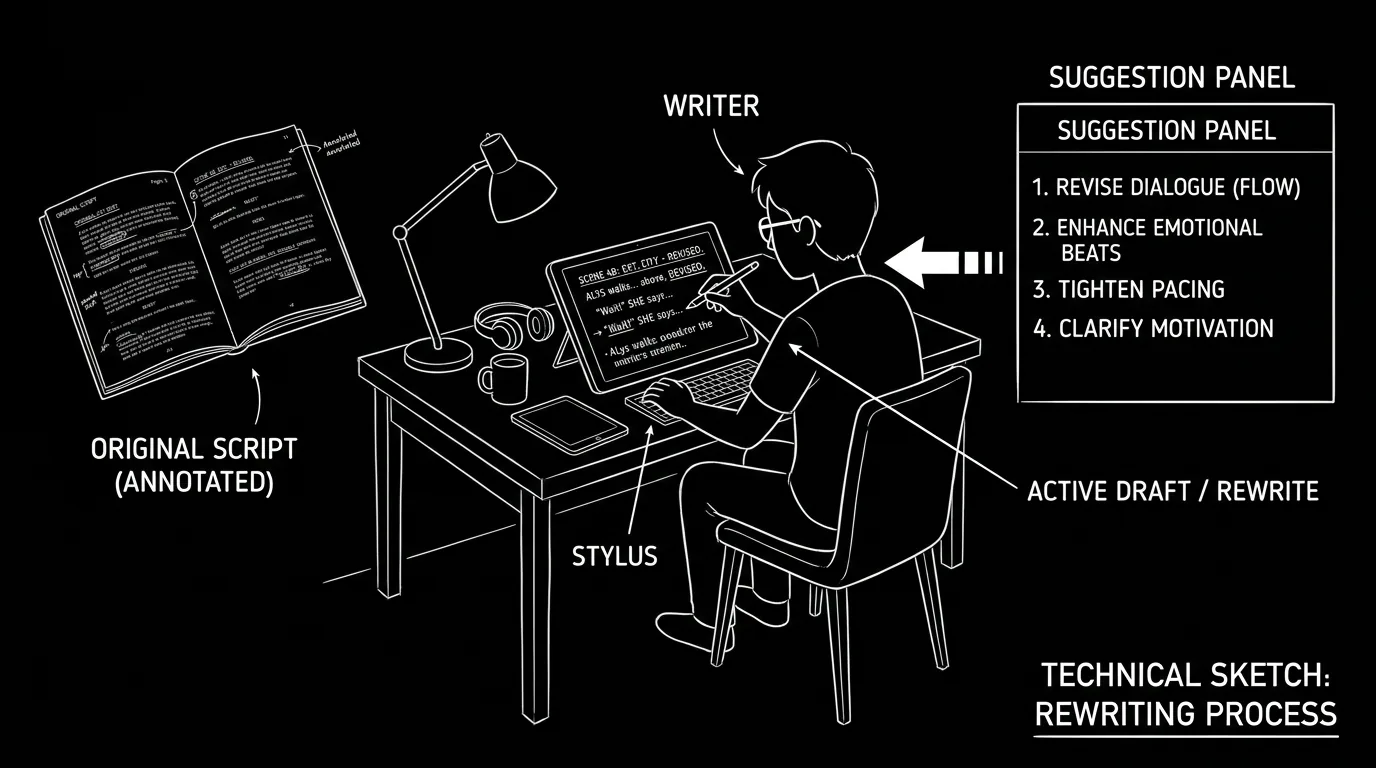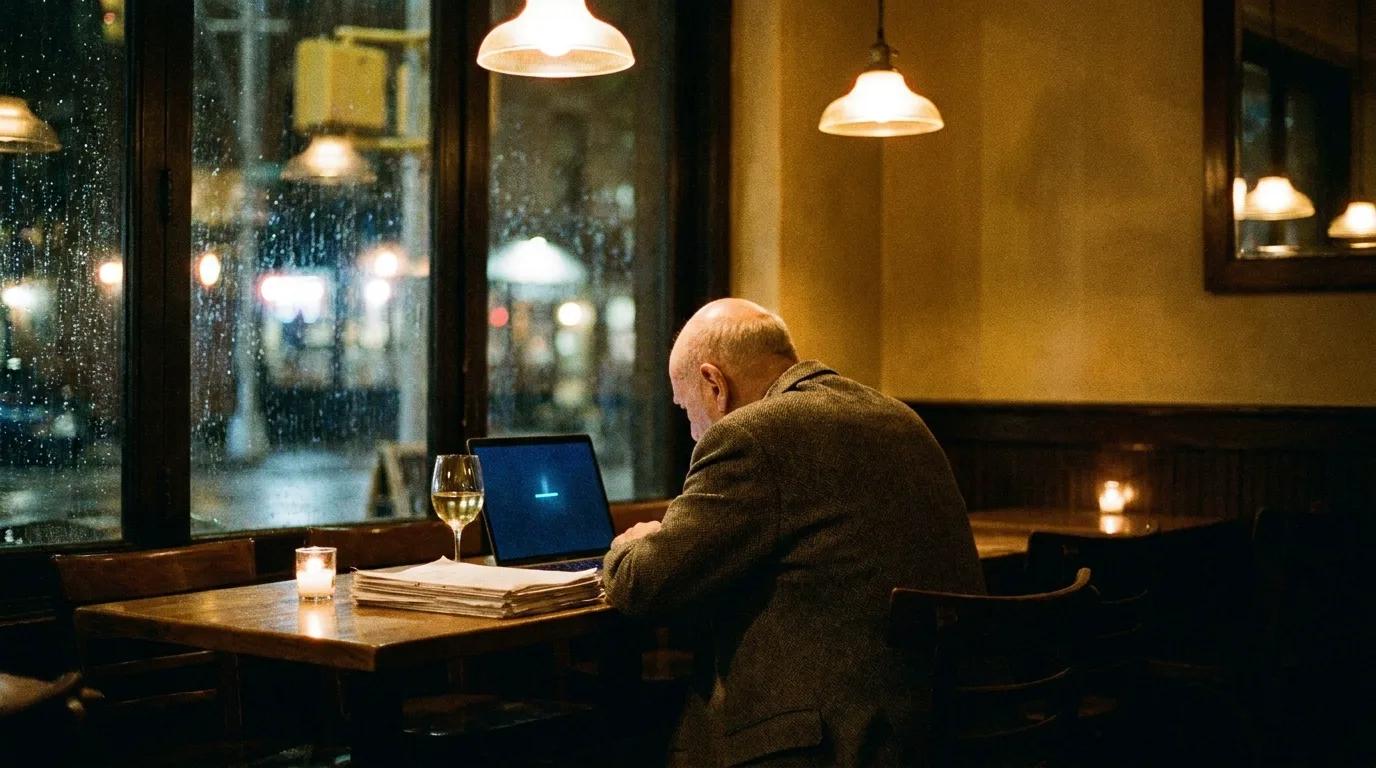

Paul Schrader, who wrote Taxi Driver and Raging Bull, is now 80 and using AI for almost everything his peers refuse it for: synthetic actors, visual effects, and scripts. But the experiment that rattled him most was a writing one. He asked an AI for a Paul Schrader script, and it got far enough that, in his words, "I got scared. I walked away from the table."
This is based on Robert Booth's interview for the Guardian, published on 21 November and read on 23 November 2026. All quotes are as the Guardian reported them.
Disclosure: ScreenWeaver sells AI tools for screenwriters and filmmakers, so we have a stake in how writers feel about this. Read our take with that in mind.
What Schrader told the Guardian
Over white wine in a Greenwich Village trattoria, Schrader summed up his position in one line: "I am opening the cage of a monster and I don't have a leash."
He isn't running from it. According to the Guardian:
- A new film built on AI images. His horror-thriller The Doors of Perception is built around AI-generated psychedelic hallucinations, made with the San Francisco AI film studio Fable. During one sequence, he says, the AI asked him "How graphic do you want [this] to be? I suggest you do it more discreetly", and he agreed: "It's making a conscious artistic choice."
- AI actors. He has been screen-testing them and concludes "you could certainly do a whole film."
- Other AI projects. Three Guns at Dawn, which caused a controversy in September when he said he would use AI characters after Black actors turned the parts down, and a western titled Nine Men from Now.
- On the industry's resistance. He calls Sag-Aftra "just desperate", "trying to erect a fence that AI is going to plough through like a bulldozer." On the Academy, which this year barred AI actors and screenplays from winning Oscars: "Who gives a damn about the academy anyway?"
His bottom line: "You can't hold your breath until AI goes away."
The script experiment

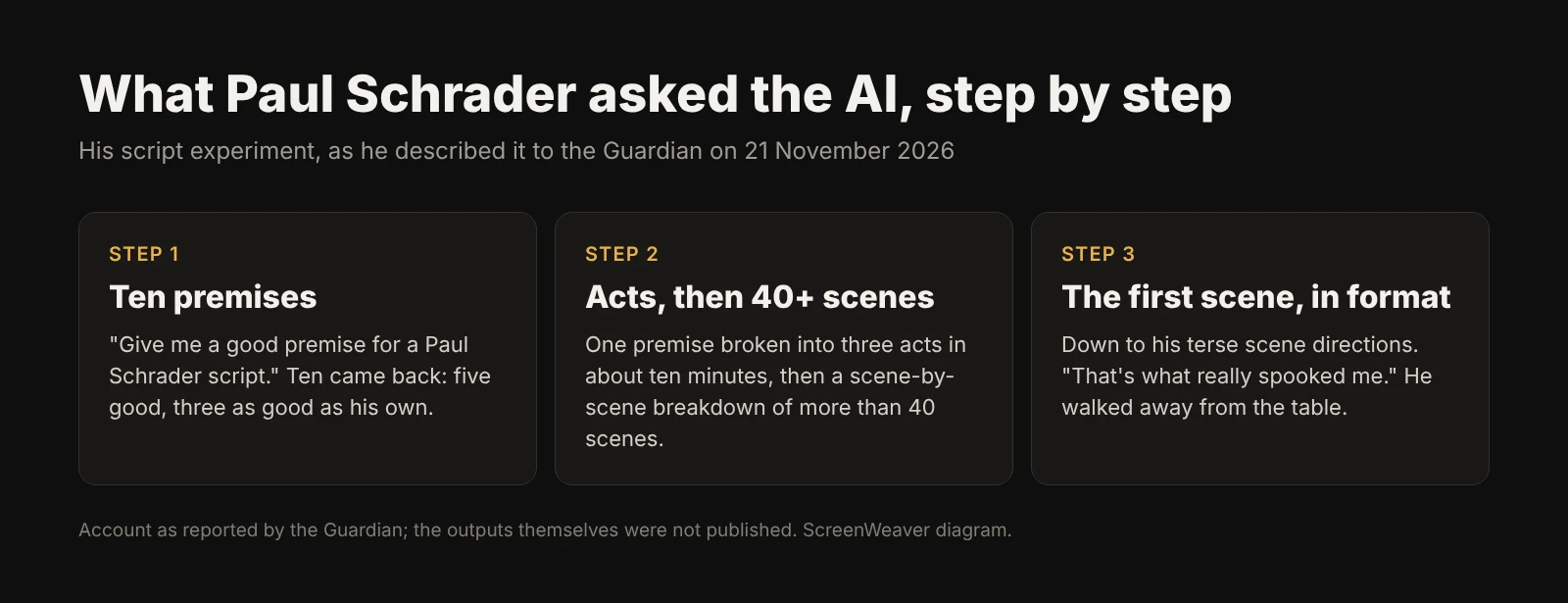
This is the part screenwriters will read twice. Schrader described it step by step:
- He asked for "a good premise for a Paul Schrader script." He got ten: "five of them were good and three of them were as good as I would have thought of."
- He picked one and asked for three acts. "It took it about 10 minutes."
- He asked for a scene-by-scene breakdown and got more than 40 scenes, roughly the scope of a feature.
- He asked for the first scene in script format. That's where it stopped being a game. The Guardian quotes the opening direction, written in his own terse style: "Exterior street night. Moon breaks through cloud, backlighting a late model BMW in the driveway of a two-storey home."
"That's what really spooked me," he said. "I realised it could write a Paul Schrader script."
What we make of it
Schrader's experiment shows how fast a model can imitate a writer who has fifty years of published, widely studied scripts behind him. It doesn't show that the imitation is a good film. Nobody has read those 40 scenes but him, and he walked away before the second one.
The more useful question for a working writer is the one he says the experiment left him with: is the AI his tool, or the other way round? Our answer is that it depends on which steps you hand over. A model that offers ten premises is a brainstorming partner you can ignore. A model that writes your scenes in your voice is doing the job that makes the script yours. That's the same line Christopher Hampton drew last week when he called AI "a sort of super Google", and the one we argue for in keeping your own voice when you use suggestion tools.
Schrader's own Fable anecdote is telling, too. When the AI suggested a more discreet staging, he accepted it as "a conscious artistic choice." Taking a suggestion is fine. Just make sure you would have defended that choice if a human collaborator had made it.
Try it free
Try ScreenWeaver for free on your script
It is free. Import your existing project, get a clearer view of your outline, and regain control of your story structure in minutes.
Start FreeWhat it means for you
- Decide which steps are yours. Premises, outlines, scene breakdowns, pages: pick where the tool stops before you open it, not halfway through a draft. Our guide to outlining with AI to beat the blank page shows one way to split the work.
- Test the imitation on yourself. If a model can produce your scene directions, ask what in your pages it can't produce: the specific detail, the thing the character doesn't say. That's where to spend your time.
- Keep a record. Note which parts of a script came from a tool. Guild agreements, festivals and the Academy are writing rules about it, and you may be asked.
What we don't know
- Which AI model Schrader used for the script experiment. The Guardian doesn't name it.
- What the outputs looked like. Only the one scene direction above was quoted.
- How much of The Doors of Perception is AI-generated, beyond the hallucination sequences, or when it will be released.
FAQ
What did Paul Schrader say about AI?
In a Guardian interview published on 21 November 2026, he said "I am opening the cage of a monster and I don't have a leash." He is using AI for synthetic actors, effects and script experiments, and says "You can't hold your breath until AI goes away."
Did AI write a Paul Schrader script?
Not a full one. He asked for premises, got ten, broke one into three acts and then into more than 40 scenes, and had the first scene written in script format. He said that was when he realised it could write a Paul Schrader script, and he stopped.
What is The Doors of Perception?
A horror-thriller Schrader is making with the San Francisco AI film studio Fable, built around AI-generated psychedelic hallucinations. It follows two brothers hunting their mother's killer.
What does Schrader think of Sag-Aftra and the Academy?
He called Sag-Aftra "just desperate", trying to build a fence AI will "plough through like a bulldozer." Of the Academy's ban on AI actors and screenplays winning Oscars, he said: "Who gives a damn about the academy anyway?"
Should screenwriters use AI to write scenes?
That's your call, but decide before you start. Many writers use AI for research, brainstorming and breakdowns and keep the scenes and dialogue for themselves, because that's where a script's voice comes from.
Where does this interview come from?
From Robert Booth's interview for the Guardian, conducted in New York and published on 21 November 2026.
From script to shots
Turn your script into a film, shot by shot
Write the scene, get its storyboard, then generate each shot with consistent characters. You direct every step.
Start your film free