Artefact AI Film Festival x mk2 · Guide

How to win the Artefact AI Film Festival.314 seconds. €10,000. Deadline 2 December.

The contest rules, the three production phases you must document, what each judging step looks at, the prizes of the second edition and a week-by-week plan to 2 December 2026. Then write the film, storyboard it and generate it with Seedance, all in ScreenWeaver.
  • Deadline 2 December 2026
  • 314 seconds, AI in three phases
  • Jury led by Nakache and Toledano
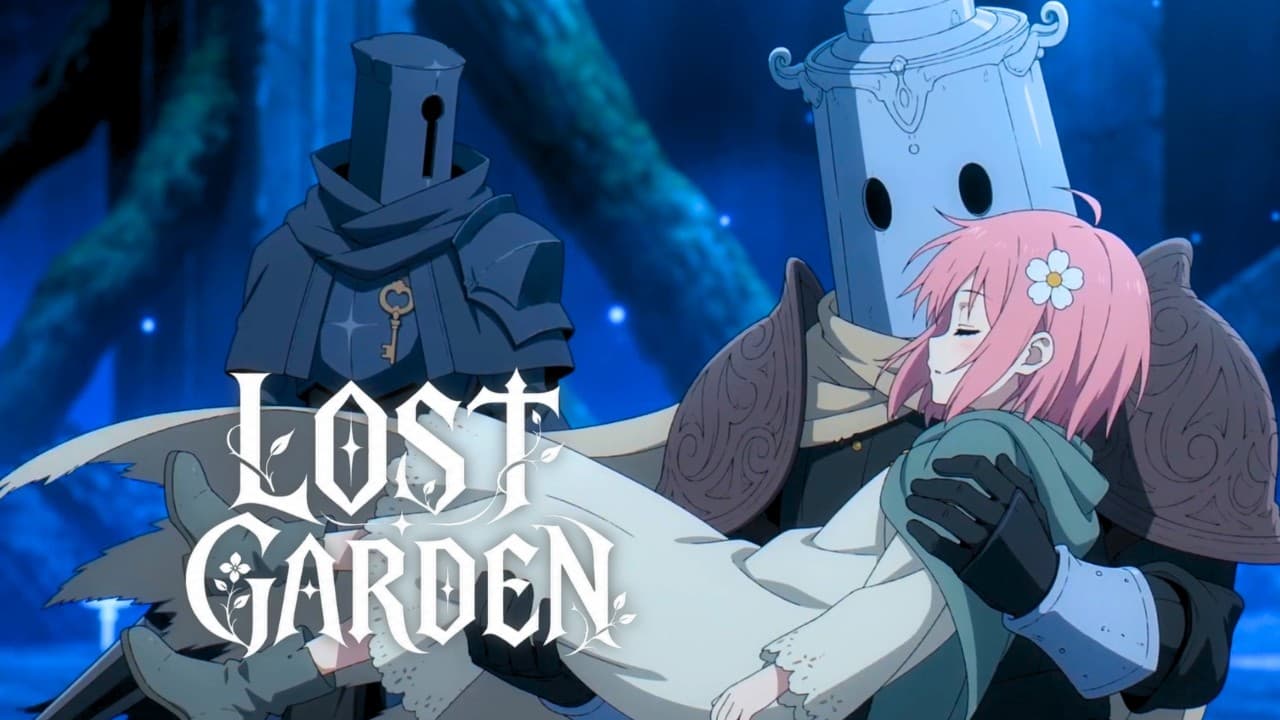
Lost Garden · Episode 1

Independent guide. ScreenWeaver does not organise the Artefact AI Film Festival and is not affiliated with Artefact or mk2. Rules read on 1 October 2026. Official rules

Available today in ScreenWeaver: free screenwriting, and a storyboard generated from your screenplay with Storyboard Beta, $9.99 a month.

Rolling out: video generation of each shot, powered by Seedance, with the Filmmaker plan.

The rules on one card

What the third edition asks for.

The Artefact AI Film Festival is a short film contest for AI-made work, run by Artefact with the mk2 cinema network in Paris. The third edition's theme is (Dis)Connection. According to its rules, the contest is free and requires no purchase. The official rules are written in French.
Edition
3rd edition, 2026-2027, theme (Dis)Connection
Submissions
2 September to 2 December 2026
Length
Up to 314 seconds, which is 5 min 14 s
AI rule
At least one generative AI tool in each of three phases: pre-production, production, post-production
What to provide
A public YouTube or Vimeo link, a visual, a synopsis, a short presentation and a production log
Grand Prix
€10,000, and a 30 second version shown for a week in all mk2 theatres
Other prizes
Jury, Audience and Artefact (best use of AI) awards: €1,000 each
Who can enter
Anyone, worldwide. One film per person

Sources: the contest rules updated on 30 July 2026, the home page and the Rules page of artefact-ai-film-festival.com, read on 1 October 2026. The French rules prevail, so read them in full before you submit. The 30 second version of the Grand Prix is on the home page, not in the rules' article on prizes.

Key dates

Nine weeks to submit.

Submissions opened on 2 September. Count backwards from 2 December, not forwards from your idea.
  1. 2 Sep 2026

    Submissions open

    Each film is checked by Artefact, goes to mk2 for artistic validation, then is put online as submissions arrive if it is accepted.

  2. 2 Dec 2026

    Deadline

    The last day to submit. The rules give no cutoff hour: submit earlier.

  3. 9 Dec to 13 Jan

    Public vote

    The public votes on the site. The most voted film gets the Audience Award.

  4. Mid to late Jan 2027

    Twenty finalists, then the jury

    The twenty finalists are announced in mid-January. The jury deliberates at the end of the month.

  5. End of Feb 2027

    The ceremony at mk2 Bibliothèque

    Winners are announced at the mk2 Bibliothèque cinema in Paris. The twenty finalists are invited.

How films are judged

Four prizes, four ways of looking.

The rules publish no grid and no weights. They describe four prizes, each with its own logic, and three filters before the jury. Here is what each one looks for.
  • Grand Prix: the best film

    Given to the best film, plainly. The second edition's Grand Prix, The Cinema That Never Was, imagined lost films and echoed Tarkovski, Kurosawa and Ray: an idea of cinema before a demonstration of tools.

  • Jury Award: cinematic quality

    It honours the film that impressed the jury by its cinematic quality. Framing, light, editing, rhythm: think direction before generation.

  • Audience Award: the 9 December to 13 January vote

    It goes to the film with the most votes on the site. Automated votes are forbidden. Only films put online after validation by Artefact and the mk2 editors can be voted for. A thumbnail, a title and a strong first thirty seconds make the difference.

  • Artefact Award: best use of AI

    It rewards the film that made the best use of AI. Your production log is the evidence: every phase documented, every choice explained.

Three filters come before the jury: Artefact checks the creation charter and the technical level, the mk2 and Troiscouleurs editors select the films, then twenty finalists go to the jury. A film outside the charter is excluded before any artistic reading.

Who decides

Four pairs of eyes on your film.

The jury is led by Olivier Nakache and Éric Toledano, the directors of Intouchables, Le Sens de la fête and Hors normes. The official page does not list the other jurors: the rules only say they are professionals of cinema and artificial intelligence.
  • Artefact: the charter and the technique

    First filter: the Artefact team checks that the film respects the creation charter (314 seconds, AI in all three phases) and reaches a sufficient technical level. A film outside the charter never reaches a jury.

  • mk2 and Troiscouleurs: the artistic selection

    The mk2 editors and the journalists of Troiscouleurs, the group's magazine, review the accepted films and choose twenty. They are film readers: tell a story, do not demonstrate.

  • Nakache and Toledano: the jury

    The twenty finalists go before the jury. According to the official page, the two presidents' cinema, popular and socially engaged, blends humour, emotion and a view on society. An emotion that reads without explanation is a good starting point.

  • The public and the partners

    From 9 December to 13 January the public votes for the Audience Award. The event's partners can also give extra prizes to any film in competition, finalist or not.

The theme

(Dis)Connection: three tensions to choose from.

The theme explores the new connections between cinema, artificial intelligence, contemporary creation and digital experiences. The official page names three boundaries that are shifting. The Rules page spells it "(Dis)Connexion". Under each, the angle we would take.
  • 01

    Human and machine

    The bond between a person and what they made, or what made them.

    One character facing a presence that does not answer. Two characters are enough, and that keeps faces stable for 314 seconds.

  • 02

    Real and virtual

    What we perceive, what we believe, what is true when every image can be made.

    Carry the doubt through an object or a gesture, not a screen full of text: AI video garbles writing. One well-placed slide from real to virtual beats ten.

  • 03

    Author and tool

    Who holds the camera when a machine generates the image?

    The tension closest to the Artefact Award. A film about its own making, where the production log becomes part of the story, can play both sides. The bet is to be honest about what the AI did.

The second edition

What the 2026 results say.

The second edition closed on 12 February 2026 at mk2 Bibliothèque, under president Cédric Klapisch, with about twenty finalist shorts according to Écran Noir. Its theme was (Dis)play.

  1. 01

    The Grand Prix went to an idea of cinema. The Cinema That Never Was, by Mark Wachholz of Germany, imagines lost films and calls up Tarkovski, Kurosawa and Ray. A film about cinema, crowned at a festival tied to a theatre network.

  2. 02

    The toolchain was varied. According to Écran Noir, the winning film mixes GPT, ElevenLabs, Udio, Kling and Midjourney: several tools, each in its phase, which is what the charter asks for.

  3. 03

    Use of AI has its own prize. La tisseuse d’ombres, by Anne Horel, won Best Use of AI. Field Notes, by Ariel Kotzer, won the French Touch Award, worth €10,000 in 2025 and absent from the third edition's page.

  4. 04

    Prizes change between editions. In 2025: Grand Prix and French Touch Award at €10,000 each, Jury, Audience and Paris Aéroport awards at €1,000. In 2026-2027: a €10,000 Grand Prix, three €1,000 awards, and more to be announced.

  5. 05

    The calendar is stable. In 2025, submissions ran from 2 September to 30 November, the public vote from 10 December to 14 January, the ceremony in February. In 2026, the same rhythm: deadline 2 December, vote 9 December to 13 January.

From script to screen

Six shots at the Source Tree.

This is the Source Tree scene from Lost Garden, episode 1, an animated series made by the ScreenWeaver team with Seedance. The charter asks for AI in all three phases: the screenplay page and the storyboard frame belong to pre-production, the final image to production.

Logline. A small knight wakes up in a dead world and learns he is the last guardian of a seed that could bring the garden back.

Screenplay · episode 1 · the Source Tree

INT. HEART OF THE ROOTS - NIGHT

Living roots coil around LANTERN and pin him down. A voice stops them.

THE SOURCE TREE

Stop. He is my guest.

A giant woman of roots and white lilies opens her arms over the cavern.

Her eyes open. Blue, and vast.

THE SOURCE TREE

Welcome to you, Lantern Knight.

She lifts him in her palm, like a lamp.

THE SOURCE TREE

Do not be afraid. I will not harm you.

In the dark, a seed of light opens. Inside the flower, a sleeping child.

THE SOURCE TREE

You must find yours. Protect her.

CUT TO:

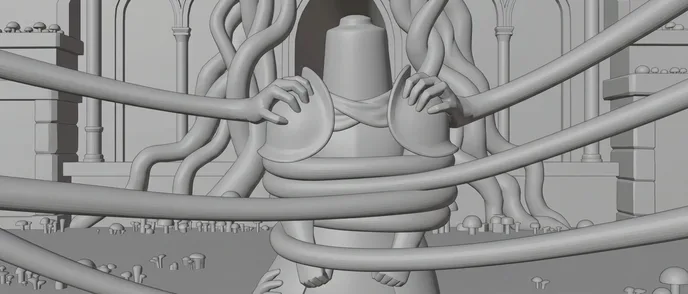
  1. A small lantern-helmed knight bound by thick roots in a ruined hall
    Storyboard frame of the trap shot, in grey
    01

    Medium · the trap

    Medium shot, Lantern bound by thick living roots in a ruined hall, glowing blue mushrooms on the floor, cold light

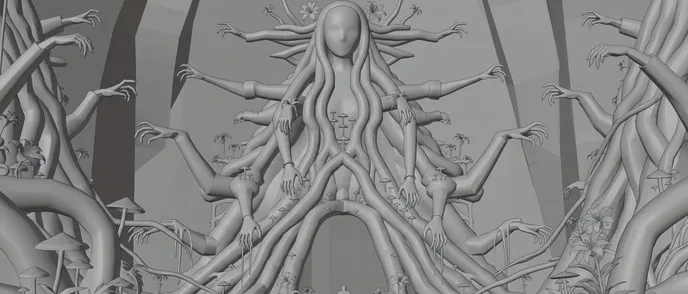
  2. A giant woman made of roots and white lilies spreads her many arms in a dark cavern
    Storyboard frame of the wide shot, in grey
    02

    Wide · the Source Tree

    Symmetrical wide shot, a giant woman made of roots, arms spread with many hands, white lilies, blue glyphs

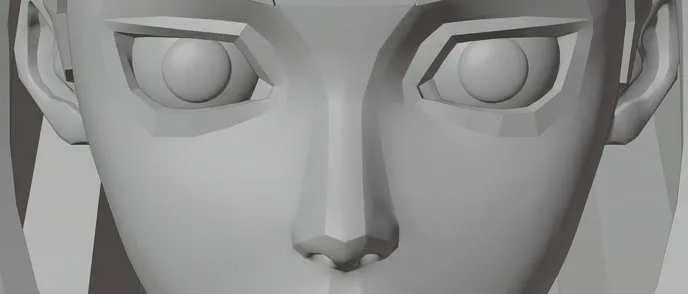
  3. Extreme close-up of a giant pale face with piercing blue eyes
    Storyboard frame of the eyes close-up, in grey
    03

    Extreme close-up · the eyes

    Extreme close-up on the giant's face, piercing blue eyes opening, pale skin, soft light from below

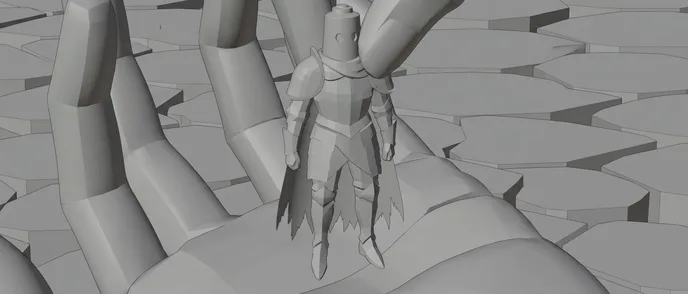
  4. A tiny armored knight stands in the middle of a giant open hand
    Storyboard frame of the palm shot, in grey
    04

    High angle · the palm

    High angle, the tiny knight standing in the center of a giant open palm, stone floor far below

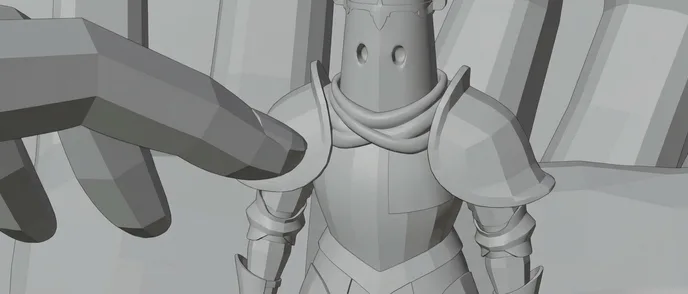
  5. A giant fingertip gently touches the chest of a small armored knight
    Storyboard frame of the touch close-up, in grey
    05

    Close-up · the touch

    Close-up, a giant fingertip gently touches the knight's armored chest, faceless helm, emotion through posture

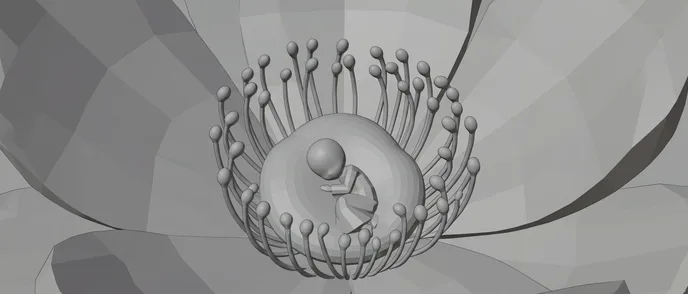
  6. A sleeping pink-haired child curled inside a glowing blue flower
    Storyboard frame of the seed insert, in grey
    06

    Insert · the seed

    Top-down insert, a glowing pale blue flower opening, a sleeping child with pink hair curled inside

Lost Garden, episode 1 runs 17 minutes: for this festival we would cut a version of 4 minutes 55 at most, under the 314 second limit. An animated series by the ScreenWeaver team, made with Seedance, and a finalist at the AI London Festival. The scene fits the theme: a knight bound by living roots, a giant palm, a touch, a seed. Hit play and it starts on this scene.

The script

A 4 min 55 film in five movements.

The limit is 314 seconds, or 5 min 14 s. Aim for 4 min 55 to keep a margin: about 4 to 5 screenplay pages and 60 to 80 shots of 3 to 5 seconds. There is no room for a second act that drags.
  1. 0:00 to 0:20

    The hook

    A single image that asks something. In a format this short, there is no preamble.

  2. 0:20 to 1:00

    The bond

    Who is tied to whom, and what threatens the tie. Two characters are enough.

  3. 1:00 to 3:20

    The break

    The bond strains, snaps or changes. Every cut of the edit should serve that tension.

  4. 3:20 to 4:20

    The choice

    The moment a character reconnects or lets go. Give it time and no needless dialogue.

  5. 4:20 to 4:55

    The last image

    A picture that answers the first one, held for three seconds. Then the credits.

The Grand Prix comes with a 30 second version shown in all mk2 theatres. Plan a 30 second extract at the edit stage, one that stands alone, with a hook and a payoff.

Week by week

From 1 October to the submit button.

Nine weeks separate 1 October from 2 December. The film is made in weeks 5 to 7, and the production log is written throughout. Everything before that decides whether those three weeks go well.
  1. 01

    Week 1 · by 8 October

    Theme and logline

    Pick one of the three tensions: human and machine, real and virtual, author and tool. Write ten loglines. Keep the one that fits in a sentence and an image.

  2. 02

    Week 2 · by 15 October

    A 4 to 5 page screenplay

    Write it in ScreenWeaver's free plan, in industry format. Little dialogue: 314 seconds cannot be shared with speech. Note in the log what the AI did, which is charter phase 1.

  3. 03

    Week 3 · by 22 October

    Characters and locations

    Lock one reference for each character and each set. They carry into every shot and keep faces identical for five minutes.

  4. 04

    Week 4 · by 29 October

    The storyboard

    Generate the breakdown and the storyboard from the screenplay, then set framing, angle, movement and duration shot by shot. It proves phase 1.

  5. 05

    Weeks 5 to 7 · by 19 November

    Generate the footage, phase 2

    Scene by scene with Seedance, from the storyboard. Keep every prompt and every version: they are the raw material of the production log.

  6. 06

    Week 8 · by 26 November

    Edit, sound, grade, phase 3

    Cut to under 314 seconds, mix, add generated or licensed voices and music. At least one AI tool must be used in this phase too, and noted.

  7. 07

    Week 9 · by 2 December

    Publish the link and submit

    Publish on YouTube or Vimeo with a link anyone can open. Write the log, add the visual, synopsis and presentation. Submit a few days early: no cutoff hour is stated.

Disqualification traps

Eight ways to be excluded before the jury.

Most come from the article on the creation charter and the guarantees asked of entrants. Read the rules before you write.
  • AI missing from one of the three phases

    The charter requires at least one generative AI tool in pre-production, production and post-production. A film generated with AI but edited and mixed by hand misses a phase. A non-compliant film is excluded before the artistic selection.

  • 314 seconds, not one more

    The maximum length is 314 seconds, which is 5 min 14 s. A film of 5 min 20 is outside the charter. Check the length of the published file, not of your timeline.

  • No production log

    You must provide a document that describes your use of generative AI against the charter's criteria. Keep it while you make the film, not afterwards.

  • A private or unreadable link

    The film must be hosted on YouTube or Vimeo with a link anyone can open. Test it in a private window.

  • Music and elements you do not own

    No protected element, whether music, text or object, without the prior written agreement of its rights holders. Use generated or licensed music and keep the proof.

  • A real face, a place, a brand

    You guarantee the consent of the people shown and of the owners of places and goods, and no advertising allusion. Invent your characters and check every shot for logos.

  • Several films, several accounts

    One candidate space and one film per participant. Creating false identities to enter more than once can mean a permanent ban from the contest.

  • Automated votes

    The Audience Award runs from 9 December to 13 January. Any automatic voting is forbidden, and the film can be disqualified. Rally people, not scripts.

Why ScreenWeaver

Three phases to document. One project to connect them.

The charter asks for AI in pre-production, production and post-production, and for a log that proves it. ScreenWeaver is the pipeline for the first two: screenplay, storyboard and footage in one connected project.
  • Pre-production and production in one place

    Screenplay, characters and storyboard in ScreenWeaver. The footage is powered by Seedance 2.0 and 2.5. Editing, grading and mixing stay with the tool of your choice, including at least one AI tool to note in your log.

  • A production log that nearly writes itself

    Every shot stays linked to its scene, its storyboard frame and the prompt that made it, so your log is a readout of the project.

  • The same faces for five minutes

    Characters, locations and references carry from shot to shot: what it takes to hold 314 seconds without a continuity break.

  • Free to write

    The Screenwriter plan is $0 with no end date, Storyboard Beta is $9.99 a month, and video generation comes with the Filmmaker plan, now rolling out. The contest is free, so your budget goes into the making, not the entry.

Real productions

International festival-recognized films have been written and produced with ScreenWeaver.

ScreenWeaver is already being used as a creative workspace for real AI film productions, from cinematic shorts to animated series pilots selected, nominated, and awarded by international festivals.

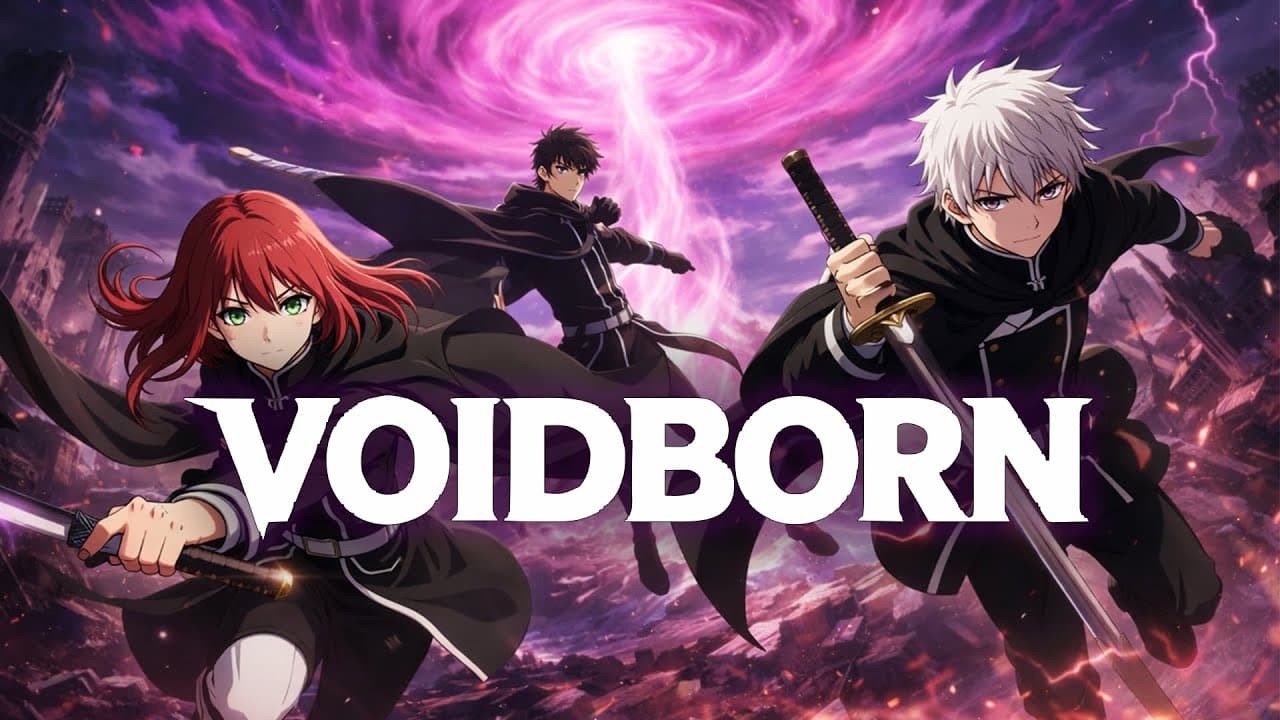
  • Video thumbnail for VOIDBORN

    VOIDBORN

    AI animated / cinematic short

    Festival recognition

    • 1st Place Silver

      Mondial Chroma Awards

    • 2nd Place Dreamina

      Mondial Chroma Awards

    • Award Winner

      Seoul International AI Film Festival

  • Video thumbnail for Les Fils du Vinnana

    Les Fils du Vinnana

    AI short film

    Festival recognition

    • Honorable Mention

      Top Quark Film Festival

    • People's Choice Nominee

      Illuminate Oneness of Humanity

    • Nominee

      ALTFF Supershort

  • Video thumbnail for Lost Garden

    Lost Garden

    AI animated series pilot

    Festival recognition

    • Finalist

      AI London Festival

The pipeline

Write. Board. Produce.

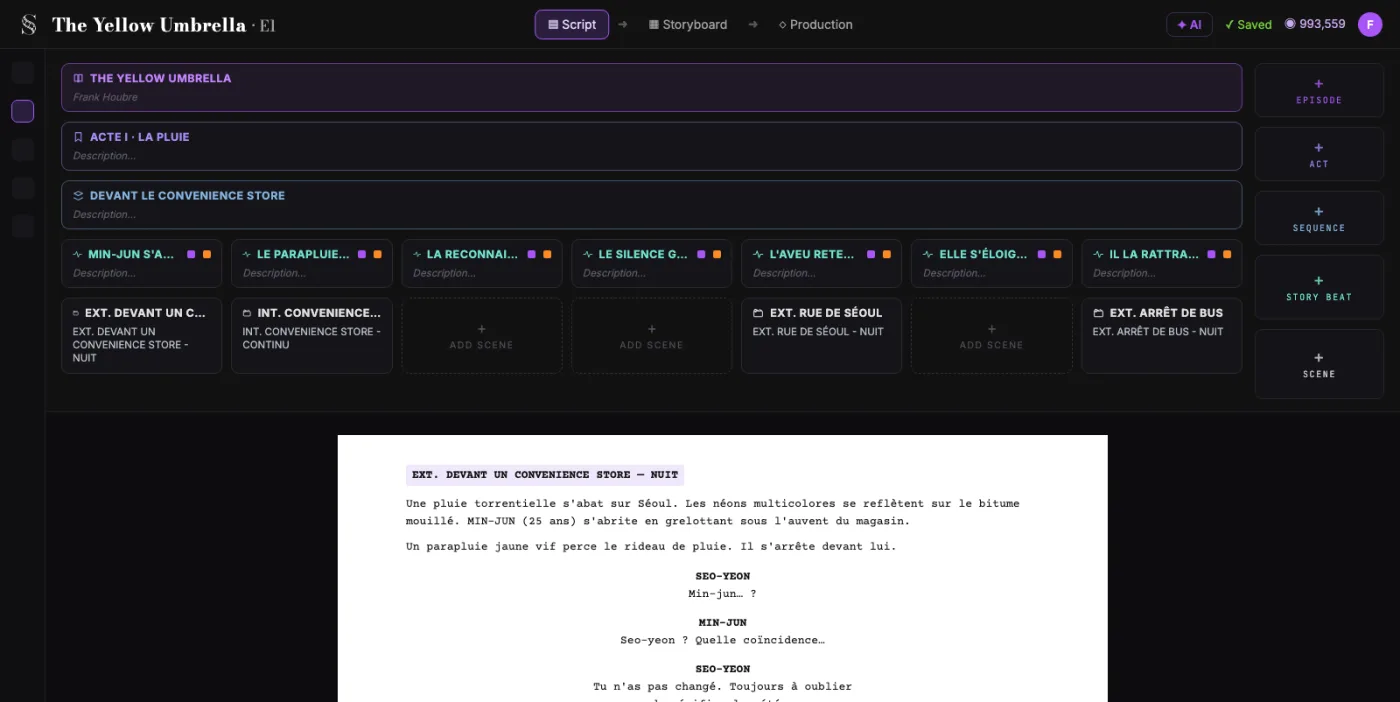
  1. ScreenWeaver screenplay editor: acts, sequences and beats above the formatted script of The Yellow Umbrella

    01The screenplay, enriched

    An industry-standard screenplay editor, and more: a visual outline and beat editor, your writing inspirations (notes, photos, audio) kept next to the page, and an AI researcher to support your writing, not replace it.

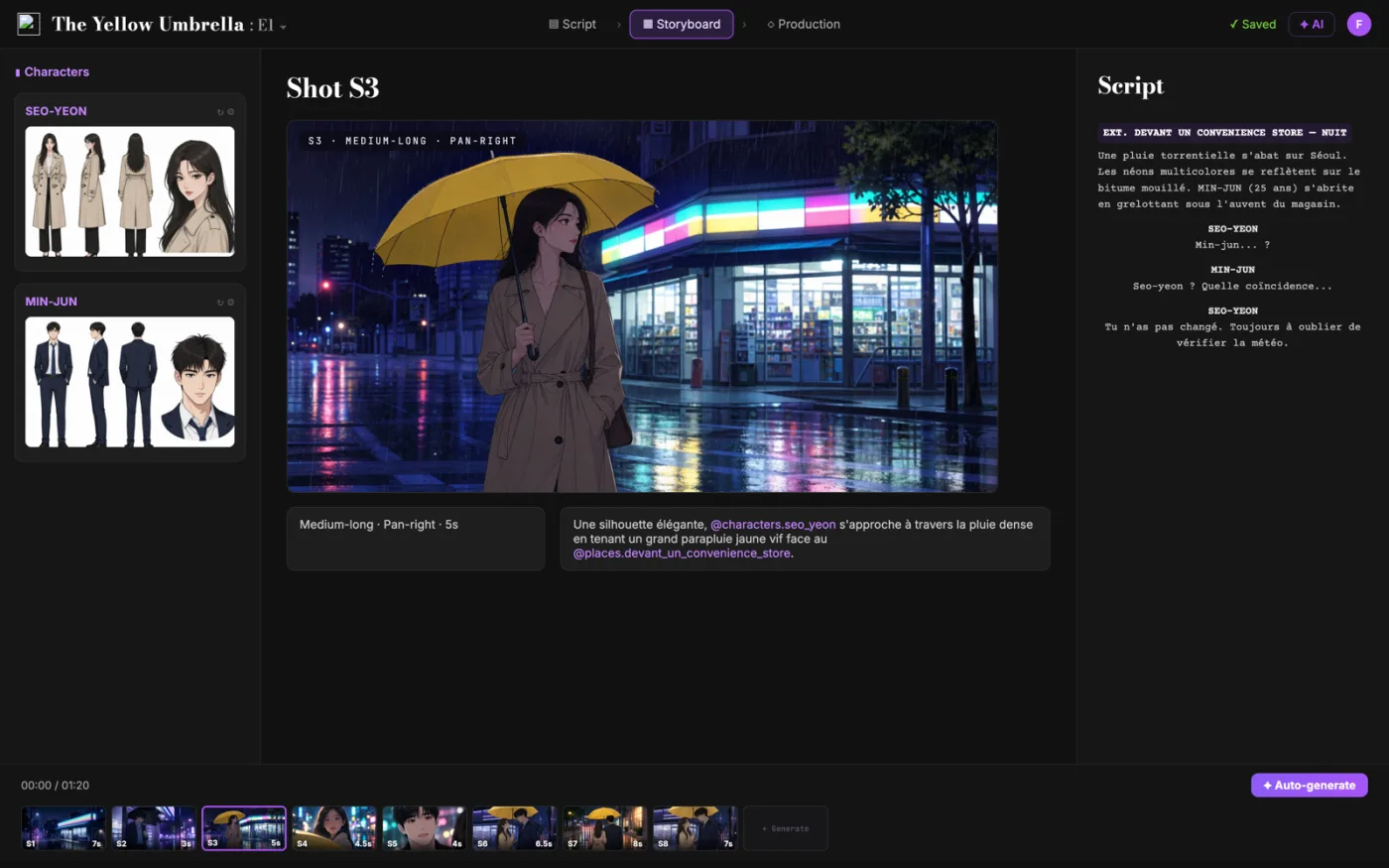
  2. ScreenWeaver storyboard: shot S3 of The Yellow Umbrella with characters, shot settings and the script beside it

    02The storyboard, made easy

    Shot breakdown generated from your screenplay, manual control over every shot (frame, angle, movement, duration), and generative AI previsualization in one click.

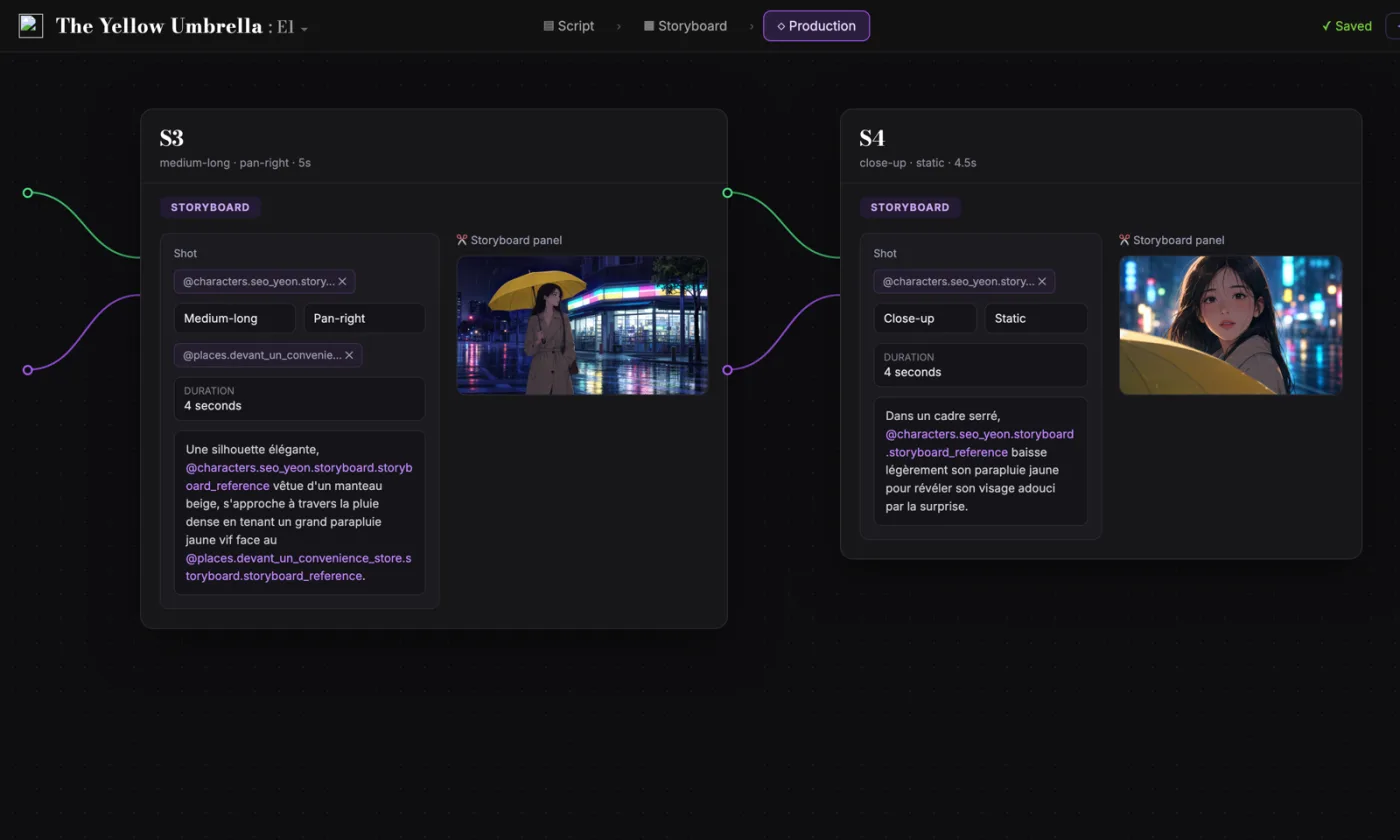
  3. ScreenWeaver production canvas: shots S3 and S4 as connected nodes carrying their storyboard panels and prompts

    03AI production, with finesse

    Footage generation pipelines connected to your screenplay and storyboard. Optimized out of the box, fully editable workflow.

FAQ

The Artefact AI Film Festival, your questions

How do you win the Artefact AI Film Festival?
The rules publish no grid. A film must first respect the charter (314 seconds at most, AI in all three phases), then get past the mk2 and Troiscouleurs editors, become one of twenty finalists and convince the jury led by Nakache and Toledano. Make a short, simple, moving film with a precise production log.
What is the deadline?
Submissions run from 2 September to 2 December 2026. The rules state no cutoff hour, so submit earlier. The public vote follows from 9 December to 13 January 2027, and the ceremony is at the end of February 2027 at mk2 Bibliothèque.
How much can you win?
Grand Prix: €10,000, and according to the home page a 30 second version shown for a week in all mk2 theatres. Jury Award, Audience Award and the Artefact Award for best use of AI: €1,000 each. Partners may give other prizes.
Do I need AI at every step?
Yes: at least one generative AI tool in each of the three phases, pre-production, production and post-production, and a production log that describes it. Examples: screenplay and storyboard for phase 1, image or video generation for phase 2, editing, generated music and voices for phase 3.
How long can the film be?
314 seconds at most, which is 5 minutes and 14 seconds. The rules give no minimum length.
What hosting and format?
The film is hosted on YouTube or Vimeo and sent as a link anyone can open. You add a visual, a synopsis, a presentation and the production log. The rules we read set no resolution.
Who can enter, and how many films?
Any individual worldwide, except the staff of Artefact and its partner companies and their families. One candidate space and one film per person. Minors need a parent's authorisation. A co-directed film names one lead director, who alone receives any prize.
What happens to my film, and do I keep my rights?
You remain the owner. By entering, you allow the film to be shown free of charge on the contest site, on social networks, on the Artefact and mk2 sites and in mk2 theatres, for 24 months after the contest ends.

Nine weeks. Start with the page.

Write the screenplay for free today. Storyboard it, then film it with Seedance.