AI for Good Film Festival 2027 · Guide

How to win the AI for Good Film Festival.Up to ten minutes. Applications open 15 January.

The ITU's film competition in Geneva. The rules, the six judging areas, the jury and a month-by-month plan to the 1 May 2027 deadline. Then take your film from the page to Seedance footage in ScreenWeaver.
  • Deadline 1 May 2027, 23:59 CEST
  • 1 to 10 minutes, AI at the core
  • Finalists invited to Geneva
Lost Garden · Episode 1

Independent guide. ScreenWeaver does not organise the AI for Good Film Festival and is not affiliated with the ITU. Rules read on 1 October 2026. Official page

Available today in ScreenWeaver: free screenwriting, and a storyboard generated from your screenplay with Storyboard Beta, $9.99 a month.

Rolling out: video generation of each shot, powered by Seedance, with the Filmmaker plan.

The rules on one card

What the 2027 call asks for.

The AI for Good Film Festival is the film strand of the AI for Good Global Summit, run by the International Telecommunication Union. It wants films that use AI as a core part of the process and speak to global challenges.
Organiser
ITU, with the AI for Good Global Summit
Applications
15 January to 1 May 2027, 23:59 CEST
Length
1 to 10 minutes
Completed
Between 1 September 2026 and 1 May 2027
AI requirement
A core component, not necessarily 100%
Finalists
Notified by 24 May 2027, invited to Geneva
Prizes
Speaker Pass, premiere screening, trophy, no cash listed
Language and rights
Any language with English subtitles, you keep copyright

Source: the official festival page and the ITU article of 9 July 2026 on the 2026 winners, read on 1 October 2026. The page gives the summit week as 21 to 25 June 2027 and the ceremony as July 2027, and its prize text still names Thursday 9 July, the 2026 date. It mentions no entry fee. Confirm both before you plan.

Key dates

Seven months, announced in advance.

The 2027 call is already published, so you can count backwards. <b>Applications are not open yet</b>, and the form arrives on 15 January 2027.
  1. 15 Jan 2027

    Applications open

    On the AI for Good website. You provide a download link to the film in .mp4, .mov or .h264.

  2. 1 May 2027

    Deadline

    23:59 CEST. Films must be completed between 1 September 2026 and this date.

  3. 16 May 2027

    Shortlist selected

    The first cut of the field, before the full jury review.

  4. 17 to 23 May 2027

    Judging

    The jury panel reviews the submissions against the six assessment areas.

  5. 24 May 2027

    Finalists notified

    By email, with a window to share information until 31 May. The summit follows in Geneva in the week of 21 to 25 June 2027.

How films are judged

Six areas, no published weights.

The festival lists six assessment areas and publishes no weights. After the 2026 ceremony it wrote that winners used AI to say something they could not have said otherwise, with real craft in image, sound and rhythm.
  • Quality of the overall film composition

    A strong artistic vision and a point of view on technology's role in the future. One consistent look and one author's eye make a film read as composed.

  • Cohesion of the narrative and the message

    A well-structured story that fits the theme of AI and technology shaping the world, with a clear artistic message carried by story, image and direction. Know the sentence your film says.

  • Creativity and originality

    Fresh storytelling and an original approach. The 2026 field covered plastic fish, social scores and blind painters: a familiar subject needs a new image.

  • International resonance

    The film should resonate across cultures and engage with global challenges. Avoid references that need one country's context. Dialogue in any language is fine if you subtitle it in English.

  • AI techniques incorporated

    Creative and purposeful use of AI to enrich the cinematic experience. AI must be core, not decorative, and the film need not be entirely AI-generated.

  • Ethical and legal integrity

    Responsible use of AI-generated content, proper licensing of every material or public domain sources, and transparency about AI throughout the process. You answer for every permission and release.

Ethical and legal integrity is a requirement, not a bonus. The festival asks filmmakers to uphold intellectual property rights and to keep AI use transparent. Say how the film was made, and clear what you did not make.

Who decides

Seven judges from animation, AI and film.

The official page lists a panel of judges and an official host, Lindsey Mastis. It may be the 2026 panel, since the 2027 jury is not stated separately, so expect changes.
  • Animation and storytelling

    Osnat Shurer, Co-Chief Creator Officer of Baobab Studios and producer of Moana, and Malik Afegbua of Slickcity Studios, whose Elder Series earned a WHO Game Changer Award. They know how a story is built before the tool.

  • Filmmakers who work with AI

    Michaela A. Ternasky-Holland, an Emmy-winning director and one of the first to premiere a short made with Sora, and Yiwen Cao, a Hong Kong director whose AI films have been selected by major European festivals.

  • AI strategy and technology

    Hans Ku, Vice President of AI and Engineering at Disney, Matthieu Lorrain, formerly of Google DeepMind, and Orri Bogdan of Anthum AI, who applies generative video to brand storytelling. Expect questions on how and why the method was chosen.

  • A host and a stage in Geneva

    Finalists are invited to the AI for Good Global Summit with a Speaker Pass, and the film is shown at a festival premiere before an international audience. Plan for a room, not only a link.

What the field looked like

Five subjects the 2026 finalists chose.

The festival sets no list of themes, only AI for good and global challenges. The ten 2026 finalists show the range. Under each, the angle we would take.
  • 01

    Ocean plastic

    Plastic Erosion, from China, shows plastic fish moving from boat to market to dinner plate.

    The winner took a worn subject and gave it a new image. Make the abstract physical, and design it to be attractive at first sight, disturbing at second.

  • 02

    Worth, scores and metrics

    UTILITY, from Japan, imagines a society where a score on the body measures usefulness.

    A dystopia works when one small act breaks it. One character, one act of kindness carries more than a world explained.

  • 03

    Assistive technology

    UNSEEN, from Italy, follows a blind painter whose AI voice gives back her canvas, not her sight.

    The film says no real visually impaired person was filmed or impersonated. State your ethical choices in the synopsis, since integrity is judged.

  • 04

    Care and memory

    Another Day, from Egypt, portrays dementia from within, and AVIÃO, from Brazil, a father and his autistic son on one morning.

    Intimate stories of care travel across cultures. Few locations, two characters and a repeated gesture keep faces consistent.

  • 05

    Burnout and the machine

    CLUSTER, from Belgium, follows an AI analyst whose office systems follow him into the woods.

    AI as subject and as tool is allowed, but it is the crowded corner. Say something about people, not about software.

The 2026 edition

What the 2026 winners teach.

The 2026 edition drew more than 1,300 submissions and ten finalists in ten countries. The three winners were announced at the ceremony in Geneva on 9 July 2026.

  1. 01

    First place: Plastic Erosion, by Yifei Li and Zheng Bao. It won for the choice of image, plastic fish moving through the food chain, and designed images attractive at first glance and disturbing on second. One image carried the film.

  2. 02

    Second place: UTILITY, by Yuichi Ono, a solo filmmaker. Ono iterated through countless generations in Seedance 2.0 to catch the nuances of despair, greed and hope. One person, one model, a lot of patience.

  3. 03

    Third place: The Homo Sapiens Family, by Vic Wanchana Intrasombat, sixteen years into a career in concept art. Satire about humans in a conservation zoo, with AI as “a new brush”. A craft background shows.

  4. 04

    The festival's own reading. Winners used AI to say something they could not have said otherwise and committed to the craft of image, sound and rhythm. The tools are a means, not the author.

From page to screen

Lost Garden: a story about care, in six shots.

The 2026 field was full of films about care and repair. This is a scene from Lost Garden, episode 1, an animated series made by the ScreenWeaver team with Seedance, about the last guardian of a seed that could bring a garden back. The screenplay page, then each shot as a storyboard frame and as the final image.

Logline. A small knight wakes up in a dead world and learns he is the last guardian of a seed that could bring the garden back.

Screenplay · episode 1 · the Source Tree

INT. HEART OF THE ROOTS - NIGHT

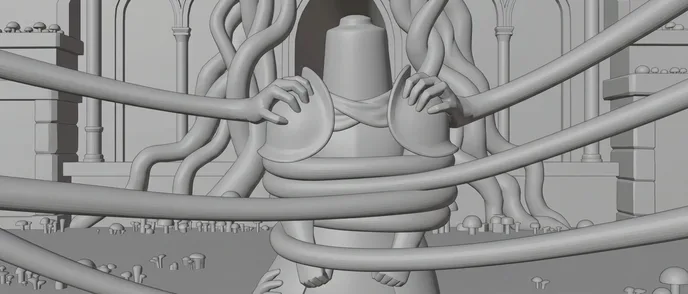
Living roots coil around LANTERN and pin him down. A voice stops them.

THE SOURCE TREE

Stop. He is my guest.

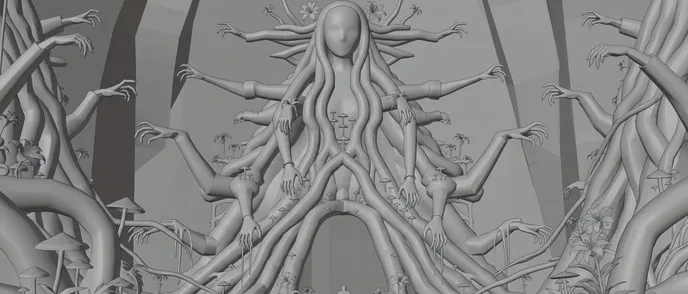
A giant woman of roots and white lilies opens her arms over the cavern.

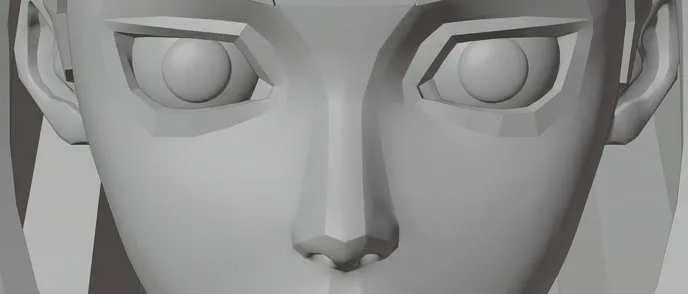
Her eyes open. Blue, and vast.

THE SOURCE TREE

Welcome to you, Lantern Knight.

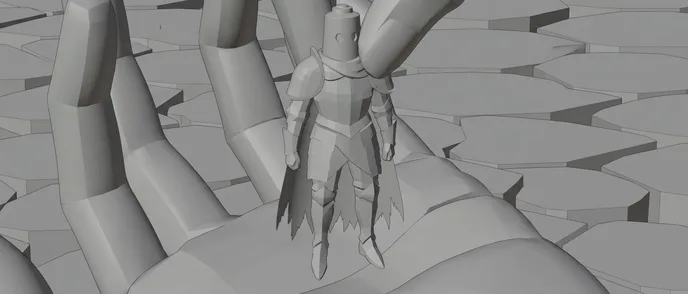
She lifts him in her palm, like a lamp.

THE SOURCE TREE

Do not be afraid. I will not harm you.

In the dark, a seed of light opens. Inside the flower, a sleeping child.

THE SOURCE TREE

You must find yours. Protect her.

CUT TO:

  1. A small lantern-helmed knight bound by thick roots in a ruined hall
    Storyboard frame of the trap shot, in grey
    01

    Medium · the trap

    Medium shot, Lantern bound by thick living roots in a ruined hall, glowing blue mushrooms on the floor, cold light

  2. A giant woman made of roots and white lilies spreads her many arms in a dark cavern
    Storyboard frame of the wide shot, in grey
    02

    Wide · the Source Tree

    Symmetrical wide shot, a giant woman made of roots, arms spread with many hands, white lilies, blue glyphs

  3. Extreme close-up of a giant pale face with piercing blue eyes
    Storyboard frame of the eyes close-up, in grey
    03

    Extreme close-up · the eyes

    Extreme close-up on the giant's face, piercing blue eyes opening, pale skin, soft light from below

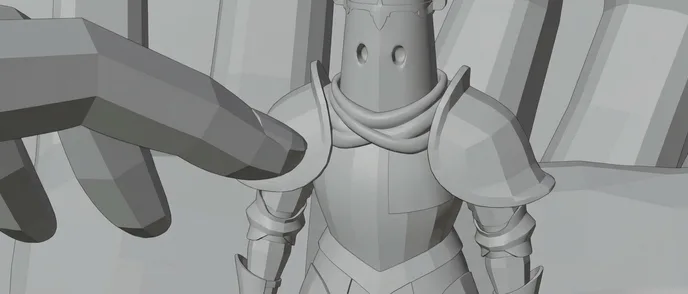
  4. A tiny armored knight stands in the middle of a giant open hand
    Storyboard frame of the palm shot, in grey
    04

    High angle · the palm

    High angle, the tiny knight standing in the center of a giant open palm, stone floor far below

  5. A giant fingertip gently touches the chest of a small armored knight
    Storyboard frame of the touch close-up, in grey
    05

    Close-up · the touch

    Close-up, a giant fingertip gently touches the knight's armored chest, faceless helm, emotion through posture

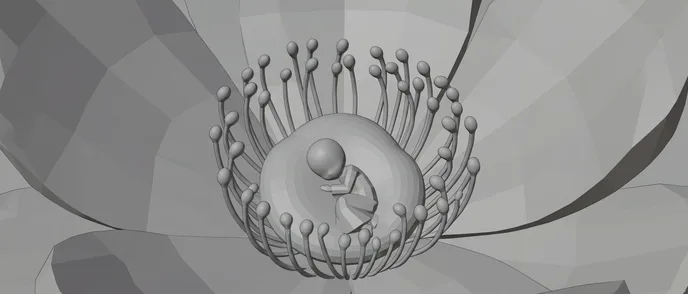
  6. A sleeping pink-haired child curled inside a glowing blue flower
    Storyboard frame of the seed insert, in grey
    06

    Insert · the seed

    Top-down insert, a glowing pale blue flower opening, a sleeping child with pink hair curled inside

Lost Garden, episode 1, 17 minutes, so it needs a festival cut under 10 minutes. The Source Tree scene is a complete movement that could carry one. A finalist at the AI London Festival. The player opens on this scene.

The script

A 7 minute film in five movements.

The festival accepts 1 to 10 minutes. A shorter film is easier to finish well, so aim for 7 minutes: about 7 screenplay pages and 70 to 95 shots of 4 to 6 seconds.
  1. 0:00 to 0:30

    The image that stays

    One image that carries the problem. The 2026 winner was built on one.

  2. 0:30 to 1:40

    The person and the problem

    A human face at the heart of a global challenge. Keep the world small.

  3. 1:40 to 4:10

    The pressure

    The challenge grows and the character acts. Use AI for what a camera cannot film.

  4. 4:10 to 6:00

    The act

    One choice that answers the film's question, shown and not explained.

  5. 6:00 to 7:00

    The new image

    A last image that changes the first one. Leave the audience a question.

Subtitles in English are mandatory when the film is in another language. Keep a clean master and an English-subtitled copy for the form.

Month by month

From October to the 1 May deadline.

You have seven months, and the film must be finished after 1 September 2026. Anything completed before that date is out. The form opens in January, so use the autumn for the story.
  1. 01

    October 2026

    Find the challenge you know

    Choose one global challenge you can speak about from experience. Test the logline on five people: keep the one they repeat back to you.

  2. 02

    November 2026

    Write the screenplay

    Seven pages, with few lines of dialogue. Write it free in ScreenWeaver, in industry format, and read it aloud.

  3. 03

    December 2026

    Characters, locations, references

    Approve one reference for each character and each set, once. List every material you will need rights for, music included.

  4. 04

    January 2027

    Storyboard every shot

    Generate the shot breakdown, then adjust framing, angle and duration shot by shot. The application form opens on 15 January.

  5. 05

    February and March 2027

    Generate the footage

    Generate scene by scene with Seedance, working from your storyboard and references. Keep every prompt and version: the festival asks for transparency in AI use.

  6. 06

    April 2027

    Edit, sound, subtitles

    Cut to 7 minutes, mix with cleared or original sound, add English subtitles. Collect the permissions, licences and releases in one folder.

  7. 07

    By 1 May 2027

    Submit, once

    Provide a download link in .mp4, .mov or .h264 through the AI for Good website. One entry per team, and deadline 23:59 CEST.

Disqualification traps

Eight ways to fall out of the field.

They come from the official page. Read it again when the form opens, since the festival can change its terms.
  • Finishing at the wrong time

    Films must be completed between 1 September 2026 and 1 May 2027. A film finished in August 2026 is not eligible.

  • The wrong length

    Films run 1 to 10 minutes. A cut at 10 minutes 30 is outside the rules.

  • AI as decoration

    AI must be a core component of the filmmaking process. A conventional film with one AI shot does not meet the requirement.

  • Unlicensed material

    You are responsible for permissions, licences and releases for any copyrighted material. Use licensed or public domain sources, and original or cleared music.

  • Hiding the AI

    Filmmakers must maintain transparency in AI applications throughout the creative process. Describe the tools and where they were used.

  • No English subtitles

    A film in another language must include English subtitles. Any language is welcome otherwise.

  • Putting the film fully online first

    You may submit elsewhere, but a finalist film must not be fully available online before the event. Plan your release after Geneva.

  • Two entries, or a broken link

    Each team may submit only one entry, with a download link in .mp4, .mov or .h264. Test the link before you send it.

Why ScreenWeaver

The festival invites AI at every stage. ScreenWeaver covers them all.

The festival invites work using AI in scriptwriting, storyboarding, image creation and digital effects. ScreenWeaver covers those stages inside one connected project, and no tool is imposed.
  • Powered by Seedance 2.0 and 2.5

    The footage pipelines run on Seedance. The 2026 runner-up, UTILITY, was iterated in Seedance 2.0, per the festival's own article. Name ScreenWeaver and the model in your AI transparency note.

  • A record of the whole process

    The pipelines are connected to the script, so every shot leads back to its scene, its frame and its prompt. Transparency about AI is a judged area, and the record is already written.

  • Your work stays yours

    Projects in ScreenWeaver are private and you own your work. The festival lets you keep your copyright and asks only for permission to promote the film with credit.

  • Start for free today

    Screenwriting is $0 with no expiry on the Screenwriter plan. Storyboard Beta is $9.99 a month, and Seedance generation arrives with the Filmmaker plan, now rolling out.

Real productions

International festival-recognized films have been written and produced with ScreenWeaver.

ScreenWeaver is already being used as a creative workspace for real AI film productions, from cinematic shorts to animated series pilots selected, nominated, and awarded by international festivals.

  • Video thumbnail for VOIDBORN

    VOIDBORN

    AI animated / cinematic short

    Festival recognition

    • 1st Place Silver

      Mondial Chroma Awards

    • 2nd Place Dreamina

      Mondial Chroma Awards

    • Award Winner

      Seoul International AI Film Festival

  • Video thumbnail for Les Fils du Vinnana

    Les Fils du Vinnana

    AI short film

    Festival recognition

    • Honorable Mention

      Top Quark Film Festival

    • People's Choice Nominee

      Illuminate Oneness of Humanity

    • Nominee

      ALTFF Supershort

  • Video thumbnail for Lost Garden

    Lost Garden

    AI animated series pilot

    Festival recognition

    • Finalist

      AI London Festival

The pipeline

Write. Board. Produce.

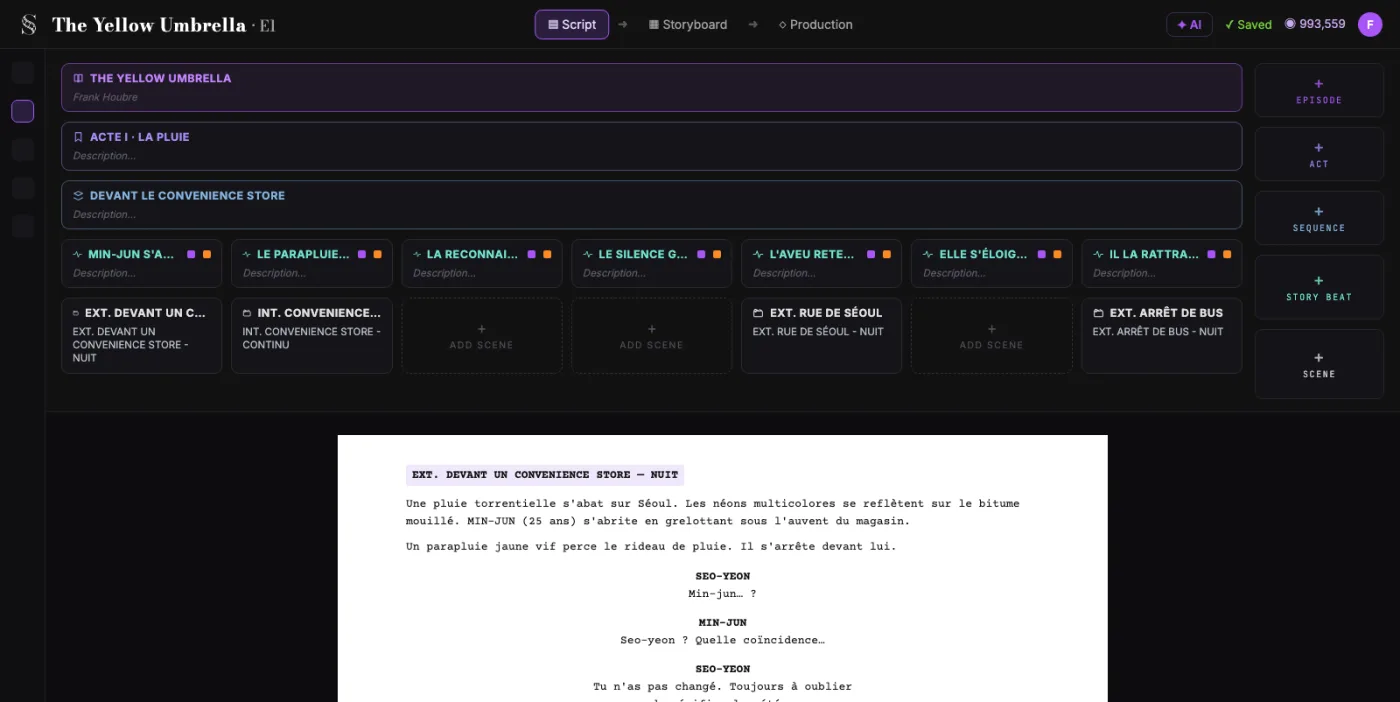
  1. ScreenWeaver screenplay editor: acts, sequences and beats above the formatted script of The Yellow Umbrella

    01The screenplay, enriched

    An industry-standard screenplay editor, and more: a visual outline and beat editor, your writing inspirations (notes, photos, audio) kept next to the page, and an AI researcher to support your writing, not replace it.

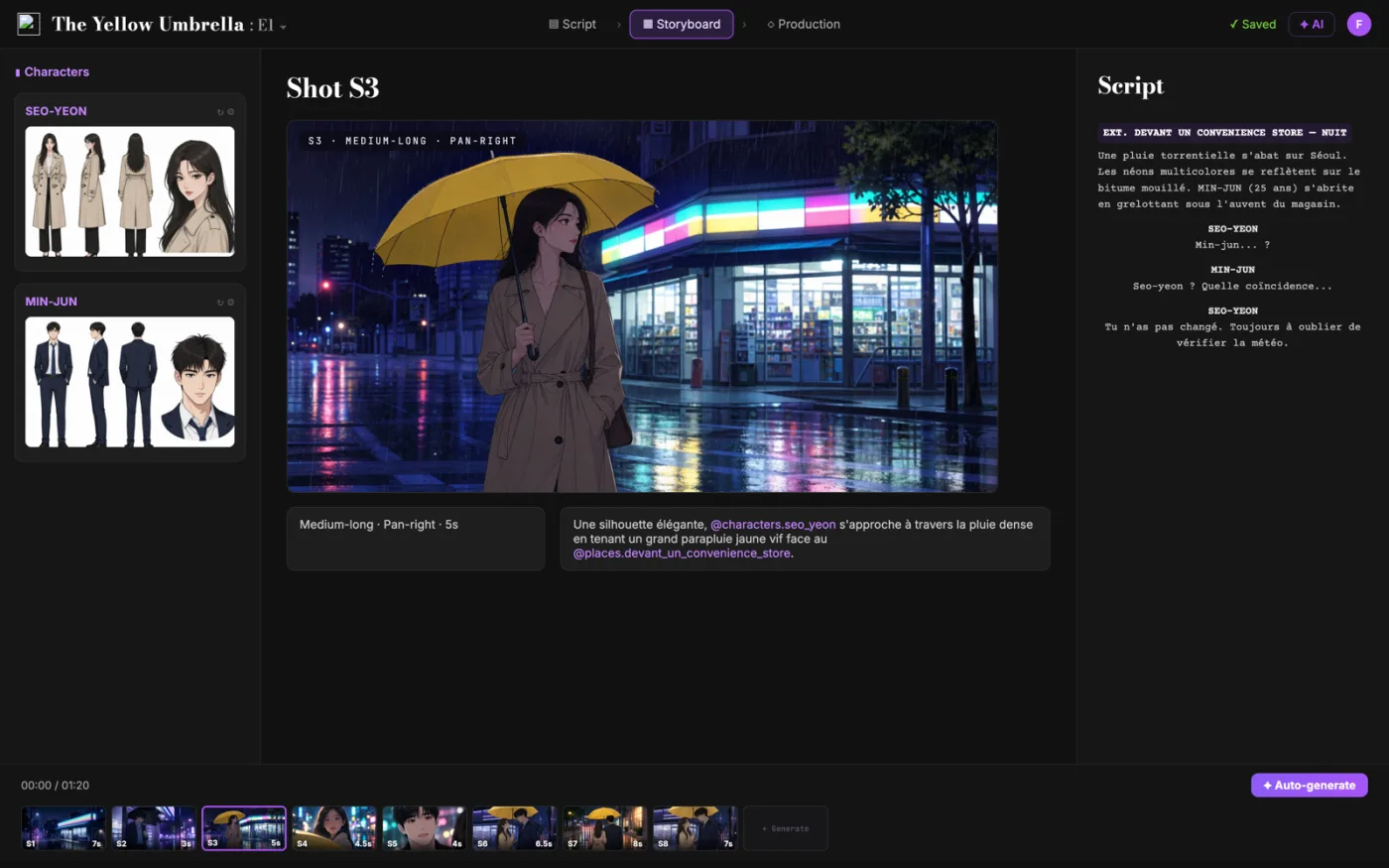
  2. ScreenWeaver storyboard: shot S3 of The Yellow Umbrella with characters, shot settings and the script beside it

    02The storyboard, made easy

    Shot breakdown generated from your screenplay, manual control over every shot (frame, angle, movement, duration), and generative AI previsualization in one click.

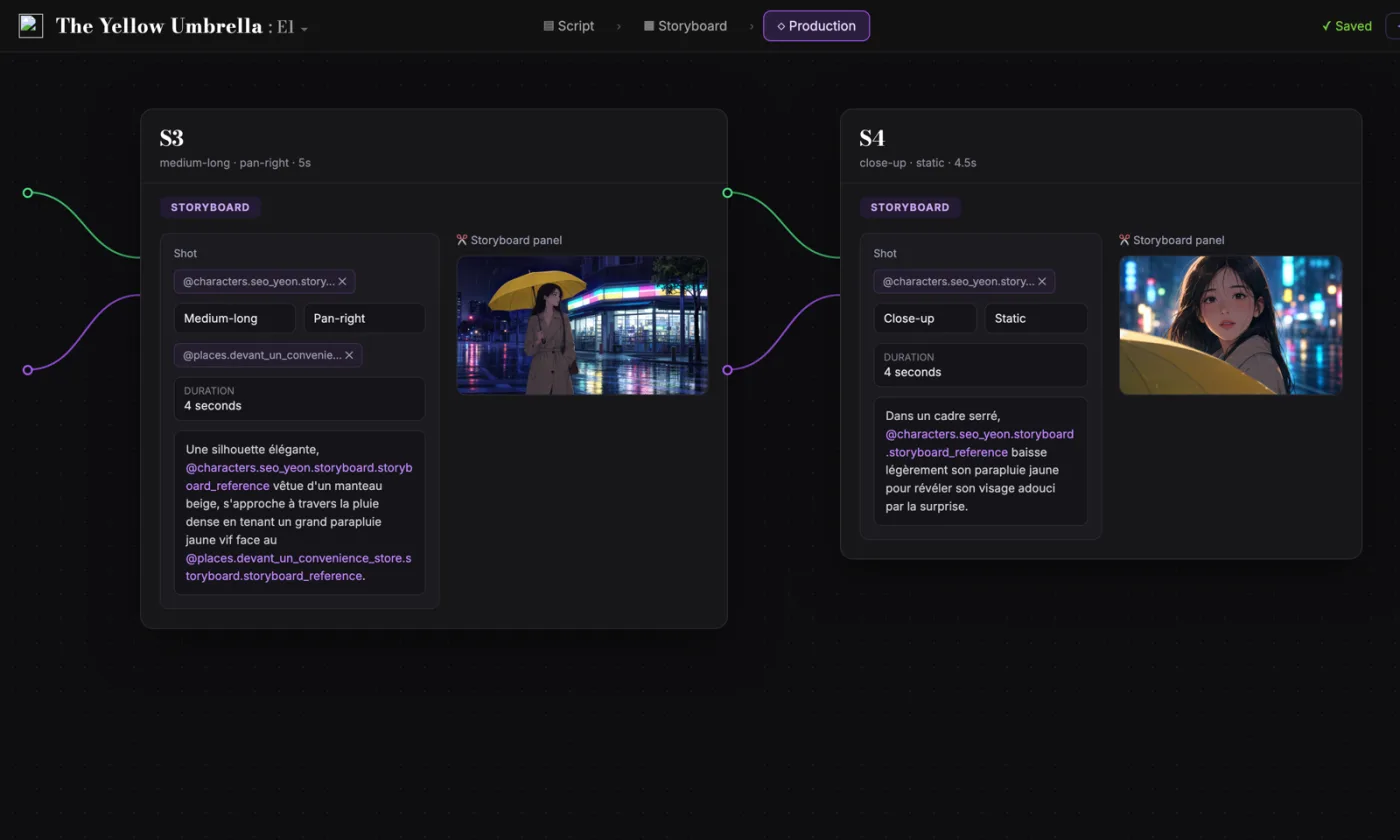
  3. ScreenWeaver production canvas: shots S3 and S4 as connected nodes carrying their storyboard panels and prompts

    03AI production, with finesse

    Footage generation pipelines connected to your screenplay and storyboard. Optimized out of the box, fully editable workflow.

FAQ

The AI for Good Film Festival, your questions

How do you win the AI for Good Film Festival?
Films are assessed on six areas with no published weights: composition quality, narrative cohesion, creativity, international resonance, AI techniques and ethical and legal integrity. The 2026 winners paired one strong idea with real craft. Use AI for what only it can show, and keep your process transparent.
Is there an entry fee?
The official page mentions none. Confirm in the application form when it opens on 15 January 2027, and do not rely on aggregators.
Is there prize money?
None is listed. Finalists get a Speaker Pass to the AI for Good Global Summit 2027, a place at the festival premiere event and, for winners, the official trophy.
What does AI as a core component mean?
AI technologies must be a core part of the filmmaking process, but the film does not need to be entirely AI-generated. The page names generative algorithms, neural networks and machine learning, in scriptwriting, storyboarding, images and effects.
Who is on the jury?
The page lists Hans Ku, Osnat Shurer, Malik Afegbua, Michaela A. Ternasky-Holland, Matthieu Lorrain, Yiwen Cao and Orri Bogdan, with Lindsey Mastis as host. It does not separate a 2027 panel, so the list may change.
When are finalists announced?
By email by 24 May 2027, after judging from 17 to 23 May. The summit is given as the week of 21 to 25 June 2027 and the ceremony as July 2027, so check the dates before booking travel.
Can I submit a film already posted online?
You may submit your film to other competitions. But if it is selected as a finalist, it must not be fully available online before the event. Keep the full film private until Geneva.
Can I make the film with ScreenWeaver?
Yes, no tool is imposed. ScreenWeaver covers the screenplay, the storyboard and, with the Filmmaker plan, Seedance footage. Declare your tools in the transparency note and clear every licence.

Seven months. Start with the page.

Write the screenplay for free today. Storyboard it, then film it with Seedance.